Film review: De Gaulle takes an epic look at a singular French hero—and outsider
As Visions Ouest screens the large-scale, two-part achievement this week and next, Simon Abkarian’s general steals the show—even amid the sweeping battle scenes
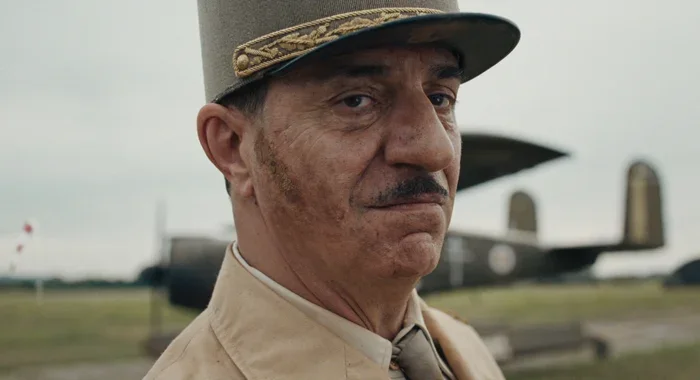
De Gaulle: Liberté, Part 2
De Gaulle: Liberté, Part 2
Visions Ouest presents De Gaulle: Résistance on November 7 at 12 pm and De Gaulle: Liberté on November 8 at 12 pm at the Park Theatre; and De Gaulle: Résistance on November 12 at 6:30 pm and De Gaulle: Liberté on November 13 at 6:30 pm at SFU Woodward’s Goldcorp Centre for the Arts, with Alliance Française Vancouver, SFU Live, and Le Relais francophone de la Colombie-Britannique
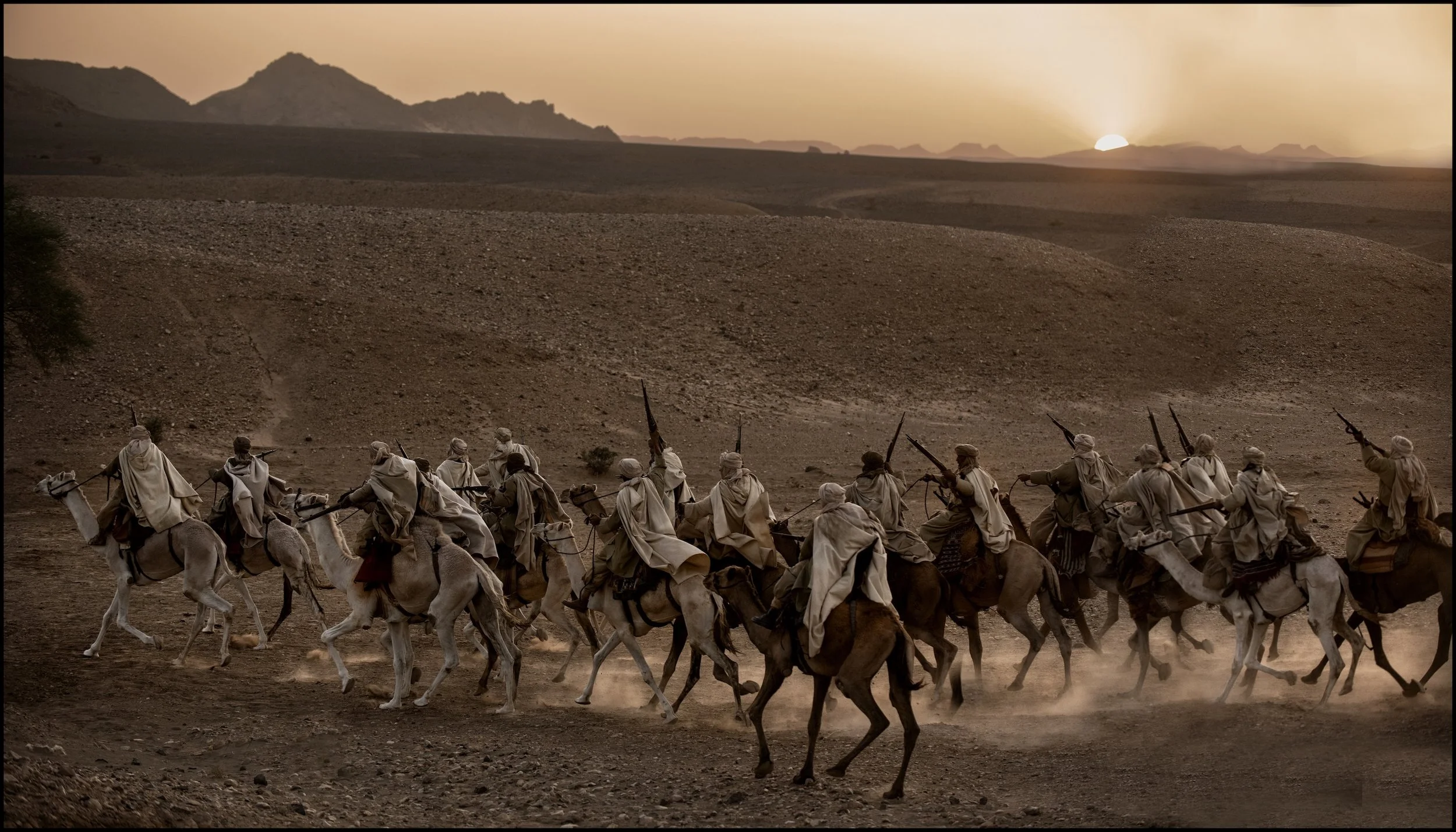
THE TWO-PART EPIC De Gaulle, with its sweeping African sea and desert battles, is the sort of thing that history buffs live for.
Big-screen showings of the film, whose French title is La Bataille de Gaulle, happen this week and next, care of Visions Ouest. And they offer a new window onto a part of World War II that barely makes it into North American textbooks: Vichy France’s capitulation to the Nazis, Charles de Gaulle’s subsequent exile and push for a Free France from abroad, his role in the complex battles of Africa, and his fight to keep France from falling under Anglo-American control after the war.
Many who have flown in and out of a major airport named for him may not fully comprehend why de Gaulle was convicted of treason and sentenced to death in absentia by a court martial in 1940’s collaborationist Vichy regime. Or how, in the same year, he had to grimly accept the deaths of 1,300 of his beloved French servicemen in the British bombing of the French fleet at Algiers’s Mers-el-Kébi—all to prevent warships falling into Nazi hands.
It’s dramatic stuff, and audiences in France, especially younger generations, have eaten it up.
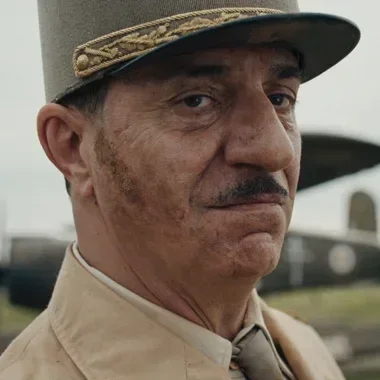
But despite the film’s gigantic scale, it’s the simple face of Simon Abkarian, as de Gaulle, that often feels like enough to carry the story across each film’s two-and-half-hour-plus length. Wearing his iconic képi hat and distinctive moustache, his unlikely hero locks into a perfectly inscrutable expression that mixes the haughty, stubborn, and defiant.
In an early scene where de Gaulle is in exile in London in 1940, others race for bomb shelters while he barely flinches, even when an explosion blows out a window. “Barbarians,” he says, and strides out into the shattered streets. And then there’s his famous quip, shortly before a malaria outbreak among troops in Africa, that “mosquitoes do not bite General de Gaulle.”
Director Antonin Baudry, adapting Julian Jackson’s definitive biography of de Gaulle, A Certain Idea of France, leans wryly into the absurd potential of the figure while also honouring his achievements. The director casts him as an outsider amid the Vichy-loving French elite—an unfashionable relic of the Great War. Only occasionally does he throw something across the room in a brief, but telling, outburst of sheer rage. Baudry is also careful to show the family man’s softer side, particularly in his loving moments with his daughter, who had Down Syndrome (and was raised at home at a time when so many developmentally disabled children were institutionalized).
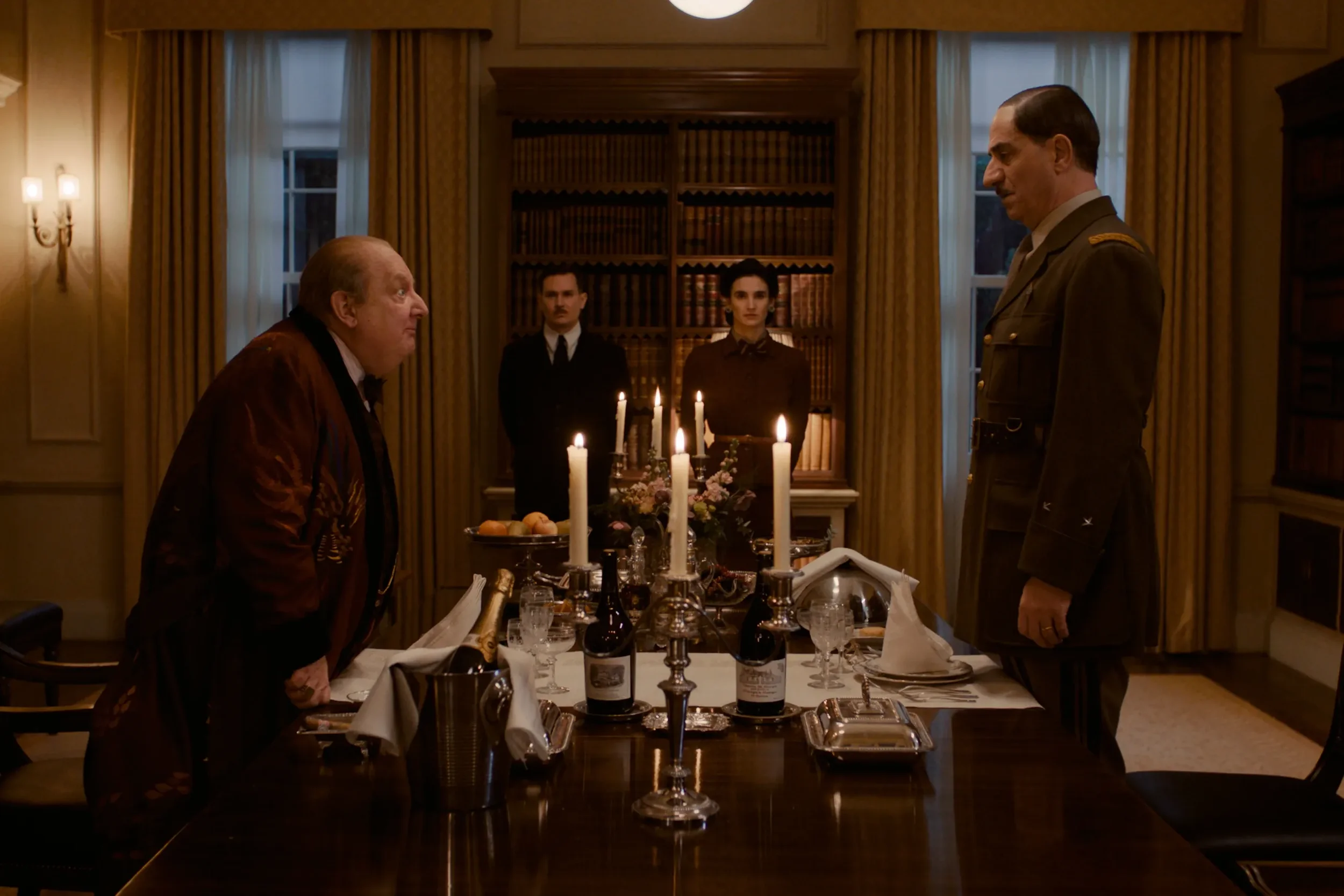
Many of the film’s most enjoyable moments happen between the ultimate odd couple, the Gitanes-happy de Gaulle towering over Simon Russell Beale’s cigar-smoking Winston Churchill. Throughout, their relationship is charged, the British leader admiring the Frenchman’s obstinate patriotism but wary of his political awkwardness and wise to the Americans’ intense dislike of the general.
The films break down into two basic parts: the first, Résistance, follows the signing of the armistice by Marshal Pétain; de Gaulle's revolt against that armistice and his London-based efforts in 1940 to establish the at-first ragtag Free French Forces; and the campaigns in France’s African colonies. Its most intense battle scene is at Bir Hakeim, where a miniscule group of roughly 3,500 Free France Forces troops held off 10 times that number of Rommel’s Axis soldiers, allowing the British army to evacuate elsewhere.
Throughout the first installment, de Gaulle’s bio alternates with a compelling plot about a young patriot (played by Florian Lesieur), a de Gaulle follower and resistance fighter stuck in occupied France who will come to take on a historical role.
Part 2, Liberté, covers the years 1943 and 1944, shifting to the wider military fight against Nazi Germany, and to de Gaulle’s intense battles with President Franklin D. Roosevelt (a strong Campbell Scott), who at first floated the idea of making postwar France a dependent state. The installment also introduces the dashing General Philippe Leclerc (Niels Schneider), heading impressive campaigns, with large numbers of African soldiers, across the Libyan desert. It all culminates, naturally, in the liberation of Paris.
Of course, De Gaulle went on to a long and colourful career in French politics, but that’s beyond the scope of this majestically scaled, old-school war film. It’s enough to try to capture the challenges of the gigantic African theatre, let alone the intrigue of the Paris resistance and the political machinations in wartime London. But here, on top of that, there’s also a lot of character to contain when it comes to the fascinating de Gaulle. 
A scene from De Gaulle: Liberté, Part 2

Related Articles