Stir Q&A: Ablaye Cissoko and Cyrille Brotto merge their musical traditions
The French accordionist and the Senegalese singer and kora player began their joint musical adventure thanks to a “slightly mad request”
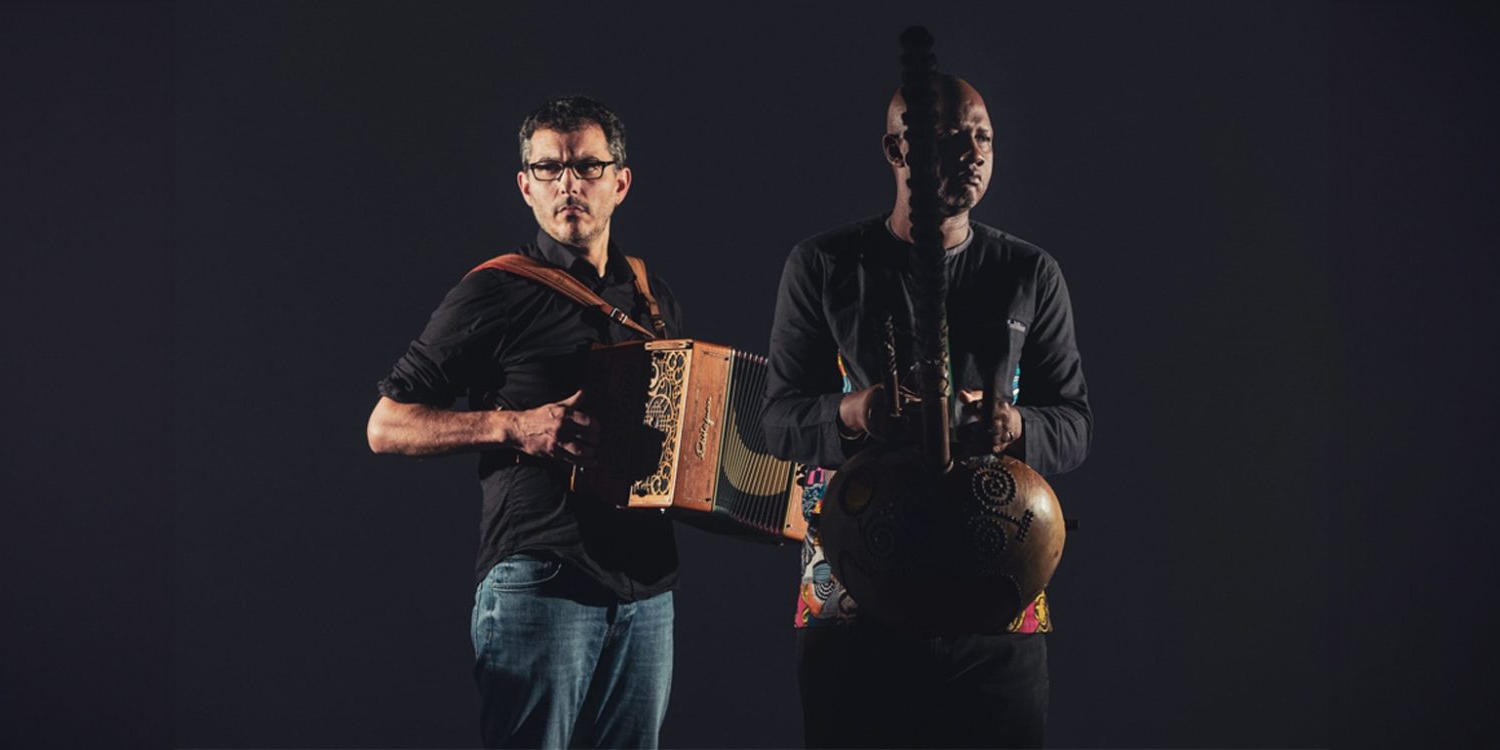
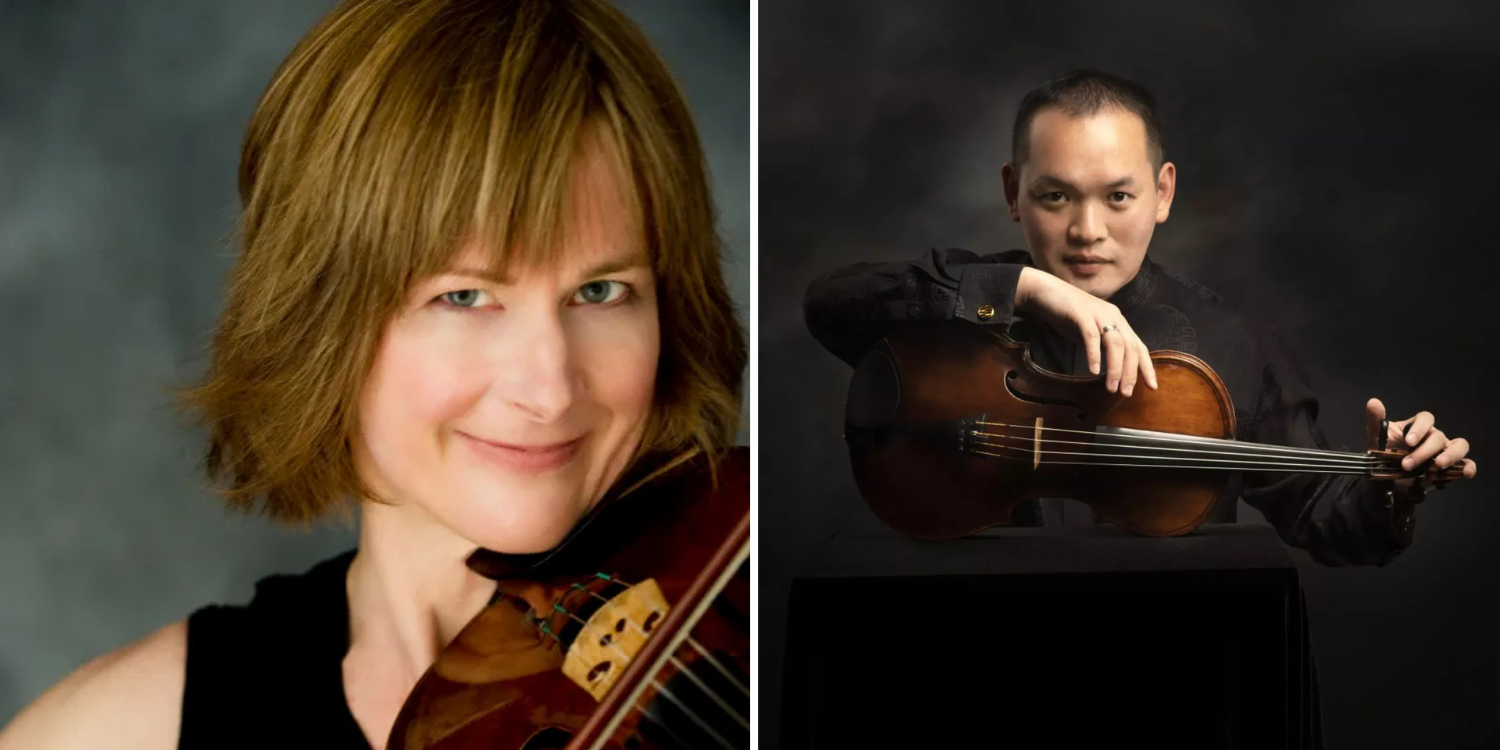
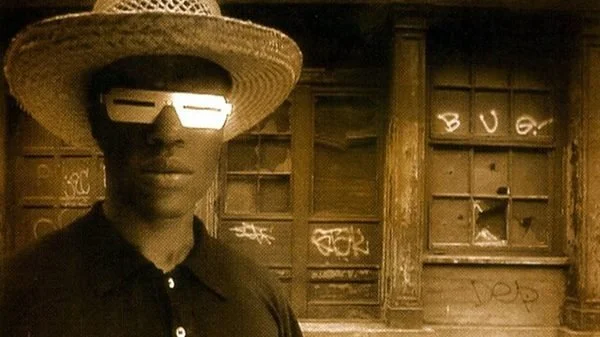
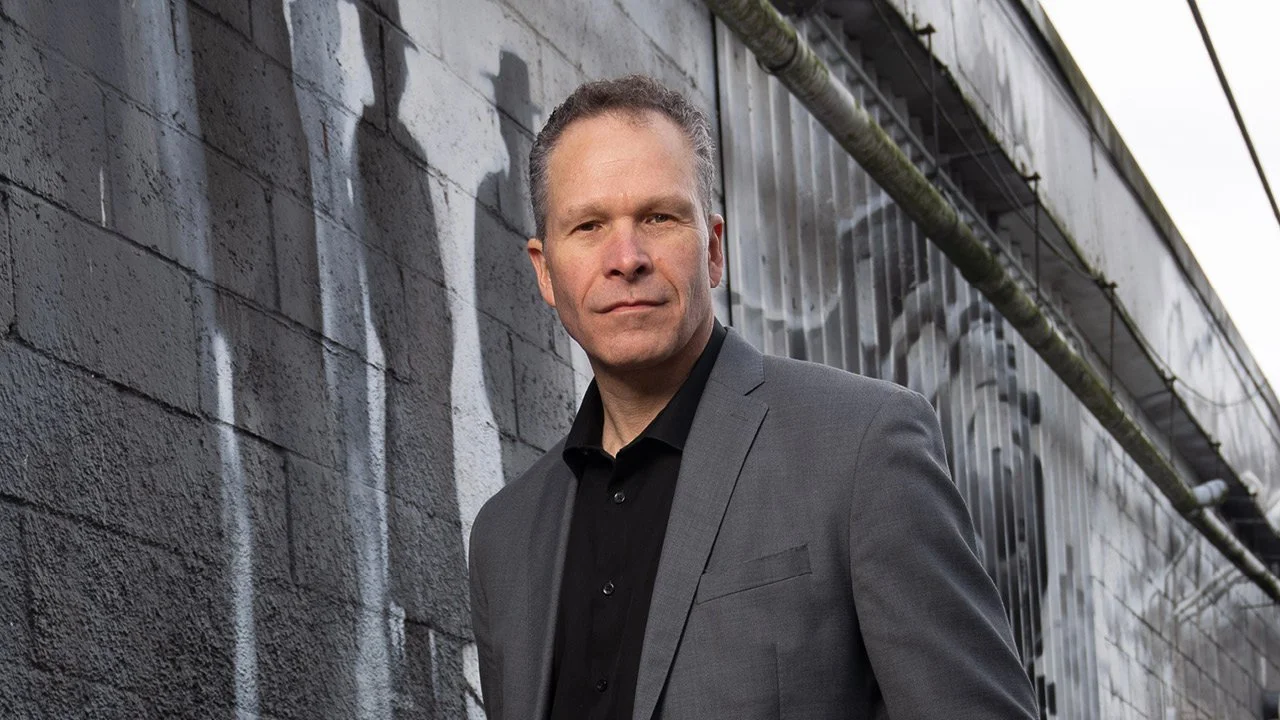
(Left to right) Cyrille Brotto and Ablaye Cissoko
Ablaye Cissoko and Cyrille Brotto perform at the BlueShore at CapU on May 14 at 7:30 pm
SOME THINGS JUST work together so beautifully that it seems almost as if they were made to be combined. The European diatonic button accordion and the West African kora come from two very different musical worlds, but in the hands of France’s Cyrille Brotto and Senegal’s Ablaye Cissoko, they blend together so harmoniously that they sometimes sound like a single instrument.
Often topped by Cissoko’s effortlessly melodic singing, the duo’s music is harmonically rich, blurring the lines between French coffee-house folk, classical rigour, and West African griot traditions.
Cissoko and Brotto released their debut album, Instant, in 2022, following it up with last year’s Djiyo. In a review of the latter, Songlines editor Simon Broughton wrote: “What’s remarkable is the way one instrument takes over from the other, at one moment the kora taking the lead, then the accordion and back—both weaving around each other and the voice.”
We asked Brotto and Cissoko five questions about their music and how it brings together disparate musical spheres.
How did you two meet each other, and when did you decide to start making music together?
CB: Everything began thanks to my wife, who is a long-time fan of Ablaye’s music. When she would play his music at home, I listened and said to myself right away that I really loved what he was doing.
As a surprise for her, I thought to myself that it would be incredible to find a way to have Ablaye play a private concert for us. So I contacted his manager to invite him to play for us and 30 guests, and to our great delight he accepted!
AC: I really said yes because this situation was clearly part of the griot tradition of seeking to meet new people, and since Cyrille is well known, my manager extolled his considerable virtues as an accordionist.
But what was really striking was that as soon as we met, the connection was immediate. Cyrille is someone exceptional, and right away it was as though we had known each other for years. I was touched by his kindness and gentleness.
CB: Our musical adventure began as a result of this slightly mad request. We realized very quickly that on a technical level, our two instruments were perfectly complementary: the kora is an instrument with muted strings which produces a relatively clipped sound, whereas the accordion brings sustain and draws out the sound.
But even before discussing the complementarity of our instruments, we realized that things were working mostly because it was a true human connection between us.
AC: That’s exactly it. There is the instrument but there is the man behind it. Cyrille has a very beautiful way of playing and is a master of the accordion. In short, he’s my man, I’ve got his back! If God gives us life, inshallah, I think we still have a very long road to walk together.
Does playing with someone from a different musical tradition change the way you approach playing your own instrument? If so, in what ways?
AC: Honestly, I don’t think this changes the essence of my playing. For that matter, I usually say that I don’t play “European kora” or “African kora”, I just play the kora. Historically, the griot is a nomad who searches out other traditions to enrich himself, to learn and then to bring this knowledge back home.
Playing with Cyrille doesn’t change the way I play, but opens me up spiritually. I hate stagnating or remaining only on the traditional side, because I’m convinced that refusing to open one’s self up to others ends by suffocating our own tradition.
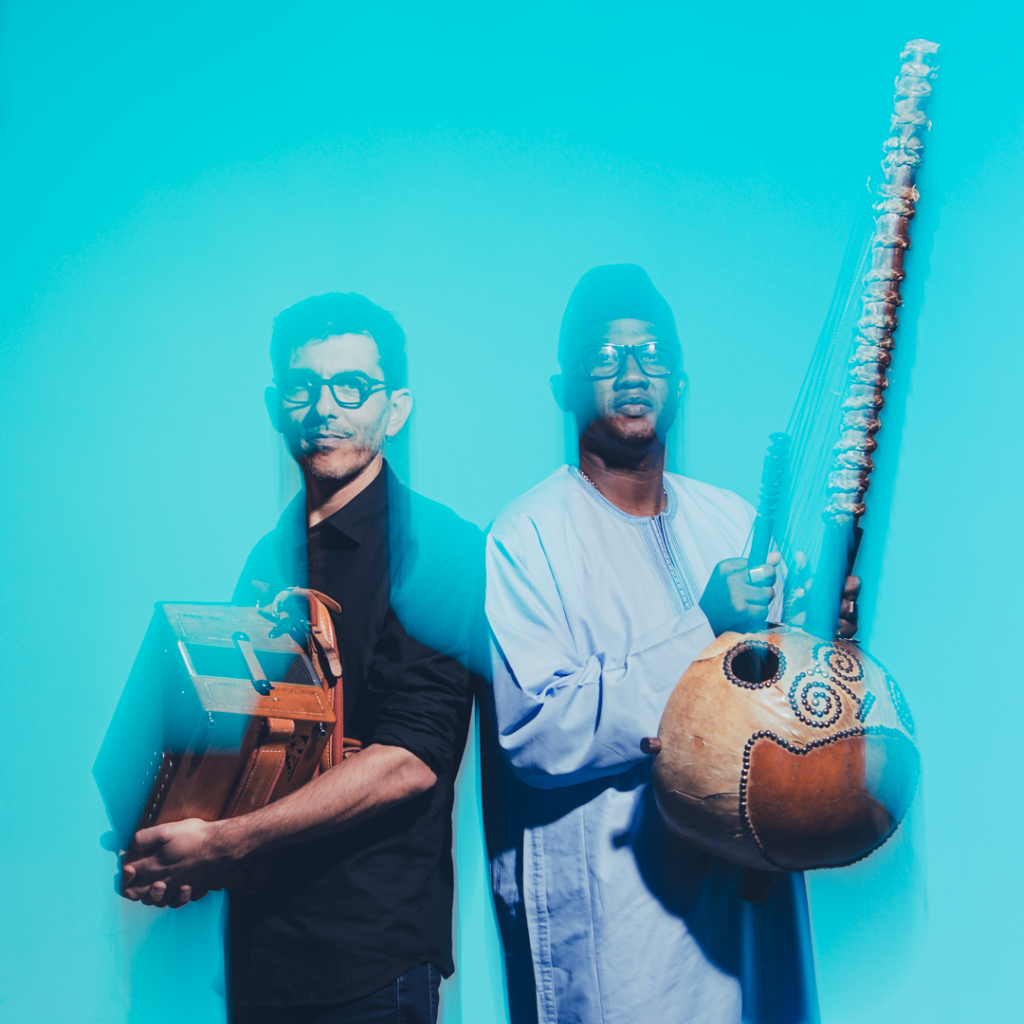
(Left to right) Cyrille Brotto and Ablaye Cissoko
Since my music is, above all, alive, my way of playing evolves naturally every day by working with other instruments. This is true of Cyrille and the other artists I have been able to collaborate with.
CB: Rather than radically changing our technique, the musical encounter pushes us to play on the complementarity of our instruments. From a purely technical point of view, the kora is a muted string instrument which produces a very short and percussive sound. The accordion on my end, wraps around this sound and brings sustain, length and what one could call a melancholic drone with Gallic flourishes.
Our two instruments listen to one another to leave the space necessary for the kora’s elegant arpeggios and Ablaye’s warm voice. At the end of the day, we did not have to adapt our playing: the instruments were compatible in essence from the start!
AC: That’s exactly it, it is a real conversation. I have been able to experiment and understand that the kora works naturally well with the harp, the guitar, the violoncello, or here, with the accordion. This conversation with Cyrille’s tradition proves to me at each concert that there exists a marvellous universality of strings and instruments. The notes come to me in a different way because we are part of a living, human exchange.
Do you feel that you have invented a new genre of music by combining different traditions and influences? If so, what would you call it?
AC: I wouldn’t say we are looking to invent or name a new genre of music. Our work shows rather that there is a universality across instruments and that the kora can speak naturally with other worlds, like that of the accordion.
CB: Exactly, it is not about sticking a new label on what we do, but rather to listen to how the sounds of our instruments blend perfectly. We have found a beautifully complementary style since the accordion allows to support and extend the kora’s short, clipped sound. It is above all a personal meeting rather than a new genre of music.
AC: We continue to develop our music, “world music”. The essence of world music is to create encounters between instruments, between cultures.
How much of what you play is written and how much is improvisational? Is there a lot of influence from jazz in your music?
AC: Our songs are written and follow previously established structures. But above all, they are alive. We always give ourselves the opportunity to explore new things.
CB: From the time we recorded the songs in the studio to today, the compositions have evolved a lot, based on what we have perceived from the audiences.
AC: When it comes to jazz, it is part of our musical culture, so there is absolutely, consciously or unconsciously, some influence in our music!
What’s next for you as a duo—more touring, more recording?
AC: Our last album was only released a year ago, and we continue to support it onstage. We have not yet started writing any new material.
CB: Still, again in 2026, we will end the year with more than 50 concerts around the world! Including a noteworthy new Canadian tour in November. We will be very busy in the coming months! 
Translations by Greg Williams

Related Articles