Merry Wives of Windsor star is an old hand at bringing Sir John Falstaff to the stage
Ashley Wright has helmed the play himself, but in Bard on the Beach’s new production, he stars as Shakespeare’s dissolute knight under the innovative direction of Rebecca Northan

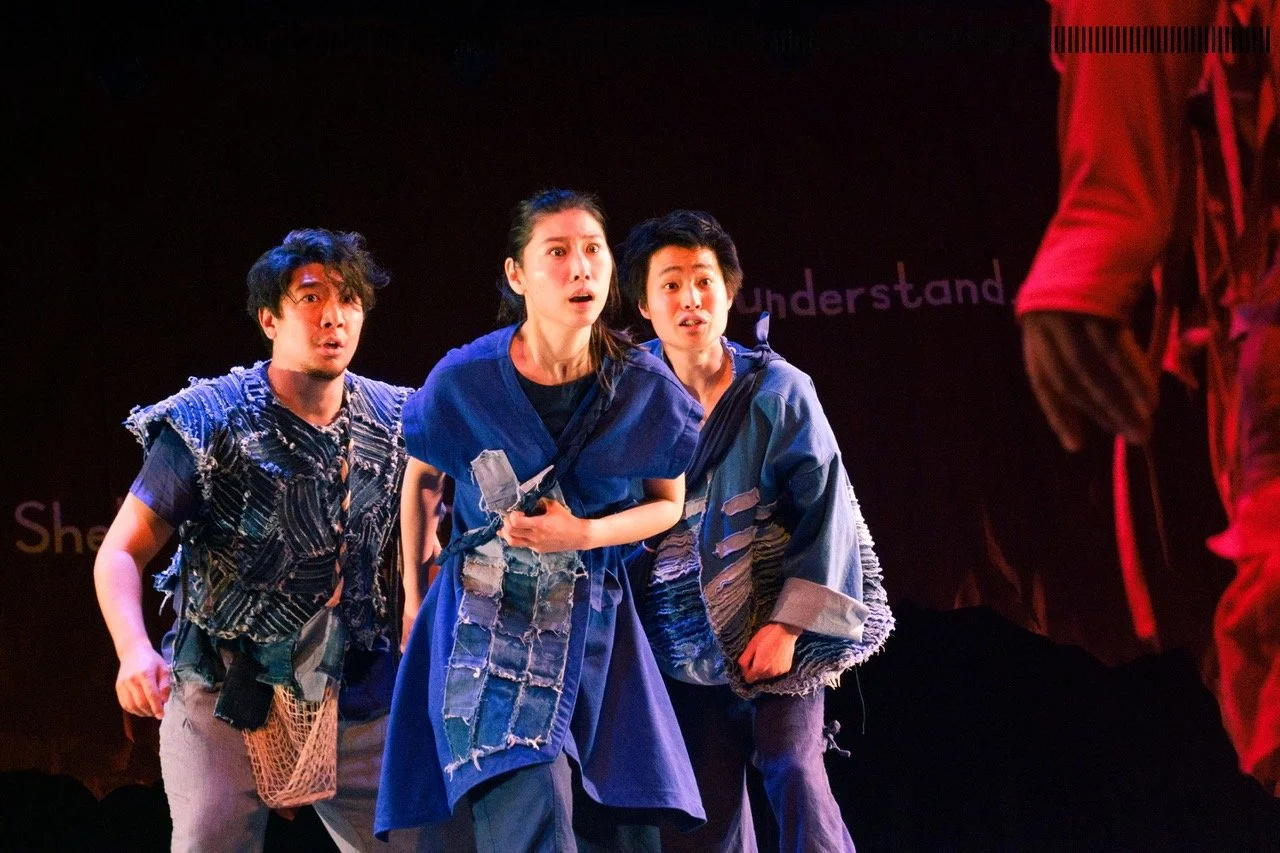
(Left to right) Ashley Wright as Falstaff, with Merry Wives of Windsor costars Melissa Oei and Jennifer Lines (photo by Emily Cooper); the Bard on the Beach festival site at Vanier Park (Tim Matheson photo)
Bard on the Beach presents The Merry Wives of Windsor on the BMO Mainstage in Vanier Park from June 9 to September 19
NO LESS THAN Orson Welles once declared the character Sir John Falstaff to be William Shakespeare’s greatest creation. This remains a controversial take, and Welles certainly had a vested interest, having cast himself as the dissolute knight in his film Chimes at Midnight. The truth is, though, that Falstaff was one of Shakespeare’s most celebrated characters during the Bard of Avon’s own lifetime. After providing the comic relief in Henry IV, Part 1 and Henry IV, Part 2, Prince Hal’s erstwhile companion proved so popular with audiences that Shakespeare wrote a spinoff, The Merry Wives of Windsor, giving Sir John top billing.
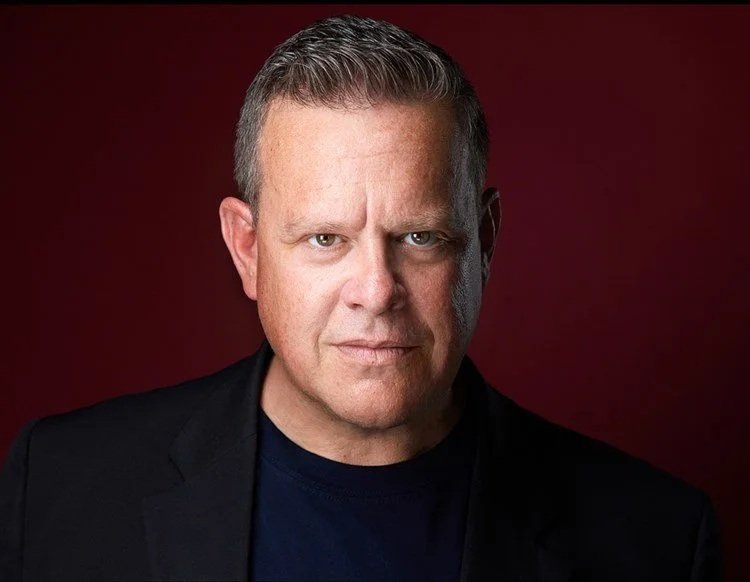
Ashley Wright
It’s a credit to Shakespeare’s deft hand with characterization that a man who on paper should be irredeemably repugnant—Falstaff is a gluttonous, licentious schemer, and a drunkard to boot—is generally accepted as an endearing rogue.
“Falstaff is such a lovable, likeable character that even his faults, people sort of look over,” actor Ashley Wright tells Stir. “He’s one of those bumbling fools that everyone loves.”
Wright points out that, while the characters in most of Shakespeare’s plays have sources—they’re based on historical figures like Julius Caesar and Richard III, or drawn from earlier literary works—Falstaff is Shakespeare’s own. Sure, the Bard may have taken some inspiration from several actual medieval knights (John Oldcastle, who led an uprising against Henry V and the Catholic Church, and Sir John Fastolf, who fought against Joan of Arc’s forces in the Hundred Years’ War), but Falstaff as we know him is truly a character of Shakespeare’s own invention.
“I suppose Orson Welles may be correct,” Wright says. “Of course, I’m biased as well, because I tend to play this character a lot. Yeah, I would say, if not the best, then he’s certainly up there as a very lovable, unique, great creation.”
The Port Coquitlam–born actor will play Falstaff this summer in Bard on the Beach’s latest production of The Merry Wives of Windsor, in which Sir John, newly arrived in Windsor and finding himself in a spot of financial trouble, sets out to seduce and swindle Mistress Ford and Mistress Page, the spouses of two prominent and wealthy local gentlemen. This goes about as well as you might expect, and much hilarity ensues.
“In 2016 and 2012 I did Falstaff at Bard, and it was set in the 1960s—in Windsor, Ontario, was the conceit—and the time before, I did it in Edmonton, and it was set in the 1930s, and Falstaff was a silent-move star,” Wright says. “And this time around, we’re setting it in 2026, and it’s at a community centre in Vancouver. All the characters go to the community centre, and there’s lots of hijinks and frivolity.”
To clarify, that community centre is located in a fictitious, soccer-obsessed Vancouver suburb called—you guessed it—Windsor. The particulars of time and place don’t have much bearing on the story, however. Wright points out that, even though it is ostensibly set in the early 15th century, Shakespeare effectively wrote Merry Wives (which was published in 1602) as if all the action were taking place in his own time.
“You can set it anywhere you want, really,” Wright says. “You could set it in outer space. Wherever it’s set, wherever the director decides to place the play, the circumstances are still the same, right? Falstaff is broke, he’s a bit of a horny bugger, and so he decides to seduce these wives to gain access to their money and have a bit of fun on the side. That never changes, that’s always the same. Even though it’s a different locale and a different era, I still feel my job is pretty much the same. I still have the same motivations, I still have the same desires, and a need for money, so I’m always happy to try a new Merry Wives, you know?”
It’s fair to say that Wright knows this material inside and out. In addition to his wealth of experience portraying Falstaff, he also directed The Merry Wives of Windsor for the Freewill Shakespeare Festival in Edmonton in 2017.
“This is the first time that I’ve acted in Merry Wives since directing it,” he says. “It’s always a treat to remount the play with a different company and conceit. I feel my job as an actor is to buy into the director’s vision and help them achieve what they are hoping to accomplish. As soon as an actor gets too all-knowing, or they have the answer, it’s not a good outcome,” Wright continues. “I’ve seen it happen a few times. Buy in 100% to what the director’s take is and you’ll be a much happier actor.”
Wright knows he’s in safe hands with Rebecca Northan, who’s directing the 2026 Bard on the Beach production of Merry Wives. Fans of delightfully twisted takes on Greek classics should also catch Northan in full latex-masked goblin mode in Goblin:Oedipus at this year’s festival.
“She is absolutely fantastic,” Wright says. “She brings something really unique to Shakespearean comedies, and that’s her whole improv background. She created that show Blind Date, which went on for 20 years all over the country and into the States. She brings a very refreshing take on it. I just love working with her.
“It’s been a real eye-opener—and I’m going to steal a lot of her techniques when I direct again,” the actor adds with a suitably Falstaffian chuckle. 

Related Articles