Theatre review: Gleefully chaotic Goblins dismantle Oedipus at Bard on the Beach
Wug, Kravga, and Moog deliver a take on Sophocles’ Greek tragedy that, in addition to copious amounts of crude humour, has its share of chillingly effective moments
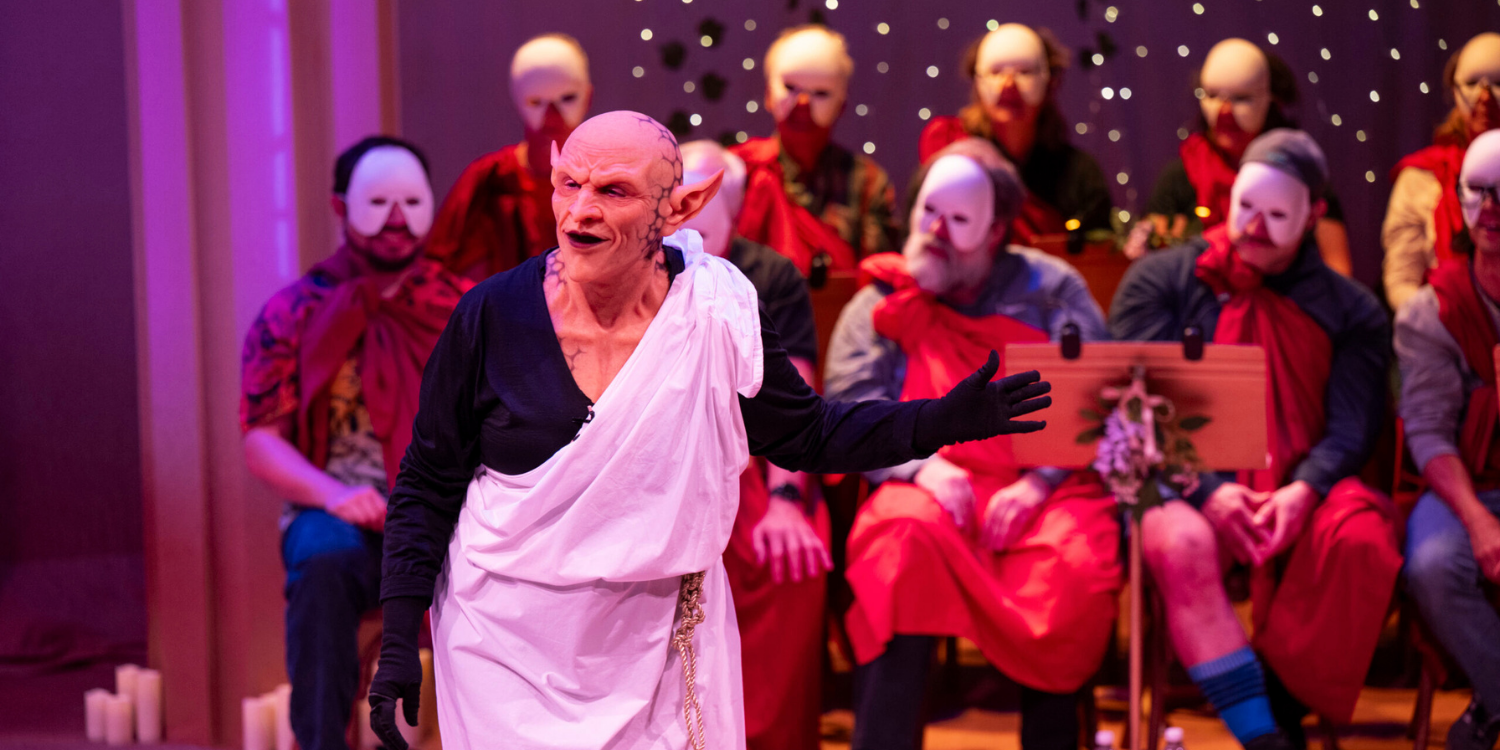
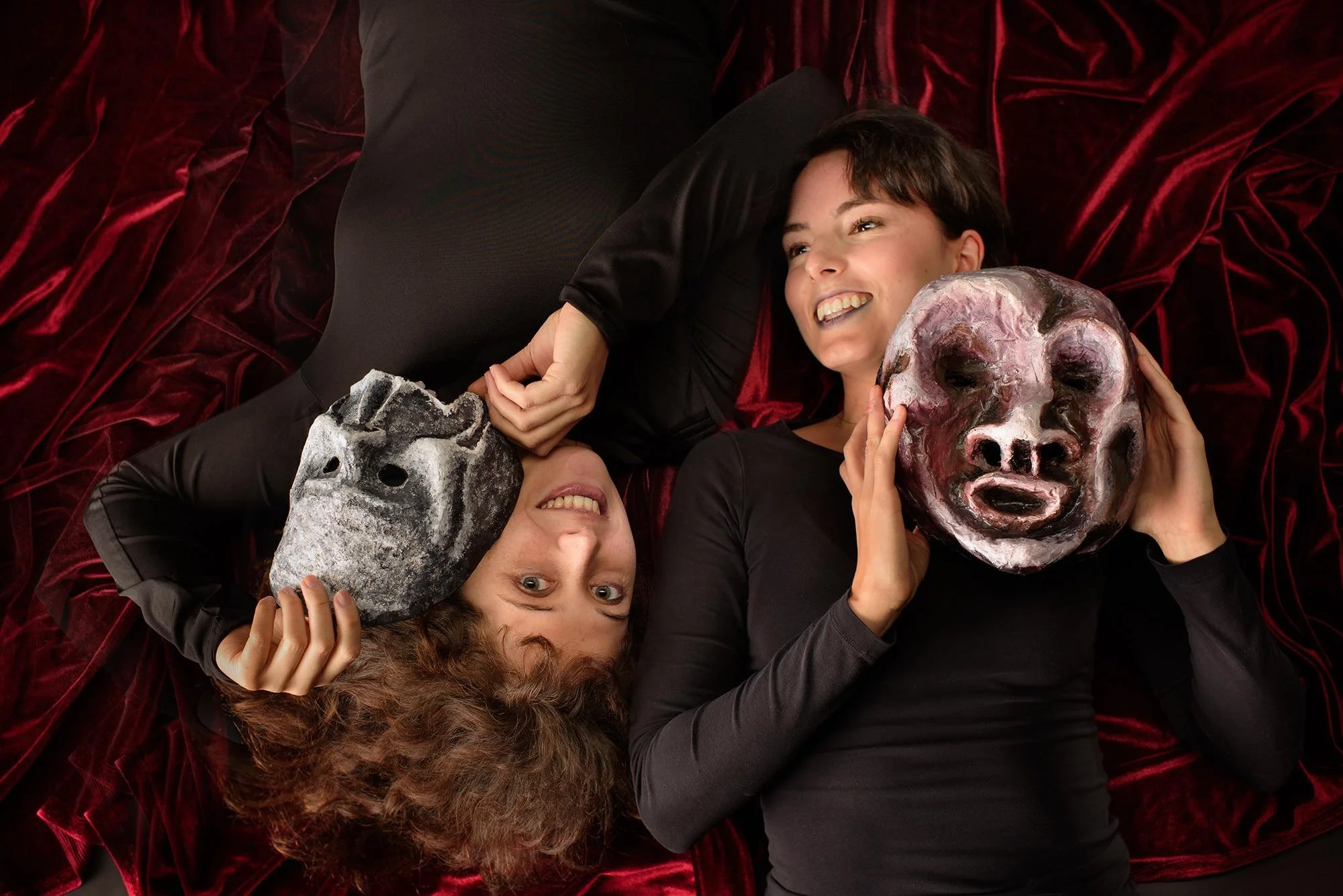
Goblin:Oedipus. Photo by Emily Cooper
Bard on the Beach presents Spontaneous Theatre’s Goblin:Oedipus at the Douglas Campbell Theatre to September 19
THE GOBLINS are back. But you probably already knew that if you’ve paid even minimal attention to what’s going on at Bard on the Beach this year. They’re hard to miss.
There’s something almost automatic about our response to these characters. The fleshy realism of their masks is just unsettling enough to make anyone pause (they’re undeniably creepy), but something about the permanent little smirk carved into their faces makes it really hard to not want to approach or at least keep looking.
They want to keep searching for us, too. That’s why they’re back, broadly speaking. If the Goblins have established any lore by now—and this is only their second summer at Bard—it’s that they’re chaotic, quite chaotic, sure, but they’re also insatiably curious; about theatre, about humanity, about Dionysus-style debauchery. They’re as interested in us humans as we are in them.
It’s a fun, reciprocal dynamic. The audience loosens right up. Before long, following the Goblins on a naughty descent into madness starts to feel like the only sensible thing to do.
Returning after Goblin:Macbeth, the trio of Wug, Kragva, and Moog (whose actors wish to remain anonymous) have traded Shakespeare for Sophocles. I suspect even people who didn’t warm to their first outing will have more fun with this one. Whether that’s because the Goblins have settled into their own mythology or because Sophocles turns out to be a more willing accomplice than Shakespeare, I’m not exactly sure.
Before they even get to Oedipus, the Goblins pause for a brief history lesson on Greek theatre. It quickly devolves into lamenting that the Dionysian festivals used to involve public orgies, a tradition abandoned, they regret to inform us, for insurance reasons. This is the kind of thing the Goblins are great at: theatre history and crude silliness.
Some other heavy hitters of the night include the repeated use of the expletive motherfucker. A cheap laugh, some might argue. But when Wug, playing the newly truth-stricken Oedipus, asks, “What insults will you hurl at me?” and a member of the chorus—made up of brave audience volunteers who punctuate the story with hilariously synchronized reactions—fires back with a perfectly timed, improvised “Motherfucker!”, it's hard not to admire the Goblins’ ability to keep finding new, or at least increasingly sillier, ways to make the same crude language funny.
Much of the comedy also comes from the Goblins criticizing each other’s creative choices. By now they’ve settled into distinct personalities; Wug is the troupe’s resident stickler, forever trying to keep the others on the straight and narrow, which makes him the perfect Oedipus. Annoyed by Kragva’s decision to stage violence with pool noodles, he reminds her they’re doing “Greek theatre, not this pornographic Roman bullshit.” Kragva, meanwhile, is the group’s gleeful saboteur, which makes it especially fun to see what she will do with each of the multiple roles she steps into throughout the night.
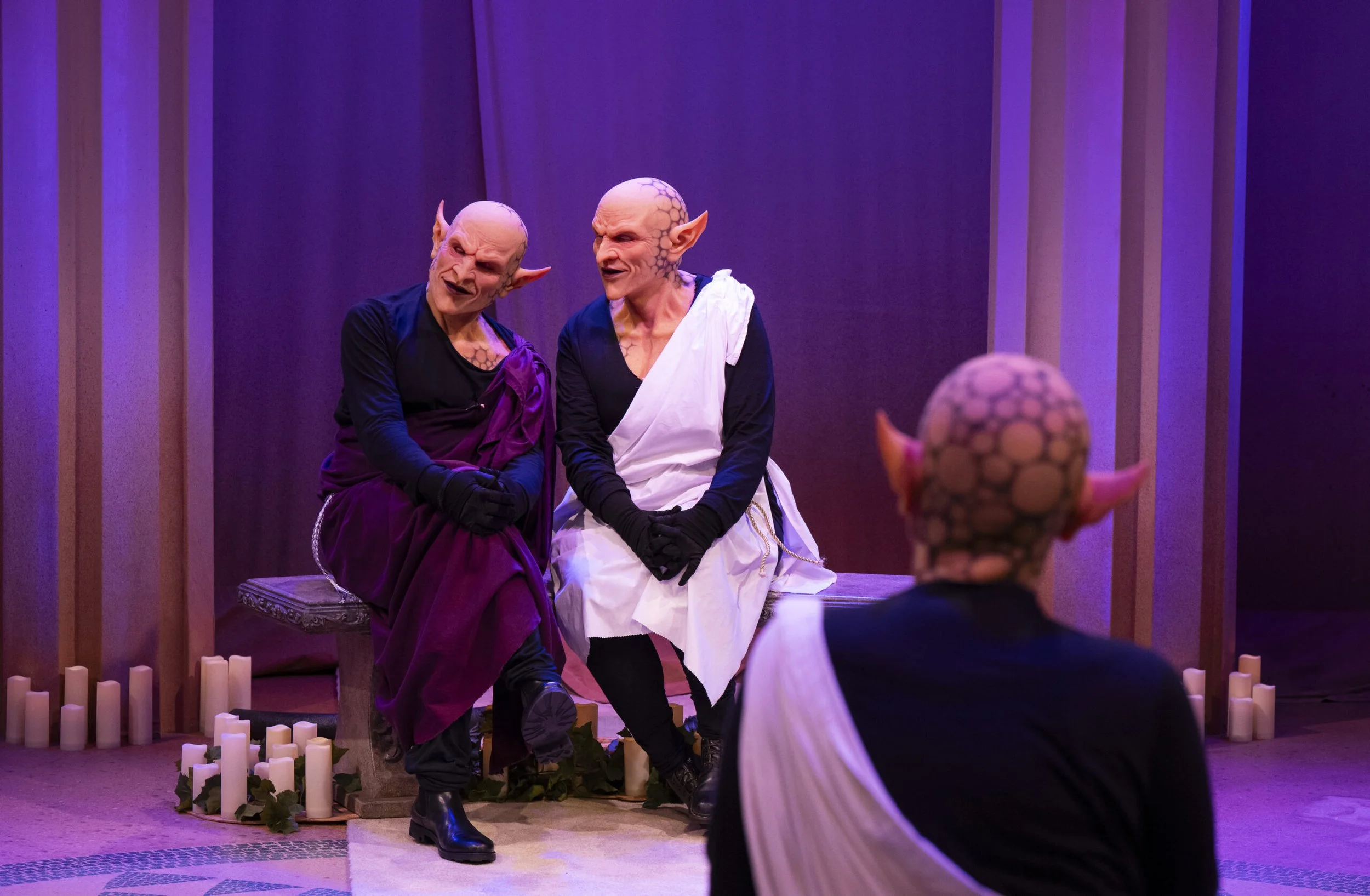
Goblin:Oedipus. Photo by Emily Cooper
Moog occupies an entirely different frequency. Responsible for the evening’s live musical accompaniment, he seems to play whatever melody first pops into his head. Somewhere around the point when suspicion surrounding the killer of Laius, Jocasta's first husband, begins to build, Moog decides the evening has become a film noir. Out comes the jazz. “It seemed like you were launching into a murder mystery,” he says with a shrug.
For all their delight in taking Greek tragedy apart, the Goblins know exactly how to put it back together again. There’s a chilling sequence, accompanied by Moog’s virtuosic layering of instruments and something close to throat singing, where Kragva recounts the fate of Jocasta and Oedipus as the chorus react in eerily perfect unison. It builds toward a terrifying image of Wug’s Oedipus that will be hard to get out of your head.
This is only the Goblins’ second time around putting on their theatrical hijinks at Bard on the Beach, but the trio already feel like mainstays. They’ve refined their particular brand of lowbrow comedy into something I suspect only erudites—or at least die-hard theatre-makers—could pull off. Here’s hoping they decide us humans are still worth studying. 

Related Articles