At the Vancouver Folk Music Festival, the eclectic Valerie June promises a little bit of everything
The American singer-songwriter plays rock ’n’ roll, blues, folk, gospel, and country, along with well-chosen cover versions of songs by Nick Cave, Gillian Welch, and Duran Duran

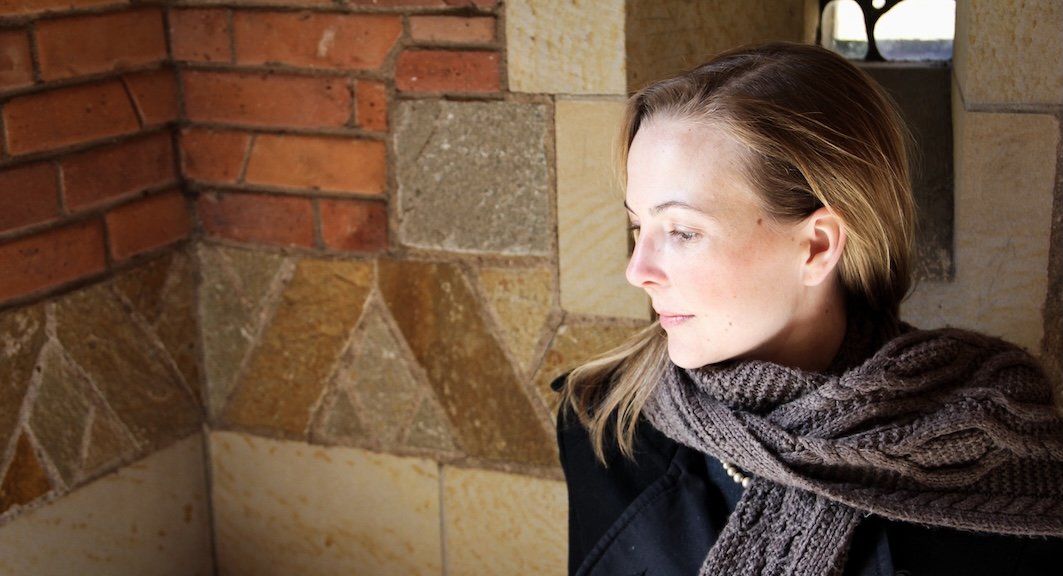
Valerie June. Photo by Travys Owen
Valerie June performs on the main stage of the Vancouver Folk Music Festival at Jericho Beach Park on July 19
WHEN STIR CONNECTS with Valerie June for an interview, she’s in a most unusual place: at her home in Memphis, Tennessee. The celebrated singer-songwriter hasn’t been there much in recent weeks because she’s been on the road, where she’ll continue to be until the end of summer, alternating between sets at soft-seaters and on outdoor festival stages.
“It’s been a mix, because I’ve had some festivals in Scandinavia and then venue performances as well, and venue performances in the U.K.,” says June. “And then with Ani DiFranco, I have been opening for her. She’s so amazing. And that was all in venues, so it’s kind of a mixture. But in Canada, I’m gonna do Ottawa Blues, Vancouver Folk, and Calgary Folk, so I have three festivals and two theatres.”
June is known for the wide-ranging nature of her work, whether that’s the psychedelic soul of the title track from her 2013 LP Pushin’ Against a Stone or the ebullient electric gospel of “Joy, Joy!” from last year’s Owls, Omens, and Oracles. A masterful tunesmith in her own right—or, at the very least, an effective conduit (more on that later)—the singer and multi-instrumentalist has also been hailed for her sublime versions of songs by an eclectic array of artists, from Nick Drake (“Pink Moon”) and Gillian Welch (“Look at Miss Ohio”) to Duran Duran (“Ordinary World”) and Nick Cave and the Bad Seeds (“Into My Arms”).
While she doesn’t reveal exactly what will be on the setlist when she takes to the stage at Jericho Beach for the Vancouver Folk Music Festival with her ace rhythm section (bassist Matt Marinelli and drummer Caito Sanchez), June promises that it will be a bit of everything.
“We perform songs from pretty much all the records, and we do a few covers as well,” she says. “It’s all across the spectrum of what I do, as far as some rock ’n’ roll songs, some blues, some folk, some country. It’s everything. Because I have so many records that I’ve done, I just like to mix up songs from each record, because different people come to my music at different times, and I just think sometimes it’s nice if something’s familiar to ’em. But it’s also cool to go back and bring something that’s older and use that too.”
June is an engaging interviewee, with a warm, easy laugh and a Tennessee accent that imparts an aura of down-home wisdom to whatever she says. Moreover, the conversation takes an especially interesting turn when it comes to her creative process. June doesn’t take all of the credit for writing her music; as she experiences things, she “receives” the songs from somewhere outside herself.
“To me, when I’m working in that space, co-creating with something that’s invisible—that’s another realm or another world—that’s so magical to me,” she says. “And that’s where I like to be more than anything, more than even performing or touring. I like to be communicating with whatever realm that is that gives us songs and music.”
The songs June receives are not always fully formed—sometimes she’ll get a single line of lyrics or the beginnings of a melody—nor are they all necessarily suitable for mass consumption.
“I have songs that are for me and me only,” she reveals. “Like, I have the eating song, I have the cooking song, I have a watering-the-plants song. I have so many songs, but nobody wants to hear those. I just sing them while I’m doing things, and they’re my songs. Songs about my life, or things that I’m doing in the day. I’ve been like that ever since I was little. I’ve just had different voices that I sing along with that come to me in my head. They’re very entertaining, but as the person who’s receiving them, I have to choose. Like, ‘Is this for the world, or is this just for me?’”
One that was most certainly meant for the world is “Endless Tree”, the third track on Owls, Omens, and Oracles. Over a swelling, near-symphonic soundscape, June explores the timely theme of keeping hope alive in an era of desolation, using the natural world as an analogue for the human condition: “Are you ready to see/A world where we could all be free?/As branches of an endless tree.”
“It’s something that we have to ask every day, and hopefully we can get closer to figuring out the answer,” June says of the song’s central question. “But we don’t have to have all the answers, either, because the world’s problems are a lot for an individual to take on. But I think we do have to take them on—one little leaf at a time, one little flower petal at a time. And so we all have our part to play in nature, in making this planet a beautiful garden, but we can feel overwhelmed. But I think it’s really cool to have songs that bring us back to how simple it can be. It doesn’t have to be huge. It can be how you are relating to people who disagree with you, how you are acting at the post office or the grocery store or in traffic, you know? And so that song always reminds me of that.
“It’s definitely one of those things that’s more a question mark than a period,” she notes. “It’s more like, ‘What is possible?’ And I think when we go into things with this wonder, and not knowing for sure but having hope, then we start to get a lot of gorgeous surprises, and even miracles. It’s possible. But it isn’t possible if we can’t even ask the question, ‘Hey, how gorgeous can this world be?’ It’s a scary question to ask in times like these.” 

Related Articles