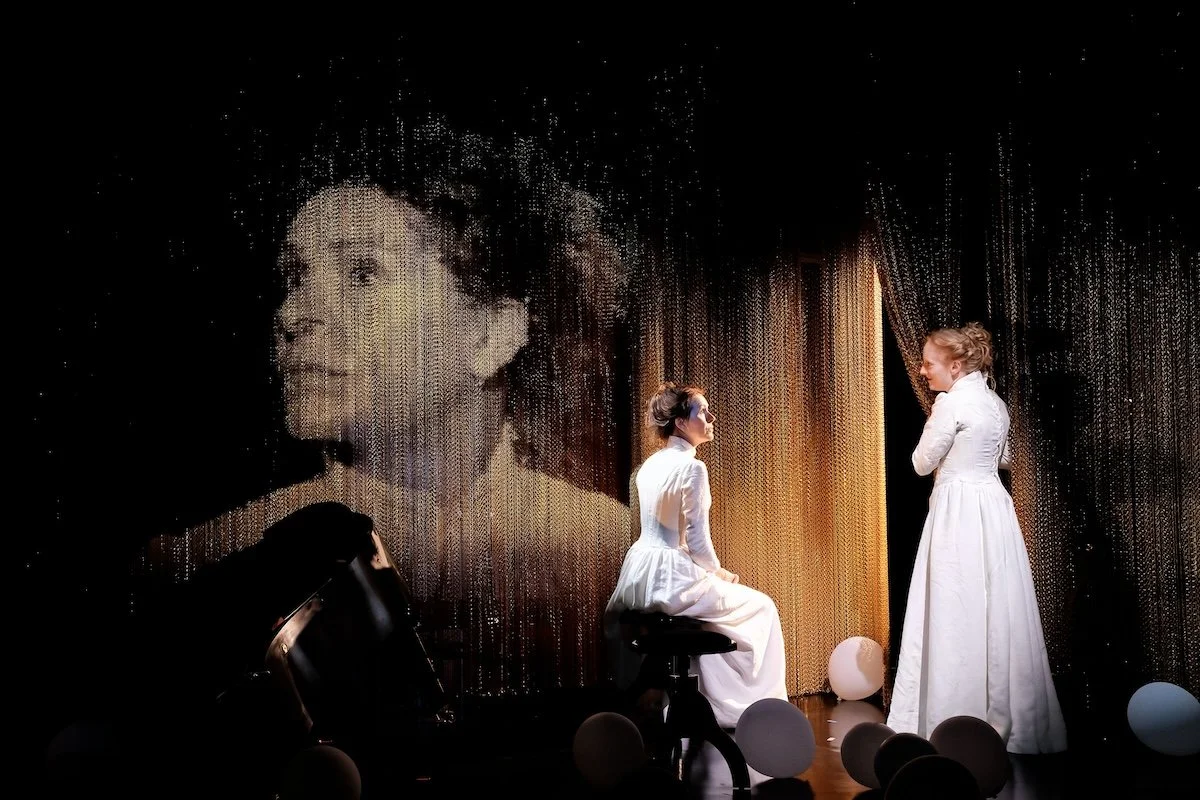
Theatre review: A Streetcar Named Desire unsettles with mix of charm, fragility, and violence
Ensemble Theatre Company taps into the humid haze of a Tennessee Williams classic where love and self-deception mingle

Ensemble Theatre Company’s A Streetcar Named Desire, with Brynna Drummond and Terrell Clarricoates. Photo by Javier R. Sotres
Ensemble Theatre Company presents A Streetcar Named Desire at the Jericho Arts Centre to July 18, as part of Ensemble Theatre Festival: Bloodlines
“A WOMAN’S CHARM is fifty percent illusion.”
Fading Southern belle Blanche DuBois has a knack for saying the quiet part out loud. Having lost Belle Reve, her family’s once-grand Mississippi estate, she arrives at the cramped New Orleans apartment shared by her loving younger sister Stella and Stella’s hostile husband, Stanley Kowalski, carrying enough lace, costume jewellery, and Southern gentility to assemble multiple versions of herself. The apartment she’s walked into, however, has very few hiding places for her illusion to live in.
Chris Lam’s staging of A Streetcar Named Desire finds something both alluring and stifling in that porosity.
Emily Dotson’s open-plan set strips the Kowalski residence back almost to its frame, its missing walls leaving the audience with very little distance from the action. A comically narrow red curtain is the apartment’s only attempt at privacy, and a flimsy one at that. The effect for everyone involved, I overheard an audience member say, is as immersive as it is invasive.
Blanche spends almost as much time behind that curtain as she does in the rest of the apartment. She emerges each time, rearranged with another dress. Fresh from the bath, she pins a delicate fascinator onto her stringy, wet hair, in an absurd and deeply moving image.
Cat Smith understands that Blanche’s performance of herself is never static. She slips between charm, flirtation, and shrill melodrama, sometimes within the span of a few lines. Playwright Tennessee Williams gives Blanche some delightfully acerbic dialogue, and Smith lands it with great comic timing, earning some of the evening’s biggest laughs just before pulling the rug out from under us.
It’s an almost impossible role. Blanche has to remain charming long after she’s stopped being trustworthy, something that doesn’t take very long at all. The way she survives the rapidly deteriorating situation she finds herself in is with one more fib, one more joke, one more drink, one more carefully curated outfit. Smith makes you understand why, for so many years, her strategy worked.
Stanley, on the other hand, has no patience for any of it. Her foil in many ways, he seems all brute fact to her elaborate fiction. It’s true, he doesn’t have as many costumes: a bowling shirt, a black T-shirt, and more often than not, no shirt at all. But his masculinity is no less performed than Blanche’s own femininity of lace, perfume, and carefully softened light.

Cat Smith and Terrell Clarricoates in A Streetcar Named Desire. Photo by Javier R. Sotres
Terrell Clarricoates certainly has Stanley’s physical confidence. He prowls the apartment, leaning into the mix of animal magnetism and cunning astuteness audiences have come to relish in the role. That part works, but I found myself wanting more variation in his performance.
Stanley’s violent outbursts are where Clarricoates is most convincing. Chairs hurl, plates smash, arguments erupt. Seated only a few feet away, you can feel the audience collectively tense up.
In the atmosphere the production team creates, the apartment also never quite separates itself from the neighbourhood around it. With little more than the suggestion of a front door, the sounds of jazz and train whistles spill in, hot, humid haze breaks up the almost noir-like lighting inside, and neighbours drift through the edges of scenes as arguments spill in from upstairs. Caught cheating, a neighbour tells his wife, “I only do that with the other girls because I love you.” It gets a laugh, because it sounds so at home in this world where love and self-deception live together.
Brynna Drummond’s Stella knows her husband’s volatility as well as the fragility beneath her sister’s charm better than anyone. She laughs easily and loves openly. It’d be easy to play her as hopelessly naive, but Drummond’s empathetic performance doesn’t ask us to believe that Stella doesn’t see what’s in front of her, but instead to consider what she’s willing to live beside.
Mitch, Stanley’s soft-spoken poker friend, also arrives with some gentleness. In this staging, Connor Riopel plays the character with an old-fashioned sincerity and an almost naive infatuation with Blanche. But their courtship has an awkward sweetness to it, and Riopel wisely resists playing Mitch as either a fool or a saviour. For a little while, he’s completely uninterested in separating Blanche from the stories she tells about herself, and moments of sincerity within that are some of the night’s most affecting. In Chris Lam’s hands, A Streetcar Named Desire becomes a tragedy that’s less about illusion than about the cost of refusing it. 

Related Articles