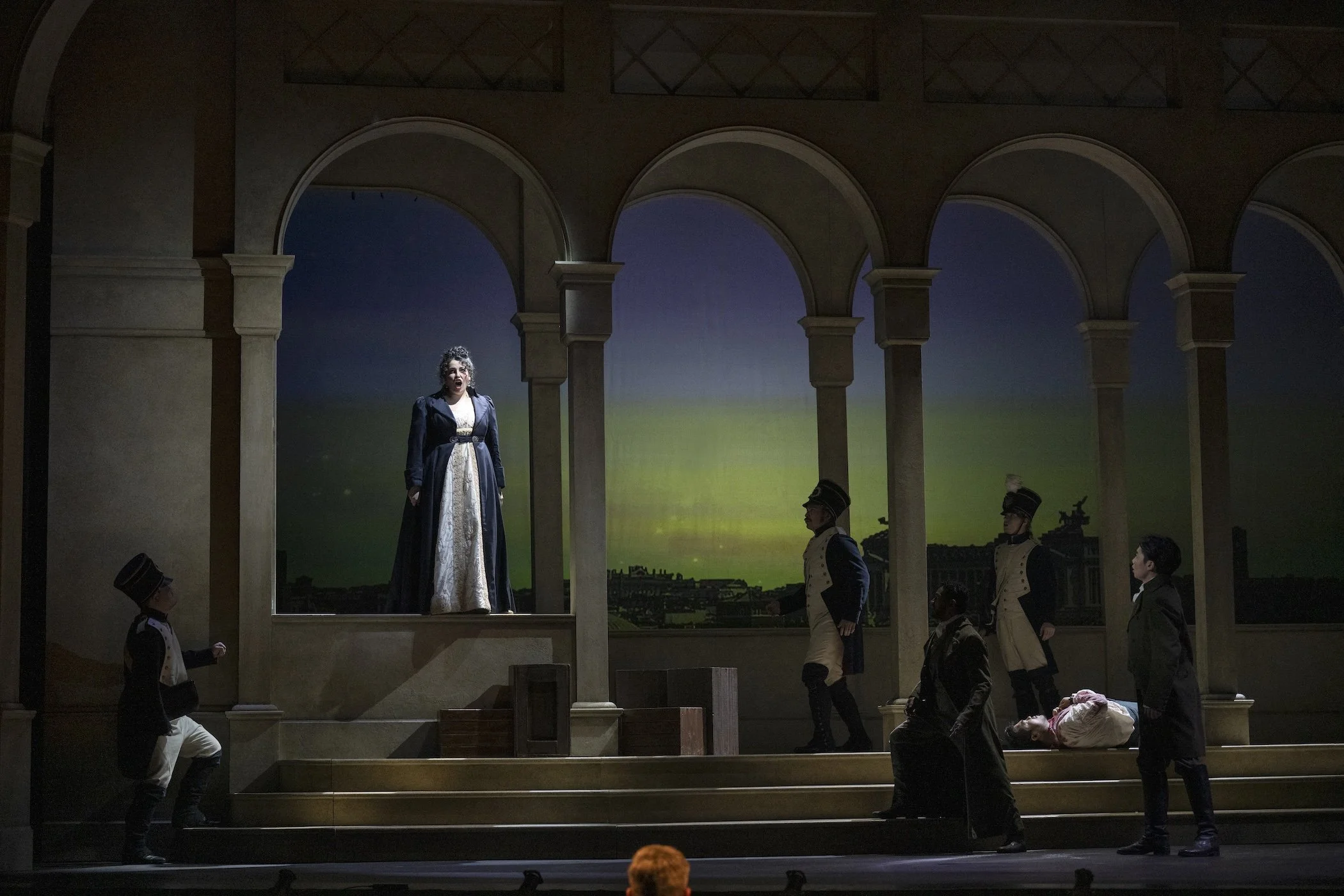
Così fan tutte gets a vintage-Canadian refresh under director Robert Herriot at Vancouver Opera
The Winnipeg artist brings experience as a tenor to a Mozart opera reimagined in a 1930s Rockies resort, complete with Mounties and log drivers
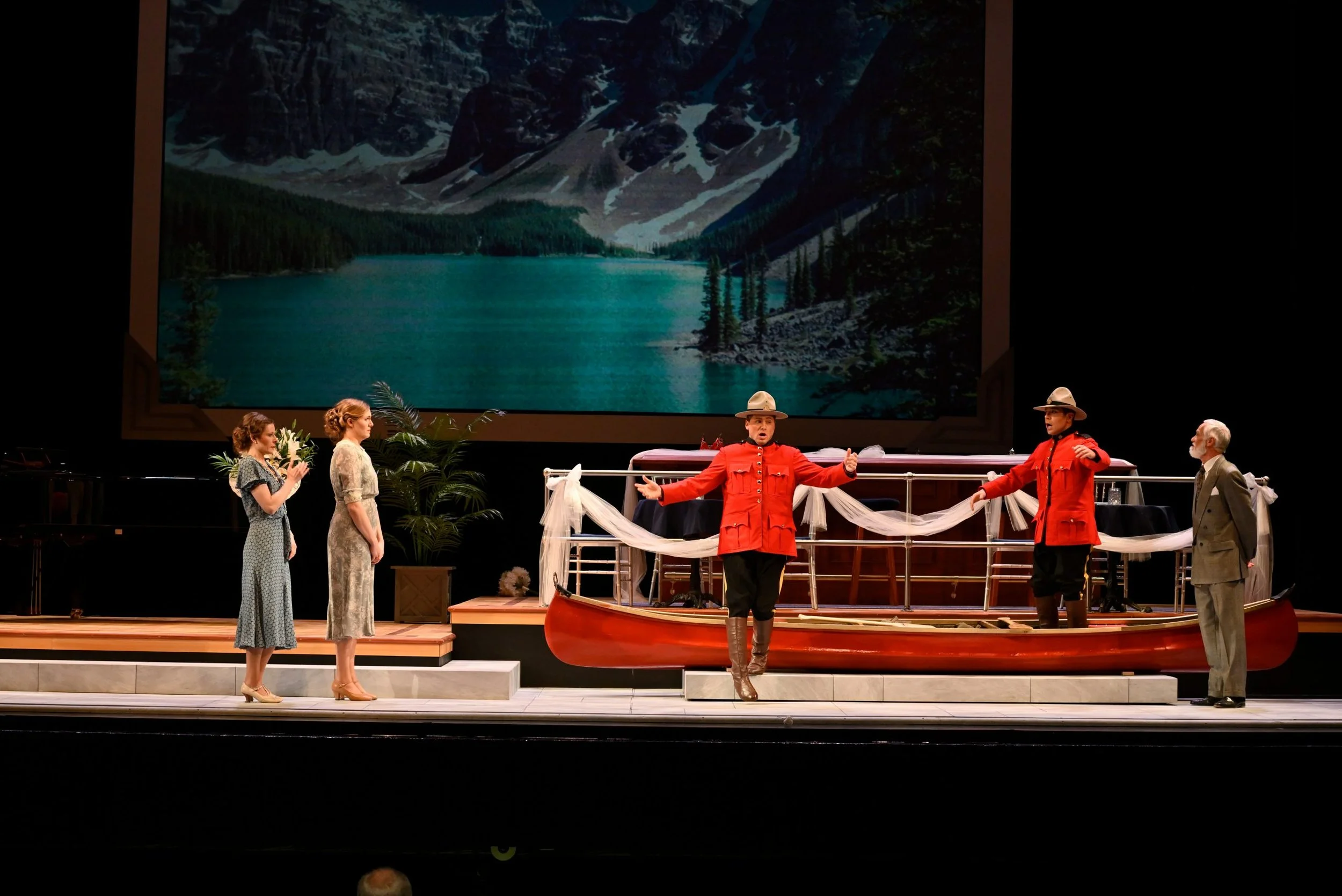
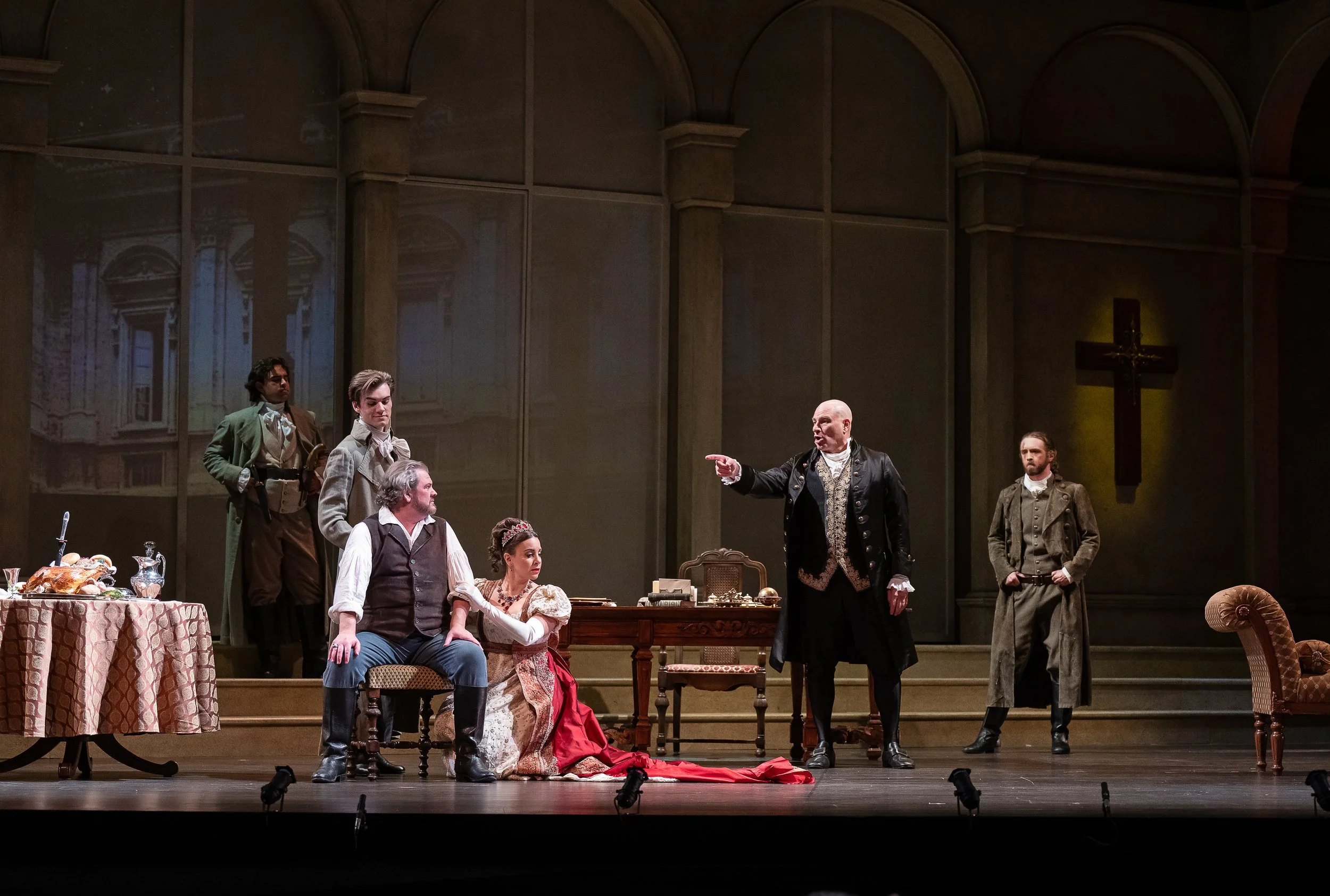
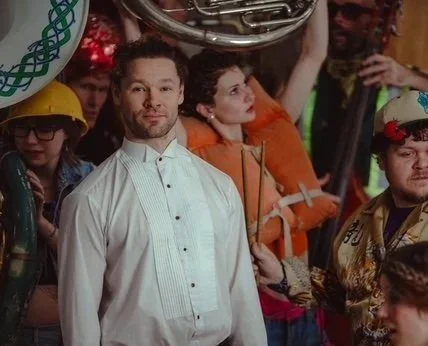
Manitoba Opera’s Così fan tutte. Photo by R. Tinker
Vancouver Opera presents Così fan tutte at the Queen Elizabeth Theatre on February 7, 12, and 15
ROBERT HERRIOT—SOON TO make his Vancouver Opera directing debut with Mozart’s Così fan tutte—is living proof that good things can come out of a debilitating case of stage fright.
After he pursued theatre at the University of Manitoba, his singing teachers convinced him to take his beautiful tenor to Toronto to study opera. Herriot went on to perform across the country—frequently in a state of anxiety.
“I hated performing,” the affable director tells Stir before rehearsals for his critically acclaimed, all-Canadian Così. “I had major stage fright. I did an opera here in 1995 and was terrified the whole time. And so I decided I would quit and pursue direction.”
That decision led to an opera career that has taken him around North America, working with companies everywhere from Edmonton and Calgary to Arizona and Utah—while always bringing a unique singer’s perspective to the helm. For years he had been mentored by beloved late Canadian opera director Michael Cavanagh, assisting a 1994 production of his The Rake’s Progress at VO.
And so this Così marks a bit of a full-circle moment for Herriot, with a clever reimagining of the sometimes problematic Mozart comedy. Set in a nostalgic Canadian West and populated by log drivers and Mounties, the vision being remounted here has earned raves in previous renditions at Opera Kelowna and Manitoba Opera.
Originally created at Manitoba Opera, with Herriot working with production designer Sheldon Johnson, it moves from Mozart’s original late-18th-century Naples to a 1930s Rocky Mountain resort that looks straight out of vintage postcards. Other references include the kitschy Canadiana of the silver-screen classic Rose Marie and the log-driving championships of the NFB animated short “Log Driver’s Waltz”. And anyone who’s visited Lake Louise will instantly recognize the iconic, shiny-red canoe.
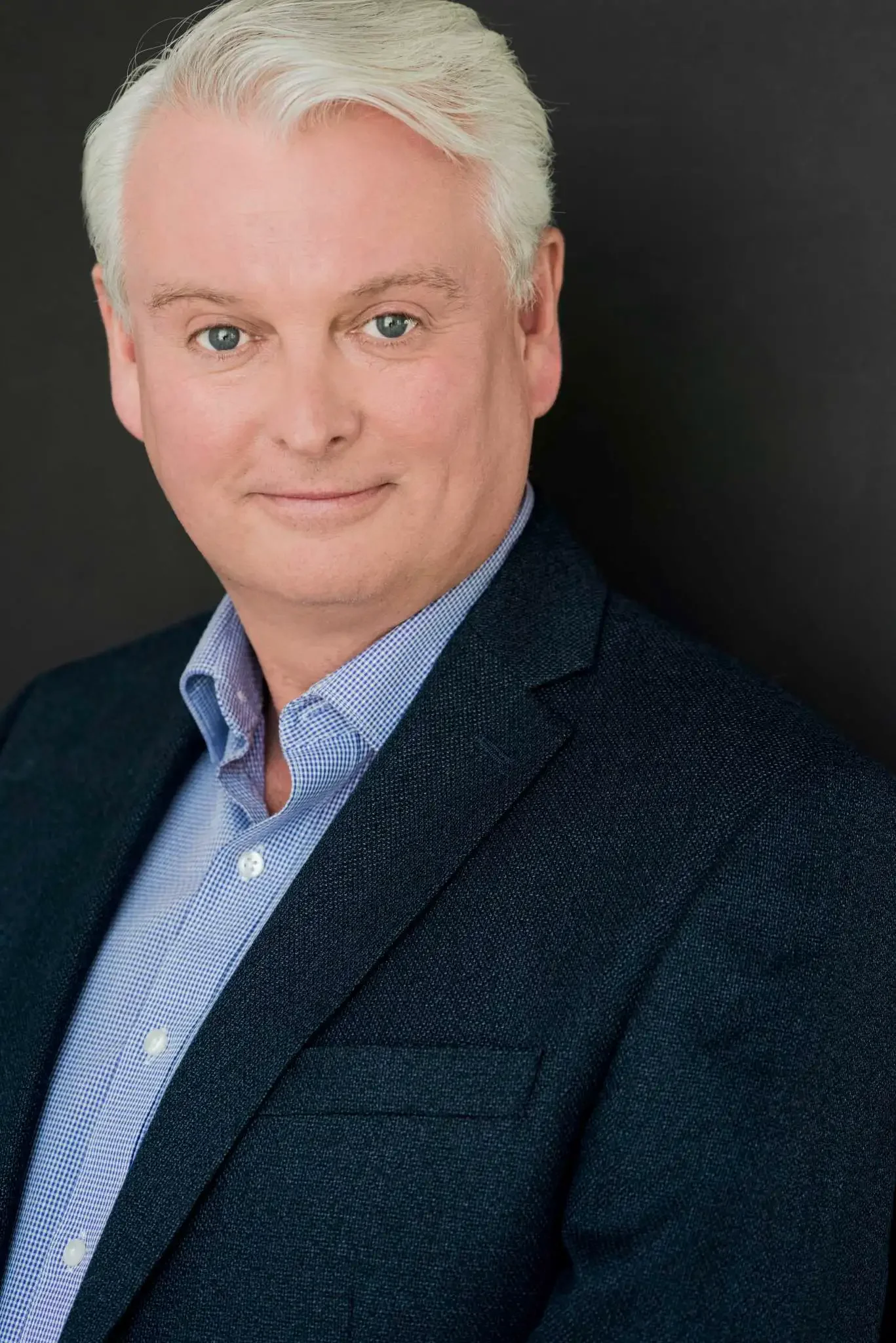
Robert Herriot
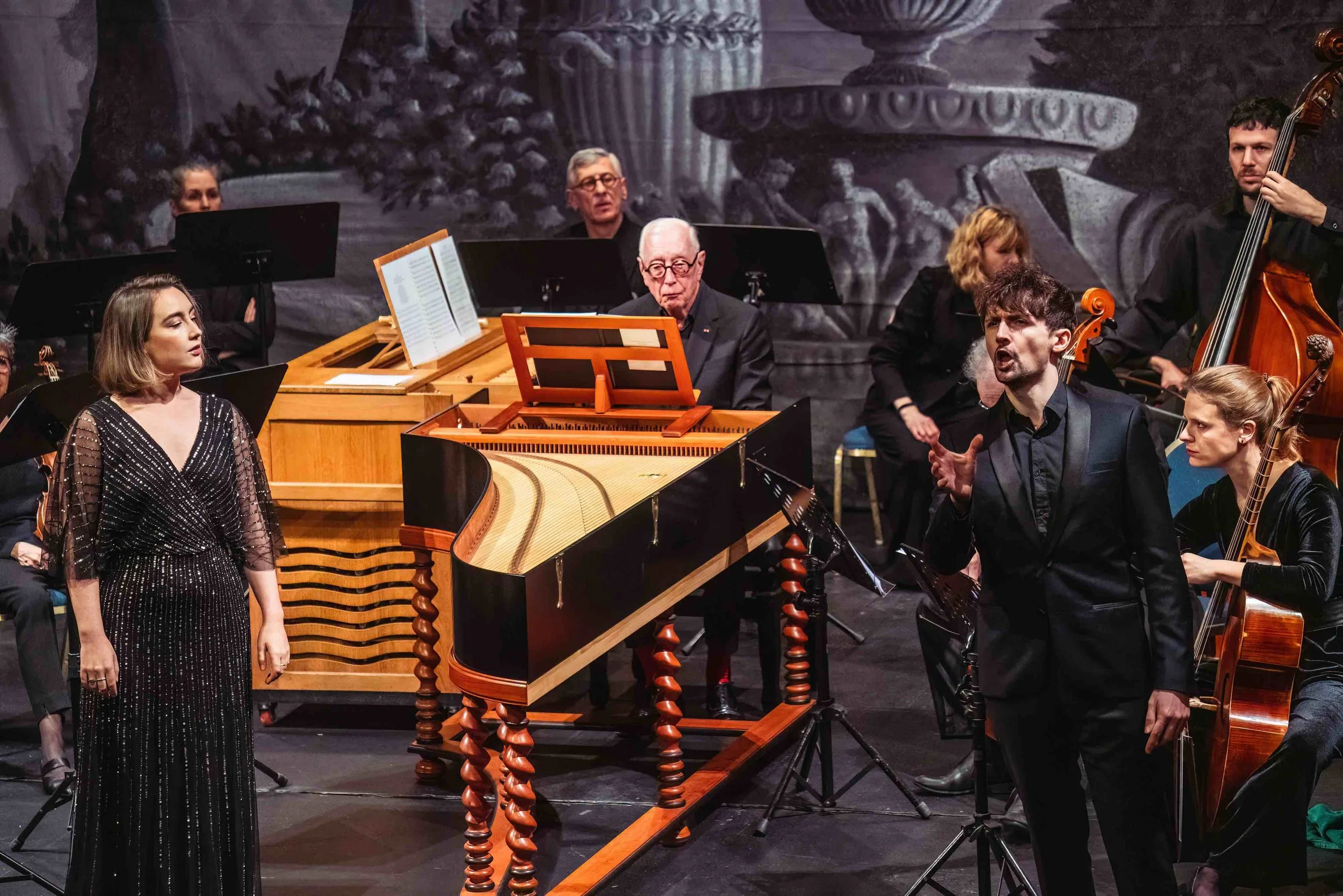
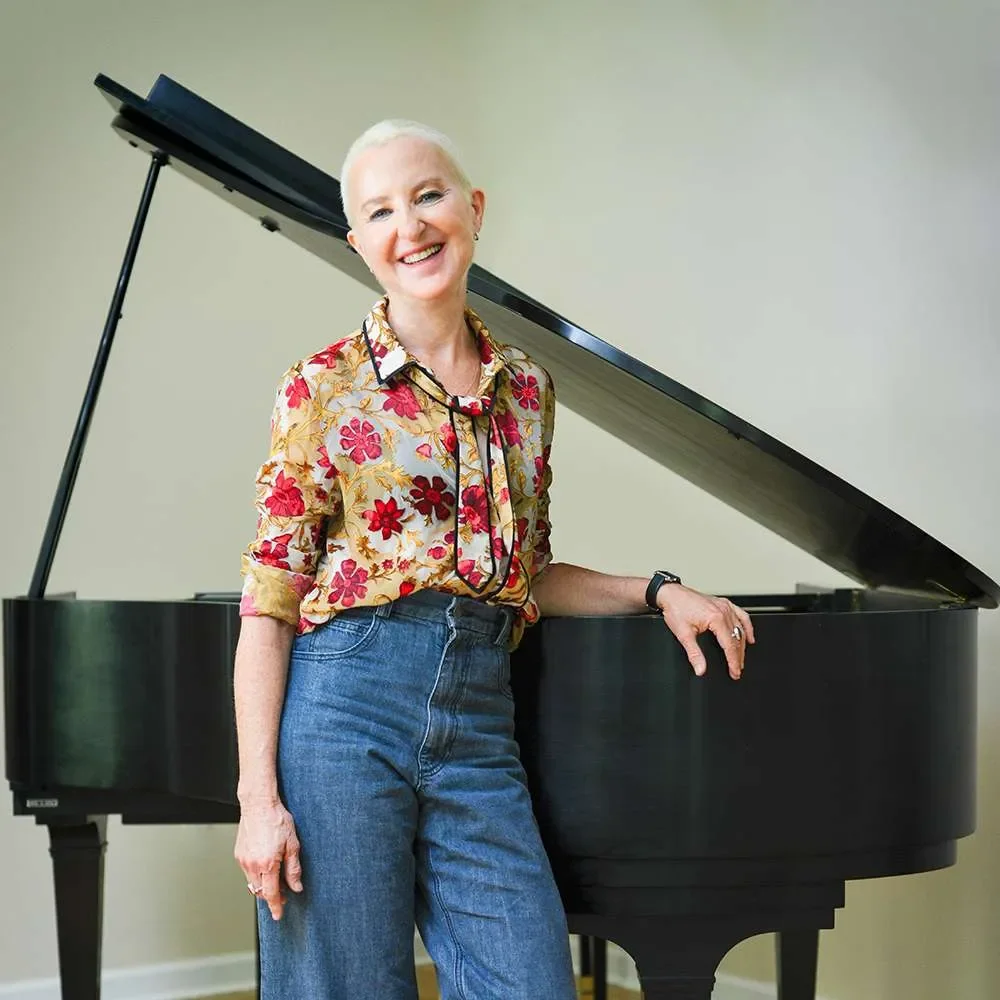
The opera buffa’s traditional continuo harpsichord? It’s replaced by a hotel lobby piano, with Tina Chang at the keys.
“The person who does the recitatives sits at a grand piano on the stage and interacts with the singers,” Herriot says. “Having her onstage is really a lot of fun. And they get to play around, interact, and the singers can sing to her—it’s a lot of fun. The pianist gets their own costume, which is stunning, and they get to, you know, drink scotch and smoke!”
The new setting offers rich comedic opportunity, the director reveals. “The chorus isn’t just servants: it’s made up of people who are travelling to this Banff Springs–type hotel,” he says. “There’s a contingent of women from the Bloor Street United Church, the ‘Ladies Brigade’. They’re all going on vacation with their husbands, who are not teetotallers, and they’re always looking for them and finding them in the bar. These women are swinging angry! The characters are really quite funny. I mean, they’re something that Margaret Atwood or Alice Munro would write about. So there’s that layer you can have fun with.”
Beyond the playful production design, Herriot’s vision evens the playing field between men and women. Mozart’s title for the opera infamously translates as “All women are like that”—a nod to how fickle women are seen to be. In the opera, the cynical Don Alfonso convinces his buddies Guglielmo and Ferrando that, given the chance, their fiancées, the sisters Fiordiligi and Dorabella, will prove to be unfaithful. To “test” that theory, the two men disguise themselves as swarthy hunks—in the case of this rendition, loggers in bushy beards and flannel—and the women quickly fall for them. In the original, that’s because, well, they simply can’t help themselves; “all women” are like that.
But Herriot takes a new approach that he thinks would better be titled “People are like that.”
“I won’t give the ending away, but we agreed that the piece is problematic in that its treatment of women is rather despicable,” he says. “So we did have long conversations about how to deal with that, and the solution we came up with worked beautifully. Opening night, I was surrounded by many people who were like, ‘Thank you for doing that!’
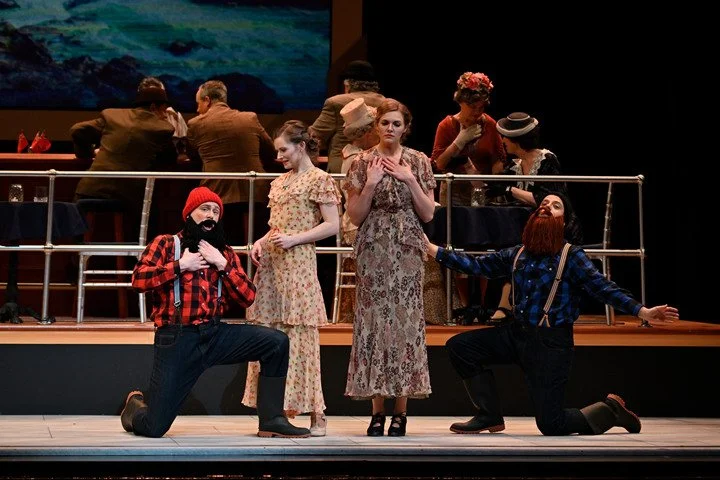
Manitoba Opera’s Così fan tutte. Photo by R. Tinker
“Like I said to the cast, ‘All people are like that’: I do think that we all have the capacity to love more than one person,” he explains. “It’s whether we act on it. But it does happen. People fall in love with other people all the time. There have been many movies made about that and the pain that that brings, and certainly that’s the case in this piece.”
Along the way, Herriot finds ways to draw on his own experiences as a singer to bring the best out of his performers.
“I think it brings an understanding of what the singers are doing and what they need to do,” says Herriot. “I can hear a singer sing a piece, and I’ll say to them, ‘On a level of one to ten, where are you in terms of difficulty?’” he continues. “And they’ll usually be very honest…and many times they’ll say, ‘Move me. Give me something to do!’ And I get that too, because you can get stuck as a singer, you can get stuck and then locked.”
The other approach Herriot brings from his background is detailed character work. In this Così, the more serious Fiordiligi and the lighthearted Dorabella are young tourists from Naples, freshly arrived on their first trip abroad.
“They’re now free to live their lives as young women and discover all of these things,” he says. “I mean, they’re Italian, so they’re most likely Catholic, and having been raised as a Catholic, I know what the constraints can be. So that was fun. And details like that really spur the character on.
“It’s important in any opera: it’s in the details,” he continues. “I’ve always thought that the tiniest of things may be imperceptible, but somehow, on some level, the audience gets it. So that’s kind of the way I look at direction: it’s got to be detailed. You have to have everything worked out. You’ve got to know what these characters want, and where they’re coming from.”
While polishing and rejigging all those intricate bits, Herriot’s singer side still gets to revel in Mozart’s sparkling music, conducted here by his long-time friend Leslie Dala. (Listen to the swoon-worthy Act 1 trio “Soave sia il vento” in the track below for an idea.)
“I’ve actually sung parts of Così fan tutte and it was some of the the happiest music I’ve ever sung—these ensembles are absolutely incredible,” Herriot says. And best of all, he can now safely immerse himself in those exquisite melodies and harmonies, the glistening orchestrations, the coloratura and the emotional highs and lows—without ever feeling crippling fear. 

Related Articles