SUBA Trio creates inspiring musical unity from Africa’s sublime sources
Although from different points on the map, pianist Omar Sosa, kora player Seckou Keita, and percussionist Gustavo Ovalles realized through improvisation that they were attuned to one another

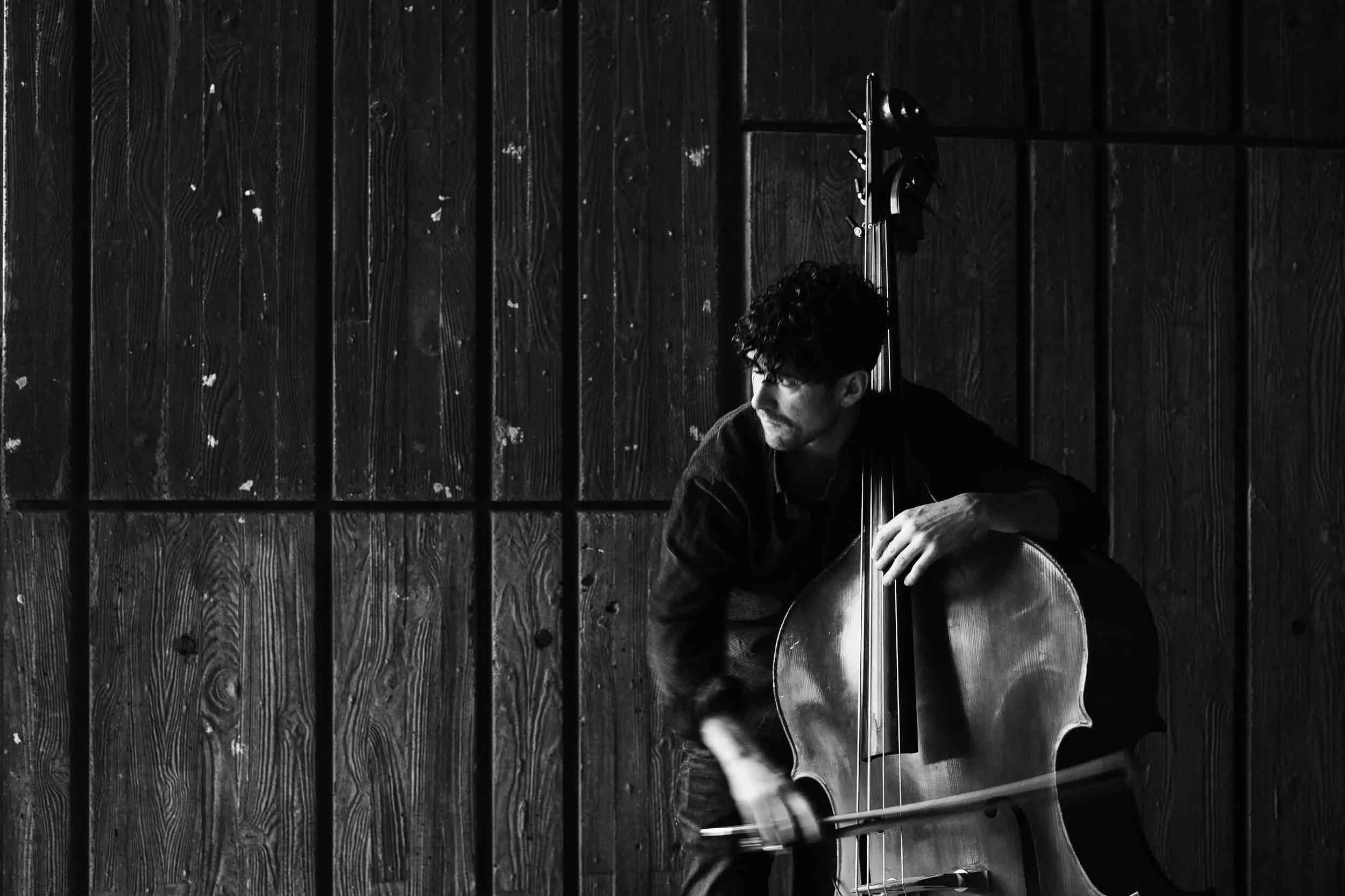
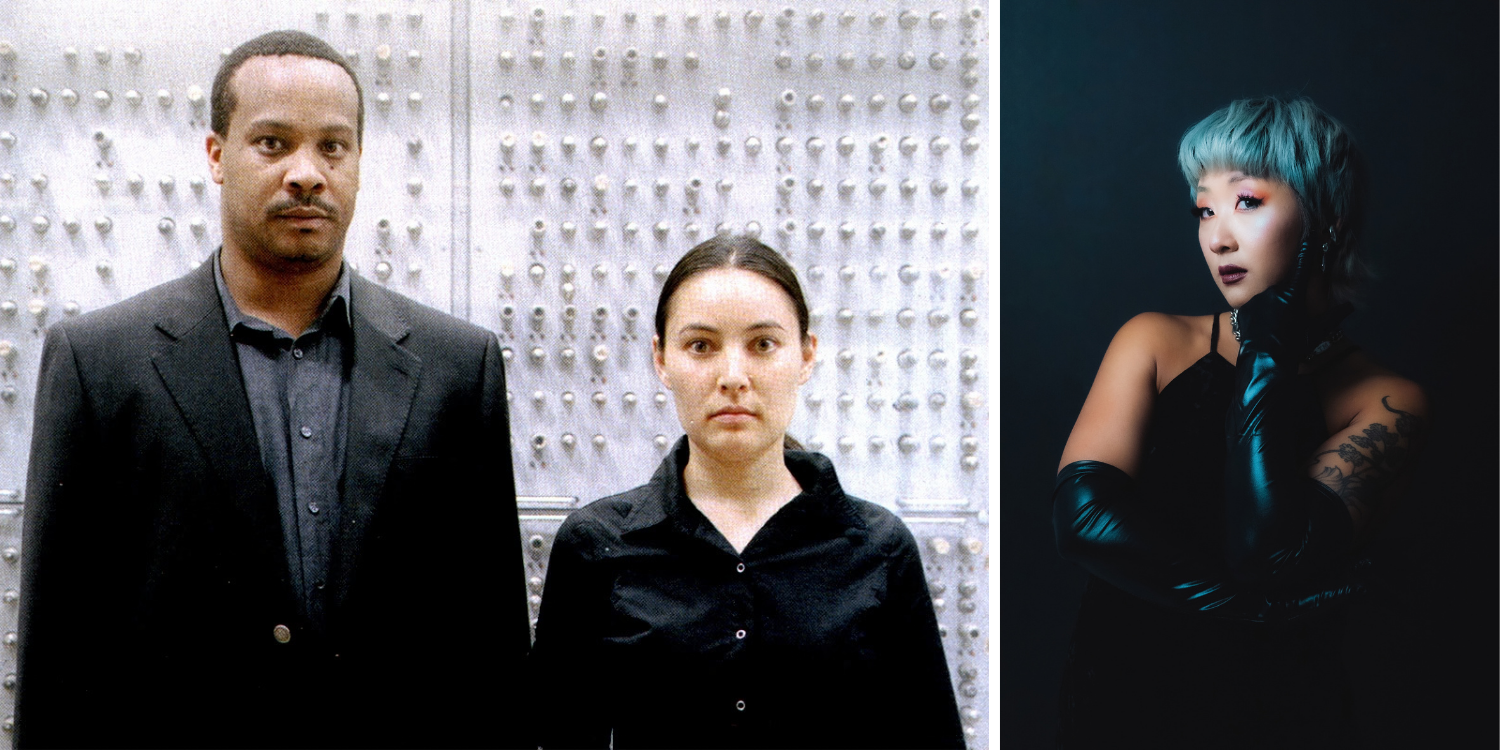
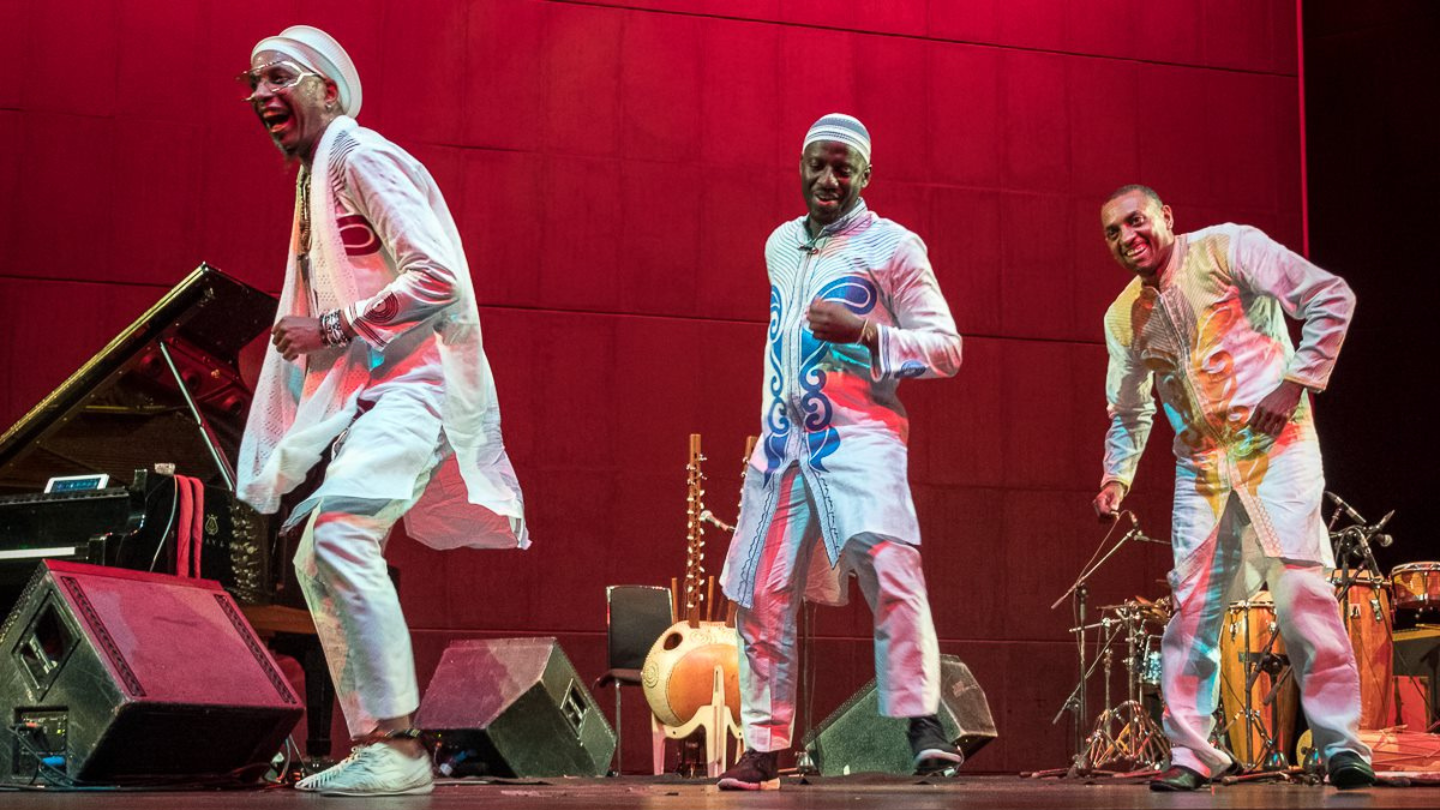
SUBA Trio. Photo by Laurent Seroussi
The Chan Centre for the Performing Arts presents Omar Sosa & Seckou Keita SUBA Trio at the Telus Studio Theatre on March 13. The show is sold-out
THIS MONTH, IT SEEMS, is a crash course in cognitive dissonance, thanks to the necessity of holding two pressing and contradictory beliefs in balance. One is that the world is circling the drain, thanks to its deranged “leaders” and their remora school of sycophants. The other is that the verities of nature are still true: days are longer, the daffodils are up, and summer’s pleasures are within sight. And if you need a further nudge to look on the bright side, hang out on your device just a little longer and head to NPR Music’s Tiny Desk Concert website (or see below), where you can take in the multinational trio SUBA’s wonderfully inspirational performance.
It’s hard to imagine more joy being packed into a scant 22 minutes.
Allow me a personal moment: I encountered SUBA’s music on the day that Israel and the United States launched their latest apocalypse, and my daughter lives in the Middle East. She’s not in immediate danger, but millions of others are. And I’m not happy about all of this, yet within minutes of pianist Omar Sosa, kora player and singer Seckou Keita, and percussionist Gustavo Ovalles starting their set I was grinning widely from the sheer beauty—and, yes, relief—that these three masters have to offer.
Which is exactly their intent.
Sosa puts it plainly. “We have a mission,” he says, reached just before a SUBA soundcheck in Santa Cruz, California. “We need to accomplish our mission, and we need to be honest with ourselves, but first we need to be honest with our spirit in life and our effect, because the only thing we’re doing is passing a message. And the message is to put the people together to create a community in the moment where we can have joy, peace, love, and unity. And we must remind people—and remember ourselves—that we are all human beings. We are all part of one scene that’s called Planet Earth. We are not different.”
My conversation with Sosa—who joins Keita and Ovalles at the Chan Centre for the Performing Arts on March 13—was necessarily brief, so we barely touched on the politics behind the formation of SUBA (which, fittingly, means “sunlight” in Mandinka). It’s relevant, however, that all three musicians are from the global south, and from countries that have been directly and negatively impacted by racist imperialism. Sosa is from Cuba, Ovalles from Venezuela, and Keita from Senegal. One thing that makes their intercontinental music possible is their personal rapport, which Sosa does have time to go into in detail.
“I’ve known Gustavo now for more than 25 years,” he says. “We met each other in Paris, back in the day, when the percussion player in my quartet was too busy to make that tour. He told me, ‘Man, I’m going to send you one of my students.’ So we arrived at the rehearsal space in Paris and talked a bit, and I told Gustavo, ‘Hey man, let’s play for five minutes. Five minutes? Let’s play for two minutes!’ He jumped to the congas, we played and looked at each other, and I said, ‘See you tonight.’ ‘We don’t want to rehearse?’ he said to me. And I said, ‘No, no, brother. You know, music arrives in the moment, if the spirits are in tune. And I feel that your spirit and my spirit, they are in tune, so see you tonight at the concert.’ So we did the concert, and it was beautiful.
“With Seckou, we met each other basically in the same way,” the pianist continues. “A friend of mine—a great drummer, Marque Gilmore, who used to be part of my band Afri-Lectric Experience—called us in to play, you know. And it was like a free-spirit session: you come in, sit down, play, and listen to each other. And this is something important. Jazz is freedom, but you need to respect and listen to your partners. And this is basically what happened with that gig. We came to play, and this one guy came with his kora, and he plucked his kora, and we played. And it clicked! It clicked so beautiful. We played for more than two hours, and after that I told Seckou, ‘Hey, man: we need to do something together.’”
SUBA Trio
A number of threads beyond musically sympathetic personalities connect the musicians of SUBA. There’s the jazz ethos of improvisation, and the fact that both Sosa and Ovalles practice the Afro-Caribbean religion Santeria, which has its origins in the Yoruba culture of today’s Nigeria and the adjoining regions. Keita, in contrast, is a Muslim, rooted in Senegal’s indigenous Mouride Sufi tradition, a kind of practical mysticism that focuses on self-actualization through work and faith. These shared African roots are reflected in another of SUBA’s missions: to emphasize the beauty and global importance of Africa’s musical roots, which run much deeper than Western conceptions of that heritage.
In alignment with that, Sosa subscribes to the notion that the piano is at heart a percussion instrument, a concept elaborated on in Soren Sorensen’s 2022 documentary Omar Sosa's 88 Well-Tuned Drums. “If we look at it that way, we’re not talking about ‘Western’; we’re talking about Africa,” he says.
“And most of the time when people talk about Africa, the first thing they see is a black man with a drum, sweating and showing his muscles and dancing like a motherfucker,” the pianist continues, laughing. “But wait a minute! It’s that, but it’s not wholly that. Africa has a sublime, simple, transparent music, and so with SUBA, we can dance without it being loud, without having a big noise. We can have that; we can make it. But we would like to show how beautiful are the butterflies that come from Africa.” 

Related Articles