For soprano Magali Simard-Galdès, early music performance and sustainability work go hand in hand
Early Music Vancouver Summer Festival’s artist in residence interprets Bach, Schubert, and Mozart—and hosts a panel on how to bring environmentally sound practices to performing arts

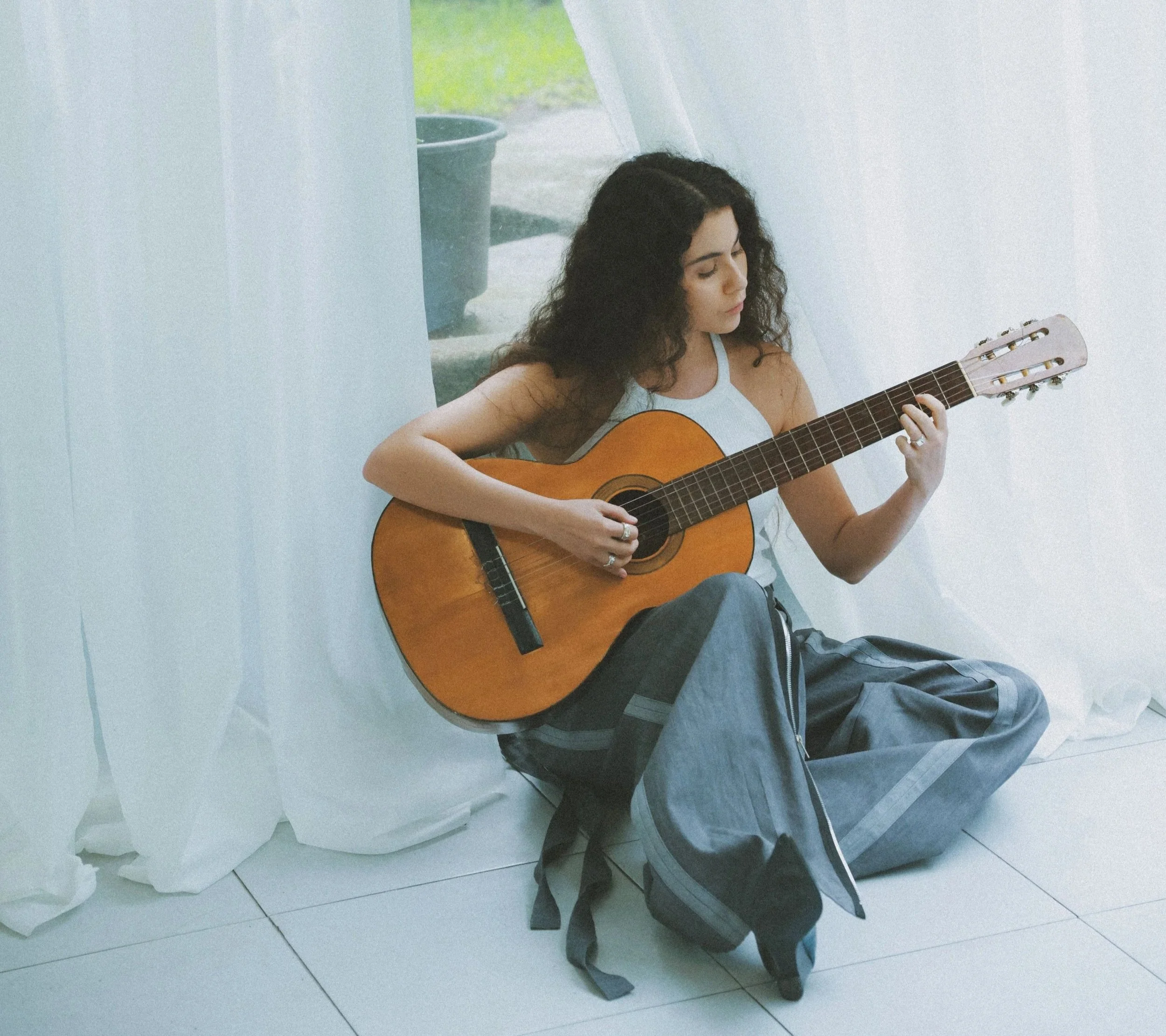
Magali Simard-Galdès. Photo by Brent Calis
Early Music Vancouver’s 2025 Summer Festival runs at various venues from July 26 to August 8
RISING QUEBEC SOPRANO Magali Simard-Galdès has long been giving voice to Baroque discoveries. At this year’s Early Music Vancouver Summer Festival, she’ll put her crystalline pipes to everything from intricate Bach cantatas to little-known Schubert lieder. But in recent years, she’s also been expressing the urgent need for environmental sustainability—both in the performing-arts scene and the wider world.
Raised by an environmental biologist and a doctor in Rimouski, Quebec, the artist in residence at this year’s festival was immersed in nature as a child, whether by birdwatching on weekends or by heading out to the region’s lakes or leafy valleys. Later, as she developed her career in music, documentaries like The Lightbulb Conspiracy and The Corporation inspired her.
When the pandemic began to hit in the spring of 2020, the professional singer saw a rare window to pursue a master’s degree in sustainability management at HEC Montréal.
“I had started incorporating in my life all these little gestures you can do, reducing waste, recycling,” she tells Stir over the phone from Quebec, to which she’s just returned after flight delays while performing in Europe. “But I started being very anxious—I had anxiety with being a singer. It's a big paradox, because I travel a lot. I mean, there’s a limit to what you can do in your everyday life if you take the plane as much as I do. So this is the part that I haven't solved yet.”
The master’s, however, has given her a better grasp on the larger systems at work. “It’s a management degree, with strategic planning and strategic analysis, and it's just given me a bigger understanding,” she explains. “I was very frustrated before because I thought it would be so easy to change things, but now it's given me a better understanding of these very wide systems that are in action.
“So it's given me a lot more compassion and a bit more respect for the big puzzle that it is in culture, with the financial means that we have to try to make a difference,” she adds. “It’s influenced the way I speak with managers and directors of companies, and it’s made my working relationships much more satisfying and enriching.”
As part of the Summer Festival, Simard-Galdès hosts a panel called Sustaining the Arts: A Conversation on Cultural and Environmental Responsibility. Joining her on July 30 at the Vancouver Playhouse salon will be One Earth Living’s Vanessa Timmer, The Only Animal Theatre Society’s Barbara Adler, the Awi’nakola Foundation’s Rande Cook, Pacific Baroque Orchestra concertmaster and Baroque Orchestra Mentorship Programme codirector Chloe Meyers, and PBO violone player Natalie Mackie.
It’s important that artists and arts companies share experiences and look at issues that go beyond small gestures such as printing fewer programs and selling fewer plastic water bottles, she suggests—especially with the music industry so late to the table on the eco-crisis.
Among the topics to consider are not only the travels of a few artists over long distances but those of hundreds or thousands of concertgoers across small distances. Production-design waste and opportunities for reuse are also subjects she expects the panel to tackle. Centralized costume rental systems are only a start.
“Right now, there's a consortium in Europe of five big companies doing a four- or five-year consultation to come up with a design of a universal, modular set for opera that stage directors could work with,” she says, pointing to an example of solutions. “Because, when you have, let’s say, a staircase with a balcony in an opera, it doesn't have to be brand-new each time.”

Magali Simard-Galdès.
THERE’S A SIMILAR curiosity and sense of innovation that Simard-Galdès carries over from those concerns to the sphere of performance. The soprano is that rare singer who moves fluidly between repertoire that’s hundreds of years old and the contemporary—the latter including parts in the Mad Chorus of Vancouver Opera’s offbeat The Overcoat: A Musical Tailoring and in Oper Köln’s production of George Benjamin’s 2013 work Written on Skin.
On August 1, she brings Forgotten Harmonies: Schubert & Friends to the Early Music Vancouver celebration, the project in which she and her partner, natural horn player Simon Poirier, dig up forgotten treasures by Schubert and his contemporaries—exquisite lieder and instrumental works performed as they would have been heard in Schubert’s time, with natural horn and Viennese-style fortepiano (played by Olivier Godin). Among the discoveries she’s most excited about is Jan Křtitel Václav Kalivoda, whose mid-19th-century Nachtlied eines Einsamen rubs shoulders with Sandeep Bhagwati’s new composition …von Ferne… on this unique program
“It’s this idea of composing a new piece for old instruments and on old poetry, and finding a lot of parallels between the present time and in the music,” the soprano says.
The entire program is the result of deep research that unearthed discoveries including a 14-minute Schubert piece that will be new to audiences: “There’s no other song like it in his repertoire,” Simard-Galdès promises.
“We went to the British Library in London and just dove in and started scanning music,” she recounts. “We spent three days there, getting old original editions from the 1800s and just bringing them back home, and then reading the music and finding the songs that we liked the most. And also it was really important for us to choose some songs that had not been recorded. We did a recording of them this spring, and it’s going to come out next year. So we’re trying to put a little pebble in the pool of getting new old work recognized—and some of these composers have been forgotten unfairly.”
Elsewhere at the fest, Simard-Galdès interprets glimmering Bach cantatas, alongside other soloists and the Pacific Baroque Orchestra, on August 5. The artist cops to loving the intricacy of the works, all themed here around the Ascension.
“Bach just elevates you,” she says. “I'm not a religious person, but I feel like there's a connection to something really holy and pure, and it brings you peace, I find. But also it lets you express really deep feelings—feelings of pain, feelings of grief and joy. It’s just really pure emotion.”
And the rising star also lends her voice to what is perhaps the most anticipated event at the EMV Summer Festival: Mozart’s Requiem, performed with the Pacific Baroque Orchestra and the Vancouver Cantata Singers at the Chan Centre on August 8. The masterpiece, in a way, brings the artist full circle. And yes, Amadeus, in which the unfinished piece features prominently, was one of her favourite movies growing up.
“I was trained as a violinist, and when I transitioned to singing when I was 19, a big part of what drew me into singing was the Mozart Requiem,” she reveals. “We had a bunch of classical music CDs at home, and when I would study and do my homework, I listened to it a lot when I was in high school.” Long before her intensive vocal training, she admits, she sang it in her living room. Close your eyes and imagine that as her soprano echoes in the rafters of the Chan during the famous early “Introitus”. She’s come a long way—and with her important work in saving our Earth from its own requiem, she has a long way to go yet.” 

Related Articles