Outpouring of grief at news of cello innovator Cris Derksen's death
Reports are emerging that the musician, composer, and pillar of the Indigenous classical community passed away in car accident after father’s funeral in Northern Alberta
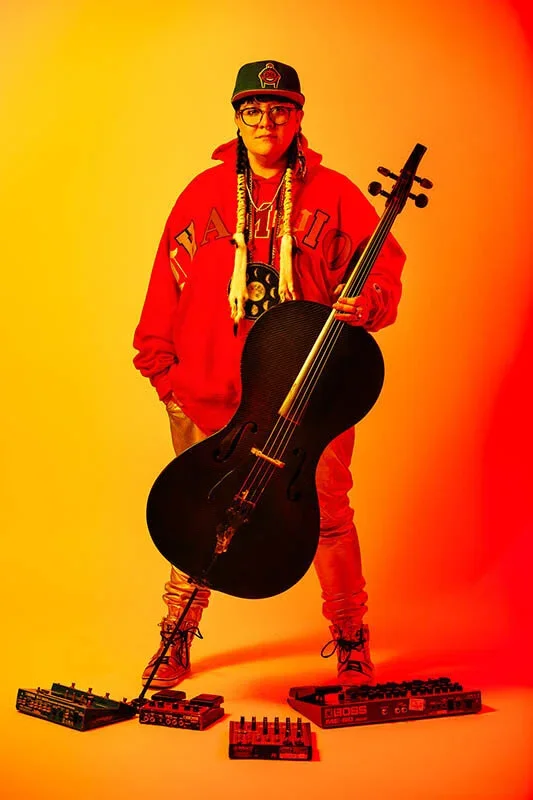
Cris Derksen
This story has been updated from Saturday, May 17.
AN OUTPOURING OF grief continues at news that gifted cellist Cris Derksen has died in a car accident at 45.
“It is with profound, shattering sadness that we share the news of the sudden passing of our dear friend, client, and visionary artist, Cris Derksen, following a car accident yesterday,” Derksen’s AIM Booking Agency confirmed Sunday morning.
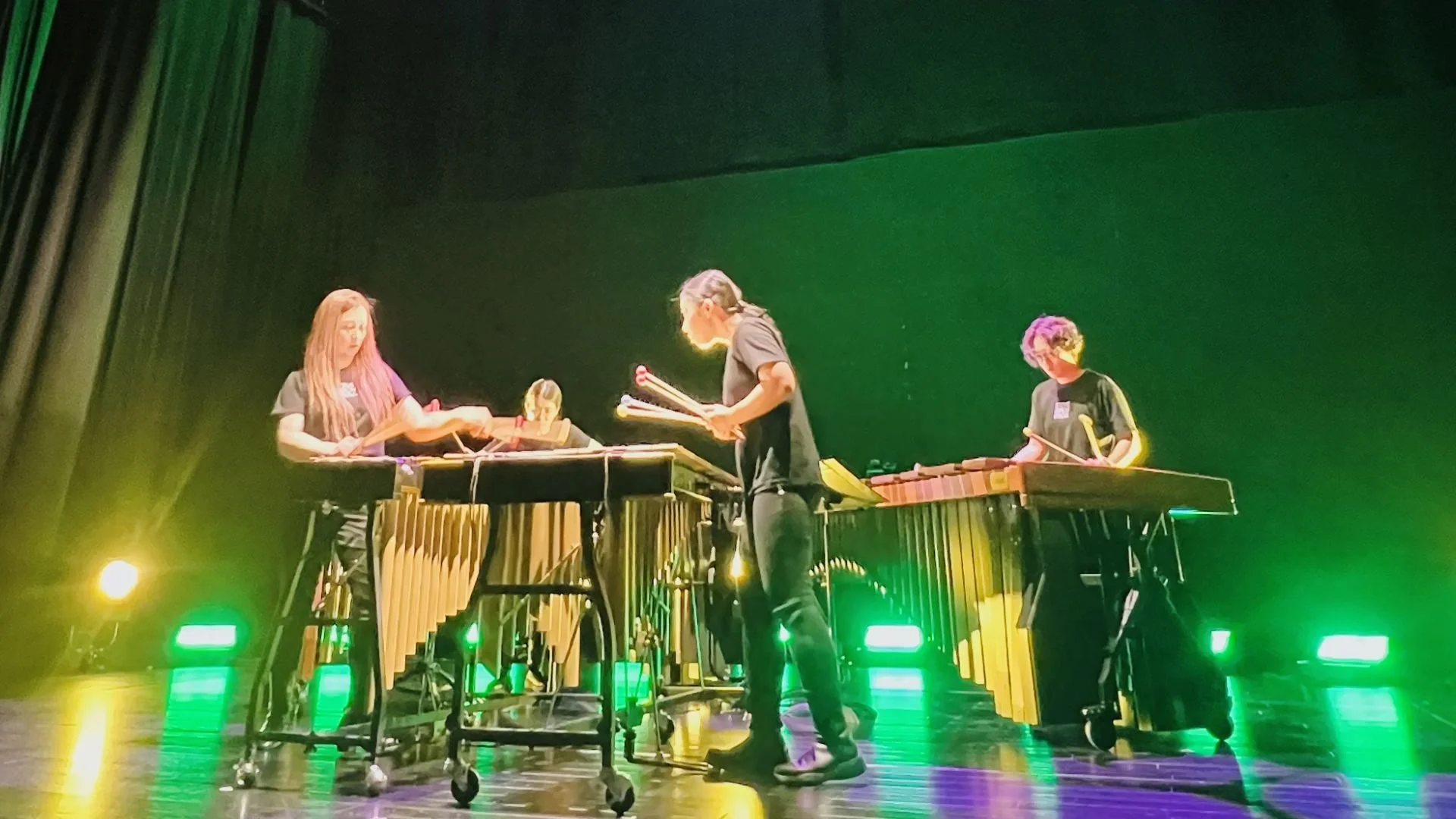
The composer and musician—whose score was recently heard here at the Royal Winnipeg Ballet’s T’əl: The Wild Man of the Woods with Indigenous choreographer Cameron Fraser-Monroe—reportedly died driving home after attending the funeral of their father Bernie Meneen in Northern Alberta, with their wife, singer Rebecca Benson, in critical condition in hospital.
“My extraordinary, gifted, radiant, cherished niece Cris may have left us prematurely, but her profound legacy and enchanting music will perpetually uplift me,” her aunt Theresa Johnson posted yesterday.
Amid the tributes, today, her alma mater UBC School of Music posted: “Cris Derksen was a powerful advocate for Indigenous artists in classical music and has made an extraordinary impact on contemporary music.”
The National Arts Centre praised the internationally respected musician for bringing “a powerful and unmistakable voice to contemporary music, weaving together classical training, Indigenous traditions, and electronic innovation. Their work resonated across the country and the world.”
Elsewhere, University of Manitoba assistant music professor Melody McKiver remembered Derksen as a “pillar of our Indigenous classical community”.
Originally from Treaty 8 Territory in Northern Alberta, Derksen was raised by a Cree father and Mennonite mother. Growing up in Edmonton, she discovered her passion for cello at age 10 through her elementary school strings program.
“Both my heritages are quite dichotomous from each other,” the 2-Spirit artist told Stir in an interview late last year, ahead of an appearance at the TRANSFORM Festival. “The Mennonites are quite religiously strict, and my Indigenous family has a different sort of spirituality, so they’re quite different from each other. Because of my upbringing, I’m able to come to the table with a perspective of being both from the land and a settler to the land.”
Derksen’s childhood love of cello inspired a move to Vancouver to pursue a bachelor’s degree in music at UBC, where their career began to blossom. During her time in Vancouver, Derksen began performing with iconic Inuk musician Tanya Tagaq and touring the Canadian folk festival circuit with her quartet and various bands and ensembles. After moving to Toronto in 2007, where she had been living when she died, she released her debut album The Cusp in 2010 and her critically acclaimed album Orchestral Powwow in 2015, which scored her a Juno nomination for instrumental album of the year for its unique blend of traditional powwow songs with symphonic arrangements. Her other accolades included a Dora Mavor Moore Award, an Indigenous Music Award, and an Aboriginal People’s Choice Award.
Derksen’s sound was unlike anything else out there, entirely her own, going beyond that mix of powwow and classical, and integrating electronics, new wave, folk, and other influences. She incorporated a drum machine, loop station, synthesizer, and guitar multi-effects pedals into her compositions. For the recent Royal Winnipeg piece, Stir described her music as a “haunting, driving score that mixes ominous strings, powwow drums and chants, and electroacoustic flourishes”—utterly unique for a ballet.
Playing with everyone from indie rock bands to her own quartet and symphonies, Derksen had toured the world, with recent concerts across Europe, in Japan, Chile, and elsewhere. Her Cikilaxʷm: Controlled Burn, a full-length narrative contemporary ballet, debuted at Ballet Kelowna earlier this month; the work, another collaboration with Fraser-Monroe, explored Indigenous fire stewardship.
The artist frequently performed with the Manitoba Chamber Orchestra, most recently in a concert titled Awasowin in May of 2025. They also recently shared a new record called The Visit this past October. In addition, the composer premiered a work called Still Here with the Toronto Symphony Orchestra.
Ahead of an appearance with our own Vancouver Symphony Orchestra, the artist had told Stir in an interview in 2021: “There are a lot of Indigenous folks who have the skills, who have the education, to speak the classical language, but in our way. I feel like it’s a super exciting time in the classical world. Definitely most of my peers have become busier over the pandemic….It’s something that we are all super grateful and also ready to stand for, too.”
In the same interview, the artist expressed the personal idea of Reconciliation that drove their work: “What I am pushing for myself is definitely Indigenous folks telling their own stories, Indigenous folks being the lead in major artworks, Indigenous folks having more autonomy. In Canada and in art, Indigenous folks have been mined for resources, so there’s a little bit of taking that back and giving folks the space to feel what they need to feel.”
Calgary Folk Music Festival remembered her Sunday as a composer, mentor, and performer who “stretched traditional and contemporary boundaries while remaining deeply grounded in her identity, story, and unique sound.”
Posted Vancouver strings artist Janna Sailor: “I always admired her fierce advocacy for other artists, wisdom and insight, and of course, her strikingly individual sound and creative path.”
Stir will continue to follow the story as it develops. 

Related Articles