Red Demon speaks three languages at the Firehall Arts Centre
Director Mayumi Yoshida takes on challenges of translation in Hideki Noda’s darkly comedic play about people struggling with mistrust as they try to understand one another across linguistic gulfs
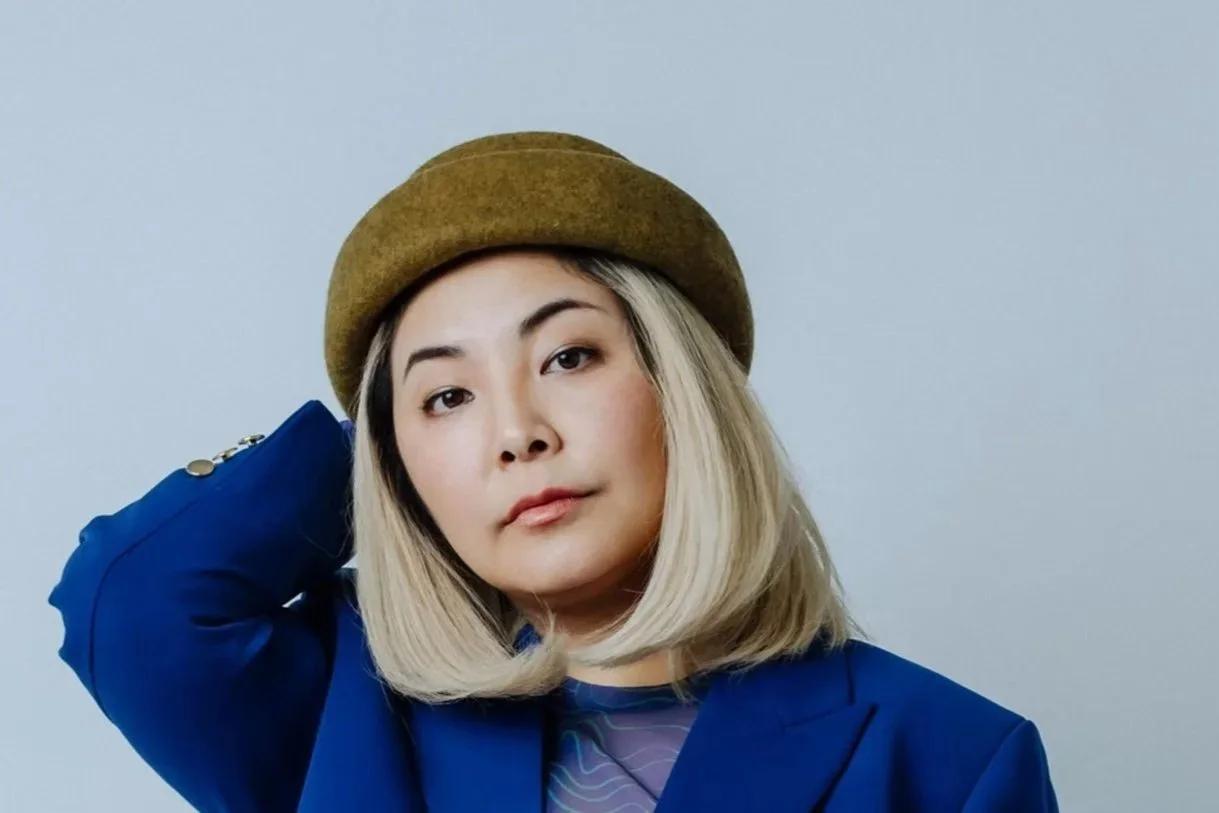
Mayumi Yoshida
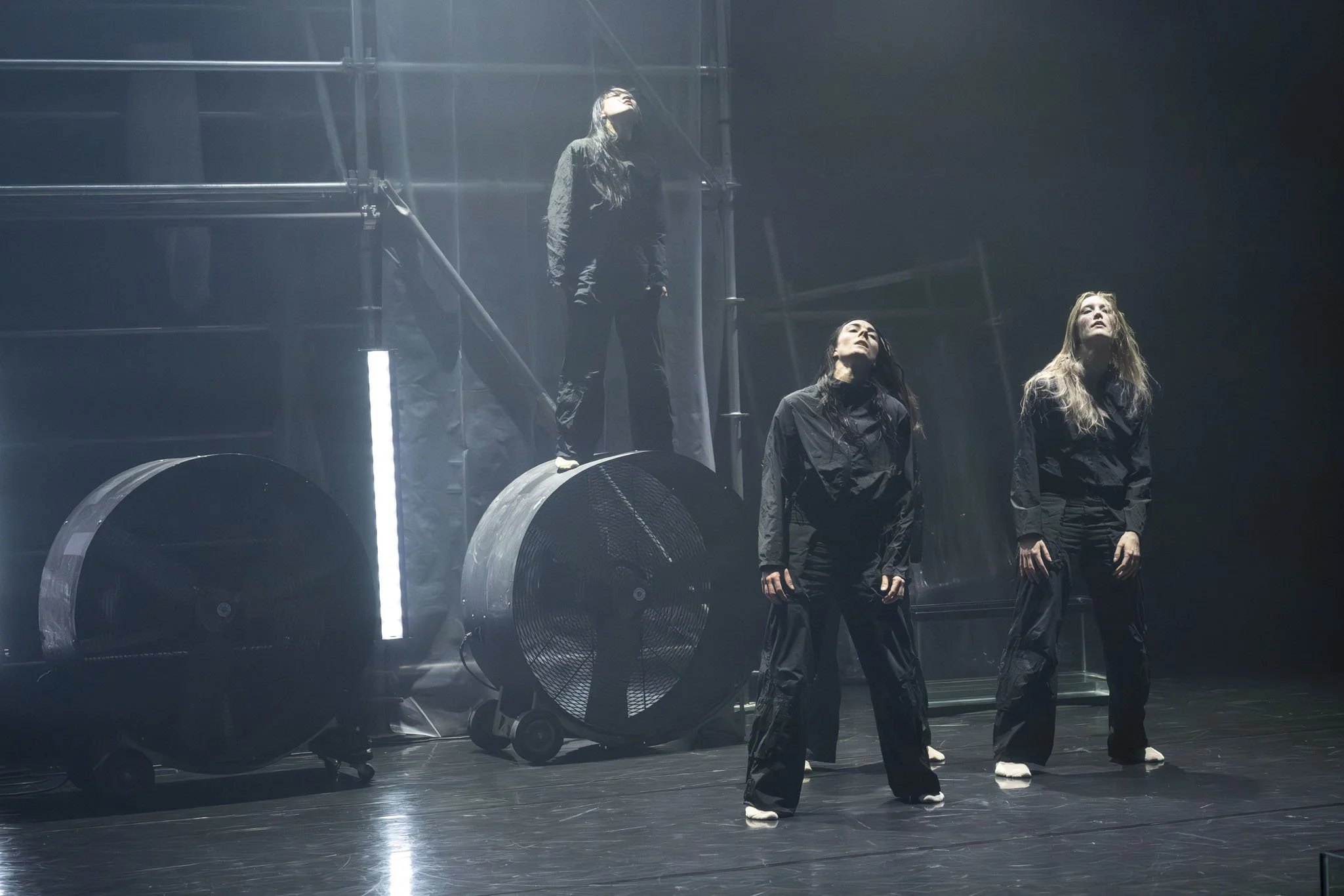
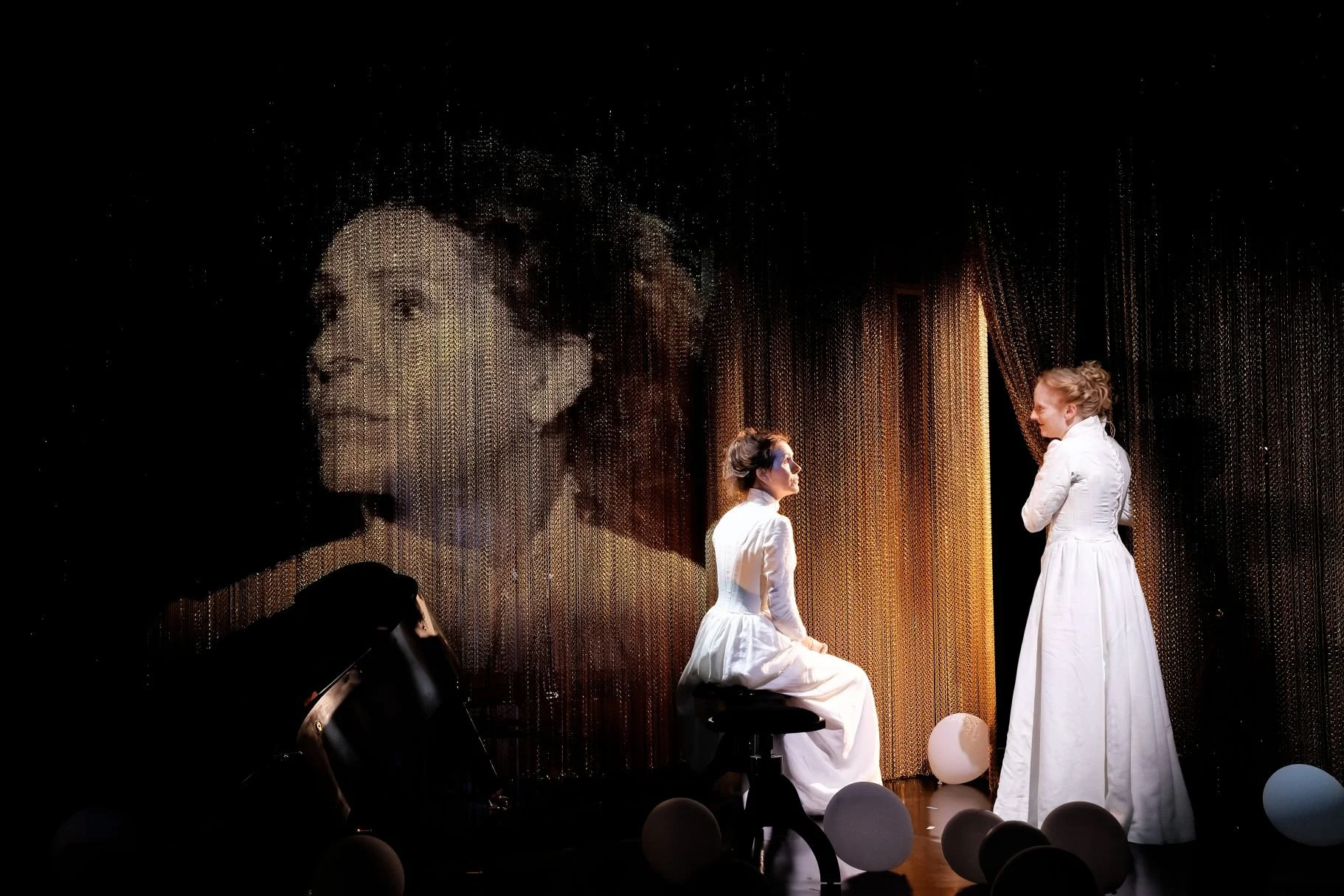
The Firehall Arts Centre presents the rice & beans theatre and Gokko Creative Society production Red Demon at the Firehall Theatre from October 8 to 18
LIKE ITS TITULAR character, Hideki Noda’s Red Demon is a traveller.
A dark comedy about a foreign creature washed up on the beaches of an isolated fishing village, the play was first produced in Japan in 1996. It’s since been adapted in Thailand, South Korea, and the U.K., each new setting introducing new linguistic dynamics and challenges in translation to Noda’s story about language, prejudice, and communication.
Now director Mayumi Yoshida is putting a twist on Red Demon’s original Japanese at the Firehall Arts Centre. The play’s Tokyo debut cast Japanese-speaking actors in the roles of the villagers and an English speaker in the role of the demon Akaoni.
That language barrier is the source of Red Demon’s tension and the heart of the mistrust that quickly sparks between the characters—each international adaptation has had to grapple with the difficult task of translating that to a local context. Yoshida’s version, though, forgoes English entirely and keeps the villagers’ original Japanese while casting Guatemalan-born actor Pedro Chamale in the role of the Spanish-speaking demon.
“I always wanted to explore a full-on Japanese play put on in Vancouver with surtitles,” Yoshida tells Stir in a Zoom interview. “This is such an interesting play to explore how language is perceived.”
Yoshida’s life is built on that exploration. Before moving to Vancouver, she grew up bouncing between the U.S., Japan, and Belgium.
“I had this international, bilingual childhood,” she says. “My life was always, like, one foot in North American customs and the other in the Japanese, because my whole family is Japanese. I always had this duality as my identity.”
When she read Noda’s play for the first time, she was hooked—it seemed like the perfect fit. But despite keeping Noda’s original Japanese, adapting the script to substitute Spanish dialogue and introduce English surtitles was no easy feat.
Translating the specific wording of any prose—culturally specific turns of phrase, jokes, and wordplay that won’t transfer directly—is difficult enough. Now try it when one character speaks a completely different language, and the plot turns on the specific sound of individual words. In a play like Red Demon, substituting Spanish for English feels like replacing half of the threads in a cable-knit sweater.
“Hideki Noda, he’s a very unique playwright who loves to do a lot of wordplay,” Yoshida says. “It’s definitely been a challenge adapting his words…not eliminating all these beautiful things that he’s written, honouring that, but also making sense for the audience in Vancouver.”
Even the English surtitles, which Yoshida and the team pulled from Roger Pulver’s U.K. translation, needed some work—changing jokes that only work with British slang, swapping out some “blokes” for “guys”. Those obstacles, and the methods we use to overcome them, are what Red Demon is all about.
Yoshida hopes that staging Red Demon in Japanese and Spanish will give English speakers a sense of the demon’s experience—an outsider in a strange land, out of their depth. But she also hopes that it can appeal to Vancouver’s Spanish- and Japanese-speaking communities.
FX’s Shōgun, which began filming its second season on the Lower Mainland this February, has seen plenty of Japanese actors moving to Vancouver in hopes of auditioning for the series, Yoshida says. Her desire to work with them was one of Yoshida’s primary inspirations for staging the play in Japanese. The same goes for casting Chamale in the role of the demon.
“I always wanted to work with Pedro,” Yoshida says. She felt that his grand, experienced presence would contrast well with the presentation of the Japanese actors and make the demon feel even more out of place.

Mayumi Yoshida
Chamale is the cofounder and artistic director of rice & beans theatre, which is working with Yoshida’s Gokko Creative Society to produce Red Demon. Together, they’ve mounted an outreach campaign to get the word out about the show in non-English-speaking communities.
“It was important to us because it’s a multilingual show, and sometimes the people in these communities don’t even expect that there is a show that is in [their] language.” Gokko and rice & beans even managed to set up a partnership with the nearby Dosanko, a Japanese restaurant on Powell Street that was to offer 10 per cent off meals when customers brought in a same-day ticket to Red Demon. A fire in the building next door to Dosanko has unfortunately closed the restaurant until further notice.
Gokko and rice & beans also enlisted the help of a calligraphy artist who worked on the set of Shōgun to create traditional Japanese lanterns in hopes of raising funds for the production. Donors who contributed $75 dollars or more will have lanterns with their names displayed in the lobby of the Firehall during the show’s run, and can take them home after closing night.
Red Demon is a play whose language, delivery, and production is a re-enactment of the themes it brings up. As its characters work to understand one another across linguistic gulfs, Yoshida, Chamale, and the rest of the cast and crew work to build causeways connecting the audience to both sides. It’s a rewarding process.
“It’s been amazing working with artists who are just very patient and understanding in including both sides, understanding both sides, and making sure things don’t get lost in between,” says Yoshida. “I love this stuff.” 
Related Articles