Theatre review: Stylish, emotionally charged Epigone speaks of grief, addiction, and fate
Electric Company Theatre’s latest work delves into a mythology-infused world where an incomprehensible loss reveals the shame and fleeting possibility that formed a life
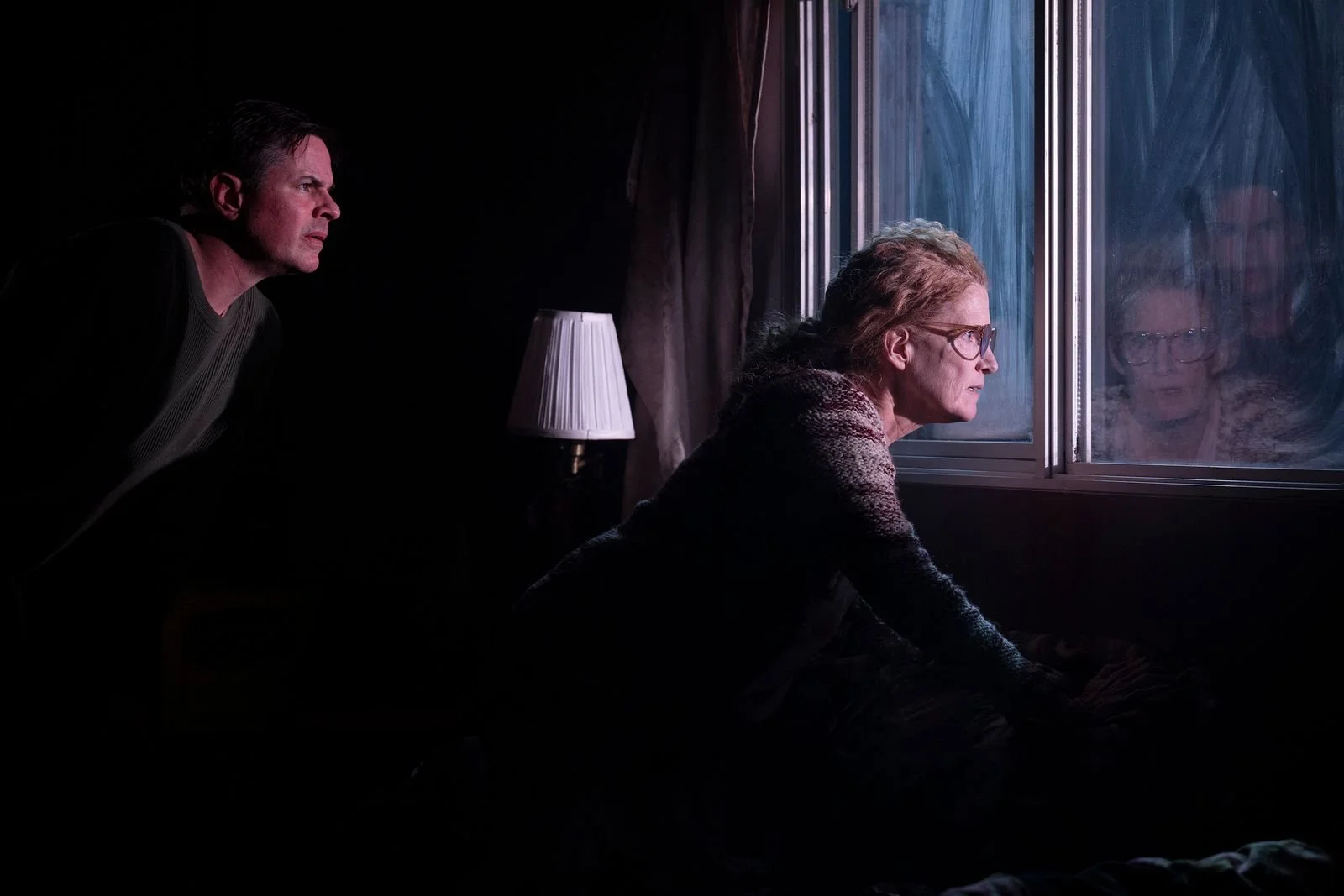
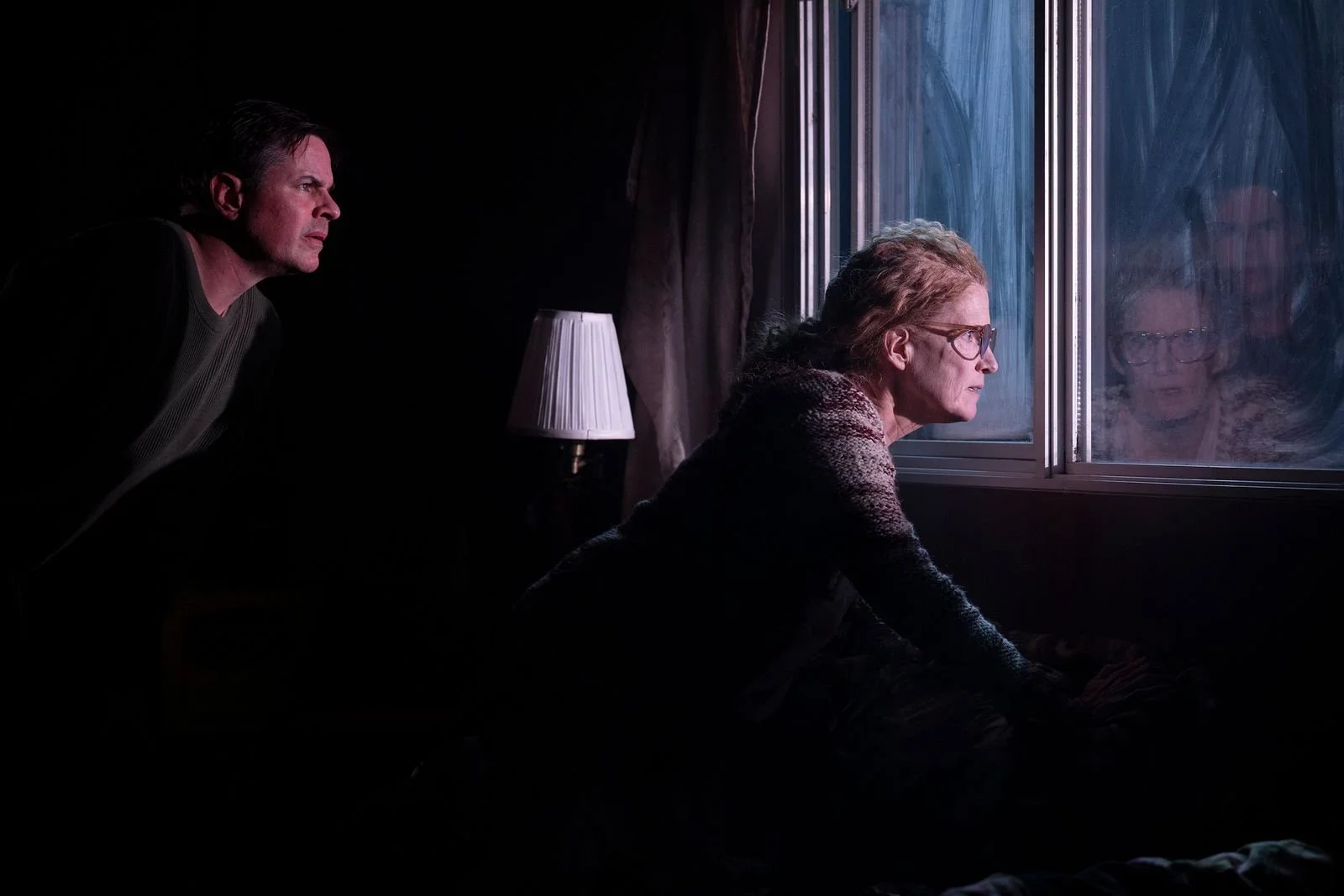
Epigone, with Kevin MacDonald and Colleen Wheeler. Photo by David Cooper
In partnership with Vancouver Moving Theatre, the Downtown Eastside Heart of the City Festival presents Epigone at the Russian Hall to November 15
EPIGONE IS SOMETHING of a transcendent eulogy uttered like a streak of light shining through a barred window. Inspired by playwright Kevin Kerr’s own experience with profound loss, Electric Company Theatre’s latest production follows James, a man returning to his estranged sister Laine’s trailer home following her death from a drug overdose. What unfolds is a haunting meditation on grief, family, and addiction, one that looks to the ancient world of myth and ritual to make sense of an almost incomprehensible loss.
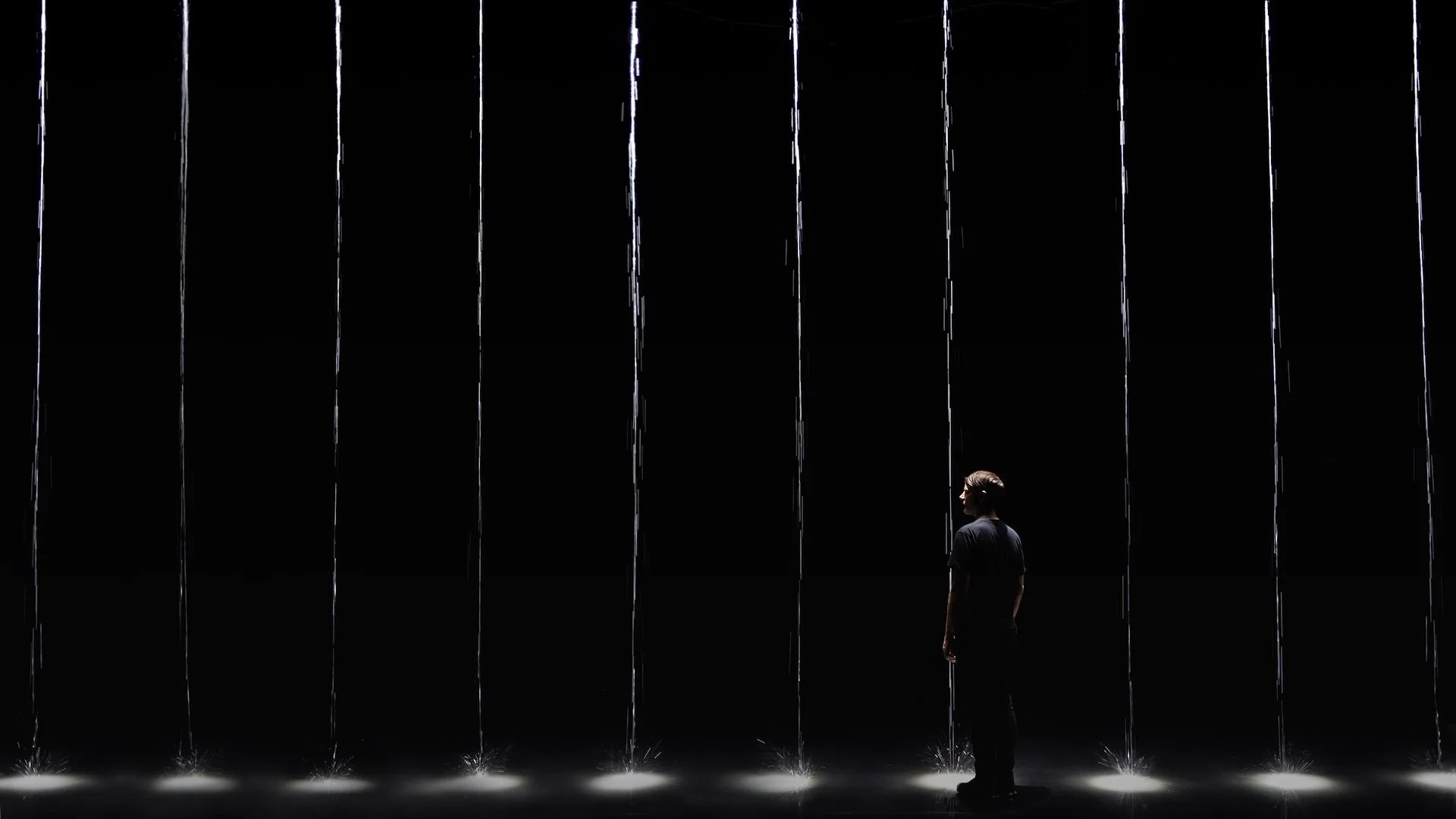
Working with set designer Paula Viitanen Aldazosa, director Jonathon Young confines his cast to a grim shoebox of a home. Complete with three walls and a ceiling, the cramped space is filled to the brim with objects and frequently washed in sudden, surreal shifts of light filtering through the outside. Together, Aldazosa’s set and Eric Chad’s lighting evoke the mythological figure Antigone’s final days entombed alive, a fitting comparison as we watch James sift through the remnants of his sister’s life in a home so crowded with objects it seems to be closing in on itself. The strangely liminal atmosphere is aided by Kate De Lorme's sound design, which includes crows cawing and, at one point, a hellish, disembodied chorus of relatives gathered for an impromptu memorial via Zoom. As questions about Laine's death haunt James, the family's shame and secrecy take on a disquieting supernatural quality.
To give such a small stage so palpable an emotional charge is no small achievement, but lest you think design is the standout, the ensemble is equally excellent. The subject matter is heavy, the directorial approach stylized, and all the performances toe the line expertly, palpably relishing Kerr’s emotionally fraught yet transparent writing. Kevin MacDonald gives James the compelling restraint of someone in denial, or perhaps ashamed of the circumstances of his sister's death, while aptly handling the play's more cathartic moments with tenderness. James is joined by Angela, his and Laine's niece, who becomes a spiritual guide of sorts, helping him properly send his sister off. Lili Beaudoin’s Angela initially seems at odds with James’s guarded pragmatism, but her eccentricity soon feels right at home in the play’s otherworldly atmosphere. There’s also Stoney, Laine's neighbour and on-and-off boyfriend, played by Tom McBeath, whose frequent, unwelcome, and messy self-insertions, strike the right tone, providing moments of humour while laying bare the character’s own loneliness and struggles.
Undoubtedly, the most haunting presence of all is Colleen Wheeler as Laine. Though we know from the outset how her story ends, her presence (or lack thereof, in the play’s first half) pushes against the idea that her life can be understood solely through the circumstances of her death. As much as there is pain coursing through Epigone, Kerr is equally concerned with redemption and transformation.
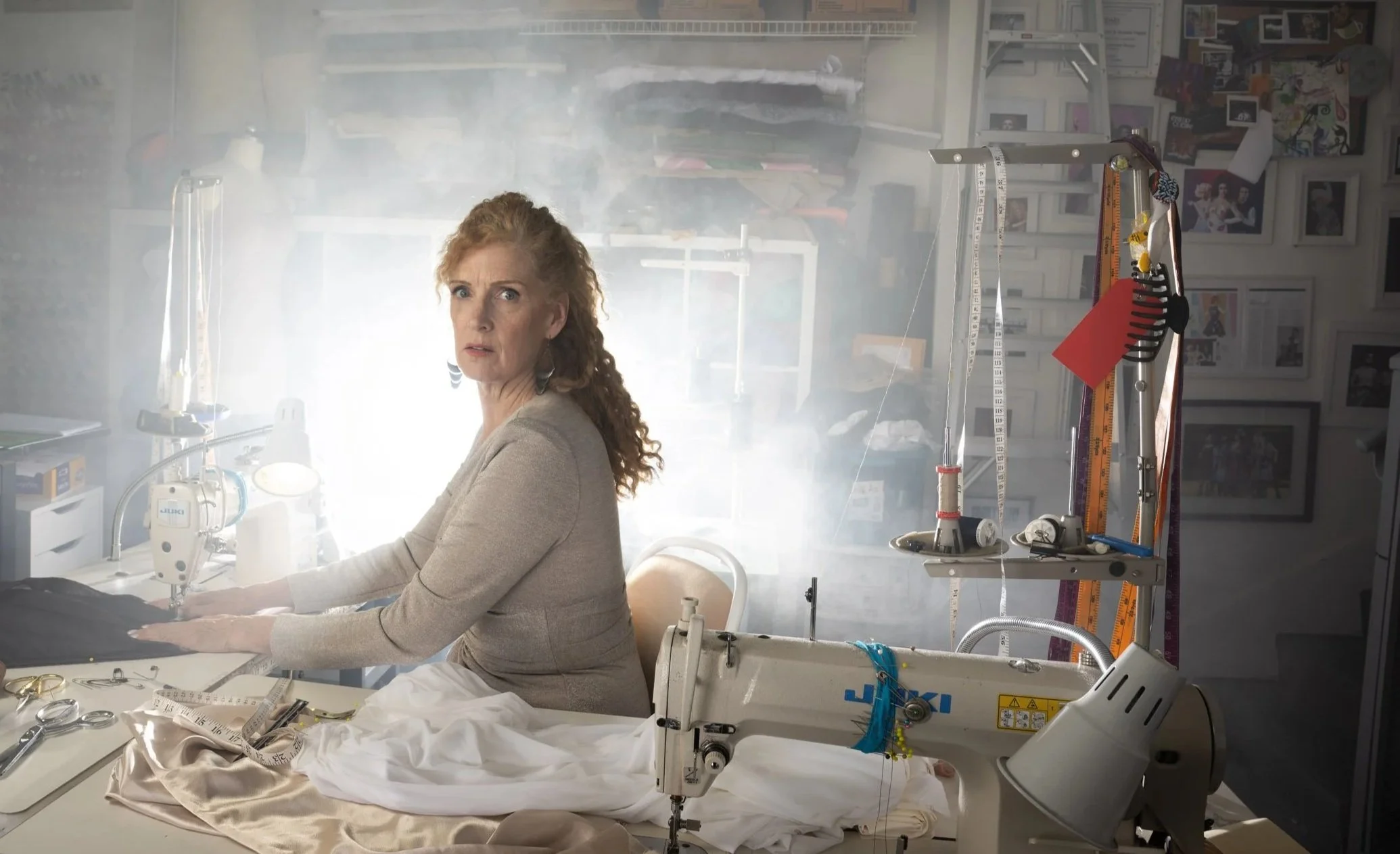
We learn early on that Laine’s life’s calling was to be a fashion designer, an ode to Kerr’s real-life sister, Tricia. There are only so many narrative beats we have come to expect from stories about addiction, and we know as soon as the play begins, even without considering its conception in Greek tragedy, what Laine’s fate will be. But her dressmaking gives the play its brightest light amid the dark.
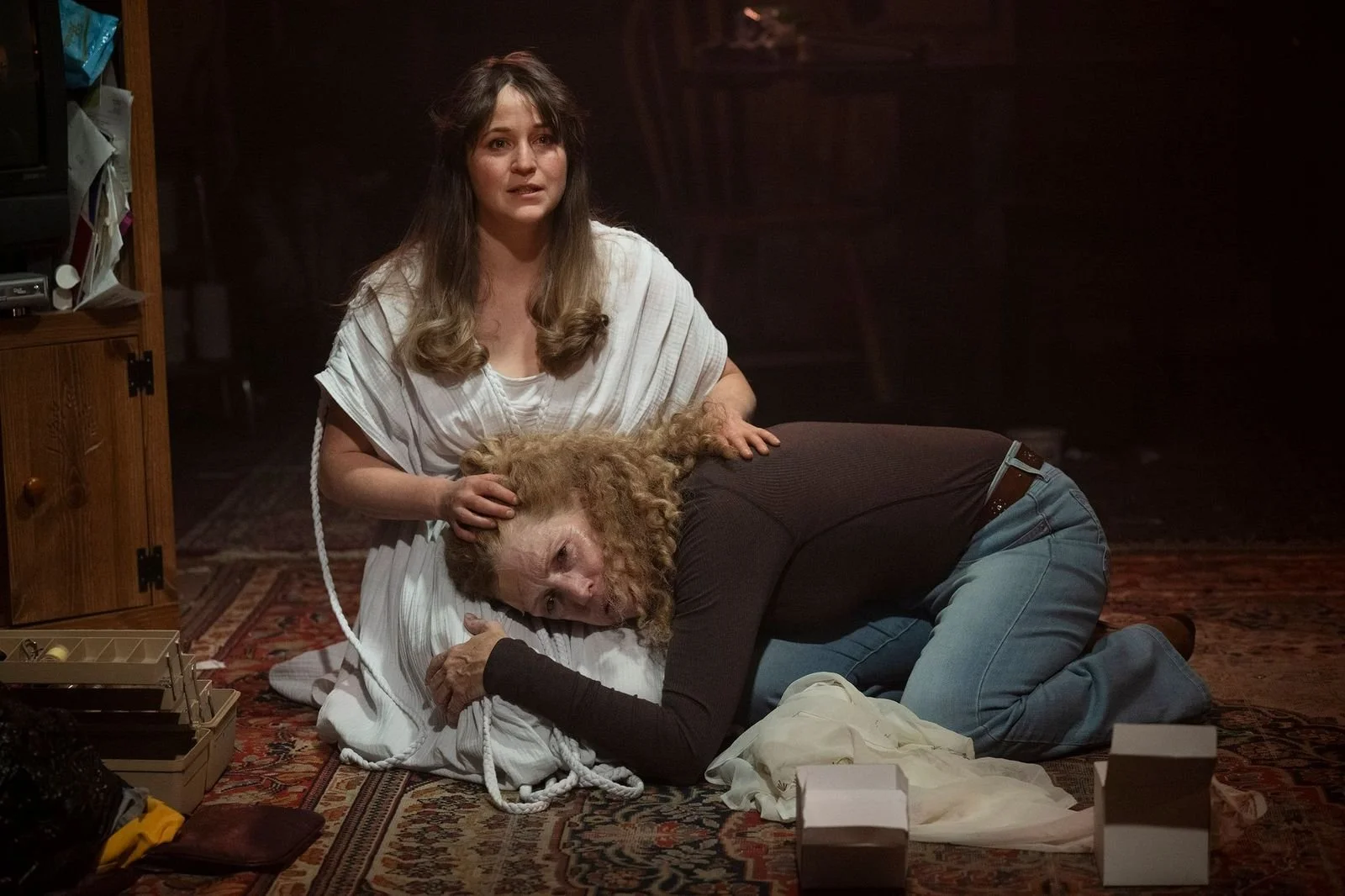
Epigone’s Lili Beaudoin and Colleen Wheeler. Photo by David Cooper
In these moments, we see Wheeler’s grander-than-life Laine push beyond her insular, self-flagellating shame and surrender herself to something larger than her immediate circumstances. The play doesn’t suggest that art can save her, but it allows us to see the desires and possibilities that existed alongside her addiction.
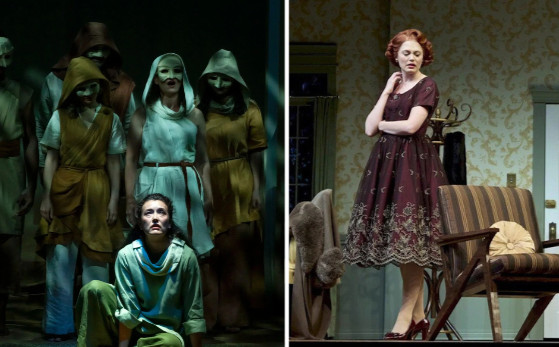
Credit is also due to costume designer Donnie Tejani, whose work brings Laine’s designs to life while connecting them to the play's mythical influences. Ancient Greek–inspired dresses adorn the stage, and in one of the production’s many beautifully staged tableaux, we see Laine working on a dress on her young roommate (also played by Beaudoin). In a beautiful play of light, the two women are silhouetted in a choreography of simultaneous artmaking and care, where, for a moment, the claustrophobic trailer becomes a space of intimacy and possibility.
For all its mythology and stylization, the circumstances of Laine’s death are handled with an almost startling pragmatism, neither sensationalized nor shied away from. There is something heartbreaking about how quickly these things happen, how an entire life can suddenly be reduced to the fact of its ending.
And for all its mythology and stylization, Epigone never loses sight of the very real grief at its centre. Its metatextual layers give the play a metaphysical dimension, reaching beyond the confines of Laine’s trailer and into the murkier questions of who gets to be mourned, and how. There are no easy answers, perhaps only space for grace. 
Angie Rico wrote this review as part of Page Turn, a professional development network for emerging arts writers, funded by the Canada Council for the Arts and administered by Neworld Theatre.

Related Articles