For Mark Mothersbaugh, scoring a film means interpreting the language of the director
The DEVO member—coming to town as part of the Vancouver International Film Festival—has built a second career composing music for TV cartoons, Wes Anderson movies, and everything in between

Mark Mothersbaugh
VIFF Live presents An Evening With Mark Mothersbaugh at the Vancouver Playhouse on October 8 at 6 pm. Mothersbaugh will also be featured in a VIFF Talk in conversation with Robert Kraft at the Rio Theatre on October 7 at 6:15 pm.
PROVING YET AGAIN that you can’t believe everything you read on the internet, some contributor to DEVO’s Wikipedia entry has confidently asserted that the band’s Mark Mothersbaugh composed the score for the 1982 film Human Highway. In an interview with Stir, Mothersbaugh says that this isn’t exactly true.
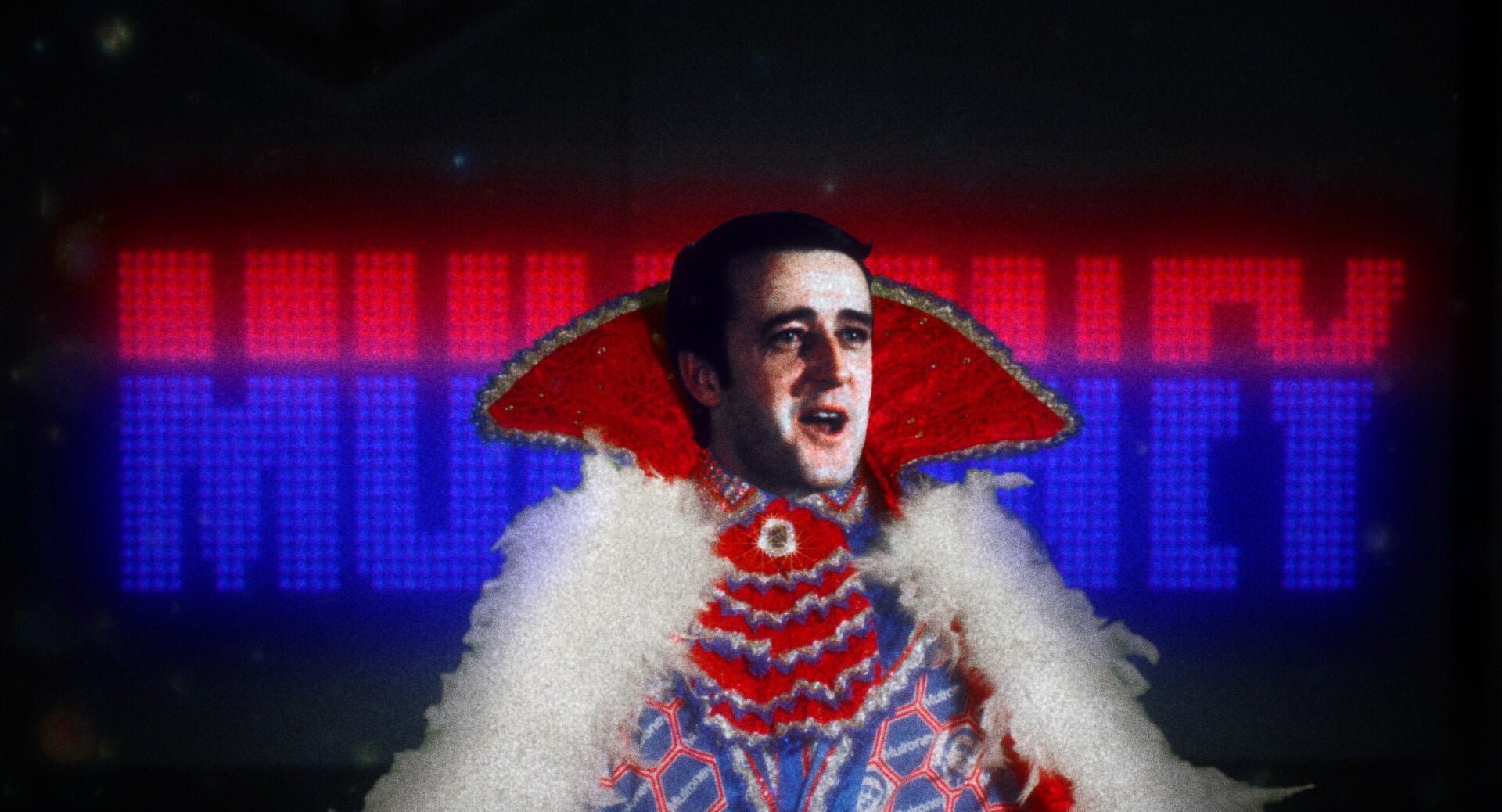
An absurdist comedy codirected by Neil Young and Dean Stockwell—both of whom also star in it, alongside Russ Tamblyn and Dennis Hopper—Human Highway was a critical flop and a box-office bomb upon release, but has since become a cult classic. Mothersbaugh portrays one member of a nuclear-waste disposal crew (his DEVO bandmates play the others) and also a preternaturally guileless man-child named Booji Boy.
He also composed a lot of the music used in Human Highway, but he clarifies that he didn’t actually write it for the film at all.
“About six months or a year before we were in Human Highway, I had scored an off-Broadway one-man Ionesco play called Man With Bags,” Mothersbaugh says in a Zoom call from his studio. “Dean Stockwell was directing and Russ Tamblyn was the ‘one man’ that did it. Six months later, he’s directing Human Highway, and when they started looking for music to put in the film, he said, ‘Hey, I’ve got all this music that Mark recorded for Man With Bags.’ So he put my music in the film. I can’t say I scored the film, but they kind of scored the film with a lot of that music, and then Neil wrote some music too. So it was a combination score. But it was just a chance for me to hear that music that I thought I was only going to hear in a little room off Broadway, and then I heard it in a movie, and that was interesting.”
In the decades since, Mothersbaugh has created scores for 279 movie and television projects, if the Internet Movie Database is more reliable than Wikipedia. These span all genres, from TV cartoons (Rugrats, Regular Show) and big-screen animation (The Lego Movie, Pixar’s Hoppers) to Wes Anderson films (Rushmore, The Royal Tenenbaums).
Human Highway aside, it all started with what Mothersbaugh considers his first real scoring job: Pee-wee’s Playhouse. The raucous Saturday-morning show’s creator and star, Paul Reubens, was a long-time friend, and Mothersbaugh ended up writing music for 15 episodes over a five-season run between 1986 and 1990. He also cowrote the Pee-wee’s Playhouse theme song with Reubens and George McGrath. (Trivia time: the Betty Boop–esque vocal on the track was credited to “Ellen Shaw”, but was in fact performed by Cyndi Lauper.)
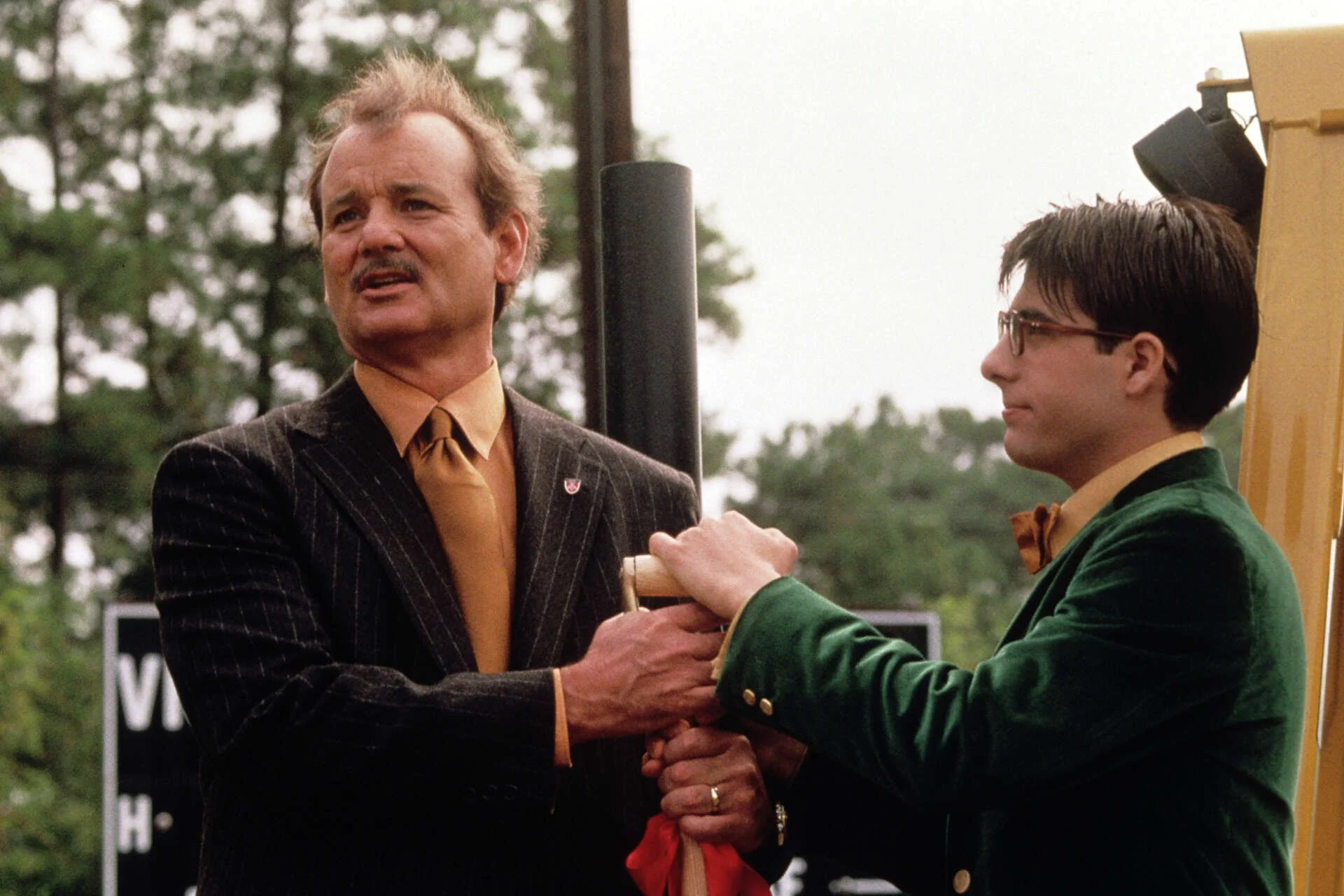
Bill Murray and Jason Schwartzman in Wes Anderson’s Rushmore.
“It was really eye-opening, because for the previous six years, I had done an album with DEVO every year,” Mothersbaugh says. “Jerry [Casale] and the guys and I would all get together and we’d spend six weeks writing the album, then we’d spend a couple weeks recording it, and then we’d get set to go out on tour, and we would come up with outfits and a stage concept. We’d spend the rest of the year touring the world, and then we’d get back home and we’d start again; we’d do another one. We did six albums like that, where it was writing 12 songs and then you’d spend a year playing ’em and then coming back.”
Scoring Pee-wee’s Playhouse was an entirely different proposition. It kept Mothersbaugh just as busy, but he was delighted to spend most of his working hours in the studio as opposed to slogging it out on the road.
“On Monday they’d send me the tape,” he recalls. “On Tuesday I would write 12 songs’ worth of music. On Wednesday I’d record it. On Thursday I’d put my reels of tape in the mail and send them to New York, and on Friday they’d mix it into the show—and on Saturday we watched it on TV. And then on Monday they sent me another tape. I was like, ‘Oh, wow, sign me up for this job.’ I just loved the idea of getting to write more instead of this long cycle of touring. That’s what got me into scoring things. The show was pretty successful, and I got lots of calls after that.”
Reubens had earlier approached Mothersbaugh about composing the score for the first Pee-wee Herman movie, Pee-wee’s Big Adventure (1985). According to the musician, he was obliged to decline the opportunity because of previous commitments to touring with DEVO. The job went instead to Danny Elfman, marking his first time scoring a major studio feature and also his first collaboration with director Tim Burton, the genesis of a partnership that one might say turned out okay for both parties.
“I think Danny was an excellent choice, and I think the sound that he brought to that movie had a lot to do with changing the sound of contemporary scoring,” Mothersbaugh reflects.
Elfman got the call when it turned out that both Reubens and Burton were fans of his surrealist art-rock outfit Oingo Boingo. The rock-band-to-film-composer career path has been a fruitful one for Elfman and Mothersbaugh, and it has worked out equally well for the likes of Hans Zimmer, Trent Reznor, and Jonny Greenwood. Not everyone who plays in a successful band necessarily has the aptitude for a second career penning music for the silver screen, though. The key, Mothersbaugh indicates, is to understand that the core duty of your role is to help other people bring their visions to life, and that can mean checking your ego at the studio door.
Case in point: erstwhile Police guitarist Andy Summers.
“We were helping him when he did Down and Out in Beverly Hills,” Mothersbaugh says. “He wrote great music for the film, by the way, and it came out really great. But he took offence when the director would say, ‘You know, that’s pretty good, but could you make it move a little faster through that scene?’ or something like that. He wasn’t like, ‘Right, this guy’s been working on the film for five years. I just got here two weeks ago, any information you have is great.’ Some people fit that scenario better than others.”
The secret to Mothersbaugh’s success (well, apart from being a prodigiously gifted musician) is his capacity for interpreting precisely what filmmakers want to hear, even when they’re only able to express it in the vaguest of terms.
“The thing about music is that it’s abstract,” he notes. “If you’re talking about editing, you can go, ‘Okay, cut this at SMPTE code number blah blah blah blah blah,’ to the exact frame, ‘and then cut it at the other end here and then remove it.’ It’s an exact piece of information. But when they’re going, ‘Can you make it more sinister?’ or ‘Can you make it more romantic?’ you’re learning what a director, producer, or whoever means when they’re saying those words. Because you might do your first guess and they go, ‘Well, not that romantic.’ And you’re like, ‘Okay.’ So you develop a language.”
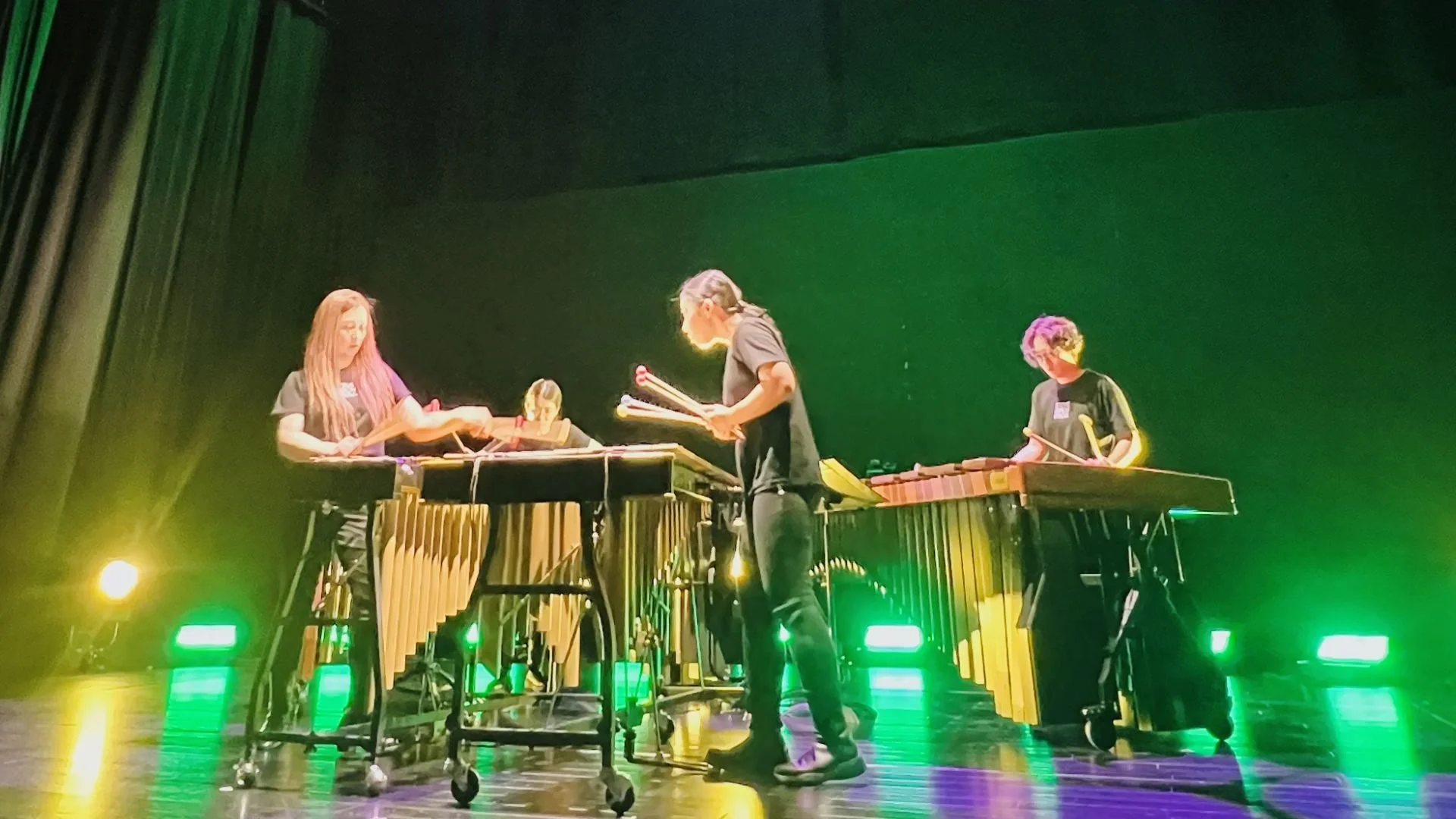
At his upcoming VIFF Live concert, Mothersbaugh will lead an 11-piece ensemble through a selection of music from his long and eclectic tenure in movie scoring. He promises there will be “some Wes Anderson stuff”, but beyond that, the show will be full of surprises for all—including, perhaps, Mothersbaugh himself.
“I haven’t rehearsed with the band yet,” he admits. “I haven’t even met them. So that’s all exciting to me, because we’re going to do this evening that will be the one time that it ever happens. When you hear it, it may never sound like that again. It’ll be different people, it’ll be a different arrangement of the music. But I’m very optimistic about it. I think it’s going to be pretty good.” 

Related Articles