At VIFF, Treasure of the Rice Terraces takes local filmmaker high into the clouds of the Philippines
Kent Donguines’s new documentary journeys to Buscalan, where ancient Kalinga hand-tapped tattooing is thriving again
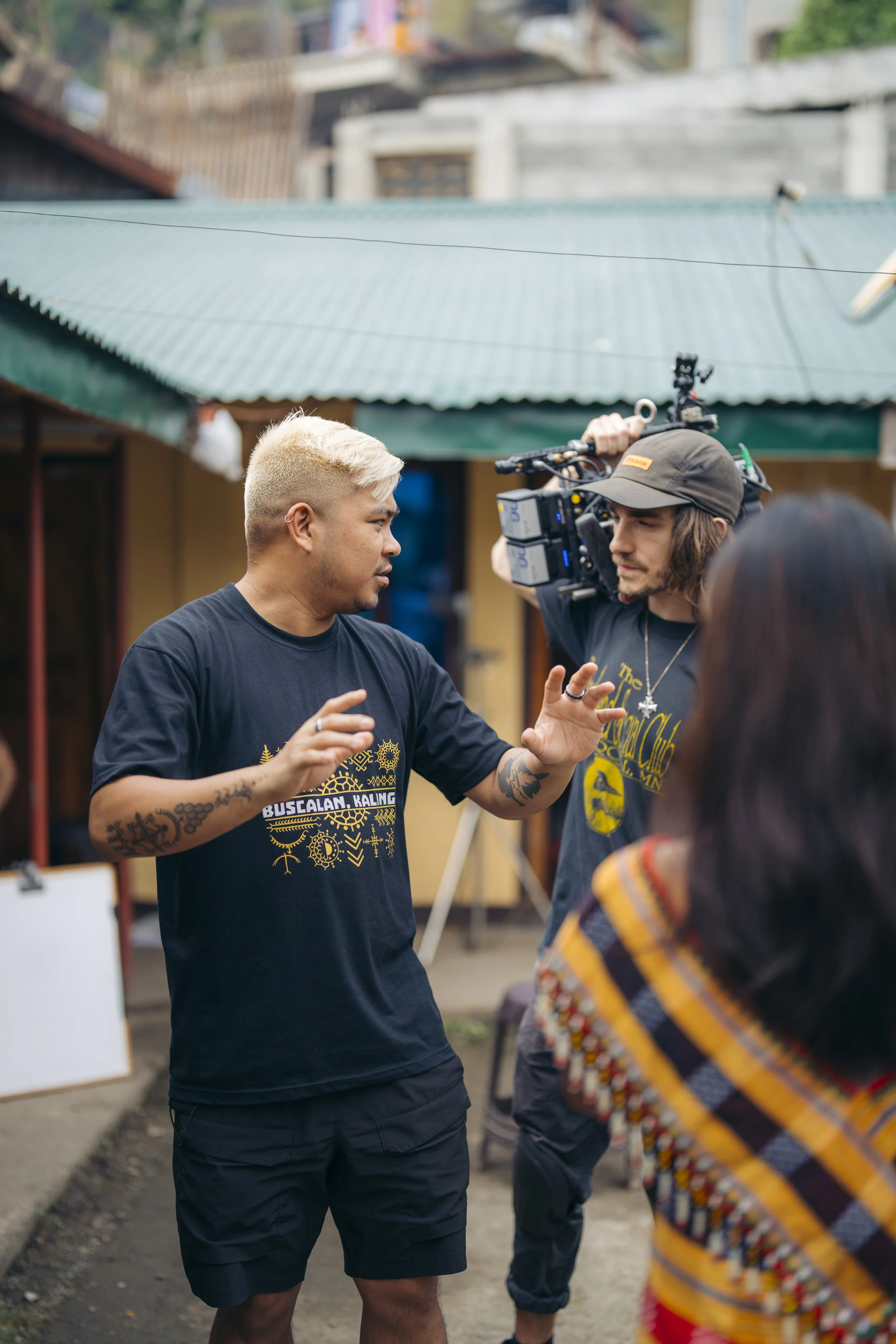
Kent Donguines shooting Treasure of the Rice Terraces. Photo by Emmett Sparling
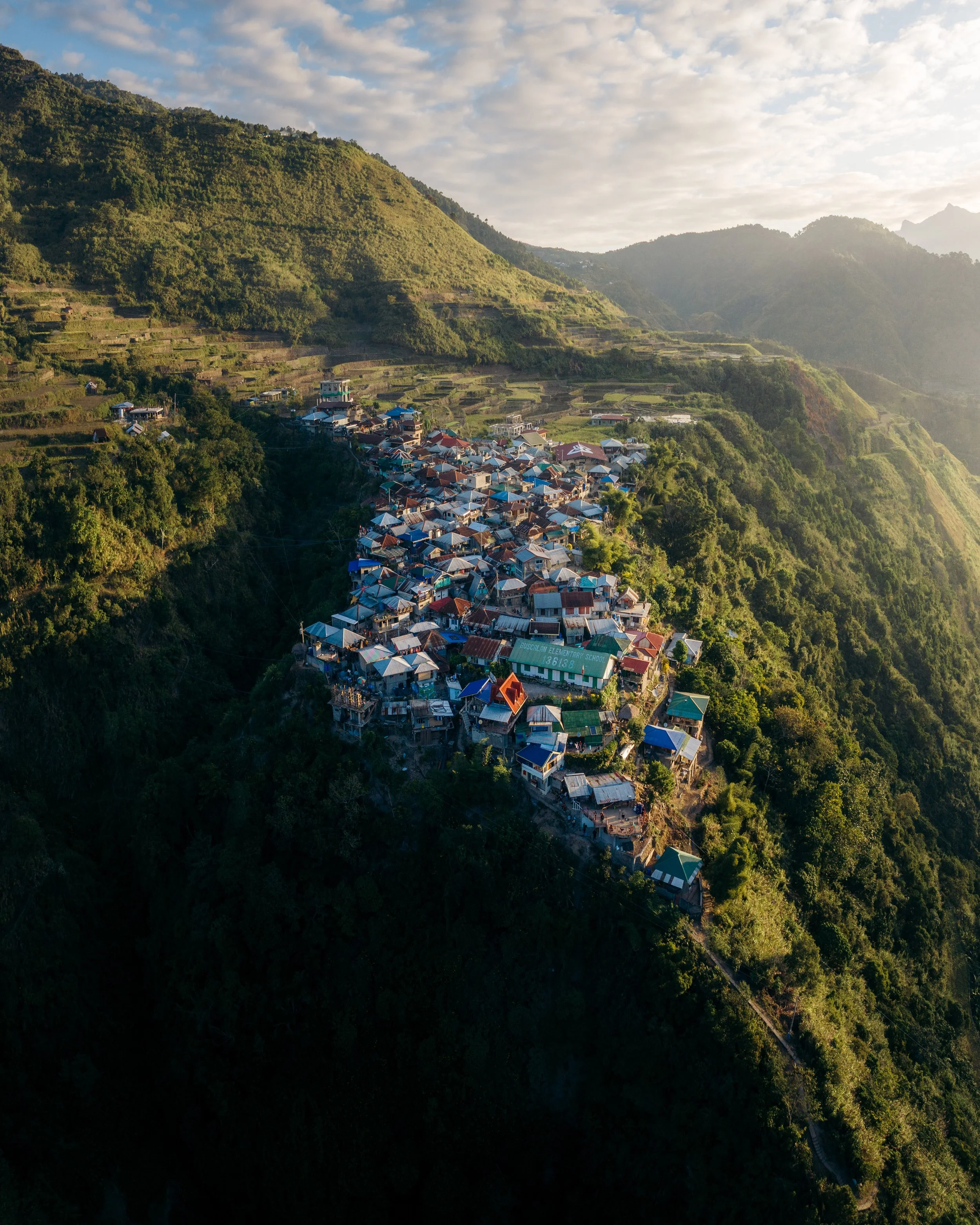
The village of Buscalan in Treasure of the Rice Terraces. Photo by Emmett Sparling
Vancouver International Film Festival presents Treasure of the Rice Terraces on October 5 at 8:30 pm at International Village and October 6 at 3:30 pm at the Granville Island Stage; filmmaker guests will attend Q&As at both screenings
IN TREASURE OF THE RICE TERRACES, Vancouver filmmaker Kent Donguines only briefly touches upon the arduous journey he and his crew made to the village of Buscalan, set high in the Philippines’ Kalinga mountains, roughly 10,000 miles from here.
Amid the legendary rice terraces carved out of the cordillera, it’s home to 108-year-old Apo Whang-od, the oldest practitioner of an ancient, Indigenous hand-tapped tattoo technique.
But reaching her with camera gear was not easy.
After a lengthy trans-Pacific flight to the island of Luzon, the small film crew embarked on a 10-hour drive toward its destination, climbing ever higher on sketchy roads.
“There were lots of curves, lots of unprotected sharp turns with no barricades,” says Donguines, who’s showing the resulting documentary at the Vancouver International Film Festival. “Then, once you got to the foot of the village, it was a two-hour hike up.”
Fortunately, as seen in the documentary about the ancient cultural tradition of hand-tapped tattooing, there was an elaborate pulley system to haul up the gear separately. After the shoot, Donguines says he and his team decided those pulleys might be the easiest way to get back down again—not just for their gear, but for themselves. “Was it 100 percent safe? Next question,” he says with a laugh.
Donguines relates of the village: “You don’t have cell service, you’re disconnected to the rest of the world—but we embraced that. We were fully immersed in the community.”
The effort was more than worth it—and not just because of the stunning drone footage the filmmaker captured in a region whose glassy sculptural rice terraces reflect the blue sky, looking straight out of a magical fairy tale (see the footage in the trailer at bottom). The experience shooting the village and its tattoo artists was literally living out a dream for Donguines: as he recounts in his deeply personal film, he was driven by a dream he had had about an old woman in a village in the clouds. When he saw images of Apo Whang-od and Buscalan—a region of his birth country, the Philippines, that he had never visited before—he realized it was the place and person in his vision and he had to film them.
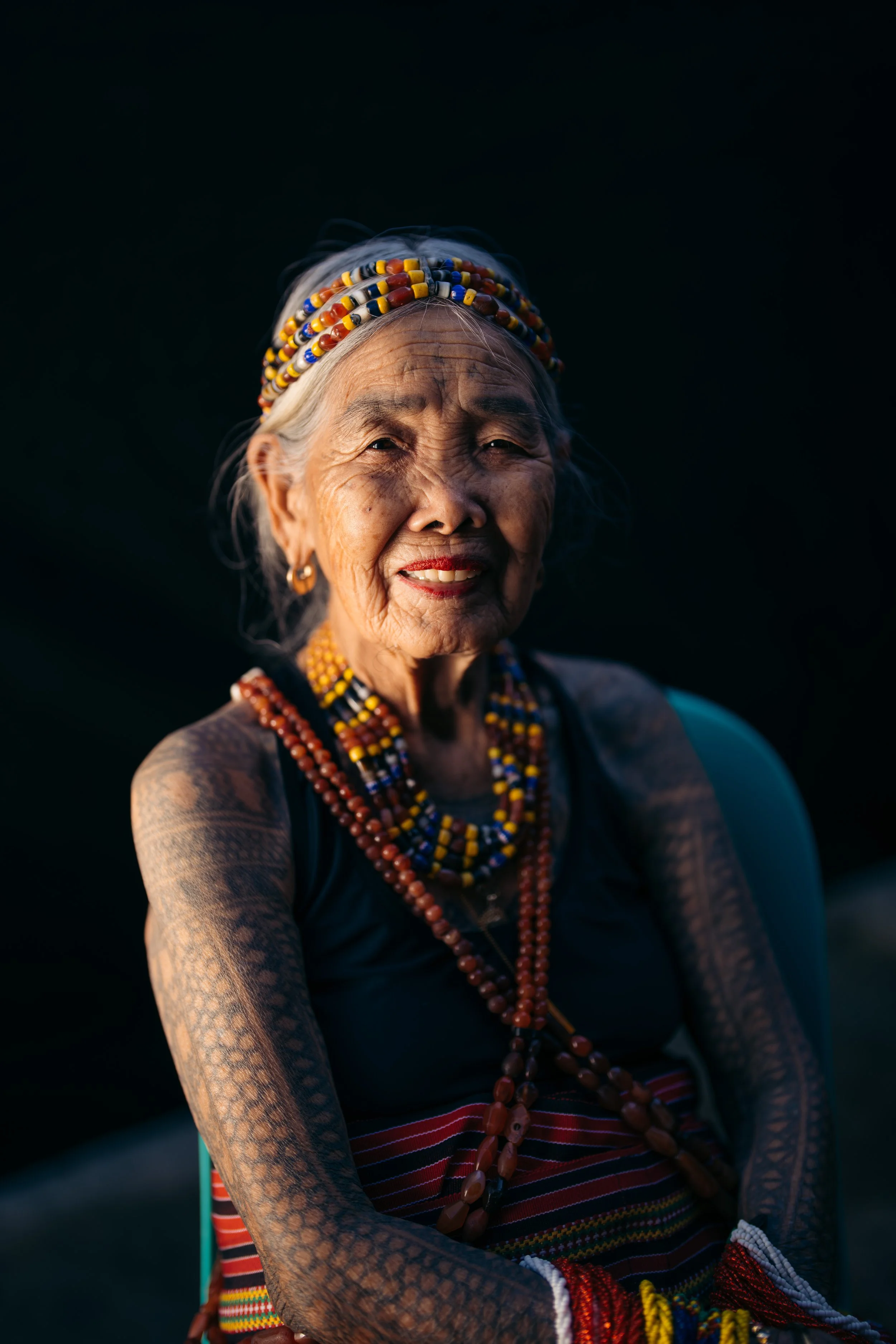
Apo Whang-od. Photo by Emmett Sparling
Another motivation behind the film was that Donguines felt he had lost touch with his home culture after immigrating to Canada. “I moved to Vancouver where I don’t have any family because I wanted to reinvent myself,” he explains. But the more he’s worked in film, the more his passion has been drawn to telling stories of the Filipino community and experience.
In the film, Donguines describes growing up in a Philippines where tattoos were strictly prohibited and long associated with gang activity. But the more he researched the cultural form, the more he realized it predates colonialism and has deep roots in the culture. “It’s the only thing that remains today that’s 100-percent Filipino,” as he says in the film he narrates.
“This was a tattoo tradition that survived 333 years of Spanish colonization—and on top of that were the Japanese and Americans,” he explains to Stir.
With the help of American anthropologist Lars Krutak, of the Discovery Channel’s Tattoo Hunter series, Donguines is able to trace the recent evolution of hand-tapped tattoos from a sacred tribal practice to a draw for tattoo tourism for the wider world. Buscalan has grown into a place where the luminous, magnetic Apo Whang-od has been able to pass hand-tapping traditions down to an ever-growing new generation. Part of her renown in the Philippines and the rest of the world is due to the work of Krutak, whose show travelled to Buscalan as part of a journey around the globe finding vanishing forms of body modification. Ever adorned with vibrant red lipstick and multicoloured beads, the stunning, tattoo-emblazoned centenarian has also recently made the pages of Vogue Philippines.
Donguines sees the attention of the world on Buscalan as mostly a positive thing. “If it wasn’t for the tattoo tourism, the village wouldn’t have been able to sustain itself,” he says, then adds: “But sometimes visitors need to be a little more educated about the people and place they're visiting. We saw people that would come up, get their tattoo and leave the next day. You need to understand why you’re going up there and the purpose, and also have an open mind about how this practice has stayed alive.”
Donguines has been forever changed by his time in the clouds with Apo Whang-od and the people of Buscalan. In April, he went back to show the film for the first time. Donguines still gets emotional thinking back to the warm reception for a film that was worth both the arduous physical journey and also the years-long meticulous research and consultation with everyone from village elders to the Philippines’ National Commission on Indigenous Peoples.
“There was so much gratitude from the people,” he says of the screening in the clouds. “I’m really grateful for the community—it’s really made by the community in Buscalan.” 

Related Articles