Anita Majumdar’s Why We Work Out is an exercise in understanding, at Indian Summer Festival
Presented by the fest and Boca del Lupo, the multifaceted one-woman show carries long-standing reflections on workout culture and the life-altering effects of a pandemic
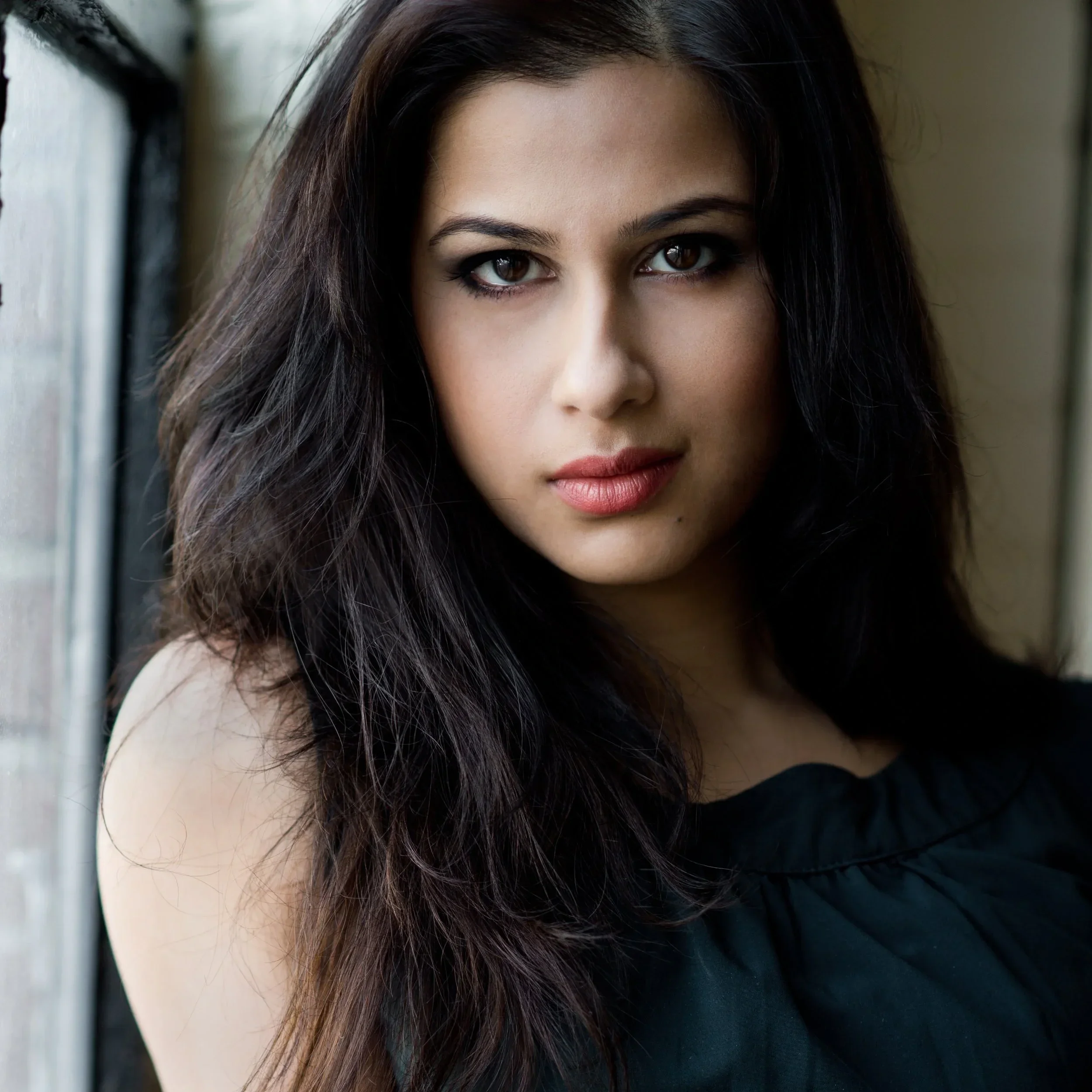
Anita Majumdar
Indian Summer Festival and Boca del Lupo present Why We Work Out at the Fishbowl from July 15 to 18
ANITA MAJUMDAR’S IDENTITY as a South Asian Canadian has always been tied up in the way she moves. Like many Bengali people, she and her family are devotees of Kali, the Hindu goddess of time, destruction, and death. Though often taking a violent role, Kali is also a maternal figure—one whose power comes directly from her body.
“Her place is about strength,” Majumdar tells Stir in a Zoom interview, “both internal strength, spiritual strength, but also physical strength."
Growing up as one of only a few Bengali people in the then small town of Port Moody, Majumdar took comfort in Kali’s strength and tried to bring it out in herself. Now she works as a playwright, actor, and dancer trained in the Indian classical tradition. Her latest show, Why We Work Out—set to open at the Fishbowl on Granville Island as part of Indian Summer Festival 2026—is an autobiographical narrative that explores Majumdar’s relationship with exercise and her body in parallel to the events that made her who she is.
“I really want to explore how it [exercise] changes as the body changes, as a woman’s body goes through various stages of life, through my own specific lens of being someone who is in her body because of her work.”
It’s that work—dancing, acting, performing onstage—that makes the physicality of Majumdar’s body such a strong current in her life. It’s possible to chart Majumdar’s life by the ebbs and flows of her training regimens, by the distinct aesthetics of the exercise videos she works out with.
In the years before the COVID-19 pandemic, that was the genesis of Why We Work Out—an autobiographical one-woman show that wove narrative into the contours of a workout. The pandemic put that on hold.
“COVID was such a blip in my overall story as a person who works out,” says Majumdar. She contracted the virus relatively early on, and it shook up her relationship with exercise. Majumdar still struggles with the lingering impacts of long COVID, and she’s had to adjust her training—along with the production schedule for Why We Work Out—accordingly.
“On top of not being able to meet in person and continue developing the show, my health also had a massive impact on how quickly we were able to figure out what the show was,” Majumdar says. About 80 per cent of Why We Work Out, as Majumdar originally envisioned it, saw her actively moving, and the constraints that COVID put on her lungs made that nearly impossible.
“Luckily, that has sort of evened out. I’ve been able to find a balance,” says Majumdar. “But it was really, really challenging, and to the betterment of the show, quite honestly.”
All the extra time COVID forced on the production of Why We Work Out gave Majumdar some breathing room to get used to the idea of playing herself. Majumdar was used to playing fictional characters, used to keeping a comfortable distance between herself and the performance. With autobiography, most of that distance is gone.
“It’s always easiest to just be able to say, ‘That’s not me. I’m playing a character,’” Majumdar says. “And here—yes, I’m playing a performed version of myself, but it’s still my name… In this position, I’m both judging myself on behalf of myself and also on behalf of the audience.”
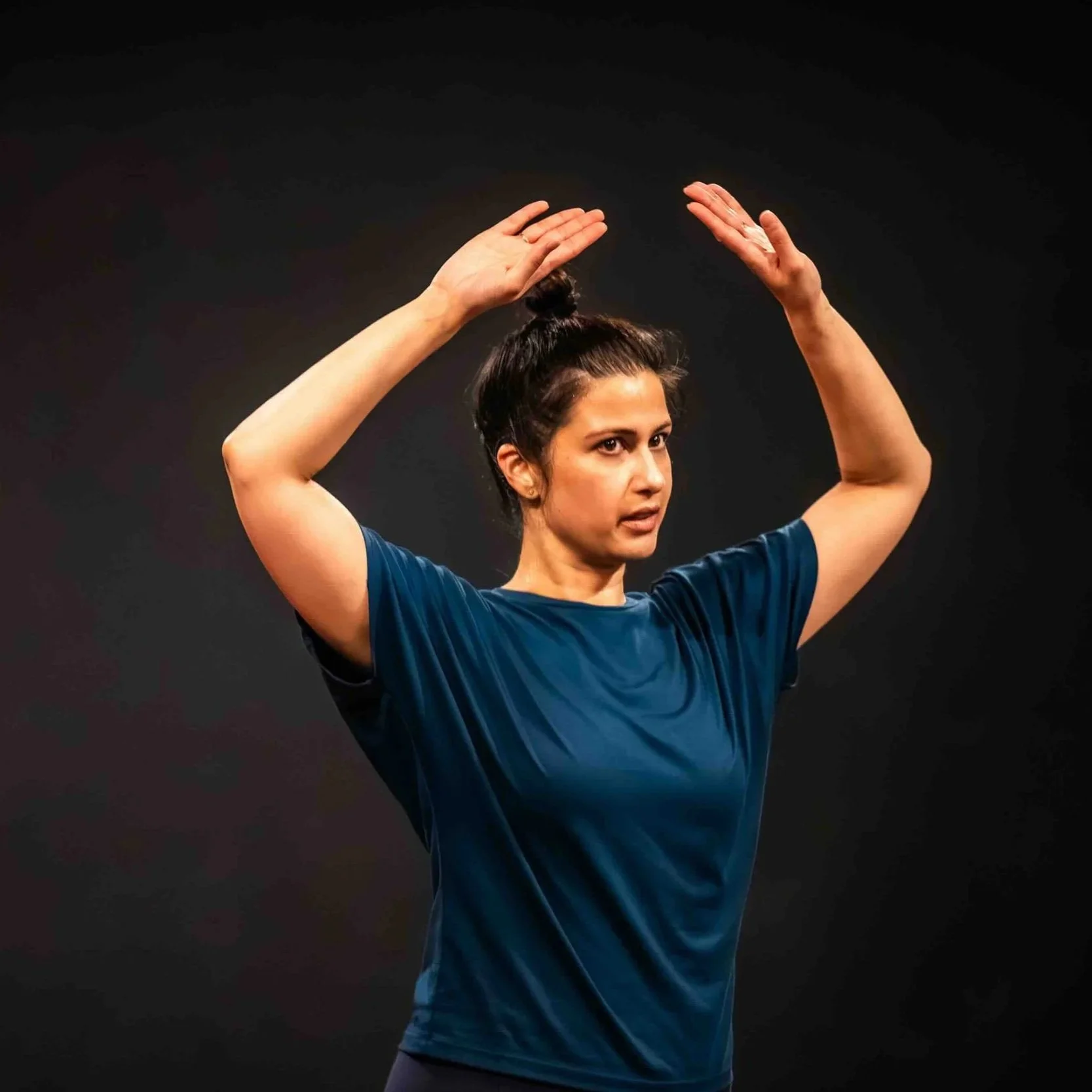
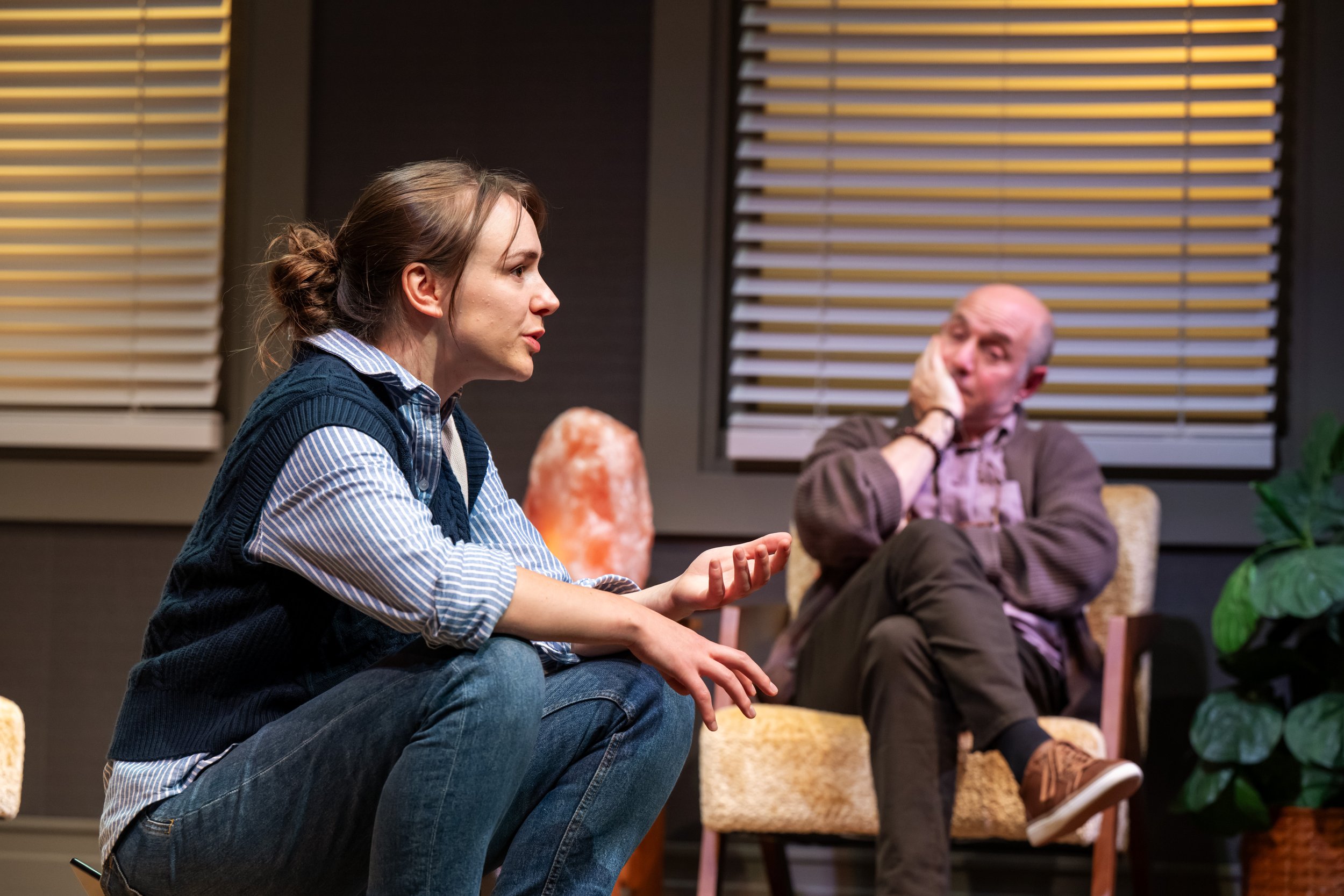
Anita Majumdar in Why We Work Out. Photo by Dahlia Katz
That self-judgment isn’t new for Majumdar. It’s a feeling that anyone who exercises—from park walkers to ultramarathoners—is likely to recognize. It can be difficult, Majumdar says, to divorce the personal feeling of working out from normative judgments about what exercise should look like. With Why We Work Out, she hopes to deconstruct those tacit images and show that health doesn’t have a single look.
“A jumping jack looks different on each of us” she says, “because of our experience, because of our limitations, the obstacles we find to doing that movement. If there’s any place where I hope there’s a reckoning around judgment and working out, I hope it’s there.”
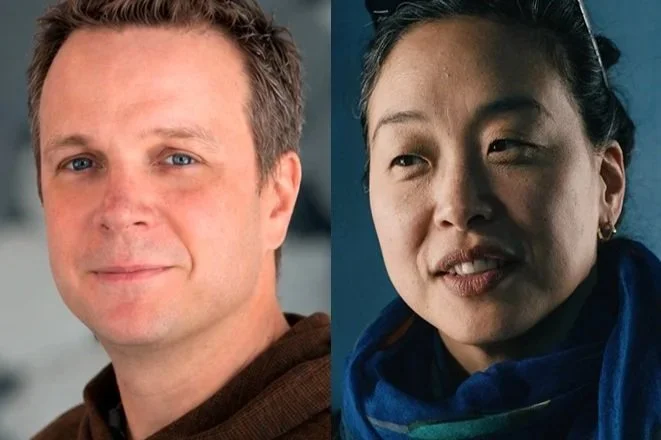
Considering the vulnerability that autobiography requires, Majumdar is glad to be working with long-time friend and collaborator Brian Quirt, the director of Why We Work Out. Majumdar and Quirt first collaborated on the premiere of Anosh Irani’s Bombay Black in 2006.
“We really recognized that we spoke a similar artistic language,” Majumdar says. “It felt important to have someone where there was a base understanding of safety. I’m not quite sure how I could develop the show with anyone else, because of how challenging it has been.”
Majumdar hopes Why We Work Out resonates, but she’s hesitant to ascribe too much meaning to it. The show presents audiences with one version of what it means to work out—her version. Majumdar doesn’t want to be prescriptive, and she’s excited to hear how her experiences with exercise compare with those of her audience.
“For me, whatever you walk away with is the right thing. In this age of right answers and right bodies, [I want] to leave space for what you actually think without anyone else’s impression, without anyone else’s authority.” 
Related Articles