Canadian Psycho carves space for diversity with a meat cleaver
In their wickedly witty solo show at the Firehall Arts Centre, writer-actor Marlene Ginader and director Jenna Rodgers satirize the white-male-dominated world of the serial killer

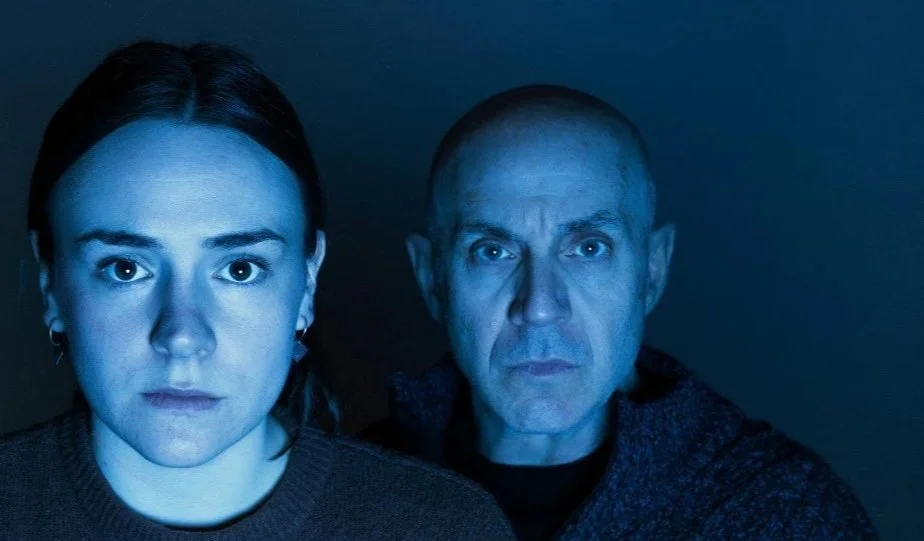
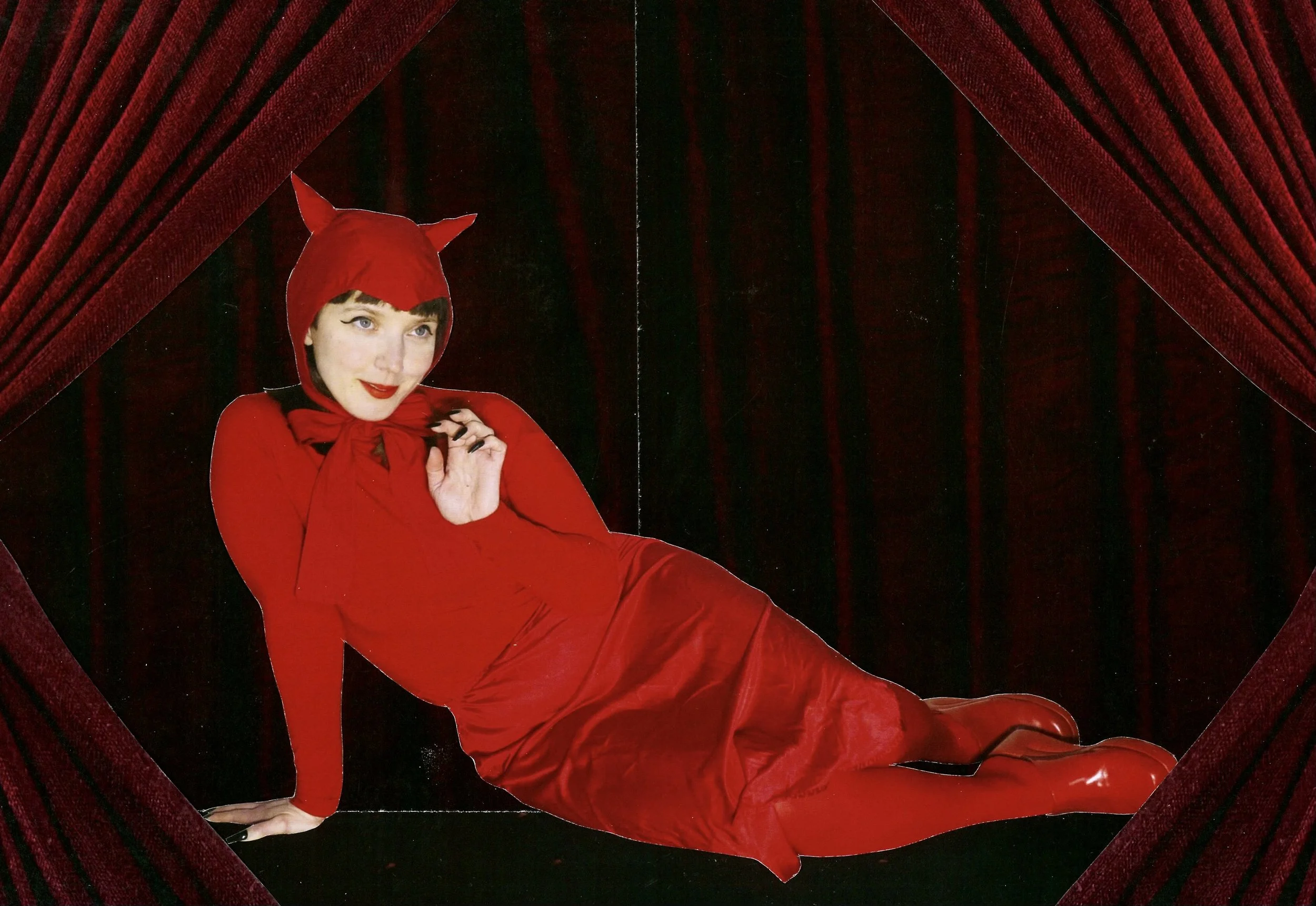
Marlene Ginader in Canadian Psycho. Photo by Chelsey Stuyt
The Firehall Arts Centre presents the ITSAZOO and Vancouver Asian Canadian Theatre production of Canadian Psycho at the Firehall from March 31 to April 12
MARLENE GINADER WISHES there were more POC serial killers—in the movies at least. She’s tired of white men always getting the juiciest, most scene-stealing roles in every crime drama. These parts—Anthony Perkins in Psycho, Javier Bardem in No Country for Old Men, Anthony Hopkins in The Silence of the Lambs—are challenging, impressive, and rarely snubbed when awards season rolls around. On top of that, Ginader says they’re just the most fun. But there’s one problem with these prestige parts: with a few exceptions, they’re all for white men.
Ginader remembers watching David Fincher’s true-crime drama series Mindhunter and thinking, “These roles are so good, but I’ll never be in that.” With her new one-person show Canadian Psycho, she’s giving herself that chance. The play, which debuts at the Firehall Arts Centre on March 31, is a multimedia satire written by and starring Ginader in the role of “a half-Asian woman who’s frustrated by the lack of inclusion in the serial killer space”.
“She doesn’t see herself in true crime as anything other than a victim,” Ginader tells Stir in a telephone interview. “And she comes to the realization that maybe she has to affect change in the real world in order for that to be represented onscreen.”
As an Asian-Canadian actor, representation for Ginader is not just a question of who she sees on TV—it directly affects her career, the roles she’s cast in, and the shape of her professional self-image. “My perceived identity has a lot to do with the opportunities I get,” she says.
It’s only natural, then, that the identity of Canadian Psycho itself is somewhat fragmented and hard to pin down, somewhere between a fever dream and an algorithmic nightmare. In a Zoom interview with Stir, the play’s director, Jenna Rodgers, says it has “a flavour reminiscent of your nightly scrolling experience where, with every scene change, we are catapulted into something that might be loosely related, but feels like a different aesthetic.”
Ginader first conceived the play as a loose collection of music, videos, and written scenes.
“I was just making whatever I had the impulse to make,” she says. The show’s multimedia format came before Ginader had a linear plot nailed down. She met Rodgers at the Banff Centre’s Playwrights Lab a few years ago. At that point, she was still in the early drafting stages—Rodgers helped her apply for grants and workshop the show over the next few years. When Ginader was ready to go to production, the choice of director was obvious, especially given the fact that Rodgers had experience incorporating video and music in theatre.
“I’ve had the great fortune of working on a few more technically demanding productions,” she says. Even so, the scale of Canadian Psycho is new to her—the only one-person show she’s worked on before was shut down by COVID before production. Rodgers says it’s fun to take the knowledge she’s gained from working on bigger, tech-heavy productions “and scale it down to a more intimate setting to do something a little bit more weird and wacky and, personally, very relevant to me.”

Jenna Rodgers
The issue of representation that Canadian Psycho questions is close to Rodgers’s heart as well.
“In this industry, part of your identity ends up becoming a commodity,” she says. “It becomes really important for us to talk about how we put ourselves into the public sphere.”
It’s a heavy topic, but Canadian Psycho keeps it light. Ginader says the true-crime genre and the idea of a woman becoming a serial killer in the name of diversity was a fun way to look at representation as a premise. “It was so ridiculous that I could take it really far, take it out of the day-to-day, and use satire to talk about those things,” she says.
Ginader adds she drew on The Colbert Report, R.F. Kuang’s novel Yellowface, and the work of comedian and YouTuber Ziwe, for the tone of her own comedic voice.
Rodgers says she’s seen the play referred to as “a satire about diversity gone too far,” but it’s not a reactionary story. It pokes fun at everything from social media to right-wing ideologues, with Ginader’s performance anchoring things the whole way through. This is Ginader’s first time taking centre stage as the star of her own show, and she says the feeling of ownership is freeing when she has to discuss her work. True to form, she thinks of it in terms of representation.
“I’m more comfortable talking about my own thing than I am speaking on behalf of something. I was always worried that I wouldn’t represent [someone else’s work] the way they wanted me to.” It’s quite a relief, she jokes. “Now I just have to worry that I’m not representing myself the way I want.” 

Related Articles