Theatre review: Uplifting and offbeat, Kimberly Akimbo finds sweetness and truth in time running out
Arts Club Theatre Company musical is buoyed by strong performances, soaring music, and sharp comedy
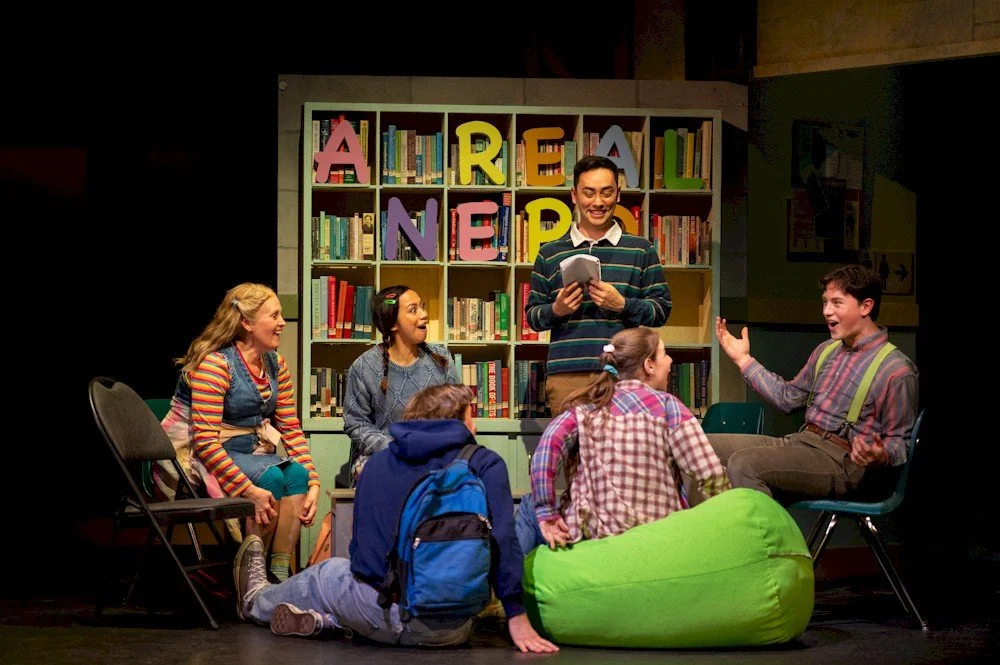
Kimberly Akimbo. Photo by Moonrider Productions
The Arts Club Theatre Company presents Kimberly Akimbo at the Stanley BFL CANADA Stage to May 3
FOR SOME, TIME is something to be feared; for others, it’s the key to their future hopes and dreams. Despite this weighty theme underscoring the Arts Club Theatre Company’s production of Kimberly Akimbo, the musical is ultimately a tender, quietly uplifting experience—one that invites both adolescent nostalgia and adult self-reflection.
Under Ashlie Corcoran’s sensitive direction of the Tony Award–winning script, the production glows, led by a luminous performance from Lisa Horner and buoyed by the genuine heart of the entire cast and creative team.
Set in Bergen County, New Jersey, in 1999, the story centres on Kimberly Levaco (Horner), a soon-to-be 16-year-old with a rare genetic condition that causes her body to age rapidly. Though still a child, Kimberly appears to be a woman in her 70s. We first meet her at Skater Planet, a local rink where she and her classmates—Martin, Aaron, Delia, and Teresa—hang out on a Saturday night. The teens embody the hallmarks of adolescence, from raging hormones to painful insecurity, and as show-choir kids, they’re also not the most popular at school. Kimberly’s crush, the earnest and tuba-playing Seth, also happens to work at the rink.
Kimberly’s father Buddy struggles with alcoholism, while her mother Pattie—pregnant with a second child—has both hands in casts following carpal tunnel surgery. Pattie harbours an intense fear of dying young and keeps a video diary so her unborn child might one day know her. The family has recently fled Lodi, New Jersey, following a mysterious incident they’re desperate to keep secret—one that involves Kimberly’s criminal aunt Debra. Naturally, Debra finds them. Armed with a sketchy, “slightly illegal” scheme, she pulls Kimberly and her classmates into her orbit just as Kimberly’s 16th birthday approaches—the same age as her projected life expectancy.
David Lindsay-Abaire’s book (adapted from his play) is clever and refreshingly odd. While Kimberly’s condition is undeniably a unique narrative hook, the story’s power lies in its richly drawn world. The show-choir kids scramble to raise funds for sequined costumes. Seth finds comfort in turning names into anagrams. Debra plots an elaborate mailbox theft and a basement chemistry lab. All of it hums with teenage aspirations, while Debra’s unfolding plan supplies momentum and tension beneath the humour.
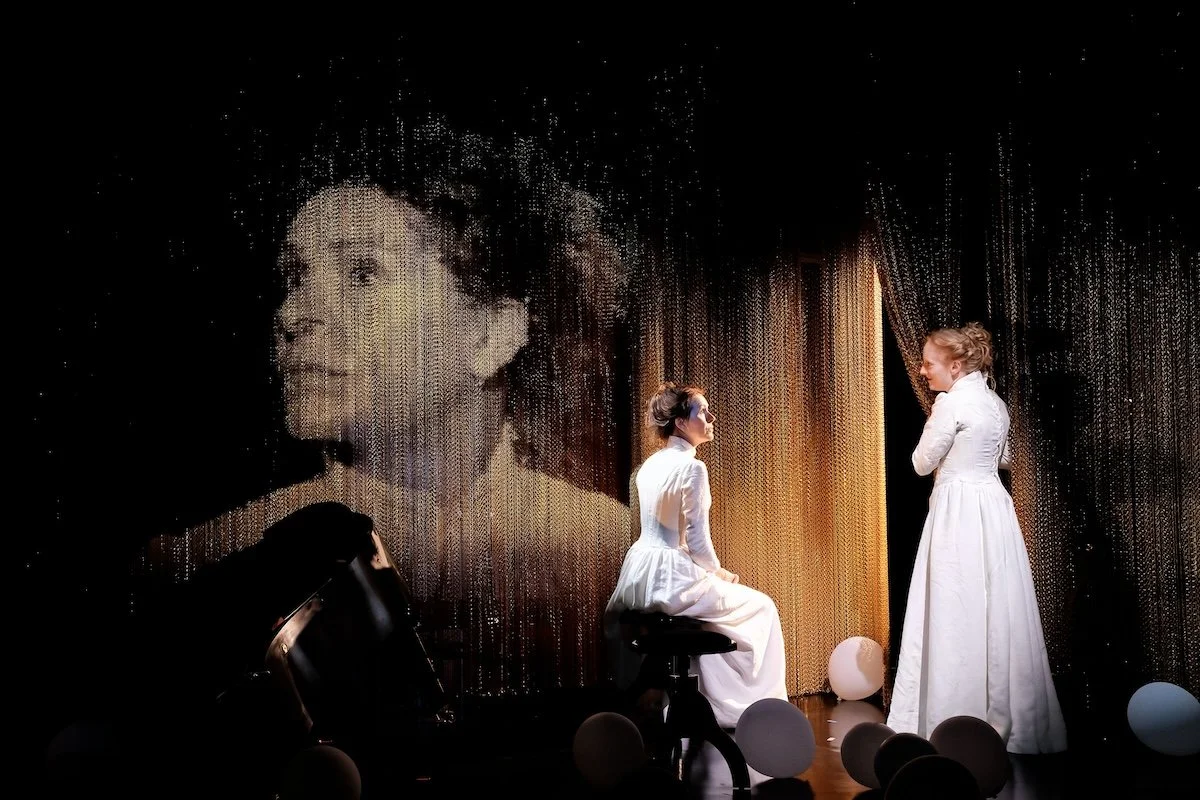
The score by Jeanine Tesori and Lindsay-Abaire—under Caitlin Hayes’s masterful musical direction and energized by Shelley Stewart Hunt’s choreography—is a model of musical-theatre storytelling. Songs are lean and purposeful, each lyric revealing character or advancing plot, in collaboration with movement. The opening number, “Skater Planet,” cleverly introduces Kimberly, Seth, and the show-choir kids in a few short moments, including backstories. Pam Johnson’s multifunctional set—a collage of lockers, muted walls, and scaffolding—keeps the action fluid, aided by sliding panels that reveal new locales, and a compact revolving platform.
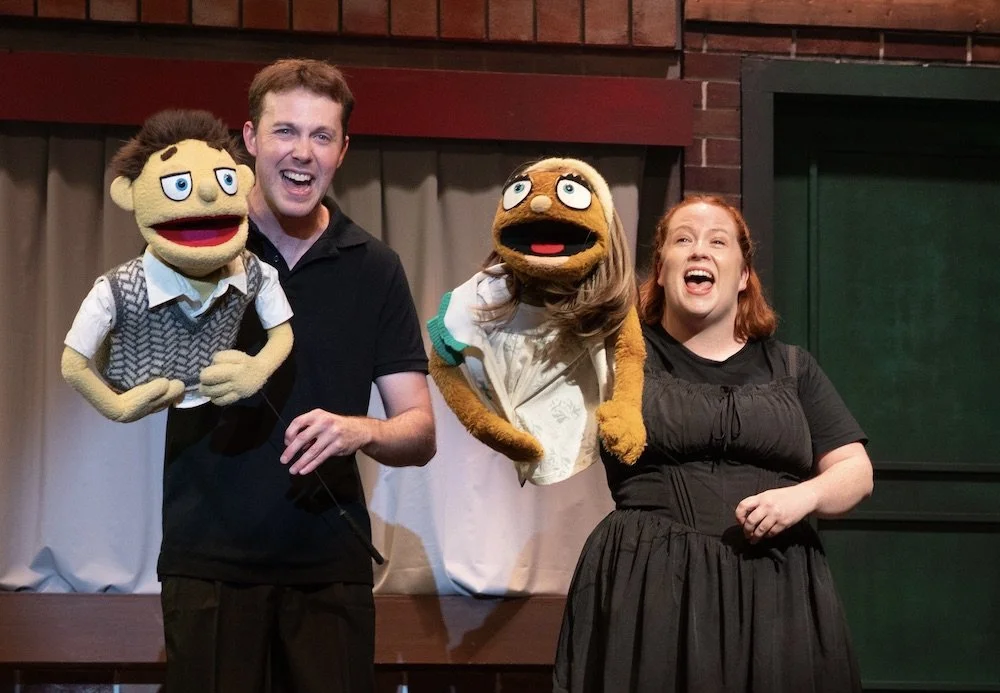
Horner’s performance is extraordinary in its nuance. She so fully inhabits Kimberly’s adolescent spirit that she’s tremendously believable as a teen. Every detail—the restless swing of her foot, her posture, her vocal inflection—rings authentic. Her solo “Make a Wish”, in which Kimberly pens a letter to the foundation, is quietly devastating, balancing youthful imagination with clear-eyed acceptance of her situation.
As Pattie, Steffanie Davis delivers sharp comedy alongside aching vulnerability, particularly in her video diary solo “Hello, Darling.” Josh Epstein brings warmth and complexity to Buddy, capturing both his failings and his love for his daughter. His standout moment, “I Should Be Happy for Her”, unfolds as a wry, moving internal monologue sung while driving Kimberly and Seth to school.
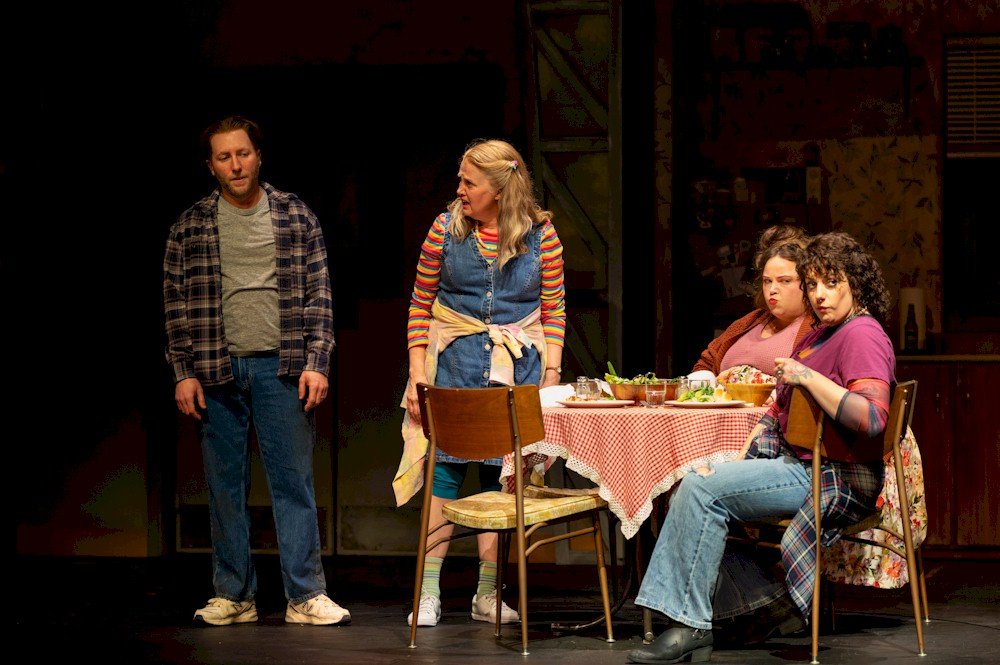
Kimberly Akimbo. Photo by Moonrider Productions
Jason Sakaki’s Seth is all nerves and sincerity, making the central romance feel grounded despite its extraordinary circumstances. Madeleine Suddaby revels in Debra’s amorality, playing her as gleefully manipulative and vocally commanding in numbers like “Better” and “How to Wash a Check”. Supporting these numbers, Sarah Cantuba, Angella Cody, Joaquín Little, and James Ross bring comic precision, stellar dance moves (especially from Little), and emotional credibility to the show-choir teens. Their show-stopping “Our Disease”—a biology presentation performed as an absurd, high-energy musical about scurvy and fasciolosis—is a highlight, fuelled by Hunt’s purposely over-the-top choreography. Another standout element of the production is the staging of the ice-skating scenes, skillfully pulled off by the cast. (This is made possible by a plexiglass surface over the stage, treated with a glycerin product.)
One of Kimberly Akimbo’s great strengths is that even without its central medical condition, the story would still resonate as a poignant coming-of-age tale. Kimberly’s disorder heightens the stakes but never overwhelms the humanity at the core. In the closing number “Great Adventure”, the cast sings, “No one gets a second time around”—a reminder to embrace life as it is, in whatever moment we find ourselves.
It’s a fitting sentiment for a show that gently holds up a mirror to our shared fears, hopes, and desires for connection, celebrating the beauty of imperfection and the urgency of living fully while we can. 

Related Articles