Theatre review: The Undeniable Accusations of Red Cadmium Light grapples adeptly with tensions around pretendianism
At the Firehall Arts Centre, Drew Hayden Taylor draws complex characters and sharp comedic artworld moments in a play that really kicks into gear in second act
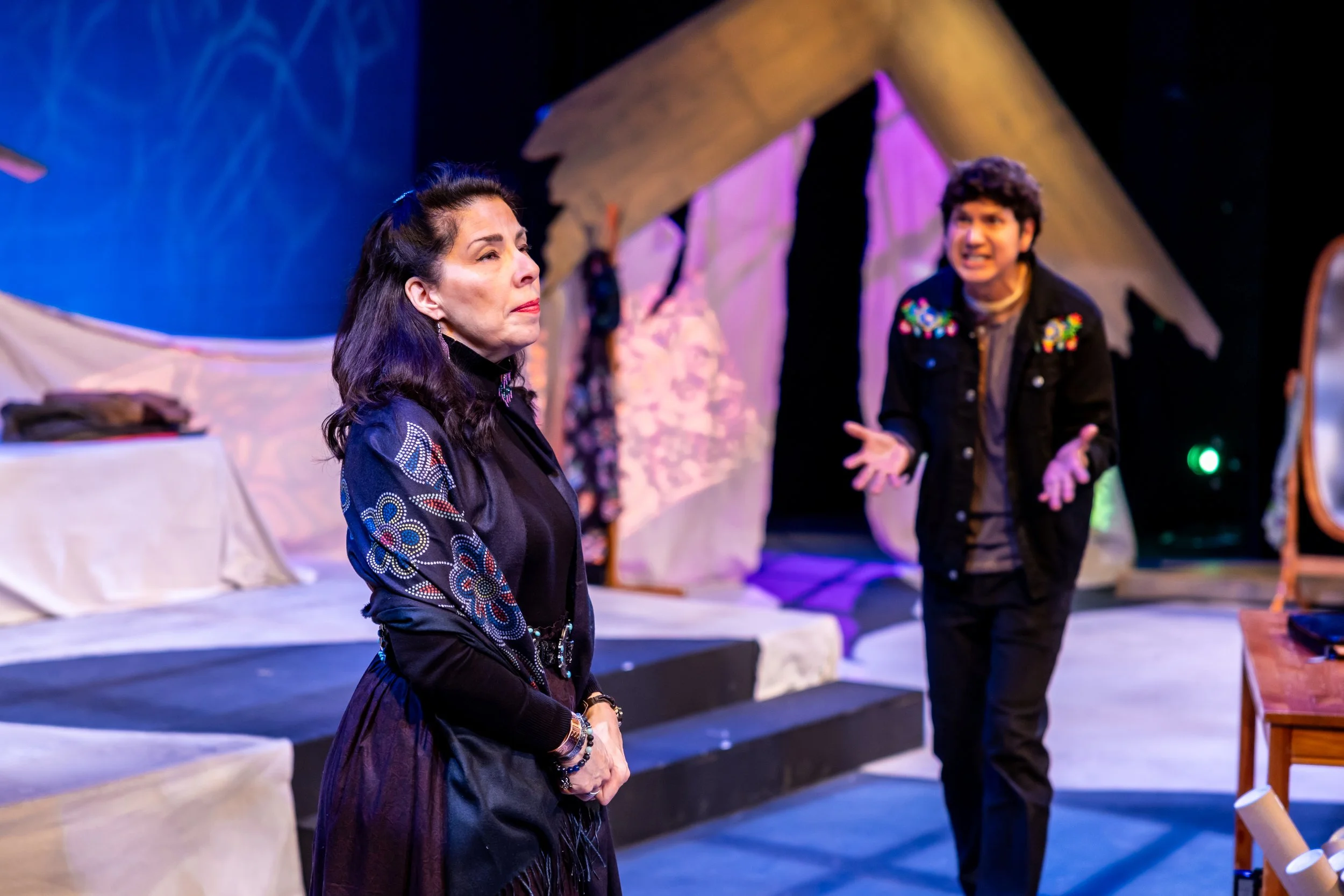
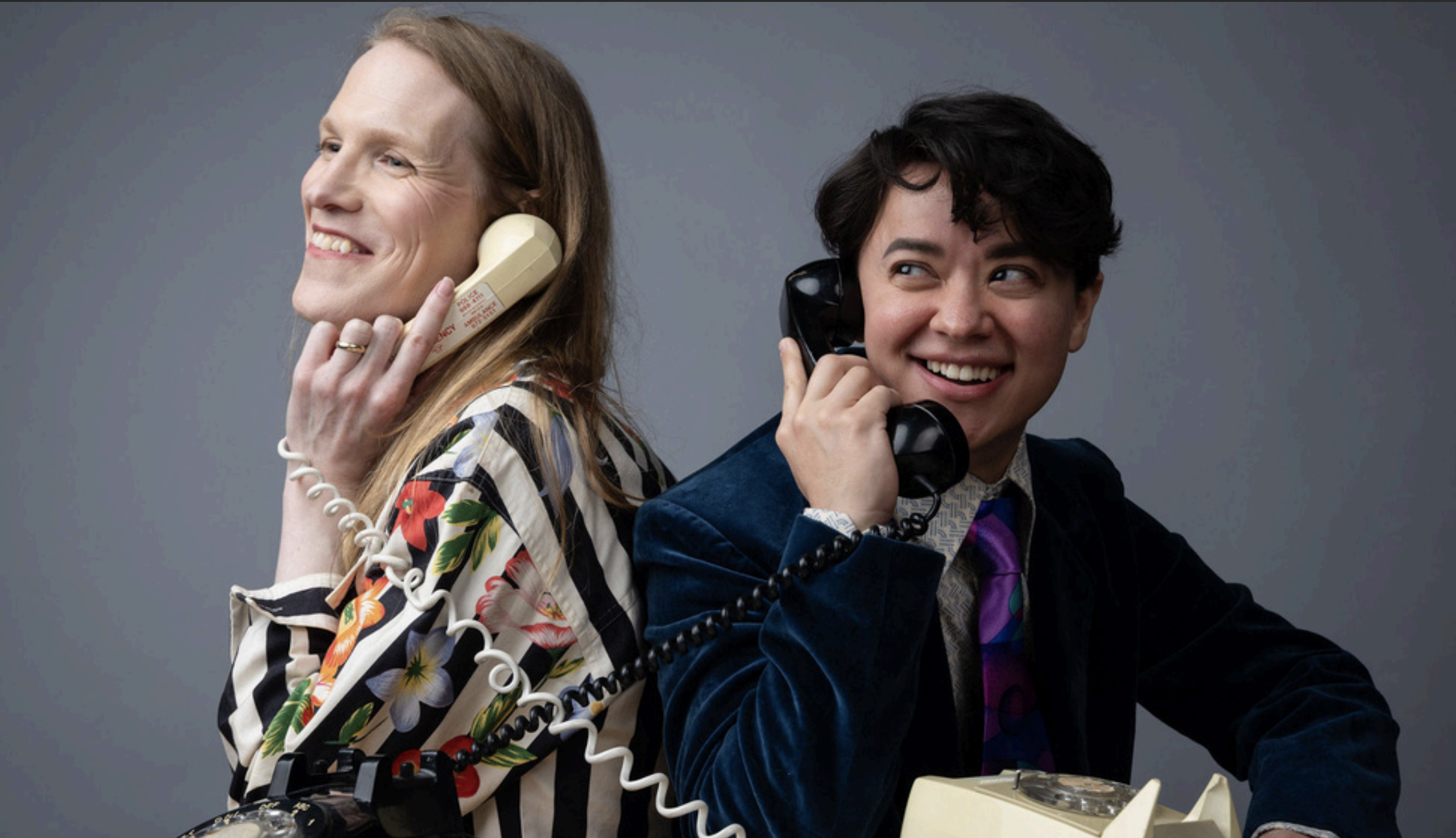
The Undeniable Accusations of Red Cadmium Light’s Anita Wittenberg and Tyson Night. Photo by Jon Benjamin Photography
The Undeniable Accusations of Red Cadmium Light runs to May 3 at the Firehall Arts Centre
IN THE UNDENIABLE Accusations of Red Cadmium Light, Anita Wittenberg stars as Nazhi, a celebrated Indigenous art expert with a major show opening on the horizon. As a revelation comes to the surface toward the end of Act 1, which will be hard not to spoil here, Drew Hayden Taylor’s latest play unfolds as a drama with tinges of comedy, taking on the realities of pretendianism and the tensions that surface when an uncomfortable truth is put up against different ways of seeing it.
The play begins and remains in Nazhi’s gallery and living space on an Otter Lake reserve. It is entirely her domain, surrounded by the work of artists like Roy Thomas, Carl Beam, and her late husband. She’s also a recognized fake spotter, turning her discerning eye to a suspected fraudulent Norval Morrisseau painting when an eager Cayuga Six Nations reporter, Martine, arrives to interview her about forgery in Indigenous art. The scrutiny, ironically, turns back onto Nazhi herself.
It’s within this space that Red Cadmium Light takes on a complex issue and is pretty clear-eyed about where it stands, treating pretendianism as a form of moral, social, and cultural theft. It does so by letting the tensions and resentments play out between the people caught up in it—those who commit the offence and those most affected by it. Early on, before learning about her stepmother’s alleged fraud, Beverly, Nazhi’s stepdaughter (an Indigenous educator lined up for a big promotion), puts it simply: “Every time there’s a splash in the pond, we all feel the ripple.”
What the play does well is sketch out its characters, so we know them once they find themselves in choppy waters. However, the first act takes a long time to get to where it’s going, and the reveal it builds toward does not exactly come as a big surprise.
When it does arrive, it changes the air in the room. Tyson Night’s Martine shifts from stumbling and starry-eyed to something much more pointed, even a little unsettling. The self-righteous anger at the truth he has uncovered is compelling, and there is a sense of genuine hurt underneath it that lands with both some cruelty and a gratifyingly unbridled and unapologetic sense of justice.
Pitted against Nazhi’s complete self-denial, each character settles further into their position. The tension, then, comes from seeing how long Nazhi can hold her ground when pushed, and how that begins to reshape her relationship with Beverly.
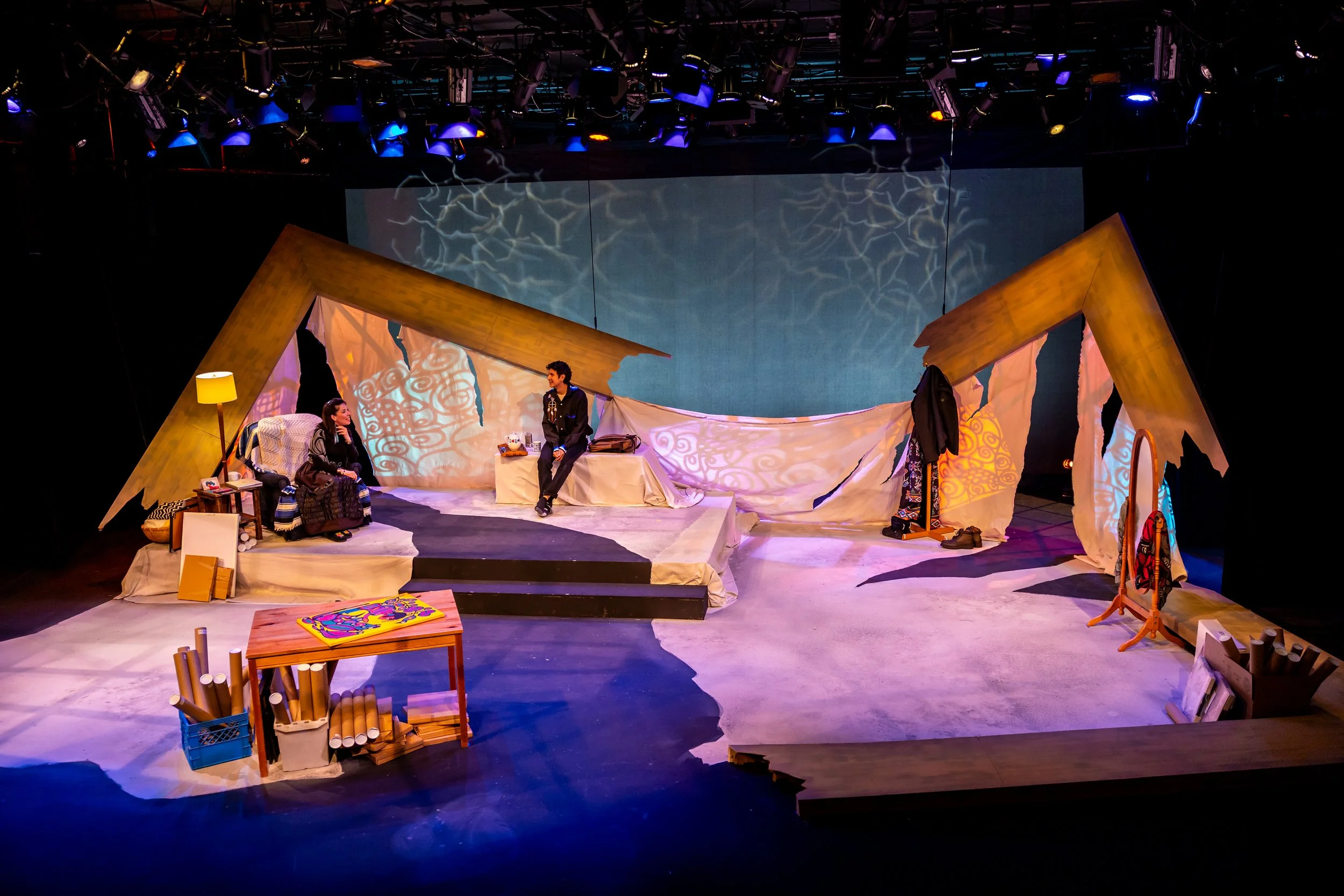
The Undeniable Accusations of Red Cadmium Light, with Anita Wittenberg and Tyson Night. Photo by Jon Benjamin Photography
As Beverly, Kaitlyn Yott is—and this might sound strange to say—a joy to watch spiral. She carries the stakes most directly, moving between an anxious need for control and real-time emotional processing. It’s with her character where the play feels most alive and grounded. She also lands some of the play’s more witty and sardonic lines, like “You are a tofu burger. You are dealcoholized beer. You are a gun shooting cultural blanks,” or “You’ve been Buffied,” making reference, of course, to the high-profile allegations of pretendianism against Buffy Saint-Marie.
Nazhi also offers moments of comedy. The shift from a spunky, self-assured woman, happy to be interviewed, to a more paranoid and reclusive figure in the second half is believable and at times darkly funny as portrayed by Wittenberg. She fully leans into the character’s more out-of-touch perspective, especially in how she frames the past as a time when Indigeneity was something to be endured, not claimed, and treats the present as a kind of overcorrection.
Under Columpa Bobb’s direction, the staging is straightforward and restrained, giving the actors space to settle into a rhythm with each other and letting the comedy and verisimilitude in Taylor’s dialogue carry. Charlie Beaver’s set signals early on that something is off, with a torn canvas backdrop framing the space. Rebekah Johnson’s lighting casts shifting, expressive patterns across it, echoing the visual language of the artwork that Nazhi built a life and career around.
What stays with Red Cadmium Light is the emotional weather it creates around it. Its three characters are all responding to the same wound from different distances: denial, moral urgency, betrayal. Nazhi holds onto a version of the past that worked for her, Marten pushes back with a sense of purpose that doesn’t feel entirely neutral, and Beverly is left to deal with the fallout. It pushes past the false notion of a private deceit, but no one really gives ground. They hold where they are, and the ripple moves outward from there. 

Related Articles