Theatre review: Powerful performances and design lift Corey Payette’s On Native Land
Playing at The Cultch’s York Theatre, ambitious Urban Ink and Raven Theatre work wields multiple threads and is bound to ignite discussion of often-neglected Indigenous issues
On Native Land. Photo by David Cooper
The Cultch, Urban Ink, and Rave Theatre present On Native Land at the York Theatre to April 19
COREY PAYETTE’S CONTRIBUTION to our theatre community cannot be overstated. By bringing awareness and insight to important Indigenous issues, he’s given a voice to many who had been silenced. His Children of God remains a landmark work: poetic, devastating, and urgently necessary.
In his newest musical, On Native Land, which recently had its world premiere presented by The Cultch, Urban Ink, and Raven Theatre, Payette again serves as writer, composer-lyricist, and director. He’s helped by some powerful performances and design elements, and the show, while fragmented, begins with much promise.
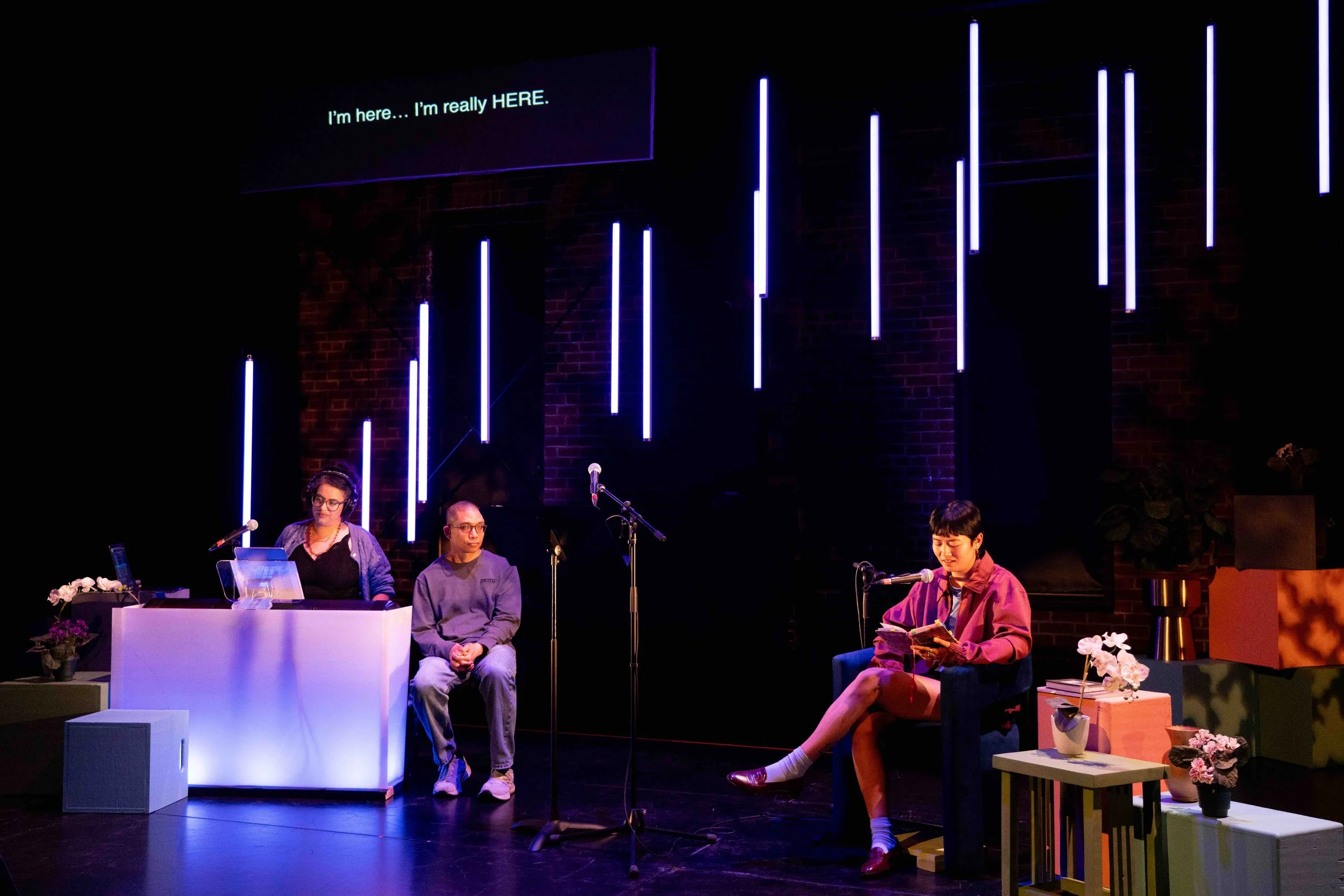
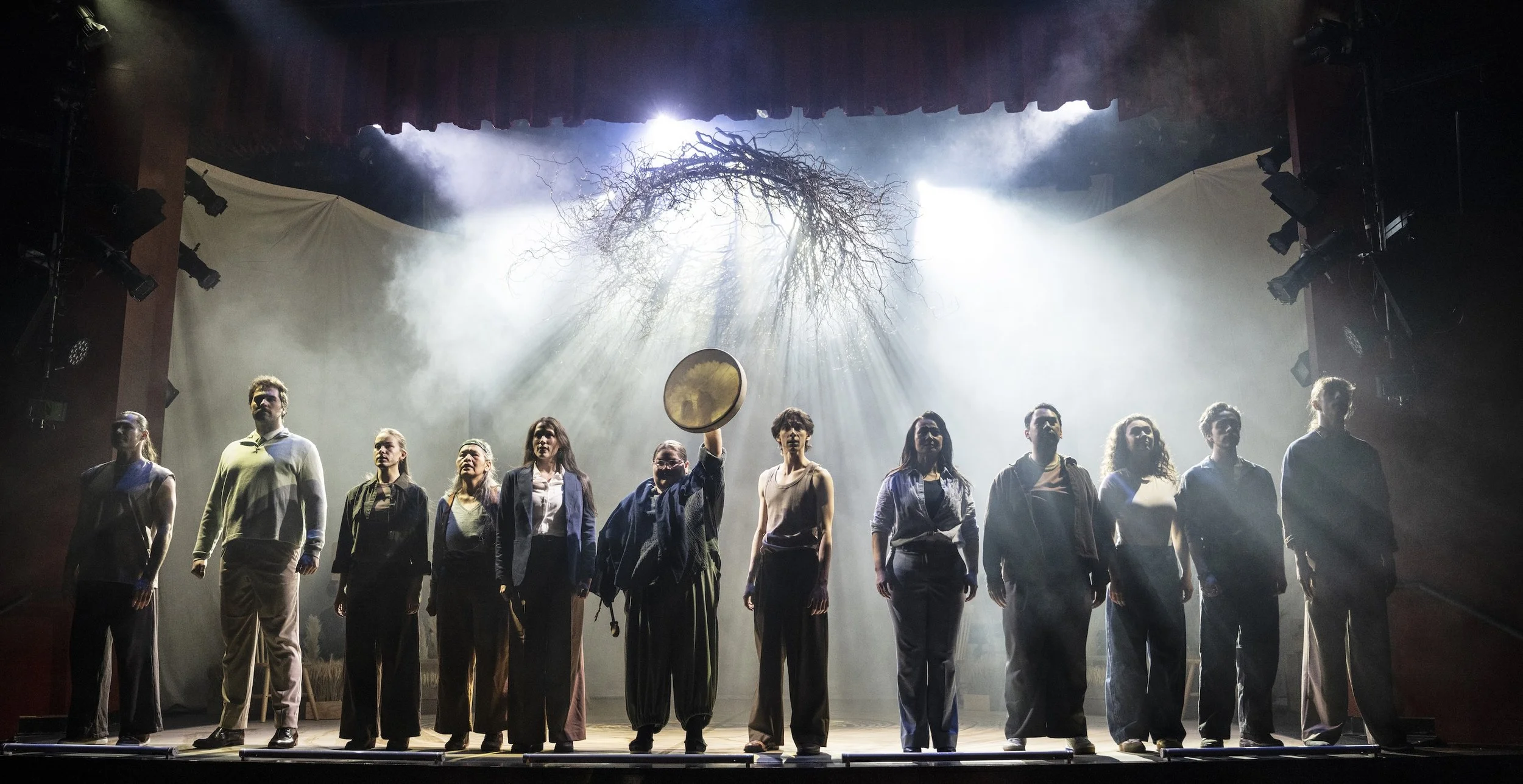
Set designer Alaia Hamer has created an atmospheric, nature-inspired forum for storytelling, with sheaves of golden grain embedded between chairs where the cast and musicians situate themselves when not involved in the onstage action. Above the stage hangs a striking circle of twisted willow, suggesting a bird’s nest and its symbolism of home—or as a metaphor for Indigenous and colonial cultures intertwining. All of this is bathed in Jonathan Kim’s design of radiant, sunshine-like lighting when the audience enters before the show. Later, the look shifts to dramatic tones and shadows to amplify the action.
The show’s narrator is Land itself, embodied by Wahsontí:io Kirby. From their first moments, Kirby charms: they’re funny, direct, and immediately in command, and that’s even before Kirby sings. Within seconds of the opening notes, Kirby electrifies the York Theatre with a gorgeous voice that soars with exquisite tonality and conviction. Land proceeds to introduce the dual protagonists whose parallel narratives drive the show: Rielle, an ambitious Indigenous lawyer representing a high-profile land case, played by Amanda Trapp with authority and impressive singing; and Blood, a singer-songwriter grappling with Indigenous identity, portrayed by Dustyn Forbes.
Something that’s done exceptionally well in On Native Land is the fusing of traditional Indigenous music with the contemporary music-theatre sound. Kirby leads the Indigenous-themed “A Song You Have Every Right to Sing” to bridge the preshow land acknowledgment and the start of the show. As the piece takes us through the history of colonial land settlement in Vancouver, including the historic Gastown fires, Payette’s music transitions into contemporary musical theatre, with songs such as the conversational “Being” and “Waiting” fittingly bringing us into the present.
Still, at key points, On Native Land wobbles. Forbes is a strong singer, but the opening vocal lines Payette has written for Blood are in a high range that sits awkwardly for him. The result is a tentative entrance that undercuts Blood’s credibility as a rising singer. From there, an imbalance emerges between the two storylines.
On Native Land. Photo by David Cooper
Rielle’s opening scene—an exchange with a Chief (played with conviction by Taninli Wright)—clearly sets the stakes: colonial systems in conflict with Indigenous traditions and practice. The narrative question is immediate and legible. And beneath the music, a haunted, unsettled underscore, highlighted in the Chief’s “You’re Not the Same”, is a constant reminder of the underlying tension between Indigenous culture and the plotlines.
Blood’s opening, by contrast, appears to focus on a potential romance with Jakob (a terrifically grounded and thoughtful Zac Bellward). If the show’s aim is to thread personal identity, love, and land into a shared argument, Blood’s path needs to feel as structurally urgent as Rielle’s from the outset. Instead, the parallelism feels out of sync, because their meeting doesn’t register as consequential enough.
As the show moves forward, the desire to hold multiple threads at once—Rielle’s professional and personal complications; the Chief’s family dynamics; and Blood’s struggle to acknowledge his Indigenous roots—poses challenges throughout, with major turns arriving without adequate groundwork. A medical condition escalates dramatically, without being established earlier. Most notably, the two narratives don’t fully connect: a second-act moment suggests a bridge between Blood and Rielle’s worlds, then withdraws it.
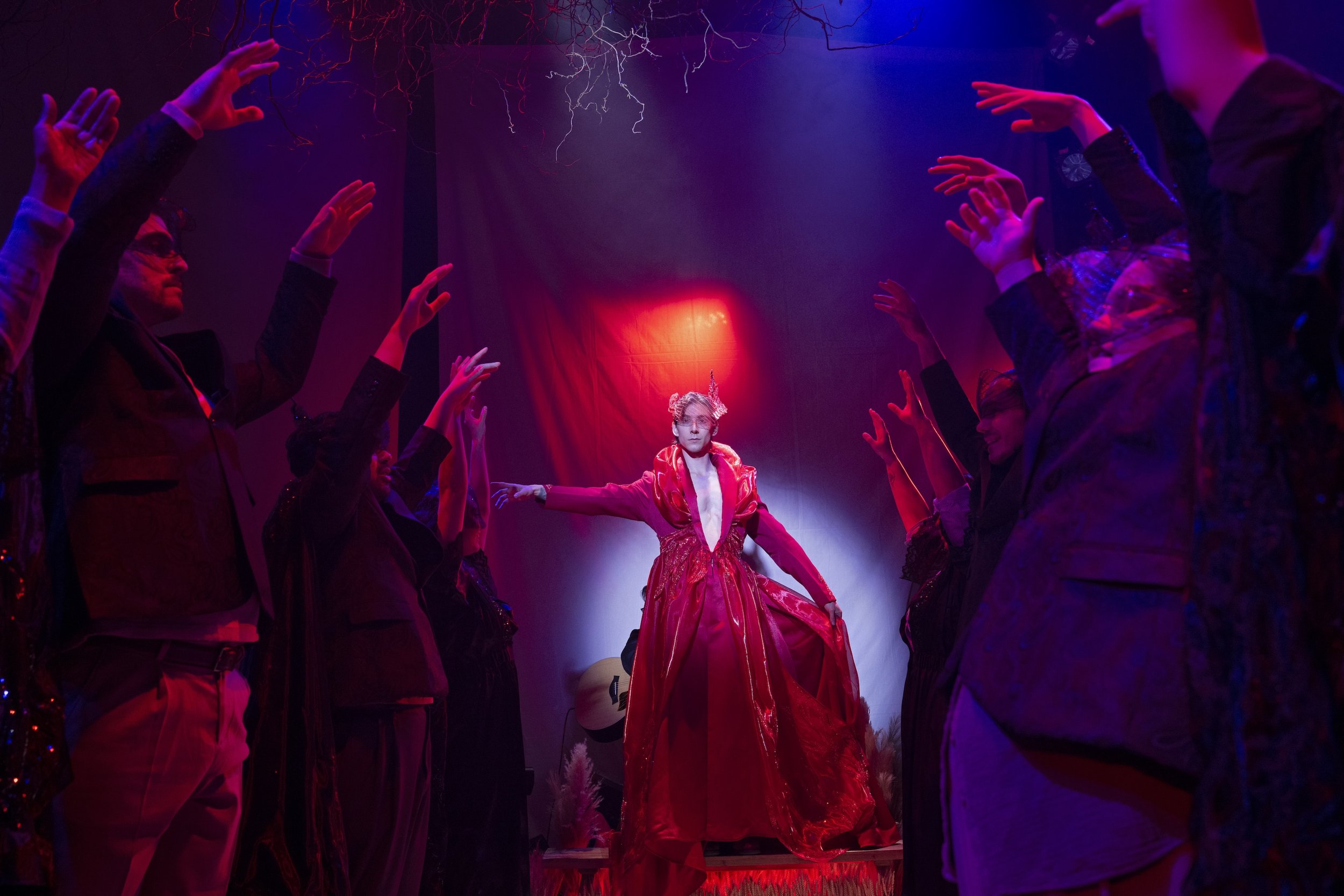
Still, the onstage talent is often powerful. Trapp and Bellward are standouts, creating emotional resonance and connection for their characters. Woike and Jenna Brown—who plays Gracie, one of the Chief’s daughters—deliver gorgeous singing. And choreographer Jera Wolfe and assistant choreographer Nathan Coburn perform a powerful contemporary ballet duet with striking beauty and athleticism. In fact, the duet is one of the show’s strongest storytelling elements, because the movement, along with the addition of menacing, cloaked figures, invites audience interpretation.
With some reworking, the storytelling in On Native Land would have more clarity and greater emotional impact. However, in the show’s current form, the issues faced by its characters—including the continued struggles of Indigenous self-identity and retaining connection to the land—are still unquestionably placed front and centre. Similar to Payette’s previous work, On Native Land will likely spark conversations on topics that might otherwise be brushed aside. If that’s the goal here, this can still be considered a win. 

Related Articles