Arts cuts loom as City of Vancouver passes 2026 “back-to-basics” operating budget
The sector will see a reduction of 12 percent, or $6 million, in funding
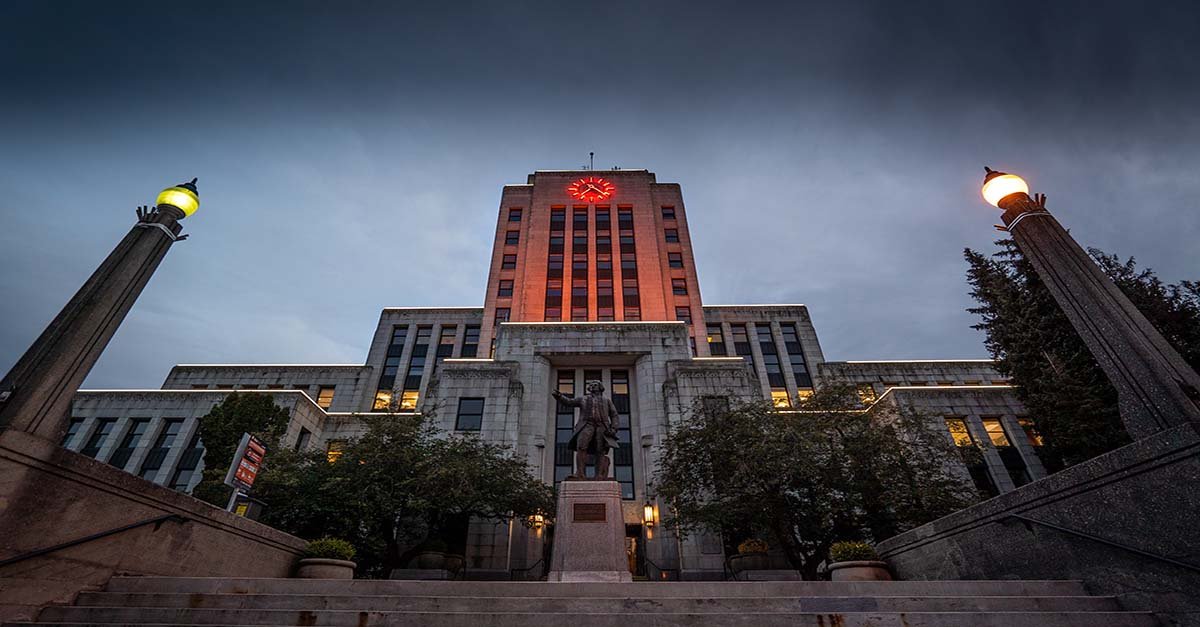
Vancouver City Hall.
VANCOUVER CITY COUNCIL has just voted to approve its 2026 operating budget, which includes a 12 percent reduction in funding for arts, culture, and community services. This is despite warnings about the fallout from a long list of arts leaders over the last two weeks.
“As previous speakers have noted, there is a dearth of information about all of the cuts that will come from this budget,” Vancouver Folk Music Festival board president Erin Mullan said at that city council meeting. “We do know that it will cause profound harm to our city. But the scant budget document fails to spell out what all is on the chopping block.”
To achieve Mayor Ken Sim’s goal of freezing property-tax increases for 2026, the city had to find $120 million in savings and new revenue within its $2.39 billion budget. Today’s reduction to arts, culture, and community services will amount to $6 million in savings. Other major changes include a 14 percent or $5.5 million cut to the planning, urban design, and sustainability budget, and a 10 percent or $50 million increase to the Vancouver Police Department.
“Zero means zero,” said Mayor Sim in his closing remarks, “and this council is committed to doing our part to keep life manageable for residents and businesses….I’m very proud to be voting in favour of this budget.”
The budget was passed with Green Party councillor Pete Fry, Vote Vancouver councillor Rebecca Bligh, COPE councillor Sean Orr, and OneCity councillor Lucy Maloney voting in opposition. Although a number of amendments were proposed today by councillors from all parties, some of which requested more transparency about the specific impacts of proposed funding cuts, most were defeated by the ABC-majority council.
“This is the most opposed budget in history,” said Coun. Orr. “[There are] millions of cuts to services, staff, and programs that will hurt Vancouver, in my opinion. And we don’t know the full impact, because the budget document is opaque, barren of detail.”
The lack of detail in the 2026 budget document, just 158 pages long, was of concern to several speakers; by comparison, a final 2025 budget document was 373 pages, and a 2024 budget document was 501 pages.
A campaign by the BC Alliance for Arts and Culture had sent out email to the public “asking Vancouver residents and workers in the arts and culture sector to write to Mayor and Council urging them to reverse these cuts and commit to sustained, inflation-indexed funding increases that protect the cultural sector as a cornerstone of civic life—and as an essential driver of economic resilience.” No amendments were made to the proposed arts cuts.
“The 2026 Budget will be a back-to-basics budget,” reads the city document, which also states that “we will need to prioritize work and consider scaling back or discontinuing activities that don’t support front-line service delivery.”
At a city council meeting that began on November 12 and reconvened on November 13, 18, and 19, more than 600 speakers signed up to offer commentary on the proposed budget, one of the largest turnouts in the meeting’s history. The vast majority of them spoke in opposition to the document. Among them was The Cultch’s executive director, Heather Redfern.
“The arts are a good-news story,” Redfern said to council, “so it’s not surprising the recent federal budget increased its investment in the arts. Why is your budget looking at cuts?”
She noted that the City of Vancouver invests $155,000 yearly in The Cultch’s operations, while the organization generates over $15 million in annual economic activity. “That means The Cultch generates $96.47 in economic activity for every dollar this city invests,” Redfern said. “That, my friends, is an exceptional return on investment.”
She estimated that the proposed 12 percent cuts to the sector would amount to tax savings of just nine dollars a year per Vancouver resident, and questioned whether that was worth the negative impact it would have on the arts and culture community.
The Cultch has launched a campaign to raise $70,000 by the end of this year, with a statement that “with looming budget cuts to the arts and culture sector of Vancouver, we feel an even greater responsibility to remain a strong and vibrant cultural space in this city.” Just over $22,500 has been donated as of today.
At the meeting, the Vancouver Folk Music Festival’s Mullan warned: “Funding for the arts is not a luxury—but a necessity. Arts organizations, and festivals in particular, are under threat in a precarious post-pandemic economy. Our costs constantly increase, and audiences have yet to return to pre-COVID numbers. Many festivals have folded, and those of us that remain struggle to stay afloat.”
Mullan said that, of the grant funding the Vancouver Folk Music Festival receives from the City of Vancouver, almost half goes back to the City to pay the festival’s policing bill. In other major Canadian cities such as Calgary and Edmonton, festivals are not billed for police services—and they’re given more base-level funding to begin with.
“Vancouver aspires to be a world-class city,” Mullan said. “This proposed budget moves us far away from being able to fulfill that aspiration. You can do better.”
Jessica Han, an East Van–based technical director, lighting designer, filmmaker, and production and stage manager who has worked on such shows as Pi Theatre’s A Taste of Hong Kong, Ruby Slippers Theatre’s Dil Ka, and The Cultch’s Beauty and the Beast: My Life, called for more time and clarity.
“Arts and culture is what makes the city thrive,” Han said. “I am deeply disappointed at the lack of transparency in this budget. It’s rushed, reckless, and built on politics, not policy.”
Vancouver-based opera singer Henry Chen, who performed in Burnaby Lyric Opera’s Le Nozze di Figaro earlier this year, also spoke in opposition to the proposed budget.
“I understand that granting budgets are not adjusted in the proposal, but arts funding is so much more than just grants,” Chen said. “Some organizations may not survive this cut, and will likely not be revived, even if funding is increased in the future.” 

Related Articles