Arts community struggles to be heard as it grapples with stagnant city funding
Twelve-percent cuts to the 2026 arts budget—while leaving grants at status quo—are the latest frustration for a community that’s repeatedly tried to voice its challenges at Vancouver City Hall
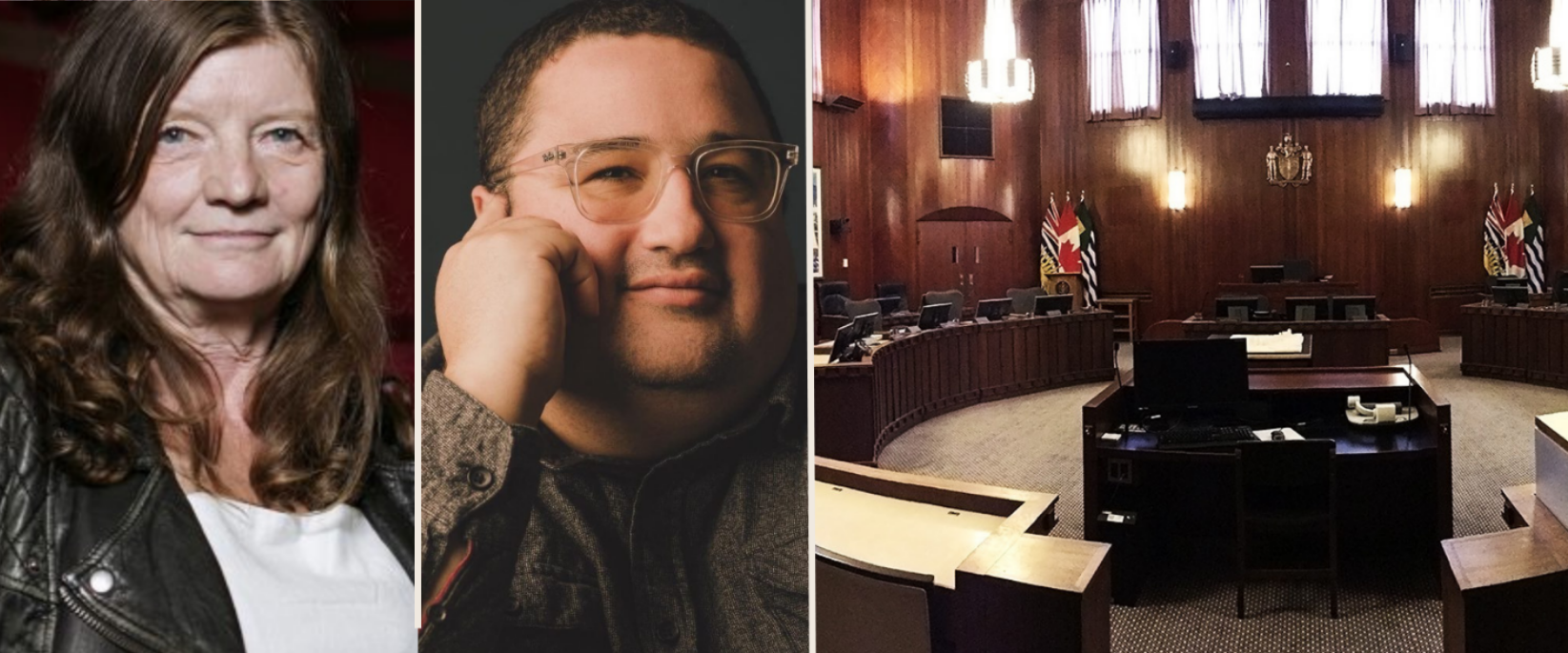
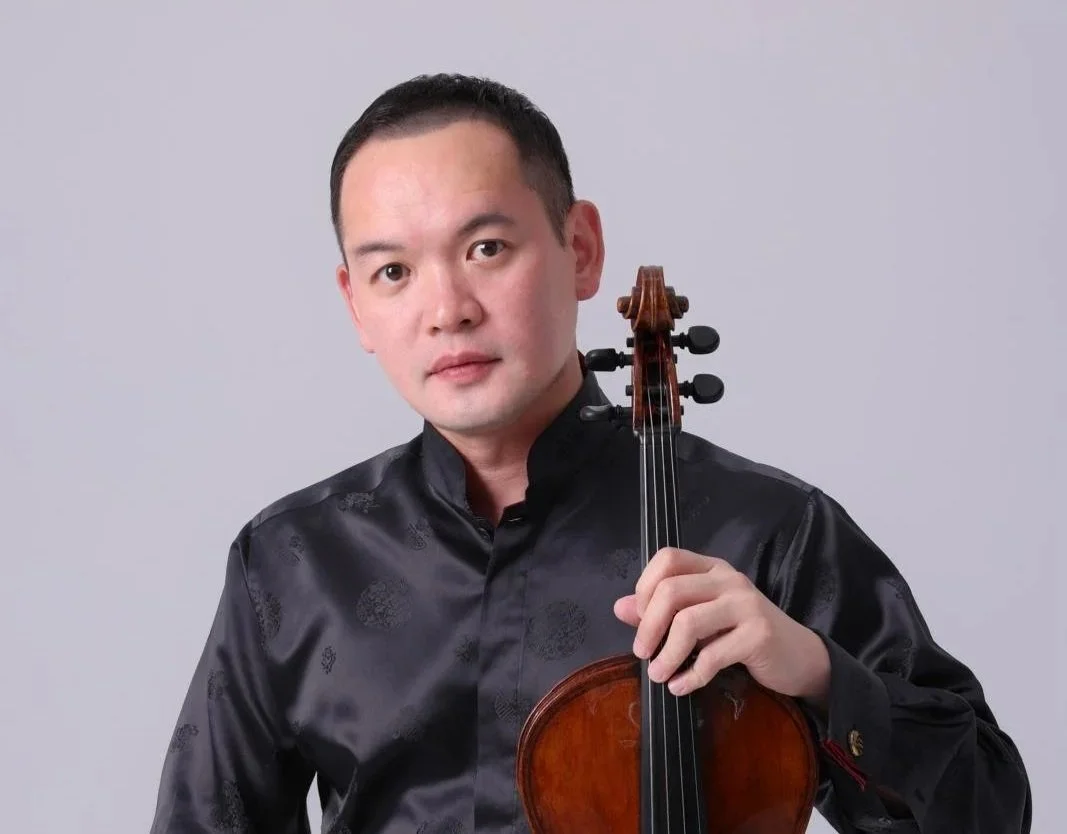
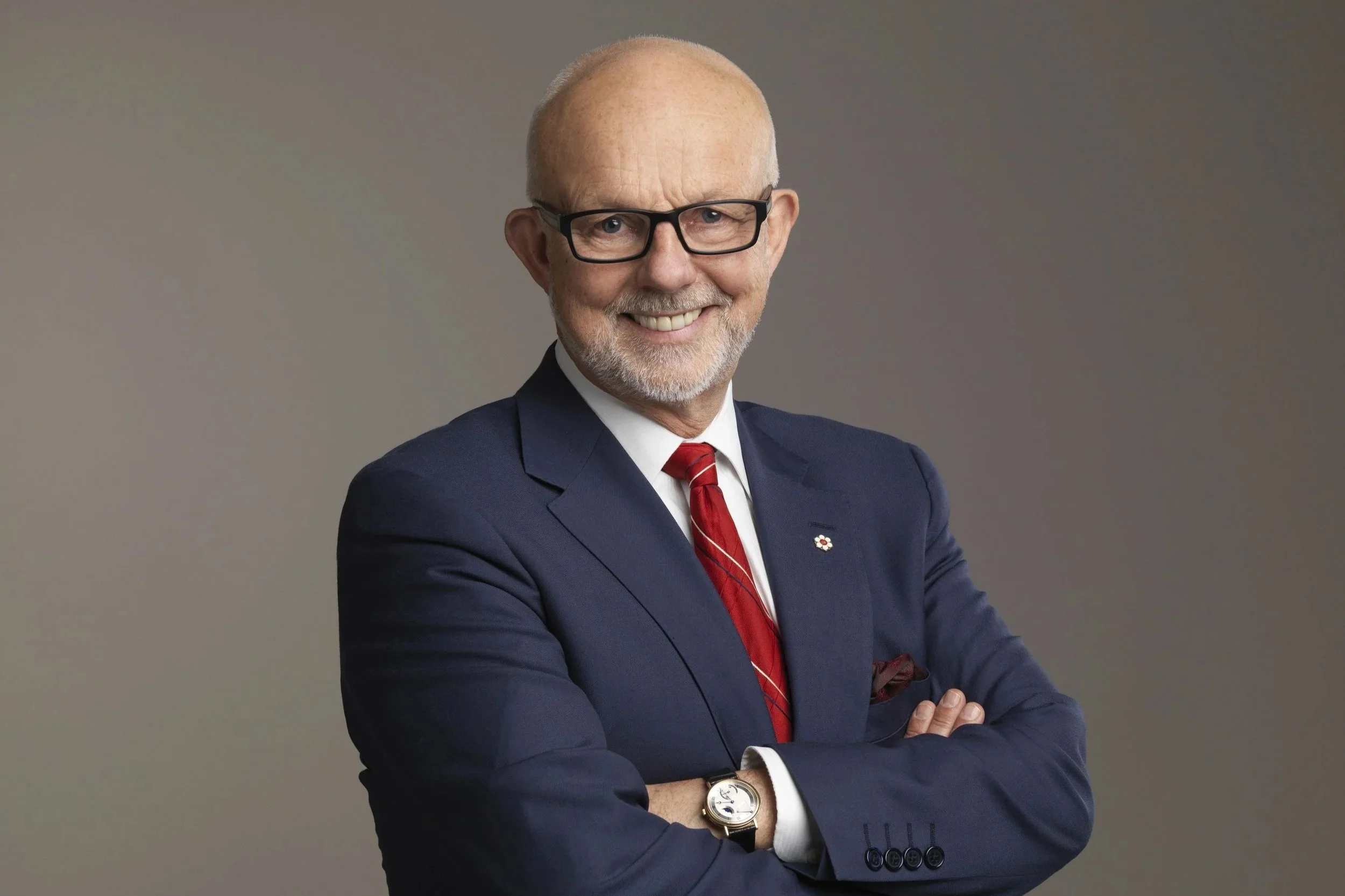
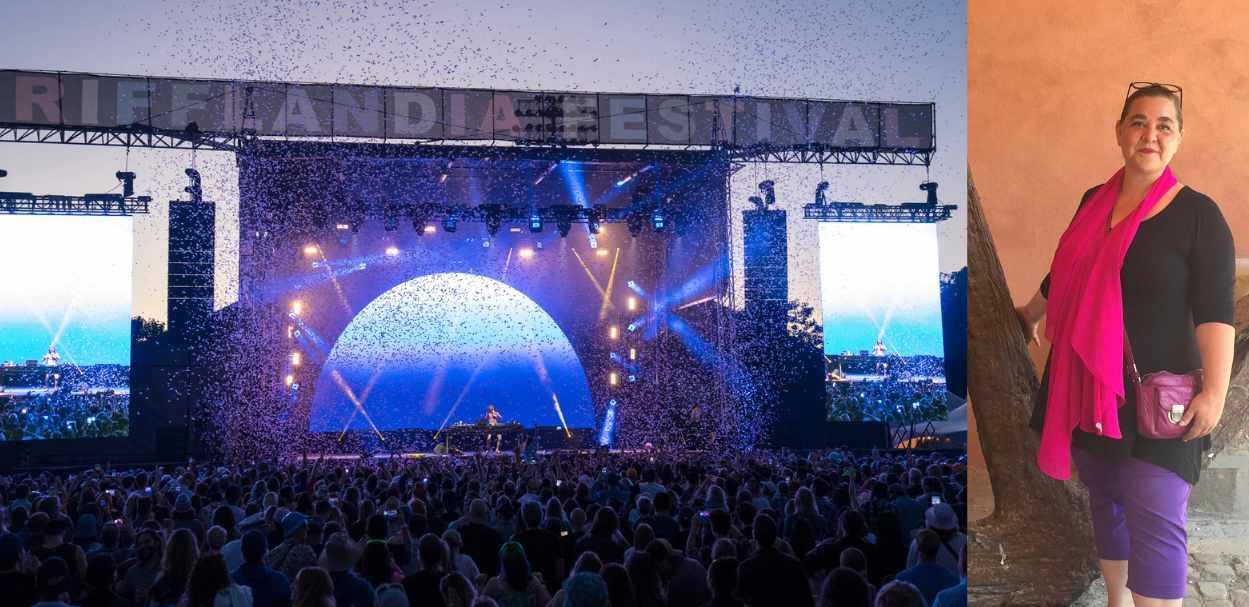
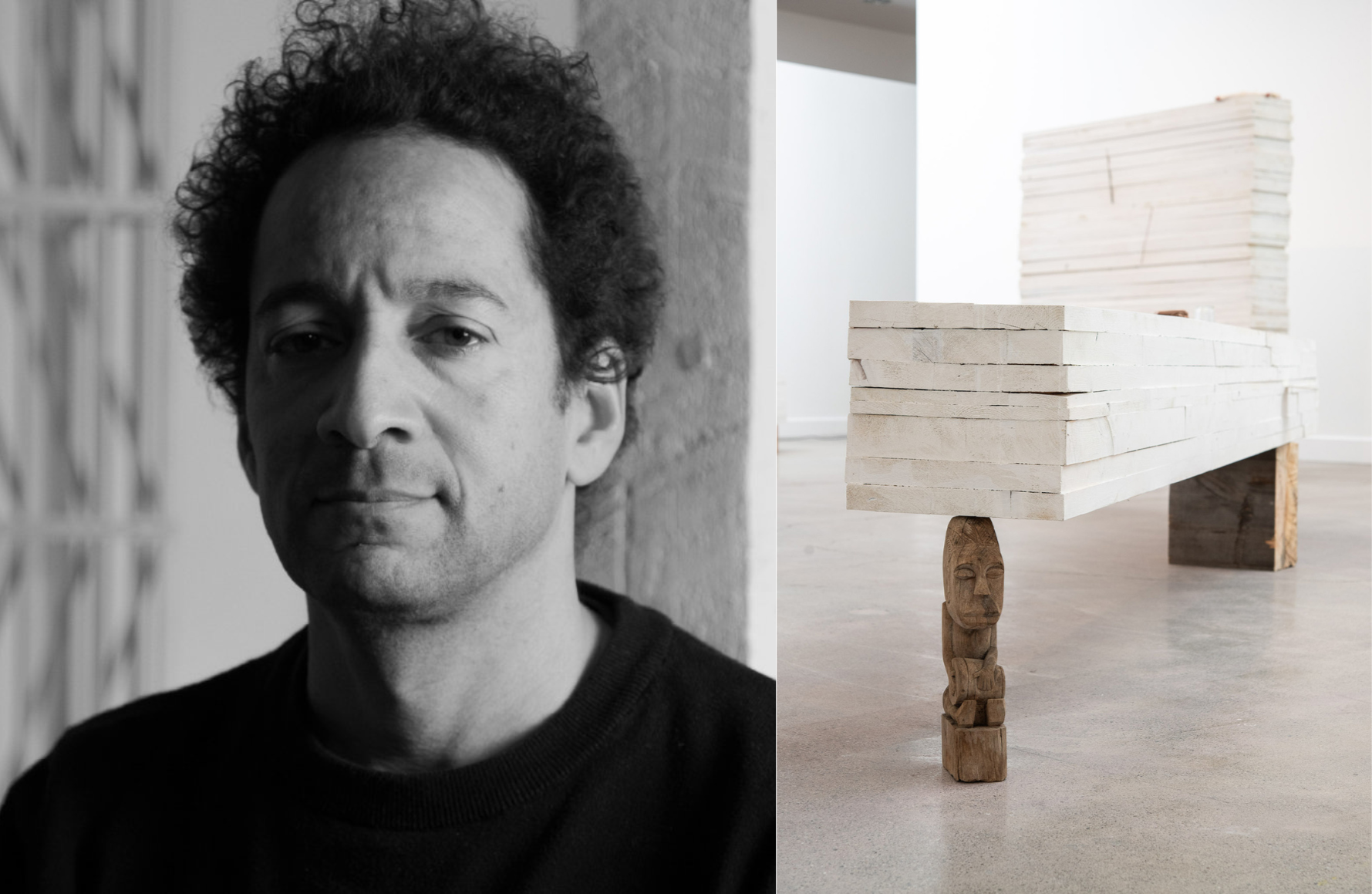
The Cultch’s Heather Redfern; Arts and Culture Advisory Committee cochair Ashley Daniel Foot; Vancouver City Council chambers.
ARTS ORGANIZATIONS ARE voicing concerns about not being heard by city council, as they regroup in the wake of a majority ABC party vote to cut the civic arts budget by 12 percent for next year. Stir spoke to several arts leaders who expressed frustration, warning the austerity measures are part of a pattern that comes at a fragile time.
As 2025 draws to a close and arts groups continue to crawl out of pandemic setbacks, other levels of government are trimming back arts funding, corporate donations are drying up, and production and space costs are skyrocketing with inflation. Amid all this, arts leaders have been asking for an increase to city funding that largely comes in the form of grants. It’s now clear that won’t happen in 2026.
The cuts, passed late last month as part of the 2026 budget decisions, are part of ABC and Mayor Ken Sim’s “Zero Means Zero” plan to keep property taxes from going up next year. City staff have not yet outlined where $6 million in cuts will occur, but council has committed to maintain arts-grants levels at current levels and try to make all the cuts internally. At the same meeting, police funding was increased by 10 percent ($46.2 million), fire funding was increased by six percent ($12.2 million), and libraries got an increase of three percent ($2.1 million) for 2026.
“They have a majority,” reflected The Cultch’s executive director Heather Redfern of ABC. “And of course the city councillors were going to vote on party lines. I did, honestly, have a bit of a faint sense of hope—there are some ABC councillors that are wonderful champions of the arts—that they would see that passing the budget the way it was could be detrimental to their campaigns when they run again next fall.”
Responding to the wide concerns in an interview with Stir, ABC Coun. and Deputy Mayor Sarah Kirby-Yung re-emphasized to arts groups that the cuts will not come out of their grant budgets.
“It was intended to be in terms of internal operations, and the external funding that flows out to communities was protected,” she said. “So I think that played into the challenges, and how hard the arts groups are working to continue doing what they’re doing, to keep their heads above water, and probably hit at a time when they were particularly nervous.”
She believes that concern stems from misunderstanding that grants will stay intact: “I think that there was some misinformation, honestly, out there, which was really unfortunate,” she said.
At the council meeting, groups worried not only about subsisting on the status quo, but the lack of clarity and transparency about where exactly the cuts will hit in 2026. As Vancouver Folk Music Festival board president Erin Mullan told council last month: “The scant budget document fails to spell out what all is on the chopping block.”
The concerns echo the fact that increasingly, arts leaders are voicing a disconnect between an economically important arts scene and the level of support it is receiving at City Hall. Vancouver has the highest concentration of artists and cultural workers per capita among major Canadian cities. And in conversations with Stir, some expressed the feeling that their message is not getting through to City Hall. Others cited a general chill around nonprofits speaking out—a situation reflected in the unusual number of sources who requested to be quoted off the record when speaking to Stir for this story.
One arts leader asked to remain anonymous because “the manner in which I speak up is limited by some perceived feeling of precarity around funding that’s essential to our operations”.
“Droves of people have been showing up at City Council to express their concern over key issues that are going to vote and motions that are being passed through Council,” they told Stir. “And it seems performative—even the notion of welcoming people in to speak—because the community doesn’t seem to have any agency in the situation. They’re being heard, technically, but what is being heard isn’t being reacted to.”
“A 12-percent cut to one percent of this whole city’s budget is just vile,” said another arts leader who noted it’s politically imprudent to speak out publicly. “The arts get one percent of the budget to start with. The other part of it that’s really concerning for me, just as a citizen of this city, is that hundreds of people spoke, and I don’t know how many hundreds of people sent letters....Why are we even wasting our time doing this, if it’s predetermined?
“There was no consultation,” they added. “It would be one thing if they were cutting everything across the board and crying poverty, and that included the police force. But to give the police force so much more money when they already gave them so much more money the year before is really disrespectful to every other service in the city.”
The budget cut is set to hit after a year in which the city’s arts community has been voicing the need for increased grant funding, both through letter-writing campaigns and at city council chambers.
In July, more than 40 speakers came before council to advocate for a sweeping cultural plan that would include establishing a $40,000 minimum per operating grant to stabilize small organizations, beginning with a 10-percent increase in 2026. Brought forward by the City’s Arts and Culture Advisory Committee, it was titled Urgent Investment in Vancouver’s Arts and Culture Infrastructure and put forward by Green Party Coun. Pete Fry. At the time, Arts Club Theatre Company executive director Peter Cathie White said the organization has seen city funding decrease over a period he called “the hardest two years in the arts sector that I have ever experienced”.
Bard on the Beach executive director Christopher Gaze echoed those concerns at the same meeting: “Costs have risen dramatically….The gap between revenue and expenses continues to widen, and that threatens the very heart of what we do.”
Coastal Jazz and Blues Society expressed similar woes, estimating its Vancouver International Jazz Festival has grown to generate $20 million for the city annually but has seen its core City funding stagnate over the last 15 years.
Kirby-Yung made the proposal to amend the committee’s motion, removing the 10-percent increase and the operating-grant minimum. She added new resolutions, such as proposing a roundtable working group and pushing higher levels of government for more funding, as well as increasing funding eligibility for policing and event security.
“There was so much of a degree of specificity, including things, for example, like adding new positions and new city staff positions, which I don’t think is what we want to be doing,” Kirby-Yung told Stir of the original motion this week. “I don’t want to be adding to the city administration, the overhead. I want to be trying to be as lean as we can so over time, we can start putting funds where they matter most, which is into the community.”
In more recent news, a city staff report materialized last week that proposed dissolving the community-based Arts and Culture Advisory Committee—along with nine other such committees—before their terms end next summer. It was to have gone to city council this week, but was reversed after an outcry. The Arts and Culture Advisory Committee had urged council to reject the dissolution that staff had proposed to ease “capacity pressures” due to FIFA World Cup preparations and other issues.
“The arts and culture sector depends on informed, ongoing dialogue with Council,” argued the letter. “Eliminating committees will not streamline engagement; it will leave Council less equipped to understand the impacts of its decisions on a sector already facing affordability pressures, displacement, and inequitable access to civic resources.”
“This recommendation was a serious threat to the direct consultation structure that connects our city’s creatives with policymakers,” Arts and Culture Advisory Committee cochair Ashley Daniel Foot told Stir, giving credit to Kirby-Yung for getting the proposal withdrawn. “This outcome is a victory for civic engagement, but it must be treated as a critical reminder: we cannot afford to be silent.
“The lesson here isn’t just that we saved a committee,” Foot reiterated. “It’s that the health of our cultural sector relies on us keeping the lines of communication wide open. We need to keep advising, keep challenging, and keep showing up. If this week taught us anything, it’s that our collective voice is only as strong as our willingness to use it.”
Coun. Fry, who also serves as a liaison to the committee, suggested the initial proposal to get rid of the arts advisory committee was a sign of a larger attitude amid ABC council members.
“I would say members of ABC have sent signals that advisory committee input is not important to them,” he told Stir. “We’ve seen this evidence through various motions that came forward. We’ve seen that kind of tenor set and I think it probably does feel like their input’s being devalued.” He pointed to the rejection of much of the Urgent Investment motion from the Arts and Culture Advisory Committee.
As far as the 2026 budget cuts, he said: “They have made a commitment to keeping the dollar value of grants, but at the same time, there’s also going to be more and more demand on those grants—not just from the increasing number of organizations that are feeling the squeeze, but also because they’re moving a lot of regularized funding into the grant stream.
“That will have direct implications on the finite pool of available grants,” he added, “from a dwindling pool of grant money that has held steady for all these years.”
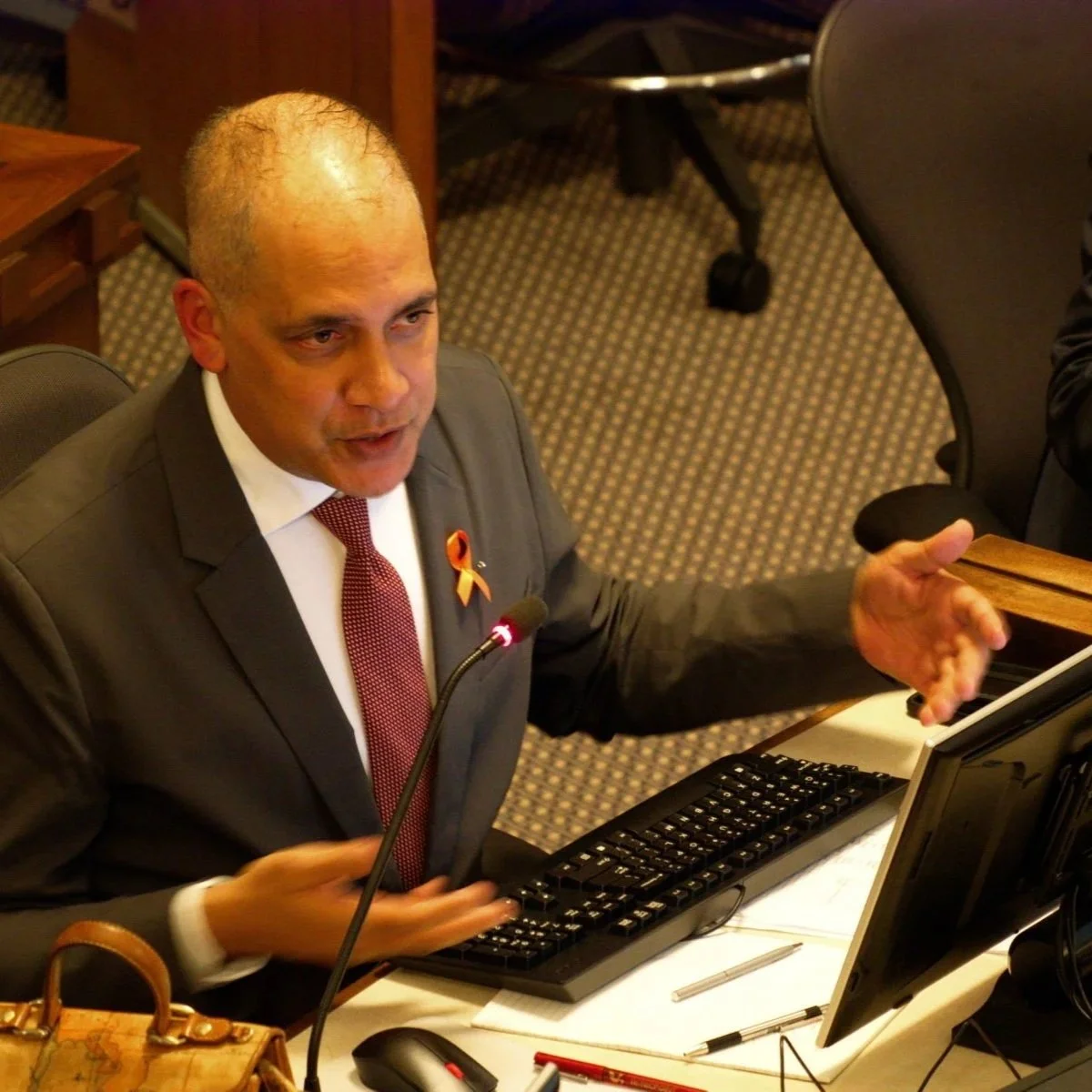
Coun. Pete Fry
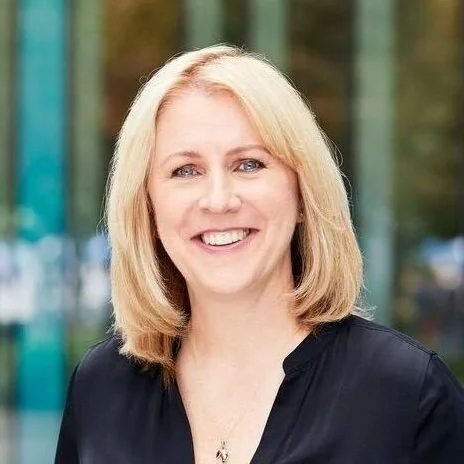
Coun. Sarah Kirby-Yung
FOR ONE ARTS leader, the austerity budget is less upsetting than the general chill they feel around being able to express protest against city decisions around the arts.
“It’s feeling silenced that is my issue with this situation,” they emphasized. “I don’t want the cuts and I don’t want to have to deal with all of those things, but I can’t speak to it outside of the formal process….If I want to post on social media something about how I disapprove of the decision the council has made, I should be able to do that without fear of getting into trouble—the trouble being losing funding.”
They and others trace that trepidation back to 2023, when city council directed staff to come up with contract wording that would ensure nonprofits receiving civic grant funding speak “respectfully” about municipal government and politicians. The initiative provoked an outcry that council was trying to stifle public criticism, and staff successfully recommended against restricting such speech as “a core tenet of democracy and political life”.
Stir spoke to arts representatives that still felt unsure about their rights given the wording of their grant-funding contracts. Cultural Grant Agreements that Stir viewed included a section called Respectful Communications that, “without limiting the ability of the Recipient or of any Recipient Personnel to hold or express positions on public policy matters”, forbids making statements or engaging in conduct that “could be characterized as threatening, intimidating, harassing, or discriminatory”, “in the City’s sole discretion”; the penalty is the loss of the grant. Though that language seems to clearly be directed specifically to only abusive statements, a few cultural workers said the larger discussion that happened in 2023 has made them worry about breaking the contract by vociferously protesting city actions.
“It says at ‘the City’s sole discretion’, which means they can just make up their mind if they don’t like what any of us are saying, and that is way too open ended for me,” said one arts leader who asked for anonymity.
“I certainly wouldn’t be able to go on record, or on social media, as saying that the current leadership is aligned with the police and the ultra-rich, and is overlooking the needs of middle-class citizens and the people who create the work that makes the arts and culture sector and the city itself vibrant,” said another.
“It’s the role of arts and culture to give people a voice and to speak up for what matters to healthy communities and what matters to us in society,” they added. “And if people feel that, A, they are being censored, or B, which is more to the point of the current case, that they’re being welcomed to provide feedback but that feedback isn’t taken into account in any way, shape, or form—the optic there and the reality there is disheartening. So it would be nice to see community feedback actually taken into consideration when these big decisions are being made.”
Still, others, including Heather Redfern, encouraged speaking out. “I certainly have not felt like that personally, or The Cultch has not felt like that personally,” Redfern said. “I think that would be a very slippery slope for the City to get into the business of censorship. I don’t think they would really want to do that, and I think they would be ill-advised to do that. So no—I’m not concerned about speaking out.”
Arts and Culture Advisory Committee cochair Ashley Daniel Foot, meanwhile, points to the quick reversal on the proposal to dissolve his committee before its term ended as proof that it’s worth taking a public stand. “The speed at which this decision was almost made and the speed at which it was reversed proves that speaking up works,” he said. “It proves that the City is listening, but only when we are consistently vocal.”
For his part, Fry said he empathized, pointing to what he calls a larger pro-business approach at an ABC-run City Hall, even though “the arts are 100-percent defensible as an economic driver and as a tourism driver”. And then, of course, there’s FIFA World Cup 2026, hitting the city in June.
“We’re certainly seeing the impacts of FIFA, and we’re seeing the prioritization of FIFA over a lot of things,” Fry said, “and it can’t help but feel like, ‘Oh, we’re kind of getting the short end of the stick here as an arts community in favour of the splashy, big eight-week circus of international soccer.’”
For her part, Kirby-Yung said she is committed to continuing roundtables with arts groups outside of council chambers to come up with solutions to challenges. That might mean finding ways to establish multiyear grants, or getting the City of Vancouver to free up space to alleviate the rising costs on rentals; maybe it’s developing a dedicated arts and culture hub where administration costs can be shared. She points to a recent council decision to grant $175,000 toward Phase II feasibility studies for a major new theatre complex in downtown Vancouver as a sign her government is serious about supporting the arts into the longterm.
“Let’s continue meeting. Let’s put our heads together on some of these specific opportunities and see if we can alleviate some cost to you that would also help the bottom line,” she said. “Let’s sit down and have those kinds of brainstorming conversations.
“Would I like to bring more money out towards arts and culture in time? Absolutely. I think the City needs to get its house in order first,” she adds. “I recognize that they [arts groups] are experiencing increasing costs, but I will say that I am very glad that we put that stake in the ground. I think we’re going to see funding cuts from federal and provincial governments, and unlike that, the City’s not doing that. We said we will stay the course [as far as grants].”
As arts advocates move into 2026, with an election slated for October, Redfern is one vocal member of the community who is calling for unity around culture in the political realm—especially at a municipal level.
“What we’d like to see is agreement by people of all stripes and opinions and politics,” she said, “to really agree and understand that this is an asset for the city that they can all get behind.” 


Related Articles