Even after a century and a half, Little Women continues to capture emotions of both actors and audiences
Director Barbara Tomasic talks about the Arts Club Theatre Company’s new production of the Louisa May Alcott classic, which still inspires heartfelt reflection on sibling bonds and the challenges of finding a place in the world
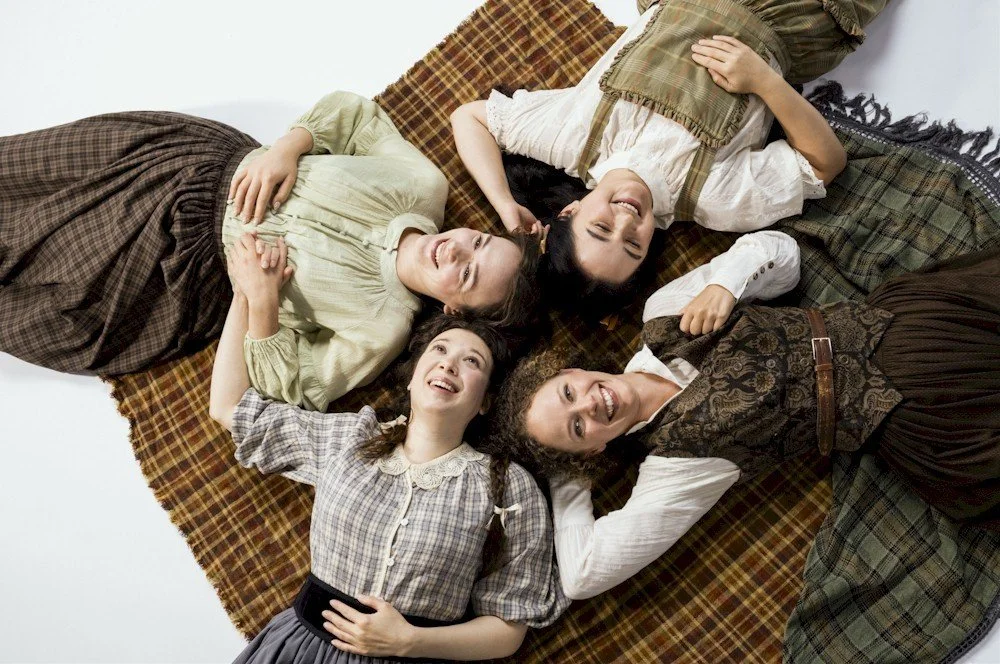
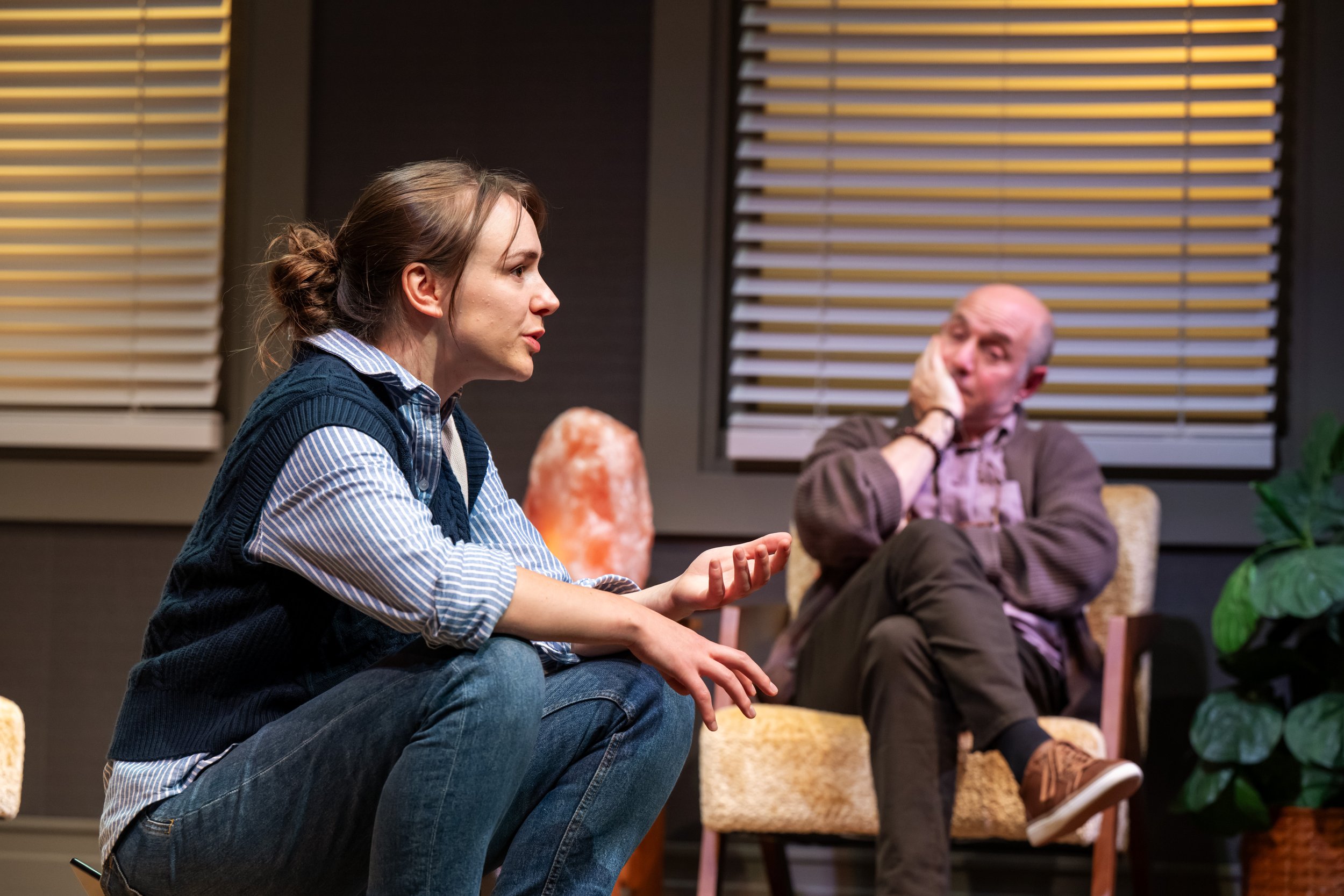
Elizabeth Barrett, Ming Hudson, Kaitlyn Yott, and Kate Besworth in Louisa May Alcott’s Little Women. Photo by Trevor Brady
The Arts Club Theatre Company presents Louisa May Alcott’s Little Women at the Granville Island Stage from November 27, 2025, to January 4, 2026
FOR OVER 150 years, Louisa May Alcott’s novel Little Women has captured hearts and imaginations.
And among those who love it, preferences about adaptation, feelings about major plot points, and personal headcanons about the lives of the March sisters run deep. For them, it isn’t just a story. It’s a piece of literature they can find themselves in.
Barbara Tomasic, director of the Art Club’s new production of Louisa May Alcott’s Little Women, understands this.
“It’s a revolutionary story, it’s hard to believe it was written in 1868,” Tomasic says. “It’s a kind of beautiful mix of family and romance and adventure, but I think why it stands the test of time is because women see themselves in the story, even now.”
For those who aren’t familiar, the original book follows the four March sisters: eldest sister Meg, traditional and romantic; Jo, the writer of the family and fiercely independent; Beth, shy and often falling into the role of moral compass for her sisters; and Amy, ambitious yet temperamental. With the American Civil War as their backdrop, the sisters must leave childhood behind and enter adulthood, each on a unique path.
For years, teenage girls have been sorting themselves into Alcott’s archetypes and asking themselves: Am I a Meg, Jo, Beth, or Amy? And as the original novel and its countless film and stage adaptations have reinforced: there is no wrong choice. There is no wrong way to be a woman, as long as you’re true to yourself.
Ah, but finding out what feels true to yourself? That’s the real challenge.
“I think there’s a universality to that journey of, you know, trying to figure out who you are. I don’t think that’s ever changed. So I think that is really a key part of what draws people into the story,” Tomasic says.
Understanding one’s place in the world has always seemed especially hard for women, whether in 1868 or now; and so the theme becomes even more relatable.
“At the time of the book, there was this sense [among women] of ‘Well, this is what I’m supposed to do,’” Tomasic explains. “And there’s a real resurgence now of traditionalism, as some people call it, around how women are supposed to be and act.…So I think [the script] really asks the questions that we’re asking today about what it means to be a woman. I think Lauren Gunderson’s script really brings that to life.”
Taking Gunderson’s script and portraying the iconic foursome are Elizabeth Barrett as Meg, Kate Besworth as Jo (and Louisa, the author herself), Ming Hudson as Beth, and Kaitlyn Yott as Amy.
“They’ve developed a bond in the room,” Tomasic says. “And I don’t know if that’s the play or if that’s just chemistry, but there’s a real sisterly bond in the room that I think has really contributed to the ease of working. This has been a very easy process—and a very fun and playful process for us.”
Rounding out the cast are Erin Ormond (Marmee/Aunt March), Conor Wylie (Laurie), and Nick Fontaine (John/Mr. March/Professor Bhaer). Scott Button, Paige Fraser, and Emma Rendell act as standbys.
According to Tomasic, the cast has been “a real team, a real ensemble” and hasn’t had any difficulty stepping into the enormous shoes these characters have and making them their own.
Whether the actors are joking about what they believe their characters’ astrological signs are or discussing how they see their own lives being reflected in the text, the work of finding new interpretations of the classic characters happened organically and immediately, Tomasic says.
“They each have their own lens and it’s quite beautiful,” she notes. “They’re incorporating their own work and their own stories into this play. It really comes from their experience. With Kate, she’s a very accomplished writer, and so she can bring that world into her characterization of both Louisa and Jo. Some of our actors have expressed that they’ve lost loved ones at a young age. So people are always bringing that work into the room, and often as an audience, we don’t know that.”
Bringing as much care and detail into the production are costume designer Barbara Clayden (who last worked with Tomasic on Kinky Boots) and set designer Jennifer Stewart.
Stewart’s set “is so imaginative and transformable, as opposed to it just being a living room on stage, it really lives in a world that transforms.…It feels like a book,” Tomasic says. “It feels like you’re opening a book and seeing an illustration.”
And as with any good book that stands the test of time, Tomasic hopes this piece gives audiences a place to let down their guard and feel a full range of emotion.
“I think it’s a piece that allows people to sit there and feel and be present with each other,” Tomasic says. “I’m excited for people to have that sort of sanctuary, a place of emotional experience that uplifts them and inspires them.” 

Related Articles