Stir Cheat Sheet: 5 takeaways from the City of Vancouver candidates forum on arts, culture, and heritage
Grant increases, expanded cultural land trust initiatives, and a hotel tax were some of the measures floated at the ABC-free meeting
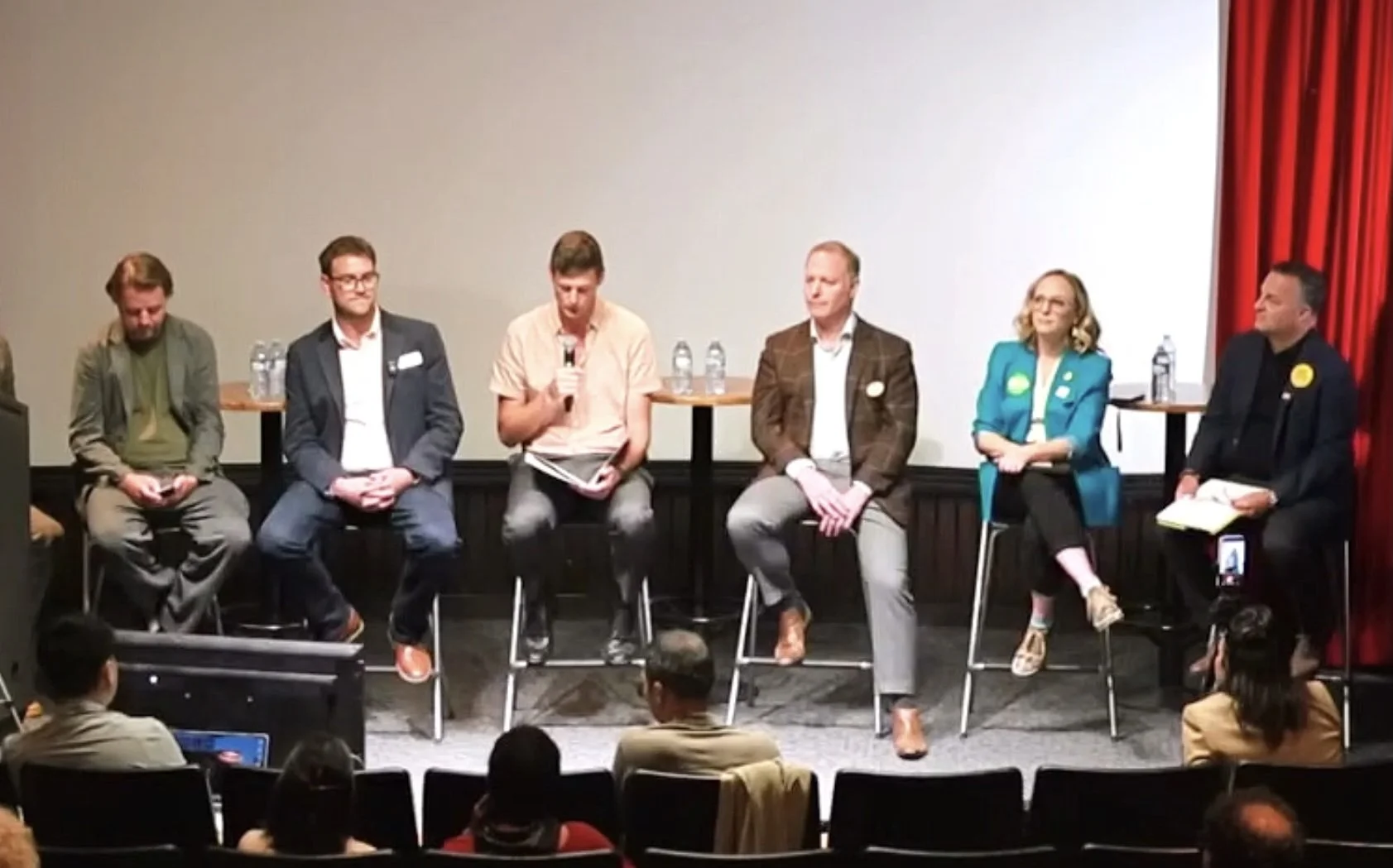
The arts-and-culture all-candidates meeting at the Museum of Vancouver this week.
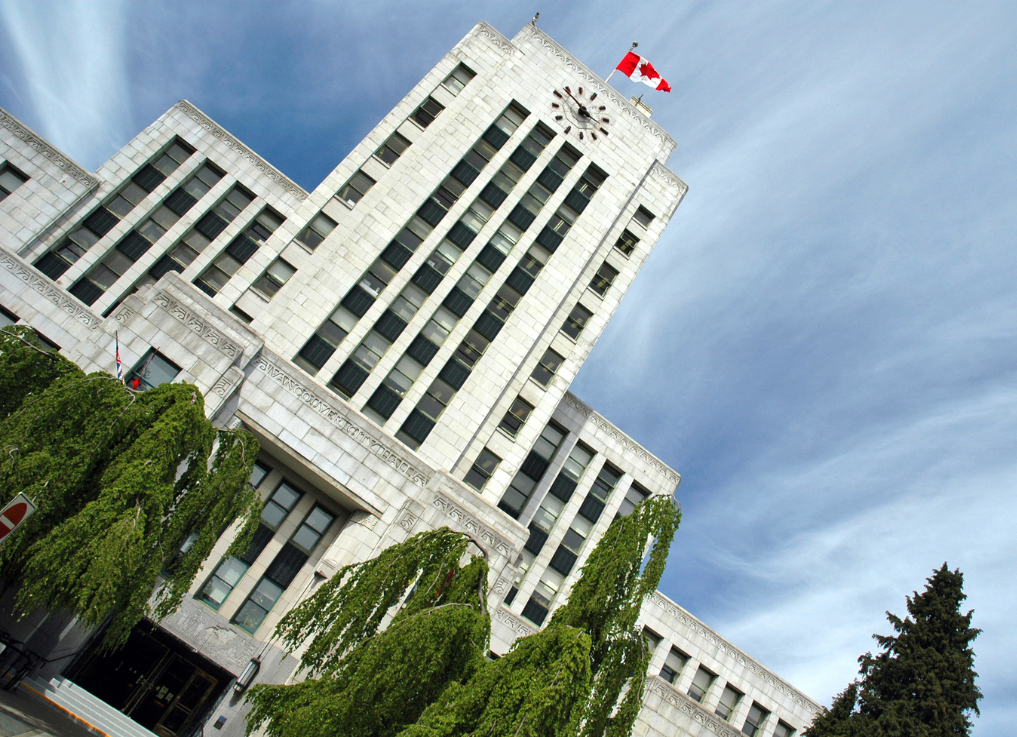
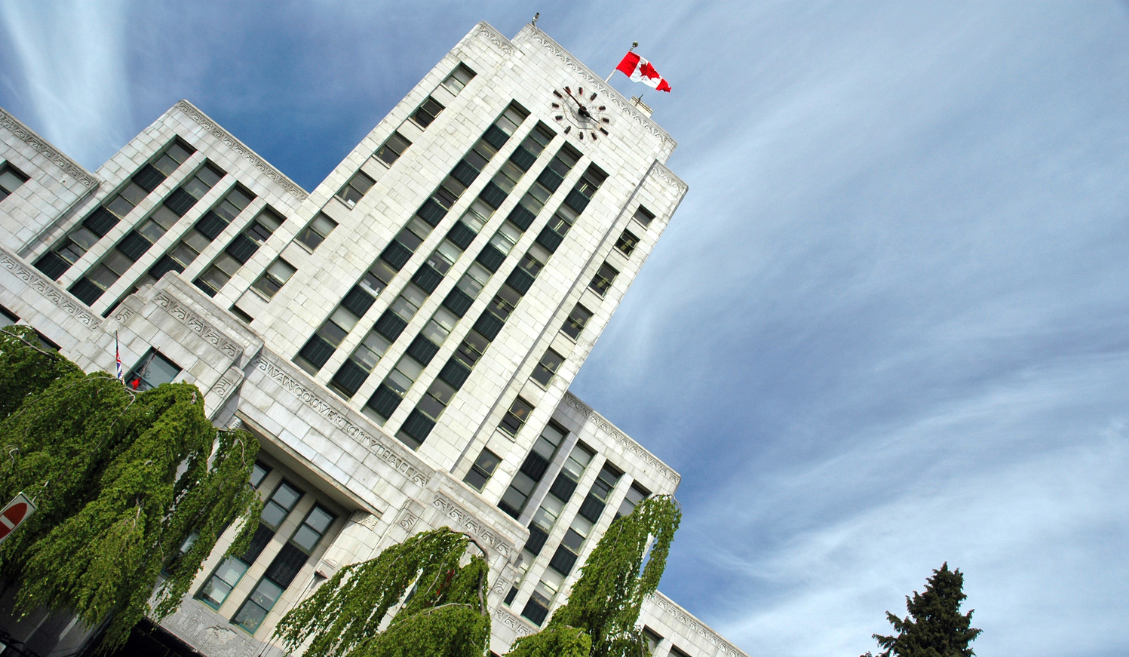
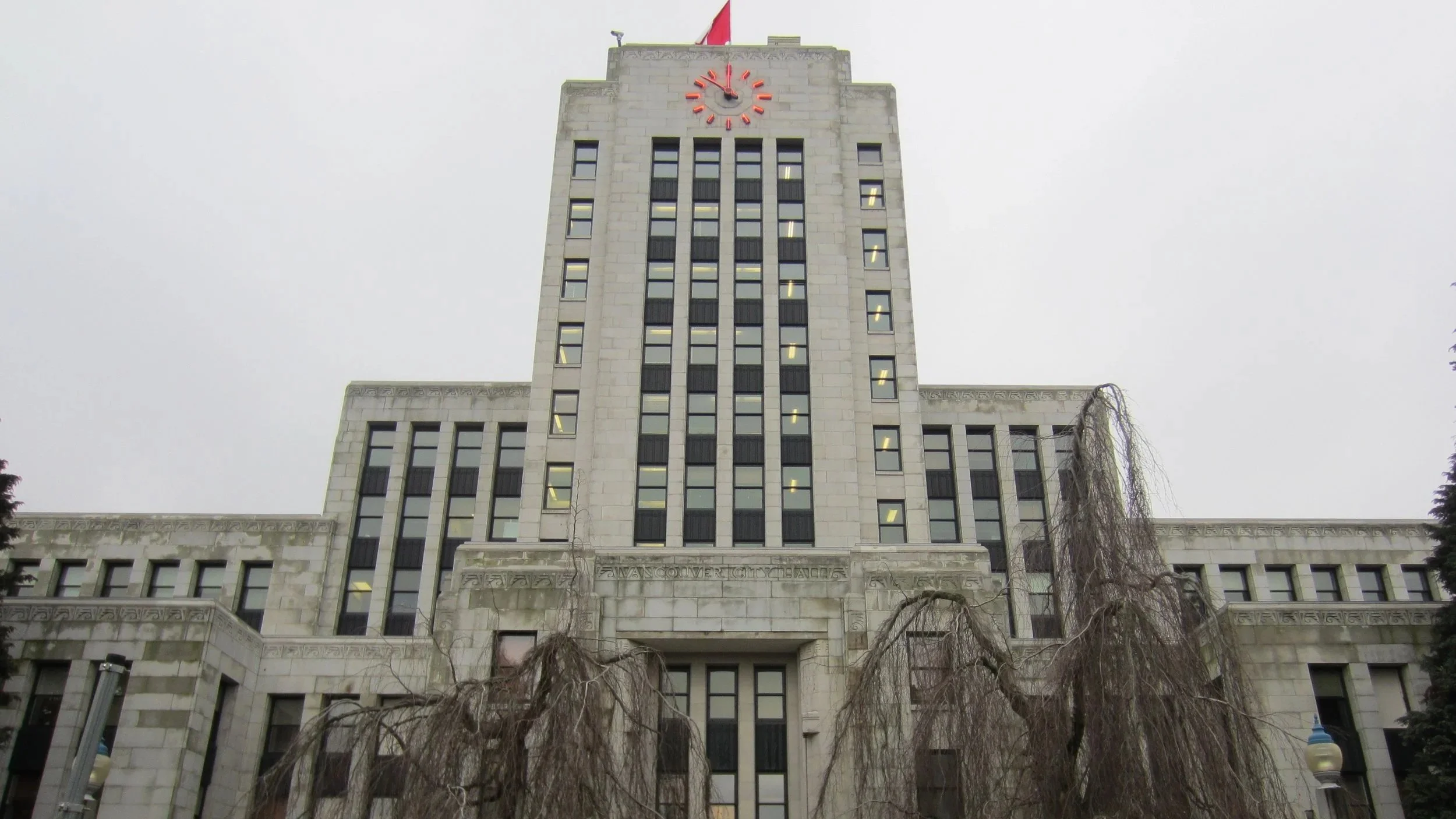
Vancouver City Hall
THE ARTS-AND-CULTURE all-candidates meeting last night at the Museum of Vancouver was not exactly marked by high-tension debate last night. All six contenders, from six different civic parties, agreed on a lot of ideas for policy change on funding, artist spaces, affordability, and helping festivals to face mounting logistical challenges. Absent from the meeting? Everyone from the ABC party that holds the majority on the current council—as it’s taking a pass on most all-candidates meeting in the leadup to the October 17 election.
On hand instead were a group of would-be councillors with a striking amount of first-person experience in the arts sector, across the board. OneCity’s Jarrett Hagglund has a background in Vancouver’s thriving standup comedy scene. Vote Vancouver’s Geoff Teoli served time as Vancouver’s Film Commissioner and worked his way up through the local film industry as everything from a PA to a location manger. The Green Party’s Annette Reilly is a filmmaker, her work including serving as AD on Bard on the Beach’s first flick, Kate Besworth’s “Done/Undone”. TEAM’s Jonathan Weisman reflected on playing in an orchestra as a youth and later serving as president on the board at Realwheels Theatre. The Liberals’ Devin Clemens talked about starting out as a writer before moving into being a policy specialist in higher education. And COPE’s Sean Orr, elected during a byelection in spring 2025, is a longtime musician whose gigs have included fronting the hardcore punk band NEEDS.
They’d accepted an open invitation from the BC Coalition of Arts, Culture, and Heritage, the forum hosted, moderator Am Johal said, largely due to a crisis in resources and space being faced by arts organizations.
“Community events face growing administrative and financial pressures, and questions about land development, reconciliation, and the future of our neighbourhoods are also questions about who gets to make culture in the city, and whether they can afford to remain here,” said Johal, who’s also artistic executive director of the Indian Summer Festival. “So tonight, it's an opportunity to move beyond general expressions of support for the arts. We want to hear about specific commitments. Where should municipal investment go? How should the city protect and create affordable cultural spaces?”
As background, Vancouver has one of the highest densities of artists in Canada, as well as North America; 2.7 percent of Vancouver’s total labour force consists of working artists. That is nearly triple the national average of roughly 1 percent.
A point of contention has been that the cultural sector in this city generated more than $6 billion in GDP in 2022—more than half of the province’s $11 billion, but received only four percent of the city's operating budget.
That’s set against a climate in which the arts have been facing enormous pressures. In July 2025, a motion called Urgent Investment in Vancouver’s Arts and Culture Infrastructure was submitted by Coun. (and now Green Party mayoral candidate) Pete Fry on behalf of the Arts and Culture Advisory Committee. It suggested city council set a goal of establishing a $40,000 minimum per operating grant to stabilize small organizations, a special Festivals Vancouver fund, and a 10-percent increase to the grant budget in 2026 to get the ball rolling. The ABC Vancouver council majority stripped out funding commitments and specific targets, directing staff to convene a sector working group. Then, later in 2025, the city approved a back-to-basics 2026 budget that included broader funding reductions across the arts, maintaining grants at the status quo but stripping other cultural funding by 12 percent, or $6 million. Elsewhere, the B.C. Fairs, Festivals and Events Fund created to help community event organizations recover from pandemic challenges has been suspended, posing further hardship.
At the meeting, most candidates had ideas outside of the arts realm—such as saving co-op housing—that might help Vancouver artists afford to be able to stay in Vancouver.
But below are some of the key proposals from the forum that were directly related to the arts: about sustaining festivals, maintaining art spaces, and bringing arts grants into line with 2026 costs. Admittedly, some of them were not as “specific” as Johal had asked for, but this should give people who care about the arts a sense of where candidates—outside of ABC, of course—stand.
Increase operating grants and institute multiyear funding
The candidates agreed that stagnant civic operational funding is taking a toll on artists and arts groups in the city, especially in the face of inflation and skyrocketing rental and production costs. And proposals by the arts and culture advisory committee to set a $40,000 minimum for operating grants have faced pushback from the current council.
In addition, groups and events struggle to plan ahead due to uncertainty around that funding.
“You need to have multiyear funding,” asserted Reilly.
“The city treats these events like a constant burden,” added Hagglund. “Grants need to be tied to inflation.”
Considering grants haven’t been boosted substantially in decades, Teoli added his voice to calls to index grants for arts groups and fests to inflation. “It frustrates me now that the city is making event organizers, in particular, come cap in hand for one-time extensions and more one-time extensions,” Teoli said. “And that's just ridiculous to me. Why are we making people go through this year after year? To me, it’s just cruel, this roller coaster ride we put them on. So I think, first of all, we need to get all that stuff back up to current dollars.”
Weisman added, “You need to maintain current levels and you need to build on them. Will it be the pace of inflation? As a minimum, that ought to be a target.”
But where should the money come from?
As several candidates, like Teoli and Orr, pointed out, the city’s recent austerity budget held operating grants at the status quo, while cutting other arts funding by $6 million—but the more recent decision to extend Granville Street’s status as a pedestrian zone post-FIFA alone cost an estimated $4.75 million that could have instead been put into local arts.
A few backed the idea of a hotel tax—a concept put forward by the City of Vancouver’s arts and culture advisory committee, but rejected last year. The committee had recommended exploring a municipal hotel tax or surcharge of 0.05 percent to go toward sustainably increasing arts funding. Many cities and regions use hotel and lodging taxes (often called transient occupancy taxes or bed taxes) to fund nonprofit arts and festivals, from Bellingham to San Diego.
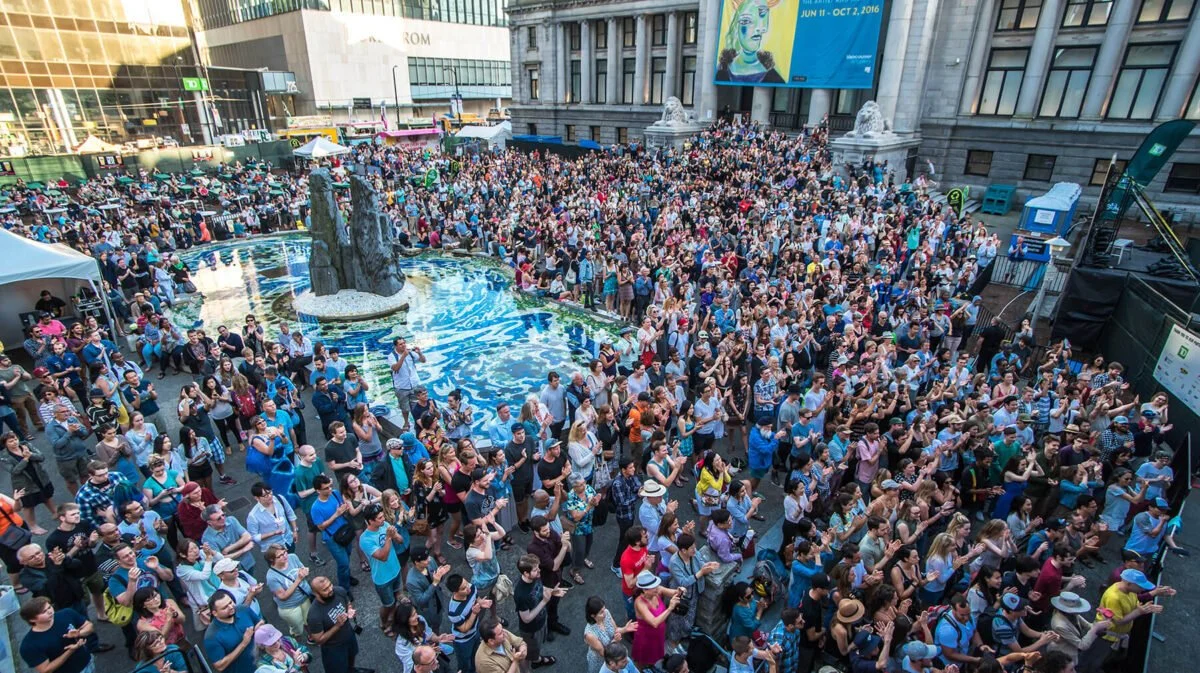
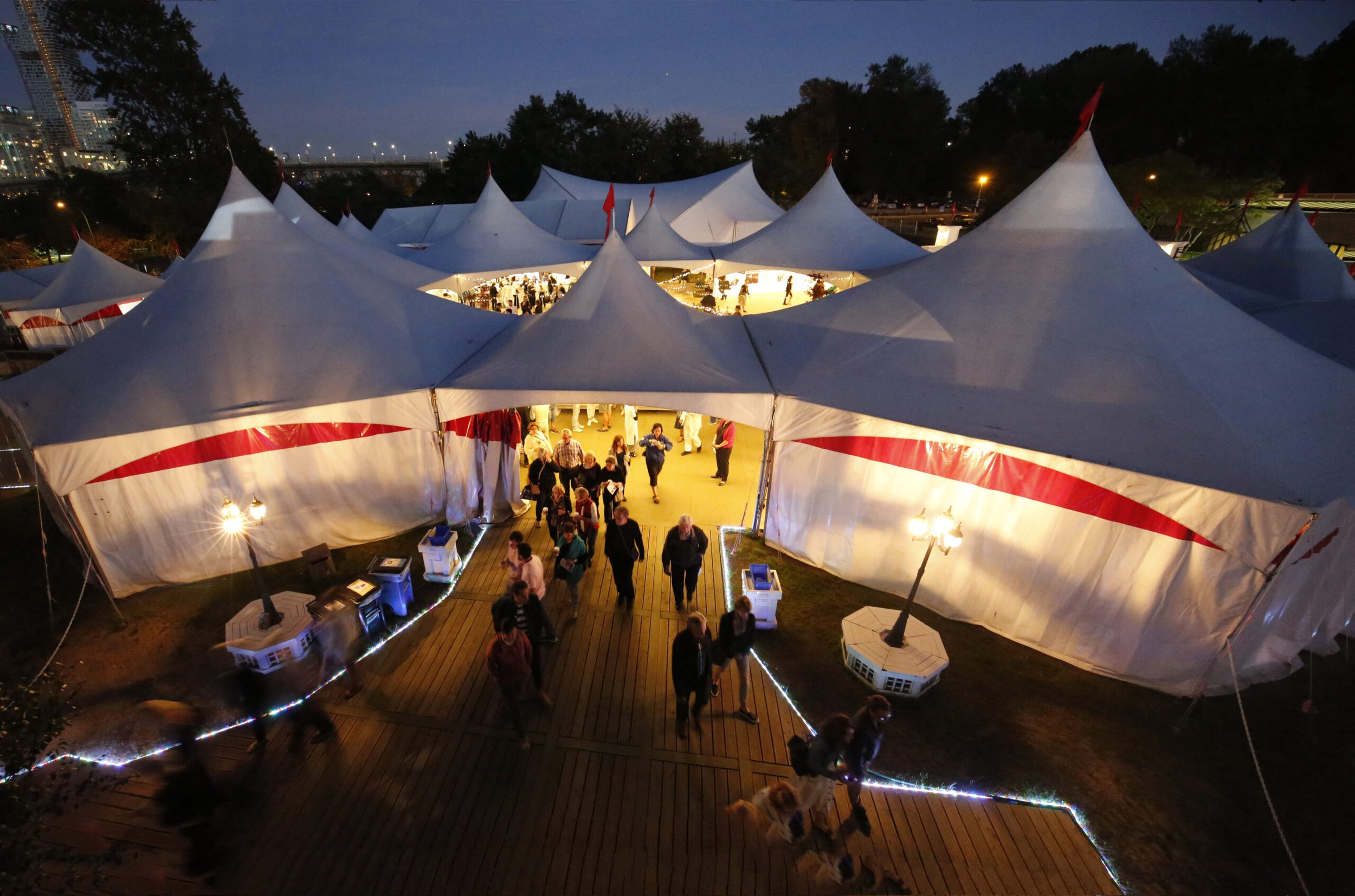
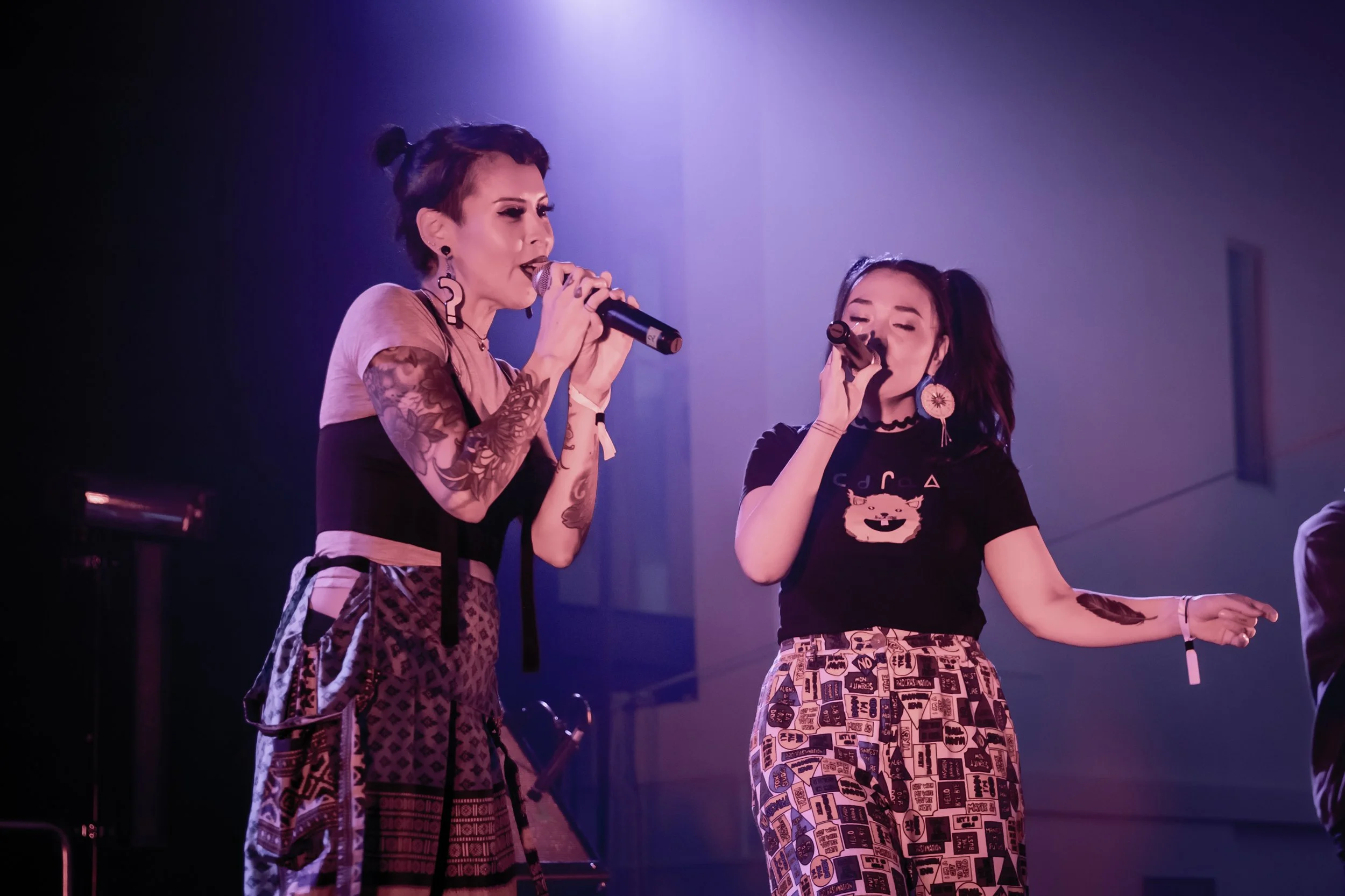
A past edition of Vancouver International Jazz Festival’s Downtown Jazz
Reduce red tape for festivals and other venues trying to host events
Several candidates backed an arts and culture committee recommendation for dedicated Creative City navigator desks to simplify special events and permitting processes.
Offered Clemens: “We can adopt a standing framework for event celebrations that makes this pathway easier every time somebody has to come up with an event, so that we are not repeating the same steps of policy, bureaucracy, and quagmire. That’s with getting capacity standards figured out, ticketing figured out in advance, cost sharing in advance, so that these events can run successfully right from go. We also want to be ready to host major events with fast approvals through that chain. And we should give the Vancouver Economic Commission a cultural tourism mandate, so that arts, heritage, and festivals, and Indigenous-led tourism are able to succeed.”
Weisman called for “uniform templates” to simplify applications for festivals, so that “different agencies from different cultural festivals can benefit from one another's work, from banding together to get collective insurance, and collective security plans so that everybody doesn’t have to fight to do exactly the same thing”.
Aside from that, Orr expressed concern that fests were forced to cover the entire cost of policing their events. (Through the FEST, or Festival Expediting Staff Team program, eligible free public events and nonprofits may qualify for financial relief or cost-sharing of up to $2,000 to help reduce those costs, but for large fests that’s a drop in the bucket.)
Take bigger measures to protect more artist spaces from disappearing
Amid a development boom over recent decades, Vancouver has lost hundreds of arts studios, rehearsal spots, and other spaces.
Orr bemoaned the loss of the kind of jam and DIY spaces that were once plentiful for the city’s musicians and are now disappearing. He called for penalties for spaces that have been left empty for extended periods.
For its part, OneCity Vancouver has proposed a new “small cultural venue license” category and a dedicated “venue navigator” to protect small arts spaces from risk and crackdowns. As OneCity’s Hagglund pointed out, among the venues targeted in small-venue raids in January was the Birdhouse, a queer performing-arts and nightlife space in Mount Pleasant. “One month they were told everything was fine, and the next month were raided with police officers and firefighters,” he said. “So that’s not really how a city shows arts venues that they’re valued.”
He supports a streamlined venue licensing program, “So we wouldn’t put up roadblocks. We would have a liaison that would work with venues to figure out how we can safely open the spaces and make sure they're accessible to people. And that collaboration, I think, is important.”
Clemens also called for action to protect the arts spaces that Vancouver has now, with stronger measures at City Hall to discourage demolition and reinvigorate those spaces.
Somewhat related, Hagglund emphasized a February report by Vancouver's auditor general that criticized the City over its lost developer amenities (which can include arts spaces and public art), through faulty tracking. “We need to demand the funding when the funding is promised. We need to follow through,” he said.
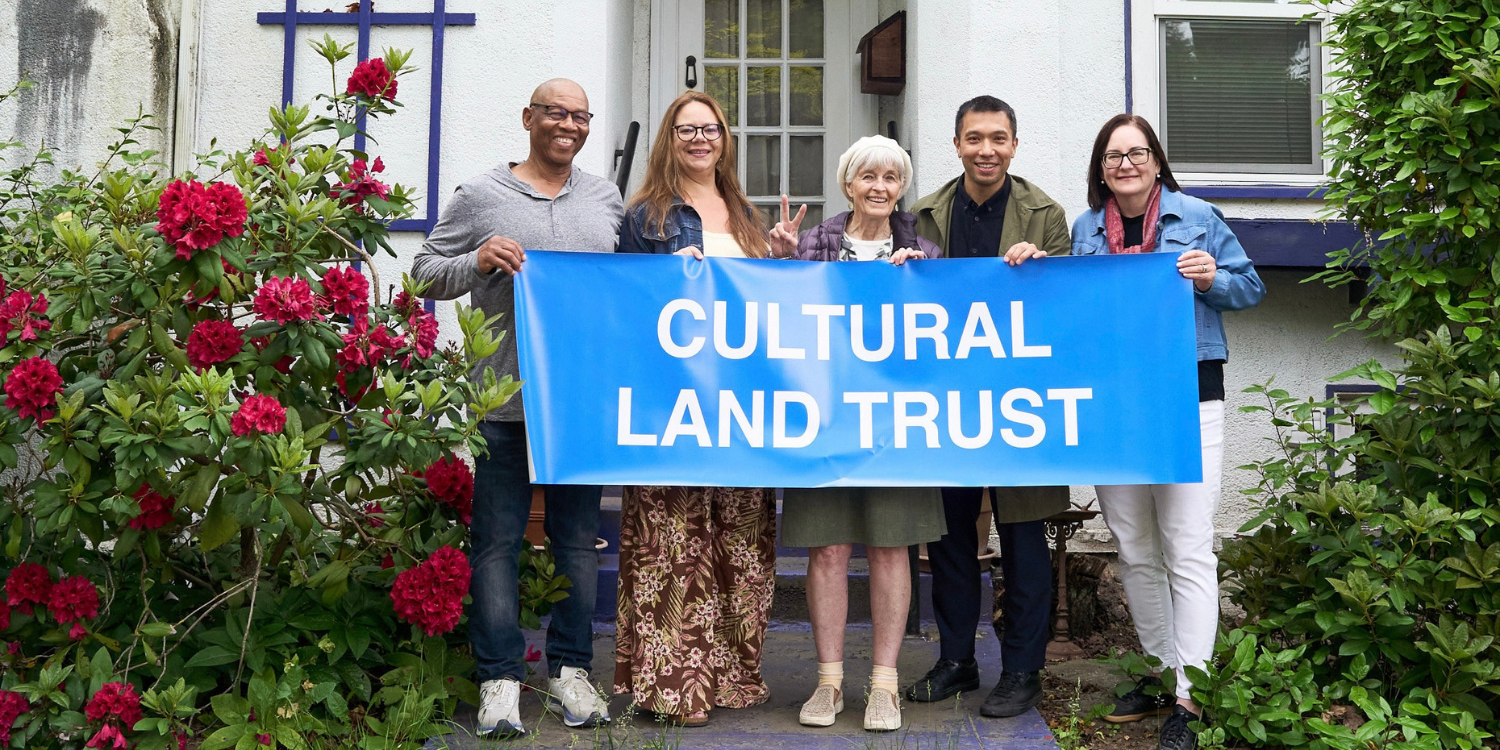
The opening of the Pinkerton Estate house, via the first Cultural Land Trust. Photo by Kayla Isomura
Expand the cultural land trust
All the candidates also supported expanded cultural land trust initiatives. In July 2026, Vancouver City Council unanimously passed a motion (“Keep the Artists in: Creating a Cultural Land Trust for Vancouver”) directing staff to draft a formal municipal policy by early 2027 to support the measures. Canada’s first CLT is Vancouver’s nonprofit 221A, which aims to acquire and steward properties for permanent cultural use, renting them to operators at fixed rates; its first property is a 1920s house on Vancouver's West Side gifted by the estate of late scholar Evelyn Pinkerton.
Reilly called for scaling up those efforts to “start taking those buildings and homes out of the speculative market and keep the rents low for artists.”
“The cultural land trust, I think, is huge,” Hagglund emphasized. “A land trust owned by the artistic community really makes sure that the decisions are in the hands of the sector, and can really create that affordability over generations.”
Establish a permanent arts committee, not just to help steer policy but to take decisions on delivering grants out of the hands of politicians
Right now, the arts and culture advisory committee offers suggestions to council and staff on a lot of issues in the sector. It had a close call late last year, when a city staff report materialized that proposed dissolving the committee—along with nine other such committees—before their terms ended in the summer. It was reversed after an outcry, with ABC’s Sarah Kirby-Yung helping to get the proposal withdrawn.
Reilly said establishing a permanent, more empowered committee would make sure that “artists should be able to speak out”.
As Teoli put it, it’s important to take politics out of arts grant decisions, “making sure the City is not the one picking the winners and losers.”
But Weisman warned: “You get arms-length organizations, you don't get rid of politics. So what you need instead is transparency.
"What you need is clarity, what you need is meaningful responses from grant organizations, the ability to speak openly, the ability to challenge, without turning it into endless litigating," he added. 

Related Articles