Theatre review: Think fun 1950s nostalgia as CTORA Productions stages Grease
Musical numbers consistently land with energy and flair in a production that boasts strong performances and choreography
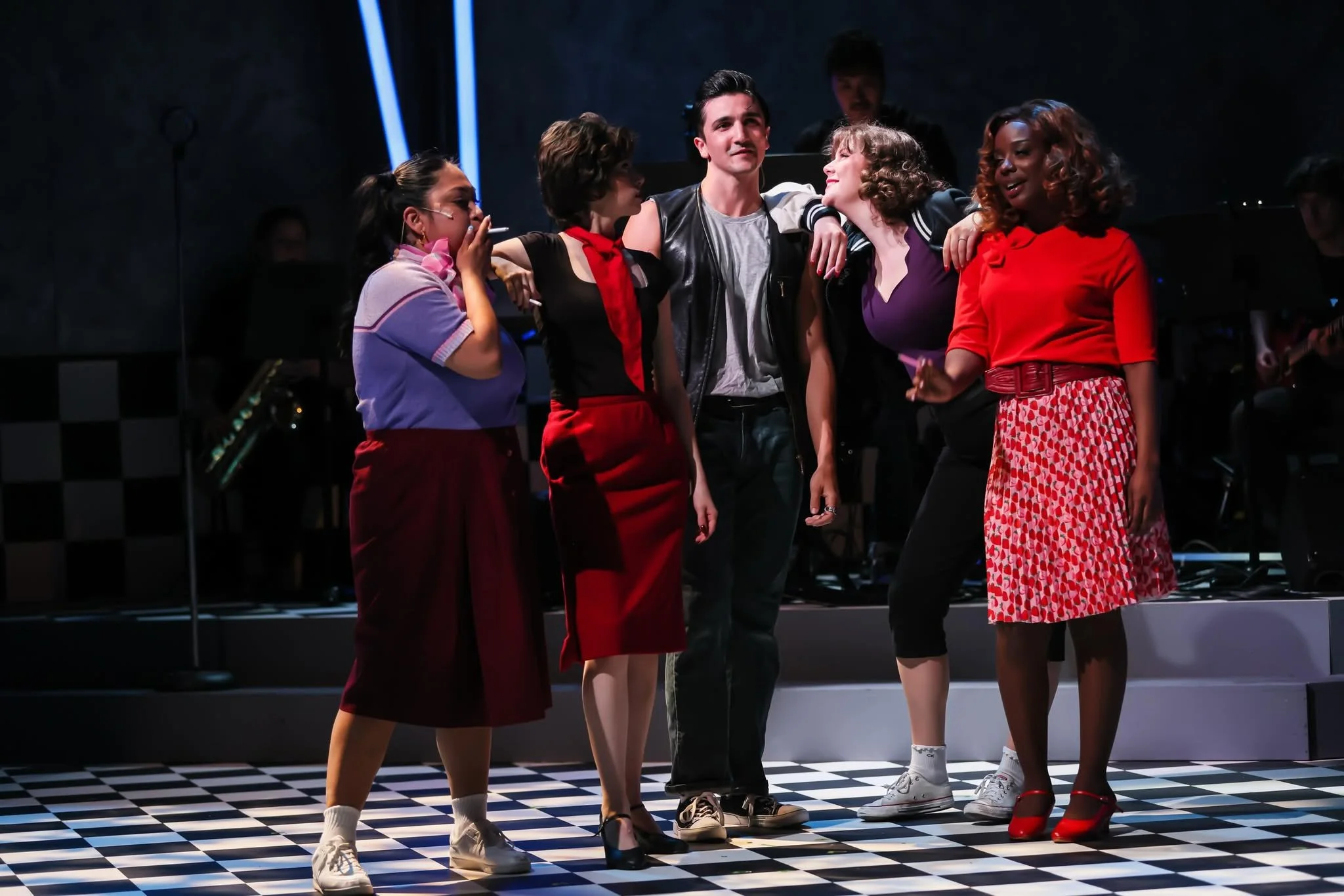
CTORA Productions’ Grease. Photo by Canna Zhou
CTORA Productions presents Grease to May 17 at the Granville Island Stage
SOME THINGS NEVER go out of style, and Grease is definitely one of them. Songs like “Summer Nights” and “Greased Lightnin’” remain crowd-pleasers generations later. Does Grease have the strongest plot? No. Or the healthiest messaging? Certainly not. But is it fun? Absolutely. And if you’re going to stage it, you may as well do it right—which is exactly what CTORA has accomplished.
From the obnoxious Burger Palace Boys (renamed the T-Birds in the film version) and the sassy Pink Ladies to the turbocharged “Born to Hand Jive” number, this production celebrates Grease’s nostalgia with style and confidence.
While the original Broadway production begins at the Rydell High class of 1959 reunion, director Sarah Rodgers instead opens CTORA’s version with the film’s iconic “Grease Is the Word”, and it proves to be a smart choice that immediately sets the tone. Watching the cast strut across the stage in leather jackets, poodle skirts, and greased-back hair creates an electrifying opening packed with attitude and retro cool.
From there, it’s easy to get swept up in the silliness and melodrama of Rydell High. As Danny Zuko, Stephen Thakkar has continuous bounce in his swaggered walk, indicative of the inner confidence his character thinks he has. Ava Stark’s Sandy radiates sweetness without leaning too heavily into naïveté, making her transition into Danny’s world as believable as one can.
Thakkar and Stark play off each other terrifically, including a fun moment when they’re reunited on the first day of school. The highlight of their partnership is their singing. Both performers possess phenomenal vocal chops, and they find an excellent stylistic balance between legit musical theatre and pop delivery, resulting in dynamite renditions of hits such as “Summer Nights”.
Another major standout is Manuela Palmieri as Pink Ladies leader Rizzo. Through sharp deadpan reactions and a palpable air of boredom with high-school life, Palmieri convincingly conveys Rizzo’s yearning for something beyond adolescence. Her powerhouse vocals are well suited to the role, highlighted by her fabulous performance of “Look at Me, I’m Sandra Dee”. With her striking presence and strong dance ability, Palmieri would also be a natural fit for Fosse-style material, including Velma Kelly in Chicago.
As Rizzo’s relationship interest, Kenickie, Connor Hawkins appropriately exudes classic greaser bravado, full of intimidating confidence and swagger, and Hawkins gets his moment in the spotlight with the crowd-pleasing “Greased Lightnin’”. Brett Williams, Eric Gibson, and Chase Sander embrace the cartoonish bad-boy antics of Doody, Roger, and Sonny, adding plenty of comic relief. Williams also delivers a sweet and melodic rendition of “Those Magic Changes”, while Gibson and María Alejandra Marshall, as Jan, charm the audience with their delightfully goofy duet “Mooning”.
There’s nice dynamism among the Pink Ladies, with Amanda Lourenço bringing bold comic flair to Marty, which is nicely contrasted by Kyla Ward’s sensitive portrayal of aspiring beautician Frenchy. Dancer Katrina Teitz’s portrayal of relentlessly overachieving Patti Simcox is fun to watch, including her effortless high kicks and split jumps. Isabelle Madrigal burns up the dance floor as Cha Cha, while ensemble member Danielle Metrow consistently shines through engaging, character-driven dance.
Rodgers inventively stages the large production with minimal scenery. Set and costume designer Brian Ball has painted the stage with a black-and-white checkerboard pattern evocative of a 1950s diner, instantly transporting the audience into the setting. The addition of set pieces such as bleachers, gym lockers, and cleverly designed “cars” for the drive-in movie scene fluidly move us through the story. Meanwhile, Ball’s costumes, which include cardigans and school gym uniforms—along with the work of hairstylists Sukh Kaur and Yunabi Kaui—further immerse us in teenage 1950s America.
Also vital to the storytelling here is Ken Overbey’s creative choreography, which includes a “swimming” effect for Danny as he’s supported by his buddies in “Summer Nights”, and some unique partnering moves and lifts for Cha Cha and Danny in “Born to Hand Jive”. Additionally, Overbey’s choreography for numbers like the rousing “We Go Together” creates the kind of uplifting moments that audiences adore.
Ultimately, the heart of Grease lies in its music, and this cast, in collaboration with the polished band under the baton of music director Jeremy Hoffman, delivers superbly. From the exuberant “You’re the One That I Want” to Sandy’s heartfelt “Hopelessly Devoted” and the campy “Beauty School Dropout”—charmingly performed by Keith Macmillan as Teen Angel—the musical numbers consistently land with energy and flair.
So, yes, parents may want to remind younger viewers that the show’s social dynamics belong firmly in the 1950s. But as a piece of fun musical theatre nostalgia, CTORA proves that Grease remains an irresistible treat, offering infectious tunes and endearing caricatures. A-wop-ba-ba-lu-mop, a-wop-bam-boom! 
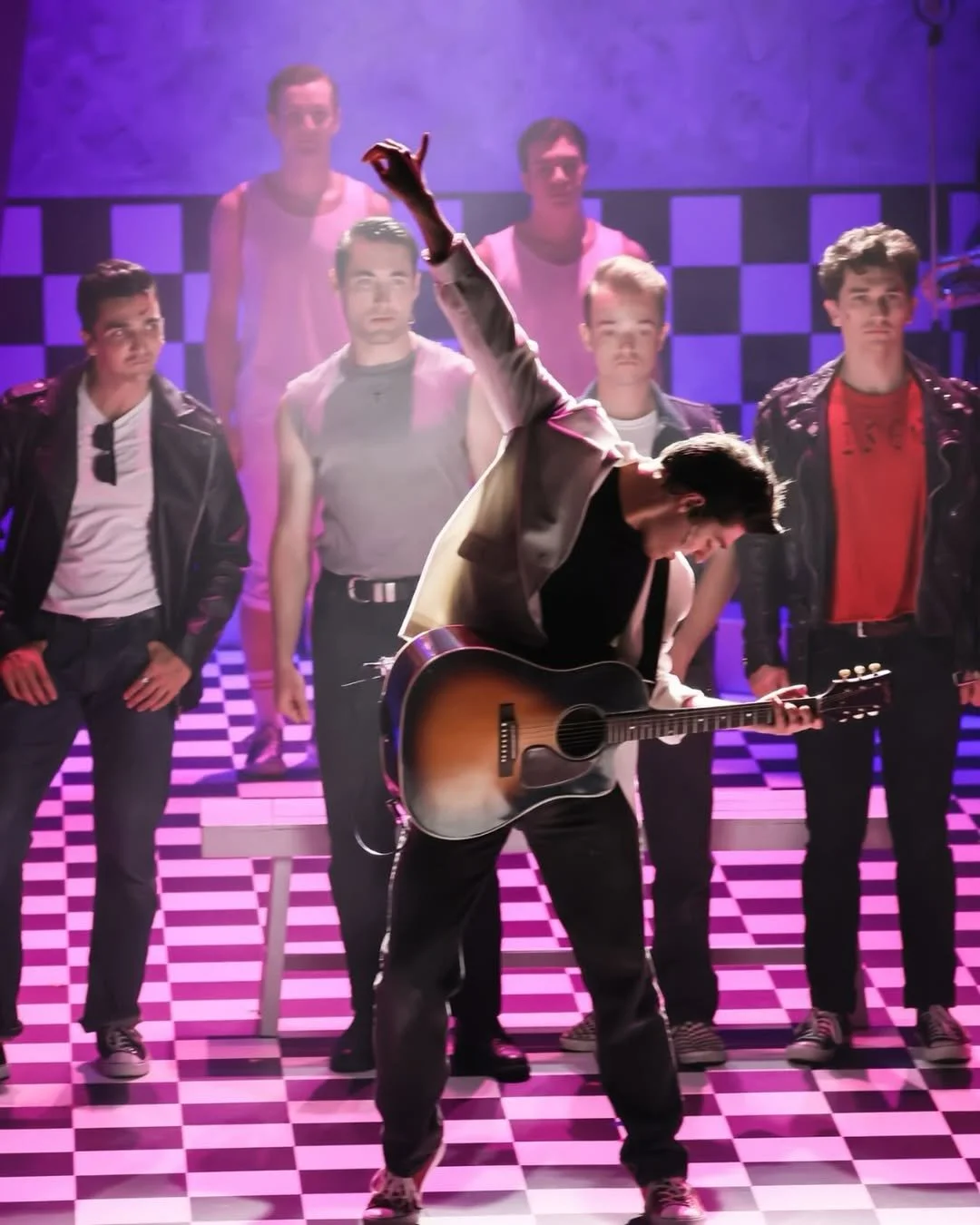
CTORA Productions’ Grease. Photo by Canna Zhou

Related Articles