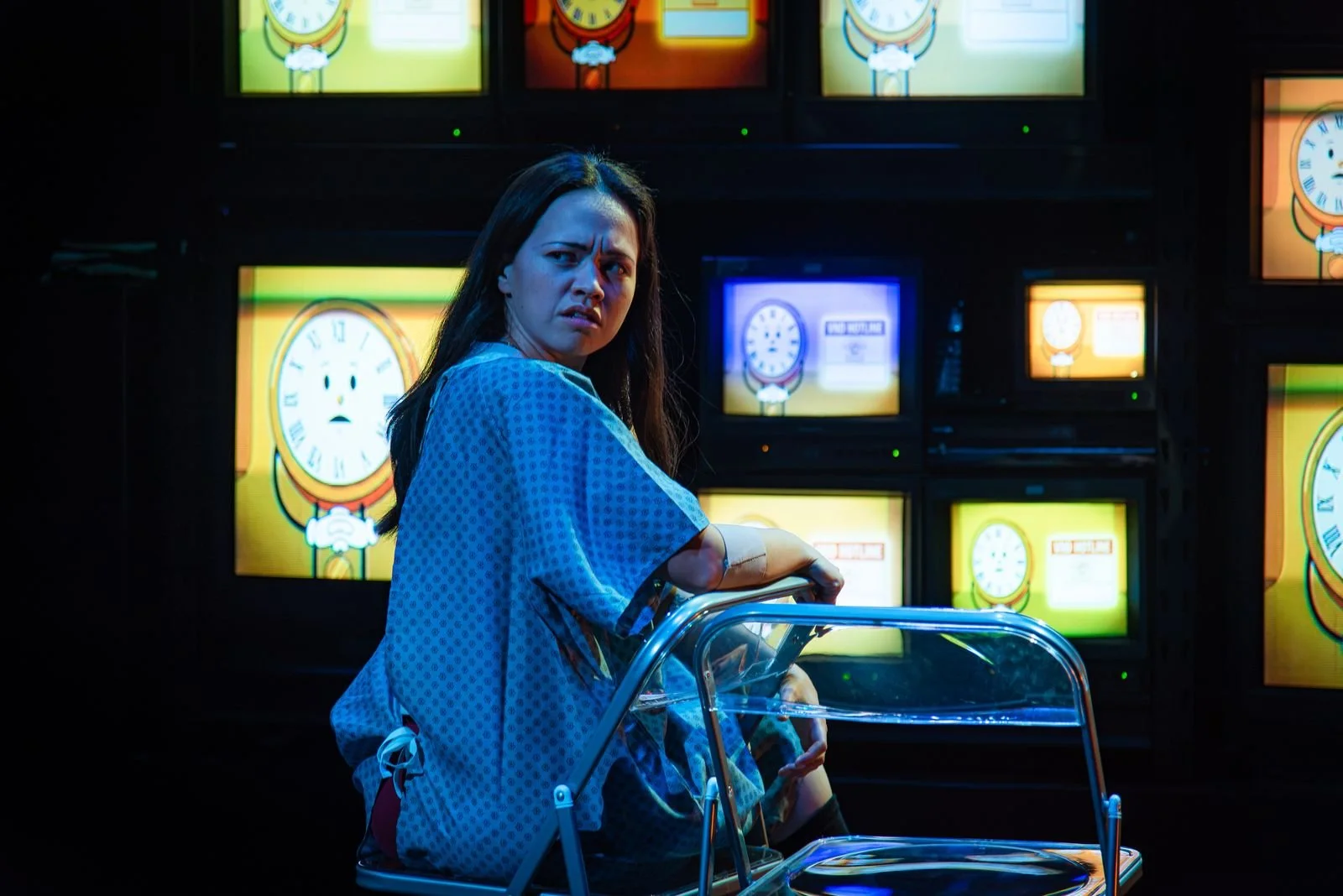
Sophie’s Surprise 29th gets the party started with a few Brit circus twists
London’s Three Legged Race Productions folds in influences from contemporary circus to cabaret in a raucously funny show that celebrates a ’90s-style birthday at The York Theatre
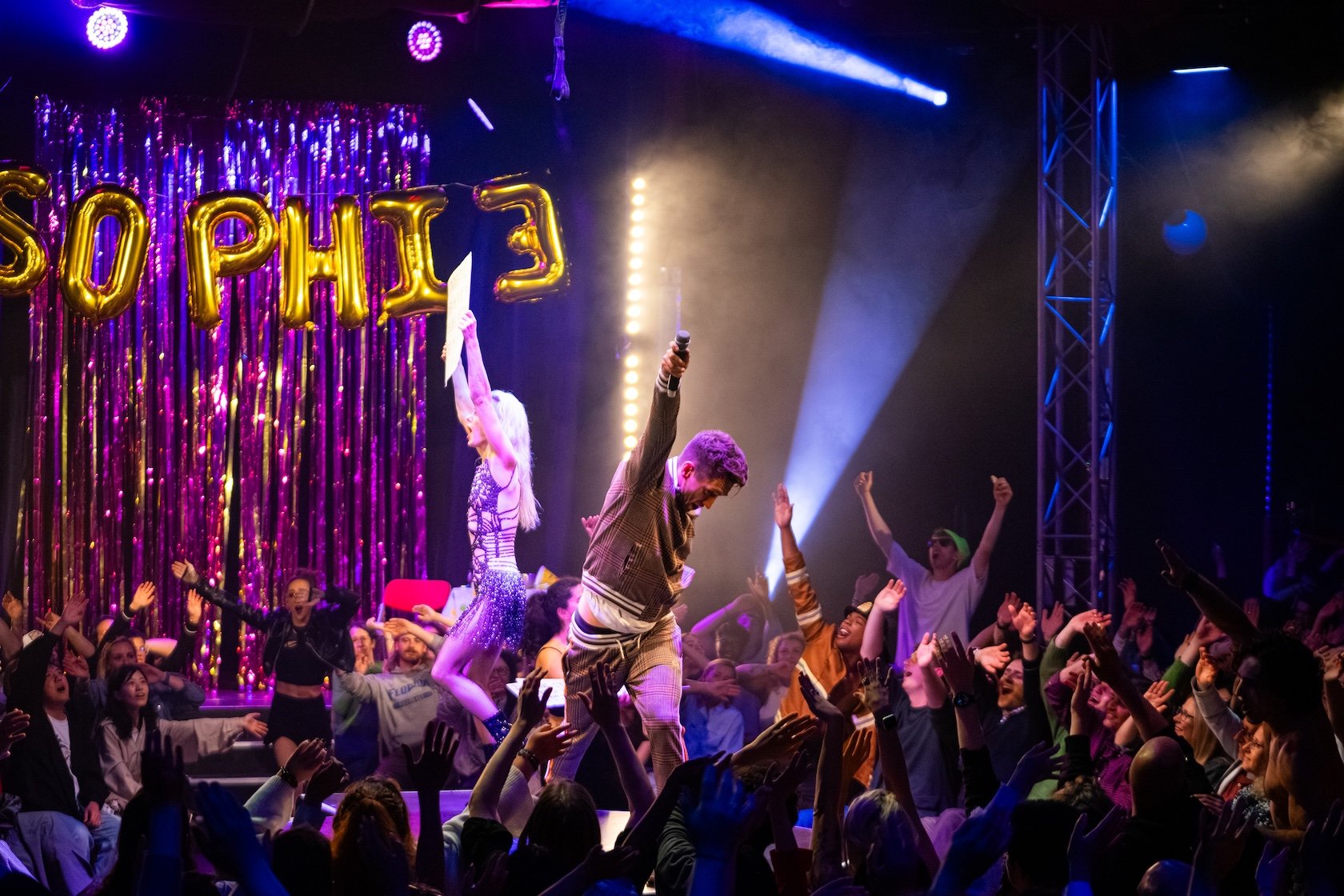
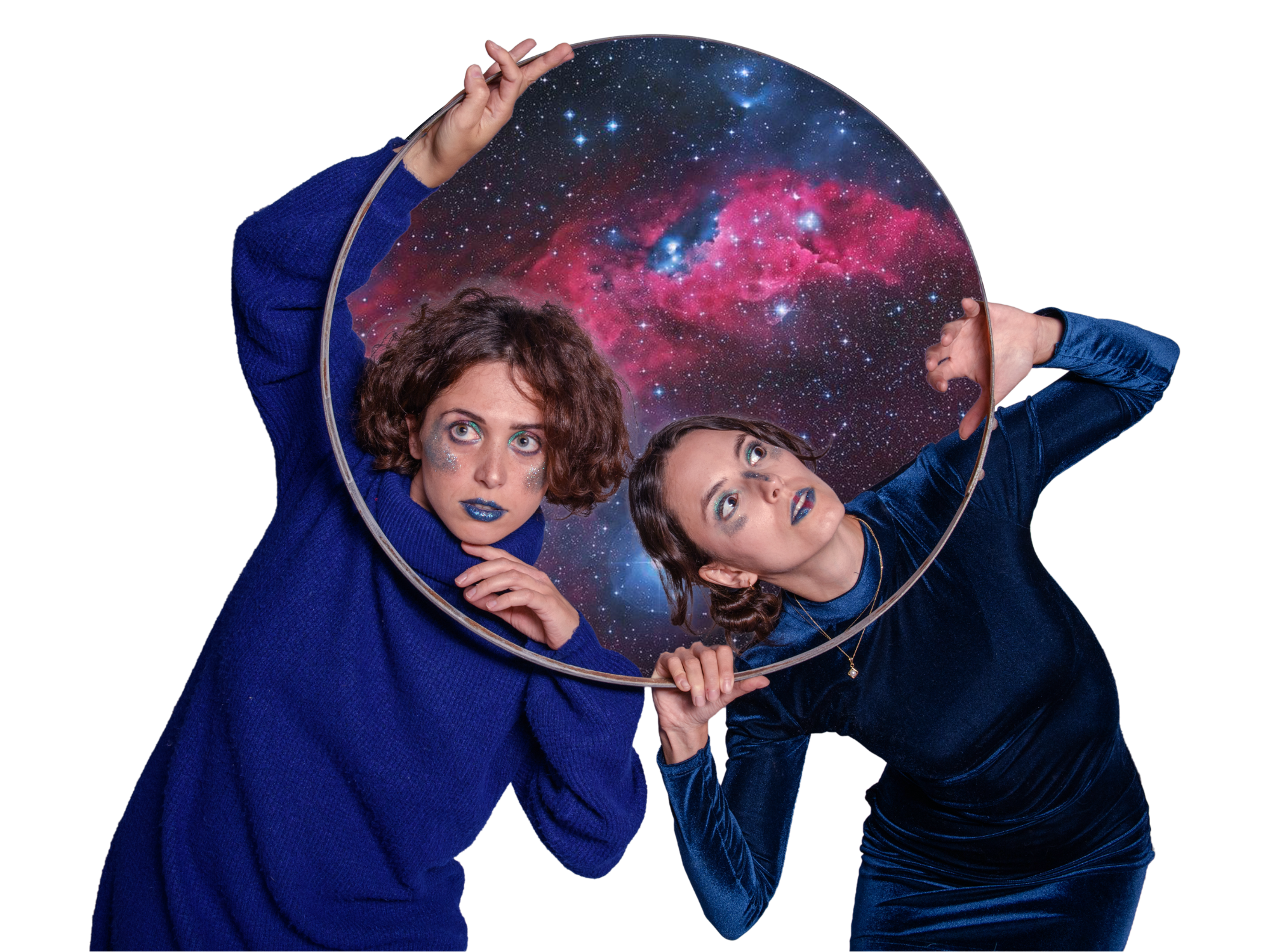
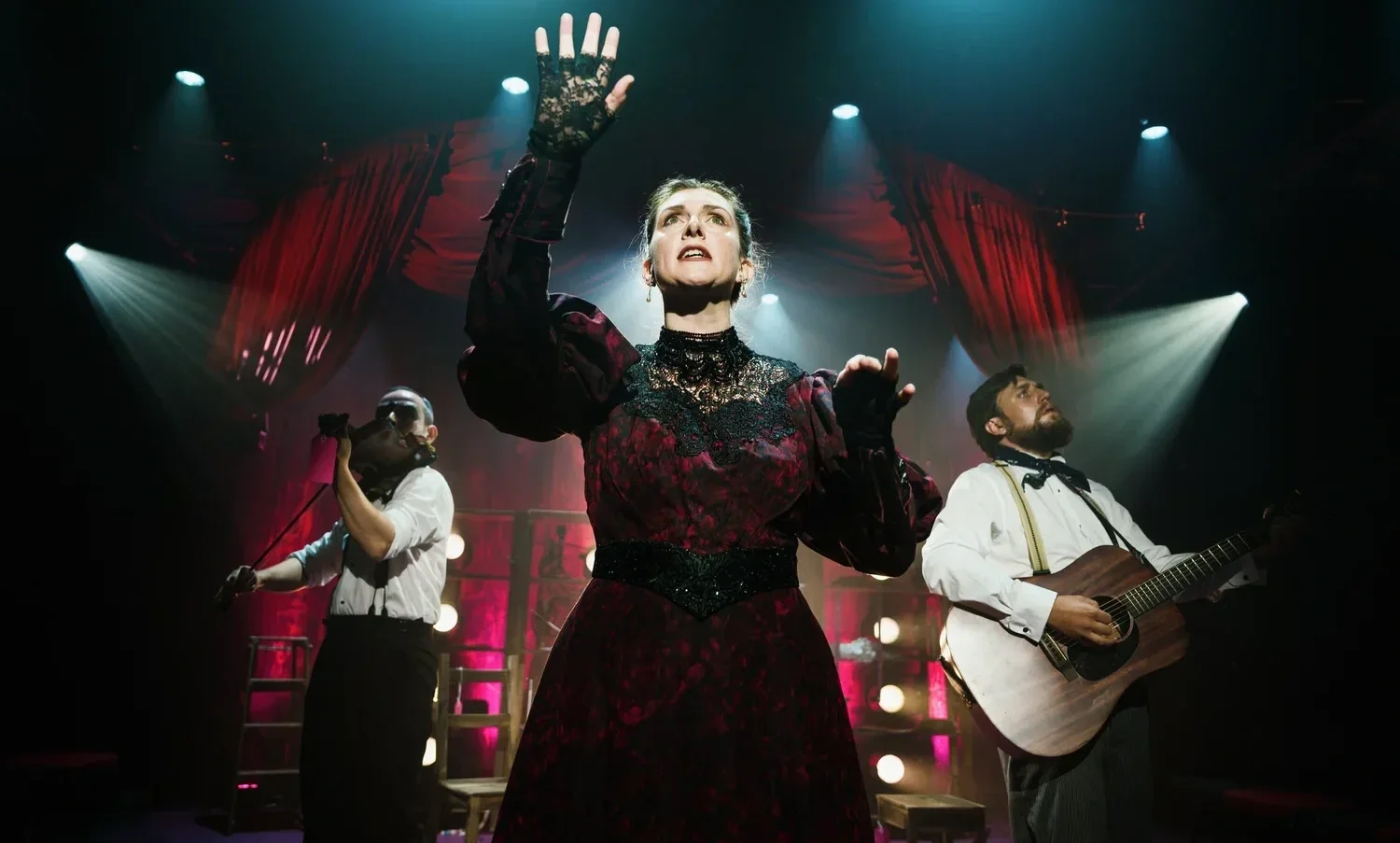
Sophie's Surprise 29th. Photo by Michael Aiden
The Cultch presents Sophie's Surprise 29th at the York Theatre from June 10 to 28
VANCOUVER AUDIENCES HAVE sampled circus from around the world—starting with, of course, the glittering, elaborately themed acrobatics of Cirque du Soleil under the big top at False Creek. We’ve witnessed the raucous, beer-soaked acrobatics of Quebec beardo lumberjacks Cirque Alfonse. And we’ve watched the full range of Australian artistry, from the intricate choreography of Circa to the artful innovation of Gravity & Other Myths.
But for its traditional season-closing acrobatic show at the intimate York Theatre this year, The Cultch has something different for audiences to discover: the unique take on contemporary circus that has grown out of England. Or at least the chaotic, comedy-spiked one coined by the relatively new London troupe Three Legged Race Productions.
Let’s start with the novel setup for the hit show it’s bringing here—Sophie’s Surprise 29th. Right off the top, audiences will be welcomed to a birthday party.
And not to reveal too much about a show that has “surprise” right in the title, but Katharine Arnold—who runs Three Legged with Isis Clegg-Vinell and Nathan Price—promises it’s rowdily interactive.
“We get a completely different, legitimate audience member every night, and we take them backstage. We do a countdown—we tell the audience she’s about to arrive,” Arnold says. “‘She’s here! She’s here! She’s here!’ We do a countdown, and then we pop her out through the curtains, and she’s onstage, and that stops the room. We get the whole room to yell and cheer.”
“There’s something so unifying about a surprise birthday party, and being there, and then yelling,” adds Price, joining Arnold on a Zoom call.
A wild array of acrobatic acts unfurls from there at this banger of a party, but back to the show itself in a minute.
To understand the form it takes, it’s important to know the backgrounds of the company’s founding artists. Each studied at London’s elite National Centre for Circus Arts, one of the top training facilities in the world, and they’ve gone on to perform for some of the best companies around the globe—from Cirque du Soleil to La Clique and the 7 Fingers (Les 7 doigts).
Between tours, the Three Legged Race founders crossed paths a lot in London’s distinctive circus-cabaret scene—especially in one restaurant that served up aerial acts and fire-breathing with cuisine and cocktails in Covent Garden.
“When it was very busy in London, you might do three gigs a night—you might run from a bar in Covent Garden to another venue to a casino to something else,” Arnold explains. “And for each of those, they probably would want a different act, and then they would want to change their acts up quite a lot for repeat.
“It was really like, ‘Get in there, hit them quick.’ You’ve probably got four minutes, it’s a short act, because they all happen really quickly. Get in, do something cool, impress them, make them clap, make them have a nice time.”
That style informs the non-stop parade of gravity-defying feats in Sophie’s, a show that finds a distinct middle ground between the honed, high-calibre, contemporary-dance-influenced training of the National Centre and the rip-roaring, unpretentious entertainment of the cabaret scene they came up through.
“One of the things I love about it is that it pulls from so many different parts of our art form—we sort of make reference to and juice up the style of traditional circus,” explains Price.
The show is also unabashed in its crowd-pleasing. As Arnold points out, there’s a circus term “splits for claps”—a playful, tongue-in-cheek way to call a flashy move aimed at quick applause. “And in some scenes, in some of the very contemporary circus environments, ‘splits for claps’ is like a bad thing,” she explains. “It’s looked down on. ‘You don’t do that, we don’t want to just give them what they want.’ And we’re kind of like, ‘No, no, we really do! We want to give them what they want, we want to give them that splits moment!’”
With its additional influences of immersive theatre, variety shows, and comedy, Price says Sophie’s feels like its own animal.
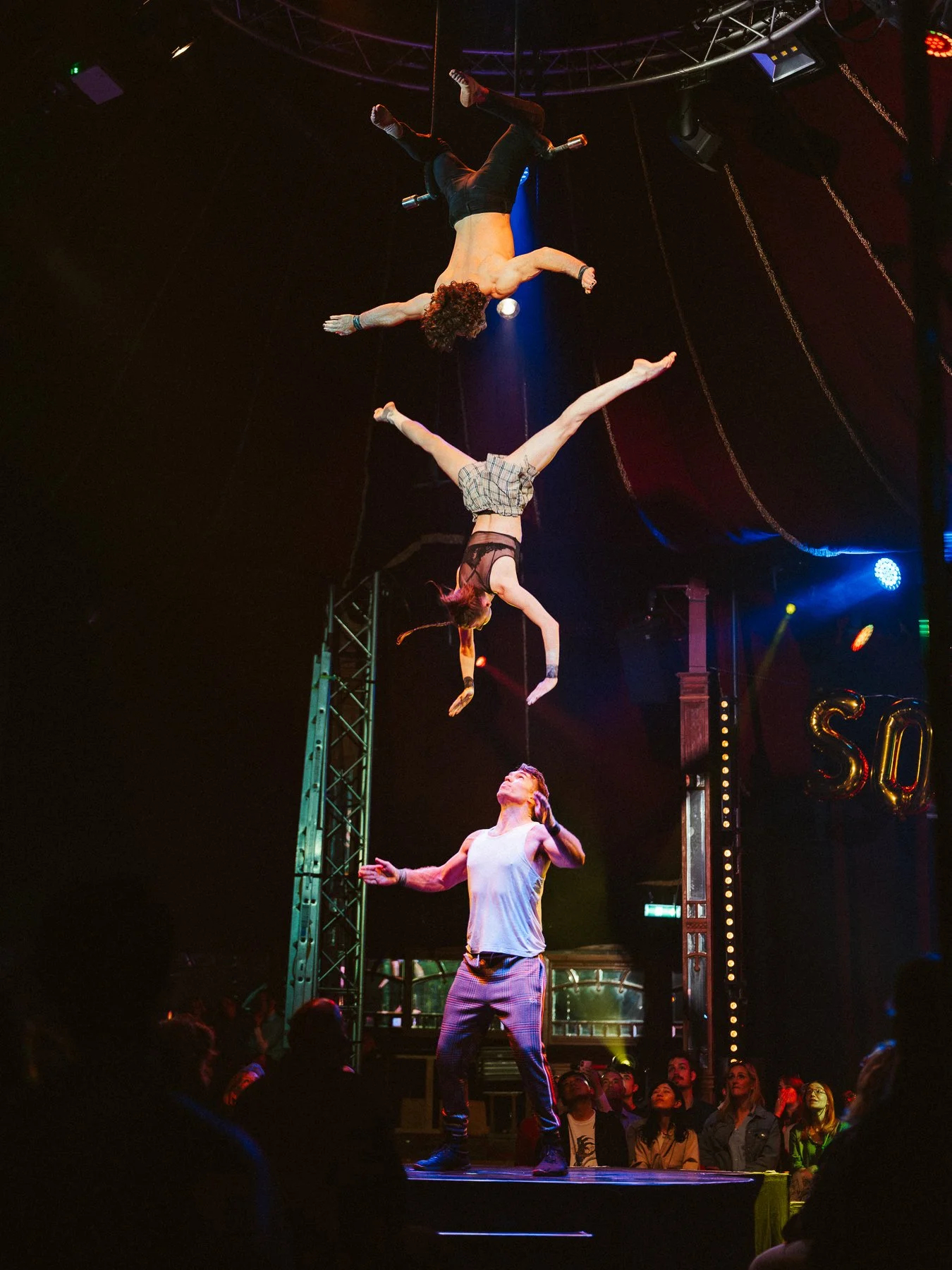
Sophie's Surprise 29th. Photo by Jacinta Oaten
“There are some really, really strong, brilliant contemporary circus companies out there—these kinds of companies that are doing really incredible big group acrobatics, movement-based pieces, that kind of thing, and then there’s great kind of ‘lineup cabaret’,” Arnold says. “And then there’s traditional circus, which is a whole sort of other world, but we saw that there’s nothing really that feels like it’s in the middle of all of that, that uses all of those things and that feels like an ensemble little show, but that is still kind of accessible.”
What exactly will that mean once the party gets started? The acts switch up almost every time the team performs the show, and there will be a guest spot by a Vancouver circus artist when Sophie’s hits the York.
In a production that plays with stereotypes, “we’ve had an office guy hula-hooping, we’ve had an American jock who does diabolo, we’ve had a policeman stripper, and we’ve had a Barbie pink girl doing the fire act,” Arnold allows.
All this rolls out amid a ton of ’90s nostalgia, care of a soundtrack culled from that era, alongside archetypes from the parties of yore: you may see a goth, a nerd, or even a chav. (For those who don’t know that last bit of oh-so-Brit slang, think knock-off tracksuits and loutish behaviour.)
That nostalgia has helped Sophie’s Surprise 29th hit right in a world looking to escape the dystopian present. “I think accidentally the show really tapped into that in a way we weren’t expecting,” Price says. “We just kind of put music in that we love from our generation, and I think it coincided with this shift towards people really wanting to be nostalgic.”
The retro mood takes nothing away from the breathless daredevil feats the troupe performs, with reviews from spots like the Edinburgh Festival Fringe expressing the gasp-inducing experience of seeing the acrobats flying high so close to the audience. There’s one novel act, Price notes, that mixes trapeze with hand-to-hand work, and finds a performer dropping head-first into the grip of another artist from high above the stage.
“We really pushed the bounds of those disciplines, and it’s so hard in circus to come up with new stuff,” Price says. “That’s one of those acts where we absolutely play up and lean into this audience perception of risk, because she’s falling five metres.”
“It’s more exciting when it feels like there’s real jeopardy,” Arnold enthuses, adding that everything is calculated for absolute safety.
As Price puts it, “There’s a difference between perception of risk and risk.”
And so consider this a birthday celebration where the party favours come with extra gasps—and more than a little British-circus bravado is on fine display. 

Related Articles