Theatre review: Bard on the Beach’s adaptation of Antigone opens new paths through timeless tragedy
Bold update by Kate Besworth brings mythic figures closer to us while continuing to ask the ancient questions posed by Sophocles
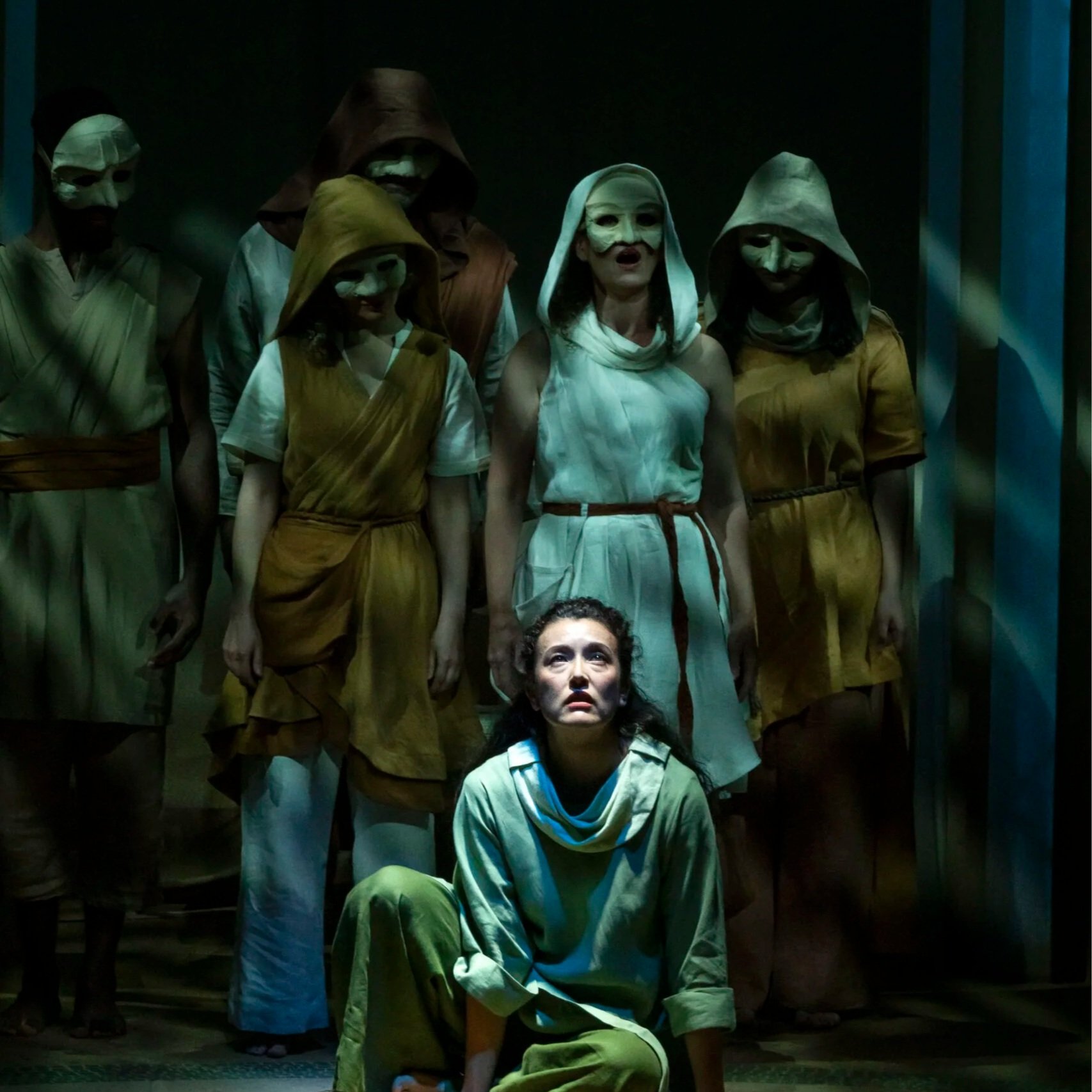
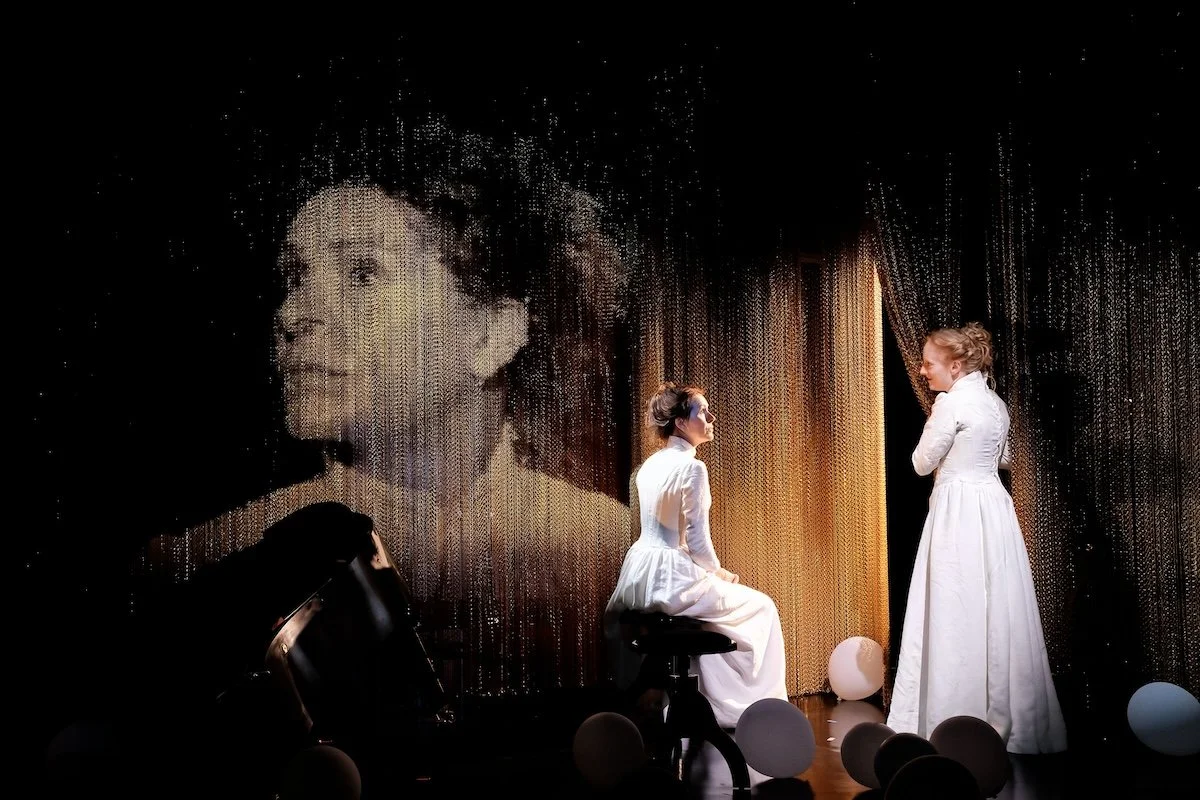
Yoshie Bancroft as Antigone at Bard on the Beach. Photo by Emily Cooper
Bard on the Beach presents Antigone at the Douglas Campbell Theatre to September 18
AT ONE POINT in Kate Besworth’s adaptation of Antigone, Ismene, desperately trying to understand her sister’s determined fatal course, finally relents. “I’m doing the thing,” she says. “I’m entering the tragedy of our family.” Variations on this strange self-awareness repeat throughout the play, almost always around Antigone.
If grief comes in waves, tragedy hits like a cascade. Few figures in literature are as closely acquainted with that rhythm as Antigone. By the time Sophocles’s play begins, she has already inherited the aftermath of her mother’s death, her father’s exile, and the civil war that leaves both her brothers dead. When her uncle Creon unjustly forbids her brother Polynices’s burial and Antigone in turn refuses to allow her brother to be dishonoured and forsaken, catastrophe follows catastrophe with terrible momentum.
The momentum of Sophocles’s tragedy remains, but Besworth and director Ming Hudson find room to linger where the original rarely does. In 95 minutes, this adaptation gives us time to feel the aftermath before the next catastrophe arrives. For example, there’s Jocasta, Antigone and Ismene’s mother. In Sophocles’s original, she has long since taken her own life; here, she remains and, as portrayed by Jennifer Lines, spends much of the play consumed by grief, barely able to acknowledge the daughters who have survived her sons. That emotional distance makes her eventual visit to her imprisoned daughter—an encounter entirely invented for this adaptation—one of the night’s most memorable moments. Reaching toward her daughter, Jocasta offers an embrace that Antigone refuses.
Yoshie Bancroft never softens Antigone’s conviction. Her resolve remains absolute, but here, it’s also shadowed by an emotional vulnerability that progressively finds some foreground. The prison scene with Jocasta is especially revealing. When her mother finally reaches toward her with open arms, Antigone can only repeat, “I can’t.” In Bancroft’s performance, refusal is no longer just heroic and becomes the only way she knows how to exist.
Around Bancroft’s immovable Antigone, everyone else changes. Cameron Grant’s Haimon begins with a glowing warmth that makes his confrontation with Creon all the more devastating, his heartbreak equally about the loss of Antigone and of the father he thought he knew. Ismene (played by Kate Besworth) undergoes a similar transformation, her playful affection giving way to a grief she once insisted she’d live to refuse.
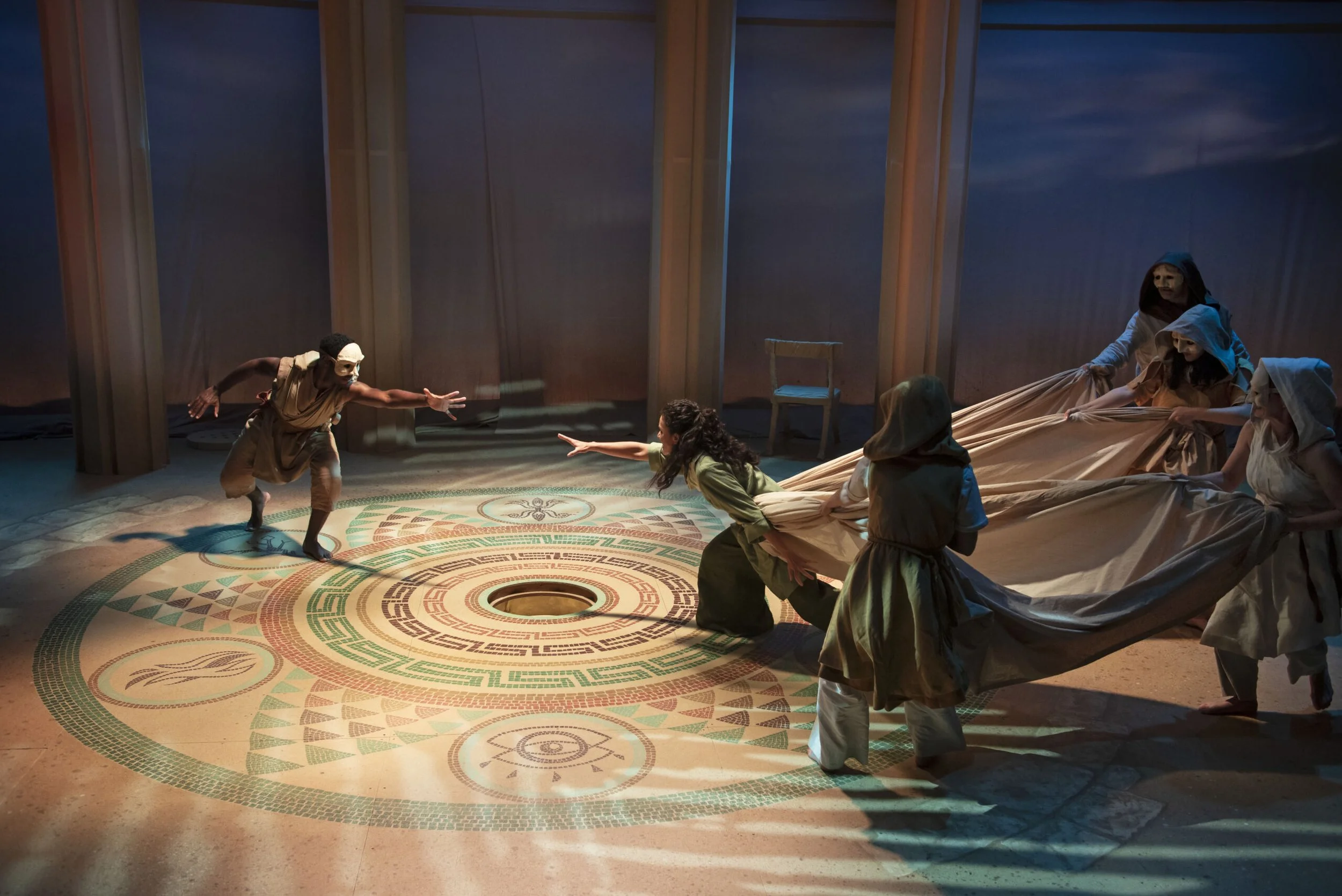
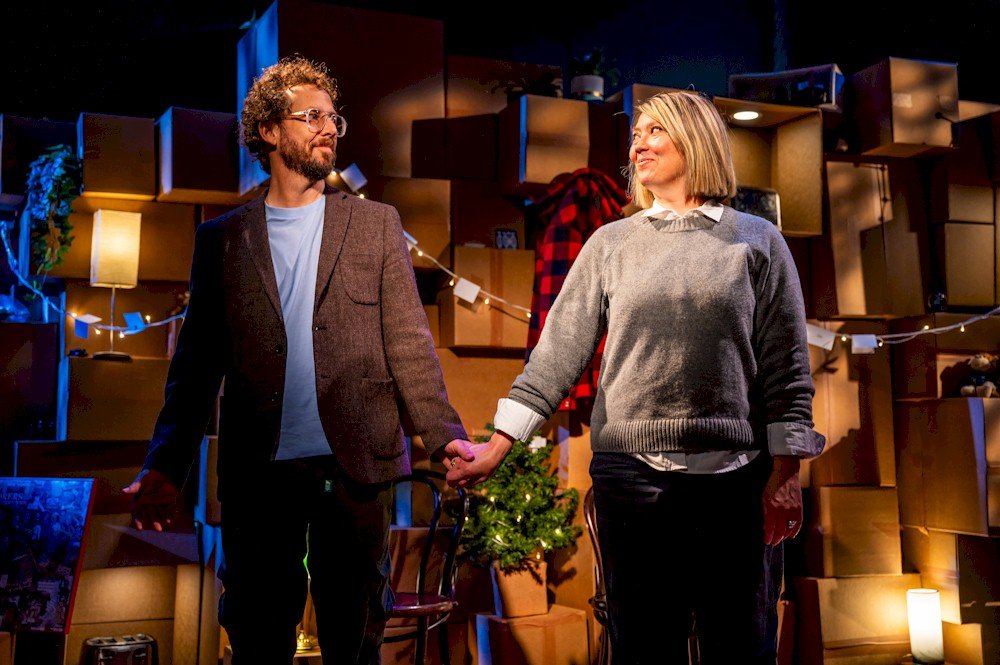
Bard on the Beach’s Antigone. Photo by Emily Cooper
Most surprising is Paul Moniz de Sá’s Creon. Rather than a simple tyrant, he carries himself with a world-weary certainty, repeatedly insisting, “I am strong. I am powerful,” the line shading from rueful self-awareness to desperate delusion. If Antigone cannot imagine a life outside tragedy, Creon seems equally imprisoned by the narrative of authority he has written for himself. In a moment of recognition he tells her, “Die if you want to,” exasperated. “I’ll release you to your narrative.”
That same economy of expression shapes the production’s visual language. Jessica Oostergo’s set strips Antigone down to its elements, much as Besworth strips it down to its relationships. The production’s most effective piece of design is a single length of cloth that keeps coming back in new forms. It conceals history, buries the dead, becomes a gesture of care, an instrument of death, and, finally, the symbol for the production’s potent last transformation. John Webber’s warm, amber light creates clean and striking tableaux on a stage that seems suspended on a landscape of memory and myth, or a world that never quite settles into a time or place.
Not every part of the adaptation lands with the same confident simplicity. Besworth’s contemporary dialogue can be revelatory when it exposes the emotional lives of these characters, but some moments of broader humour and conspicuously modern speech interrupt the emotional gravity the production spends so much time cultivating. In the refreshing ingenuity of bringing these mythic figures closer to us, it occasionally makes them feel smaller.
Besworth’s ending returns to and builds expansiveness, though. For more than two thousand years, Antigone has asked audiences to wrestle with the meaning of one young woman’s sacrifice. But Antigone has always known why to die. Here, the final image belongs not to the martyr, but to those left to decide how to continue living in her wake. The harder question belongs to whatever and whoever tragedy leaves behind. 
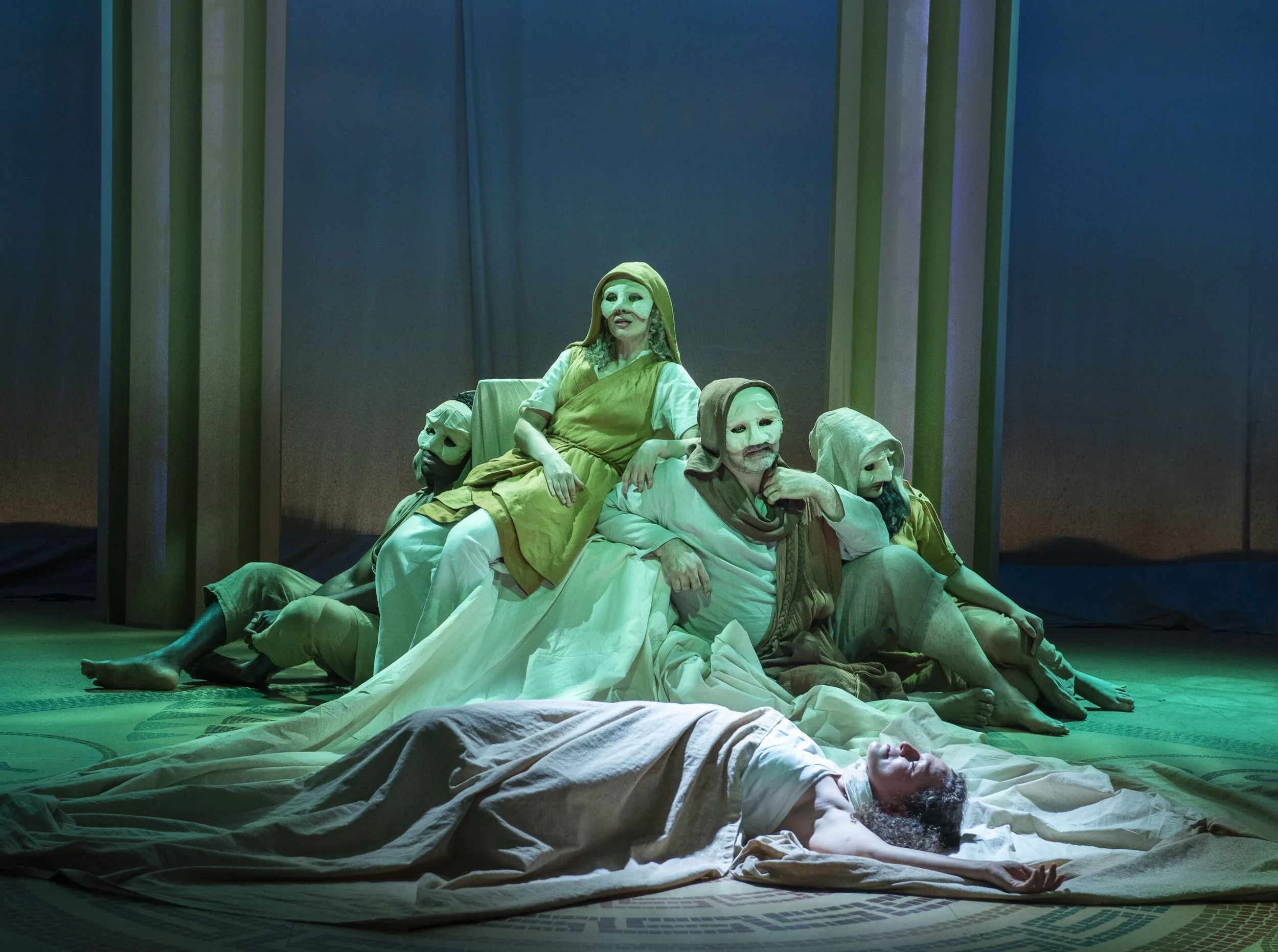
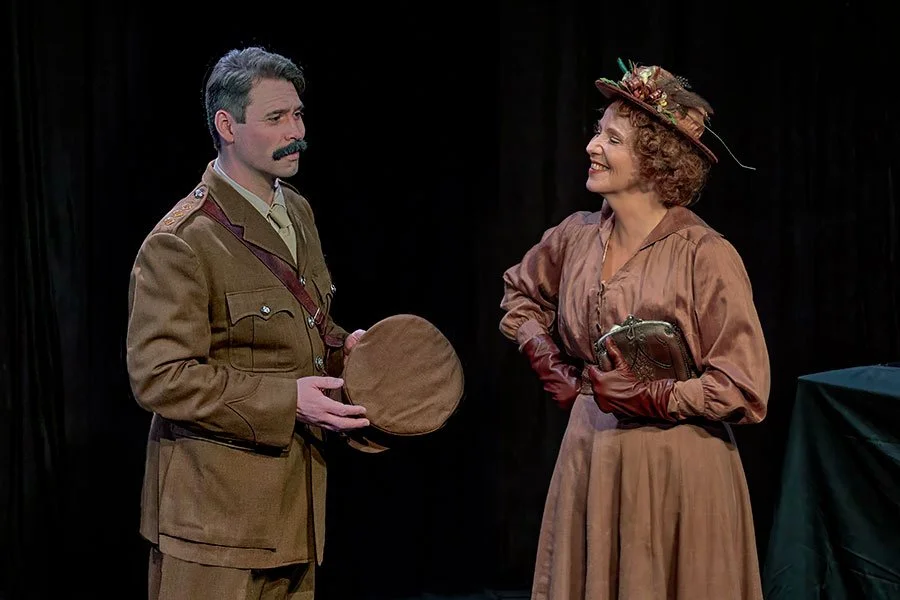
Jennifer Lines and the chorus in Antigone. Photo by Emily Cooper

Related Articles