With new outfit Elephant, Adam O’Farrill’s musical language evolves into more direct expression
The composer and trumpeter moves from head to heart through the adventurous nature of the four-piece ensemble, coming to VanJazz ’26
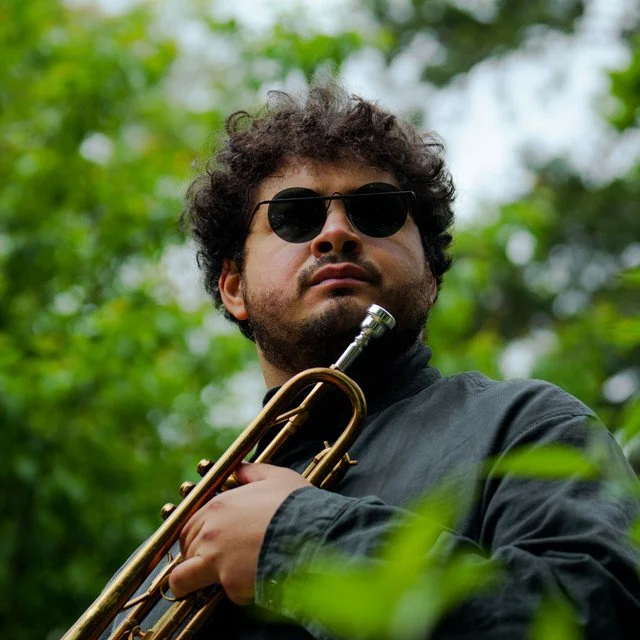
Adam O’Farrill
Adam O’Farrill’s Elephant plays Alliance Française Vancouver on October 23 as part of VanJazz ’26
FOR PROOF OF evolution, first examine the fossil record. Over untold eons, in slowly accreting layers of sedimentary rock, we can see how organisms morph into new forms that are better adapted to changing planetary conditions. If they don’t, they die. Closer in time and closer to home, we can also see how certain kinds of fish, such as the freshwater sticklebacks of B.C.’s coastal islands, have changed in the scant 12,000 years since the glaciers of the last Ice Age receded. With different populations rendered incommunicado by tectonic upheaval and rising sea levels, one ancestral form has become 10 separate species, each unique to the watershed it calls home.
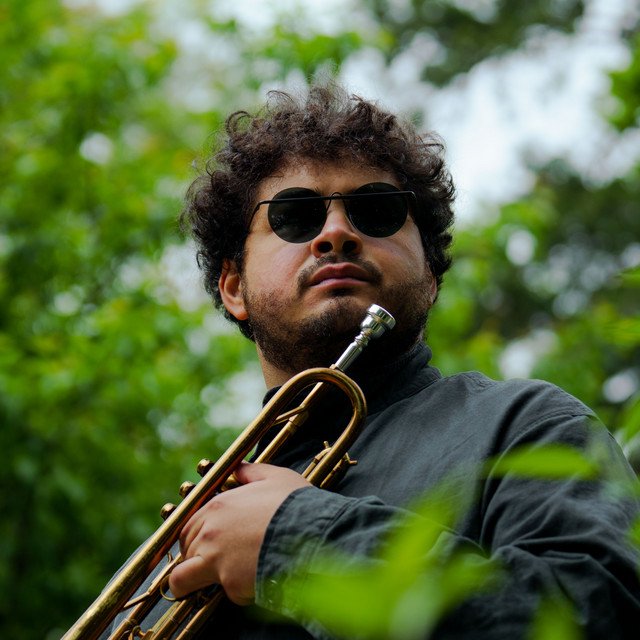
In musical evolution, however, Adam O’Farrill is staking a claim for record speed. The 32-year-old trumpeter and composer broke into the jazz scene in 2016 with the album that gave his first band its name, Stranger Days. Through five subsequent recordings and one short decade he’s evolved his sound, creating a personal syntax on his horn that is indebted to the past—Louis Armstrong, Kenny Dorham, Wadada Leo Smith, and Ambrose Akinmusire are among those he cites as important influences—but that is also open to electronics, abstraction, and occasional flashes of sweetness. And now, with the debut of his new band Elephant, he’s taken this idiosyncratic language and put it into the service of straightforward emotion. Elephant’s music is less of an interrogation of possibility and more like direct, honest expression.
“That’s not inaccurate,” the trumpeter explains in a Zoom interview from his Brooklyn home. “With a lot of this music, especially on the first [Elephant] album, I also gave myself the challenge of just letting it flow a little bit. With other albums, I really, really kind of intellectualized a lot and predetermined a lot. Which is not a qualitative comment or assessment; it’s just different.”
One difference is that with Elephant—which makes its Vancouver debut at Alliance Française Vancouver on October 23, as part of the new VanJazz music festival—there’s little “translation” involved. Thanks to especially strong work from pianist Yvonne Rogers, Elephant showcases both the music that O’Farrill composes on the keyboard and the variations that then emerge from his horn.
“I’ve always written on the piano, you know,” he notes. “It’s always been where I can most clearly hear my ideas and feel my ideas and shape my ideas. And that even applied to Stranger Days, which is a band that didn’t have piano in it. A big part of the fun of Stranger Days was figuring out how to map out all these ideas that I was playing and writing on piano onto an instrumentation that was very bare, with two horns, bass, and drums. I was really into that challenge. And then I did another project, this album called For These Streets, which was a little bit more in that direction, although it was a larger ensemble and maybe a little more traditional in the way that I was taking piano stuff and orchestrating it.
“And then I wanted to give myself the challenge of taking the piano and trying to make that interesting itself,” he continues. “Like, really lean into my background and my inherent proclivity as a composer. And where’s the line between giving Yvonne Rogers what I would play on the piano, and really making it into something different and more fleshed out?”
Rogers is obviously an integral part of the new band; at times she and O’Farrill sound as if they’re improvising with one mind. “She’s fantastic,” the trumpeter enthuses. “Yvonne has really, really big and open ears, and is a deeply responsive and sensitive player. That really pushes me. It’s like everything I play, she catches, and that’s really special.”
Bassist Walter Stinson is special enough to have been carried over from Stranger Days, and his earthiness is the perfect foil for the bandleader’s flights of imagination. “The thing I really love about Walter is that he really expands the language of the bass in a very natural way,” O’Farrill says. “He digs into, as you said, the earthiness of the bass that has traditionally been seen as the role of the bass, providing that firm foundation. But he’s also very elastic inside of that. He doesn’t let that role limit himself; he doesn’t play in a way that feels boxed in by that. I hear a lot of bass players that have so much restraint, and sometimes that’s a beautiful thing. It can feel very nuanced, and very useful. Walter can play with restraint, but he’s also not afraid to break the rules.”
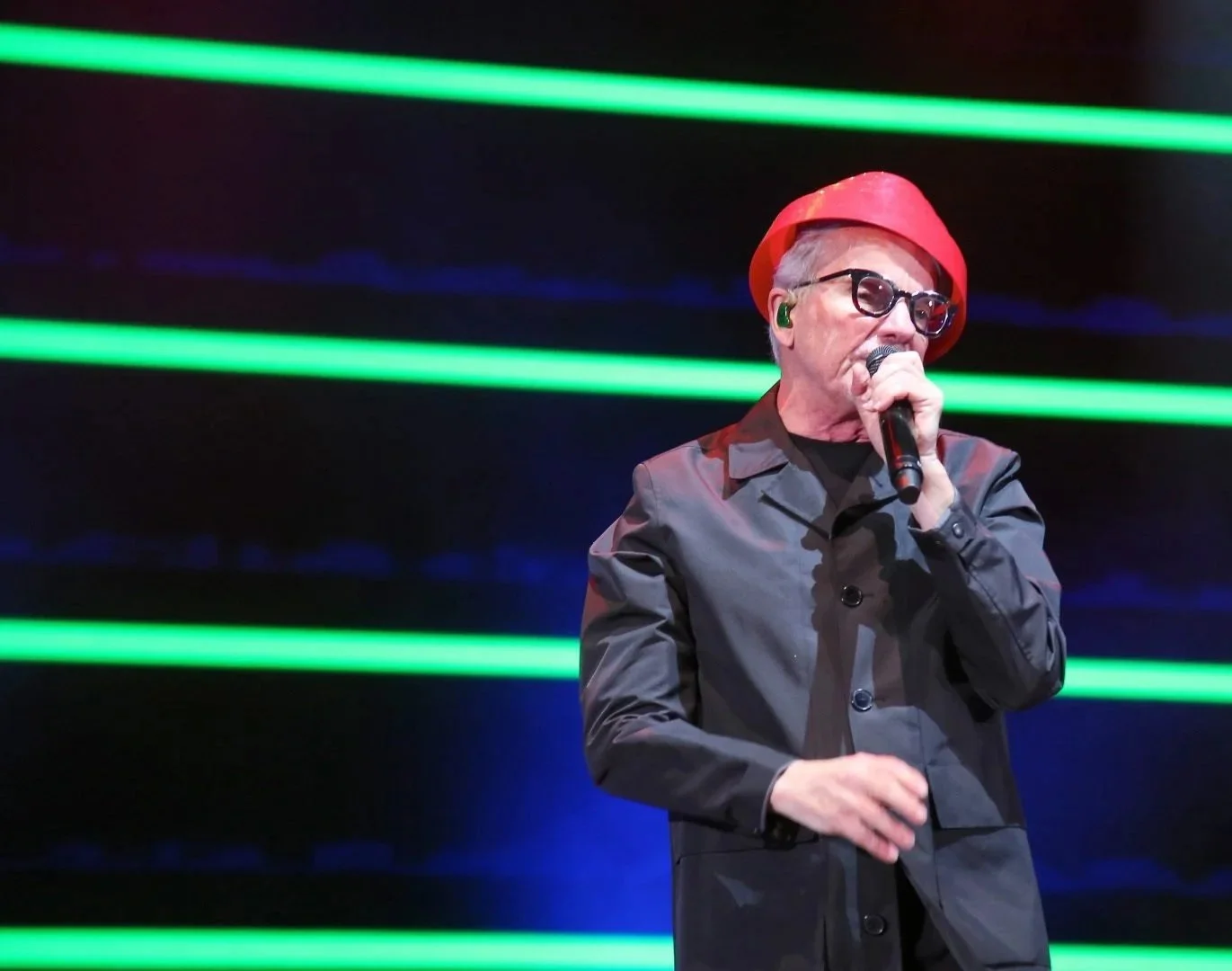
Drummer Russell Holzman is new to O’Farrill’s performing unit, but not to the trumpeter’s world; they’ve been friends since high school, although they’ve often travelled in very different circles. “He doesn’t really play on the jazz scene much; this is one of the few gigs that he does with a band that really exists inside of that language,” the bandleader explains. “He does a lot of work in the drum-and-bass scene and the hyperpop scene; he tours with [Grammy-nominated singer-songwriter] Caroline Polachek, you know! When he first started playing music he was coming from a rock background, and it’s been interesting to see his journey. He knows all the Philly Joe [Jones] hits from the first Miles Davis quintet—he’s a very studious musician—and it’s been interesting to see him incorporate that knowledge into everything he does.”
O’Farrill stresses that, in true jazz fashion, Elephant is a band of equals, even if they’re all pulling together to articulate his ideas. On Elephant’s eponymous debut, that’s perhaps most evident on Sea Triptych, an 11-minute extravaganza that incorporates the dramatic swells of “Along the Malecón”, the tranquil beauty of “The Three of Us, Floating”, and the chase-scene intensity of “Iris Murdoch”. A late addition to O’Farrill’s plans for the record, it grew out of a simple part that he devised on an ailing piano at his wife’s parents’ house.
“It’s one of those pianos that’s not really that in tune,” he says, laughing. “The resonance is a little funny. It’s a little clangy, a little washy, and I was playing dyads in both hands with the pedal on and realized, ‘Oh, this makes me think of water. It makes me think of the ocean.’ I just kind of followed that, and it made me think of different relationships I haven with water and the ocean.”
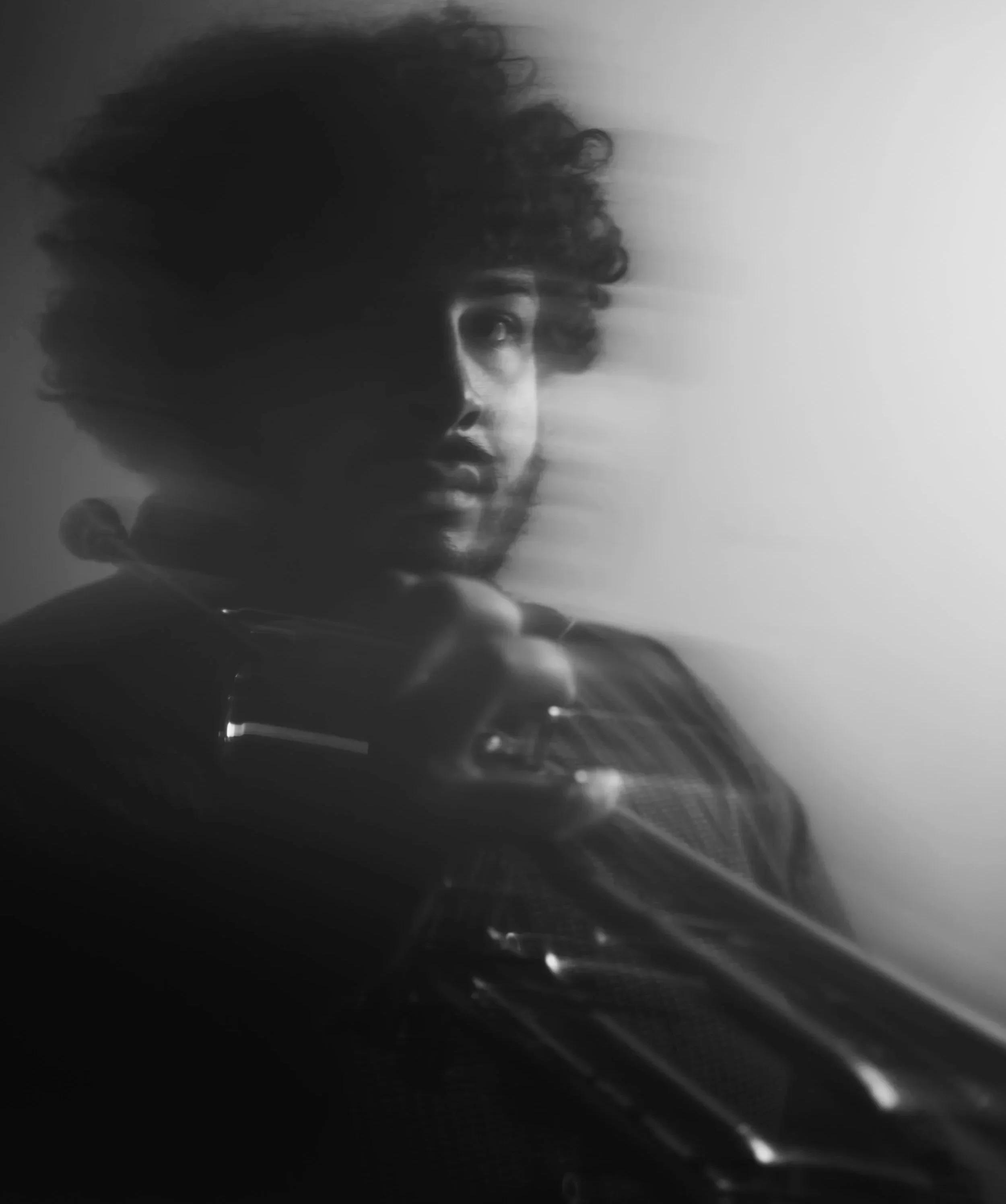
Adam O’Farrill
“Along the Malecón” is an oblique reference to O’Farrill’s Cuban heritage; he’s made five pilgrimages to the beleaguered island nation and is inspired by both its scenery—the Malecón is Havana’s more urbanized equivalent of the Stanley Park seawall—and its people. “The Three of Us, Floating” evokes a childhood memory of swimming with his father and older brother. And, naturally, “Iris Murdoch” takes a literary turn.
“I had just finished [Murdoch’s] book The Sea, the Sea as I was writing the piece, and it was on my mind,” he says. “This character named Charles Arrowby—a real piece of work, like a complete asshole—becomes obsessive about an old childhood love, and has this toxic relationship with her. But the book is so fascinating in the way it orchestrates all of this and draws it all out, and most of it takes place in this house by the ocean. So with the melody and the interaction between everybody in the band, I was thinking about the thorniness of this guy and his relationships with all of the characters, and the way it kind of reflected moments in which the ocean is responding.”
Fiction and film are both important to O’Farrill: he admiringly cites Ryuichi Sakamoto’s observation that his music functions “as a soundtrack for a movie that only exists in his head”. Like the Japanese keyboardist and electropop pioneer, he’s aiming for a sound that’s multidimensional and pan-stylistic. And that’s perfectly natural for someone whose grandfather, Chico O’Farrill, was largely responsible for introducing Cuban music to bebop jazz in the 1940s; whose father, Arturo O’Farrill, is a respected bandleader and composer in his own right; and whose mother, Alison Deane, is a formidably skilled classical piano virtuoso.
As O’Farrill notes, adventurous hybridity is baked into his musical and personal identity. “I don’t think I have any other way of doing it,” he says. “There’s not a bone in my body that would let me do it any other way.” 

Related Articles