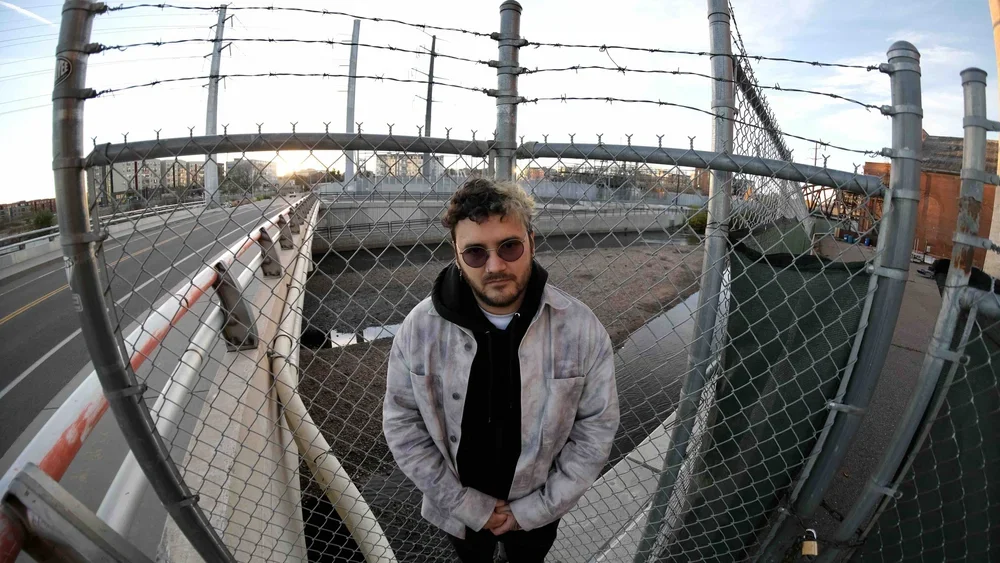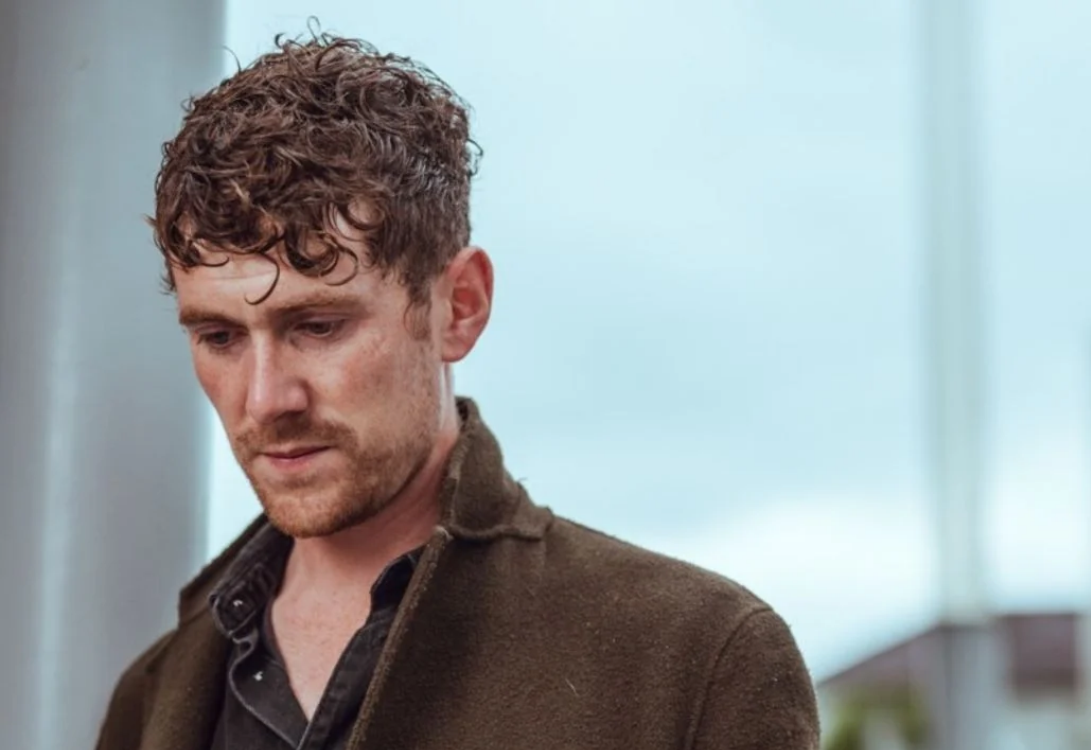
Outward-focused Ruby Singh uses his art as a means of building empathy
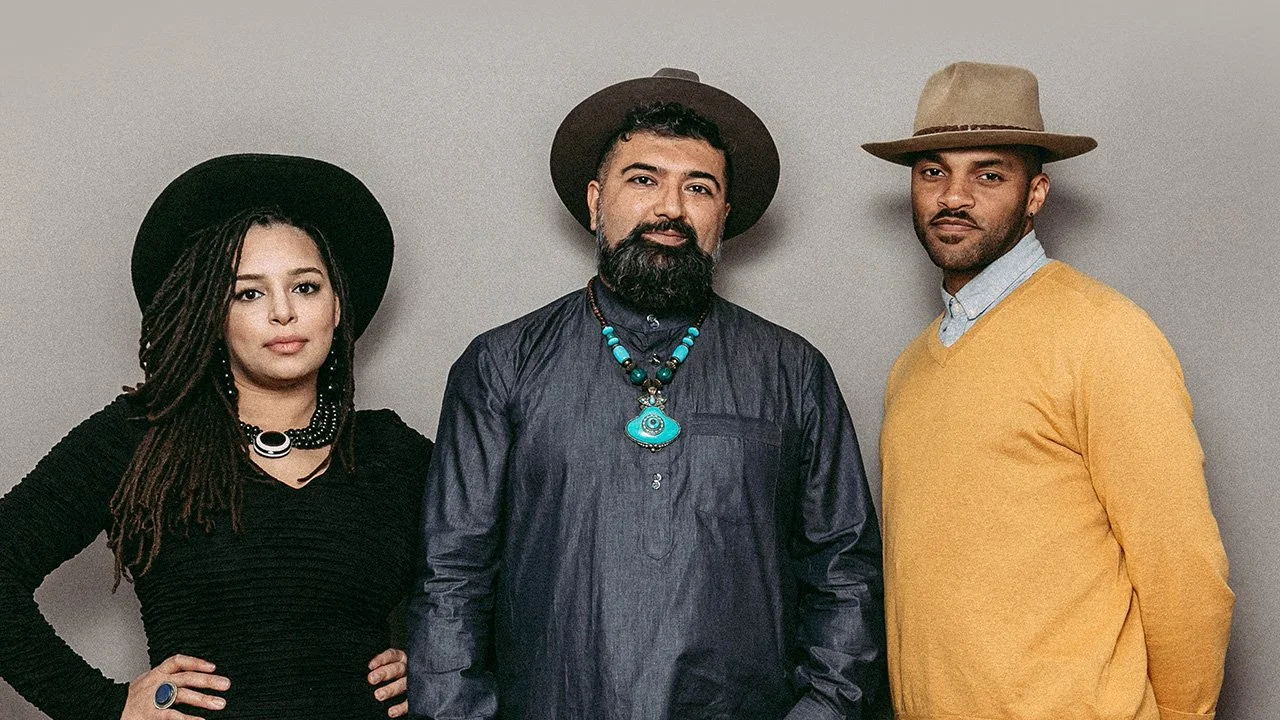
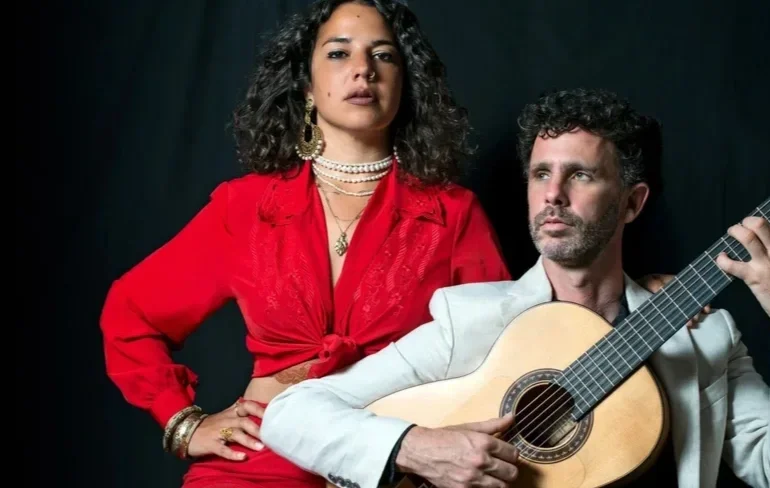
In his band the Future Ancestors, the multidisciplinary artist is joined by a powerhouse crew that includes singers Holly Eccleston and Khari McLelland
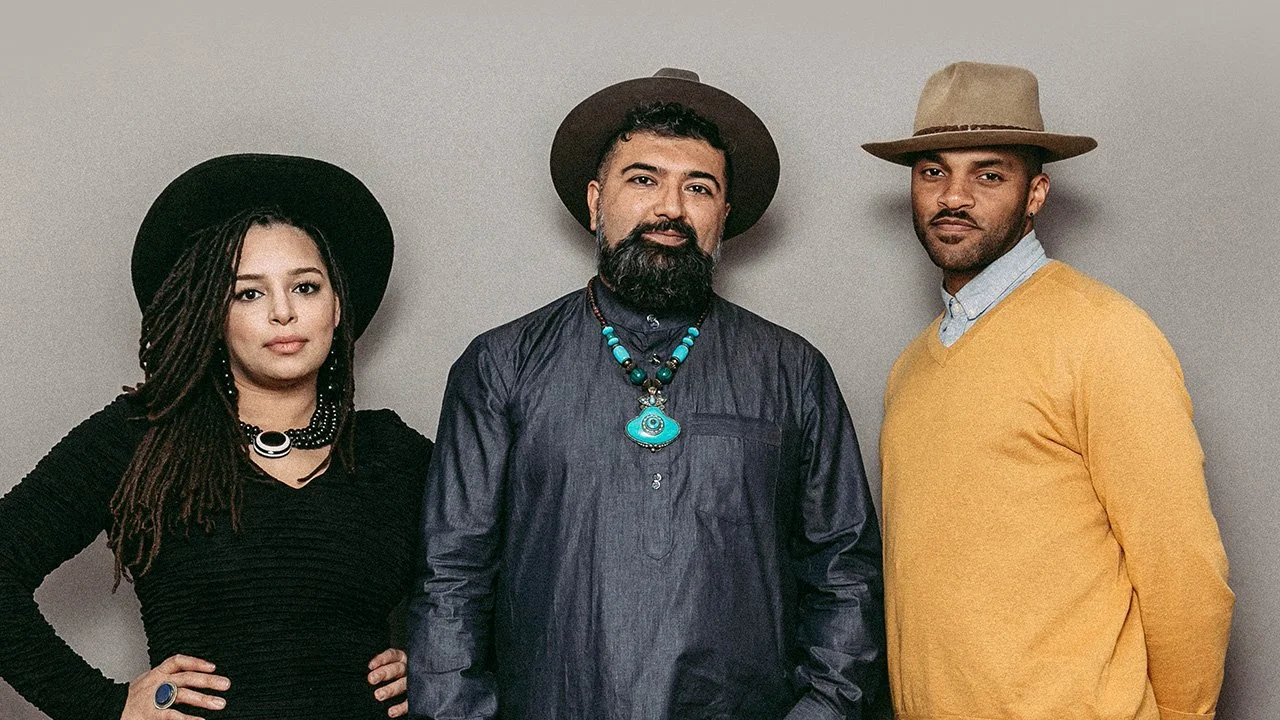
Ruby Singh & the Future Ancestors
Ruby Singh & the Future Ancestors play the Shadbolt Centre for the Arts on November 20 at 7:30 pm
RUBY SINGH HAS just returned from a few days in Bali, where he was reading his poetry at the Ubud Writers & Readers Festival, and he’s understandably agog at what he experienced during his first visit to the Indonesian island.
“It really was incredible!” the author, vocalist, musician, environmentalist, videographer, and educator reports in a phone call from his Vancouver home. “Like, the combination of the writers and speakers there was just mind-blowing, honestly. The conversations that were happening daily, both on-stage and off-stage, were really inspiring.
“I’ve always been kind of mind-blown by Balinese dance, the kecak monkey-chant calls, and the carving,” he adds. “From my view, art is still very much in the threads of everything. And, wow! I can’t get over the carvings in people’s homes. I’m like ‘Is this a temple? Is this a home? What’s happening here?’ And it’s a bit of both.”
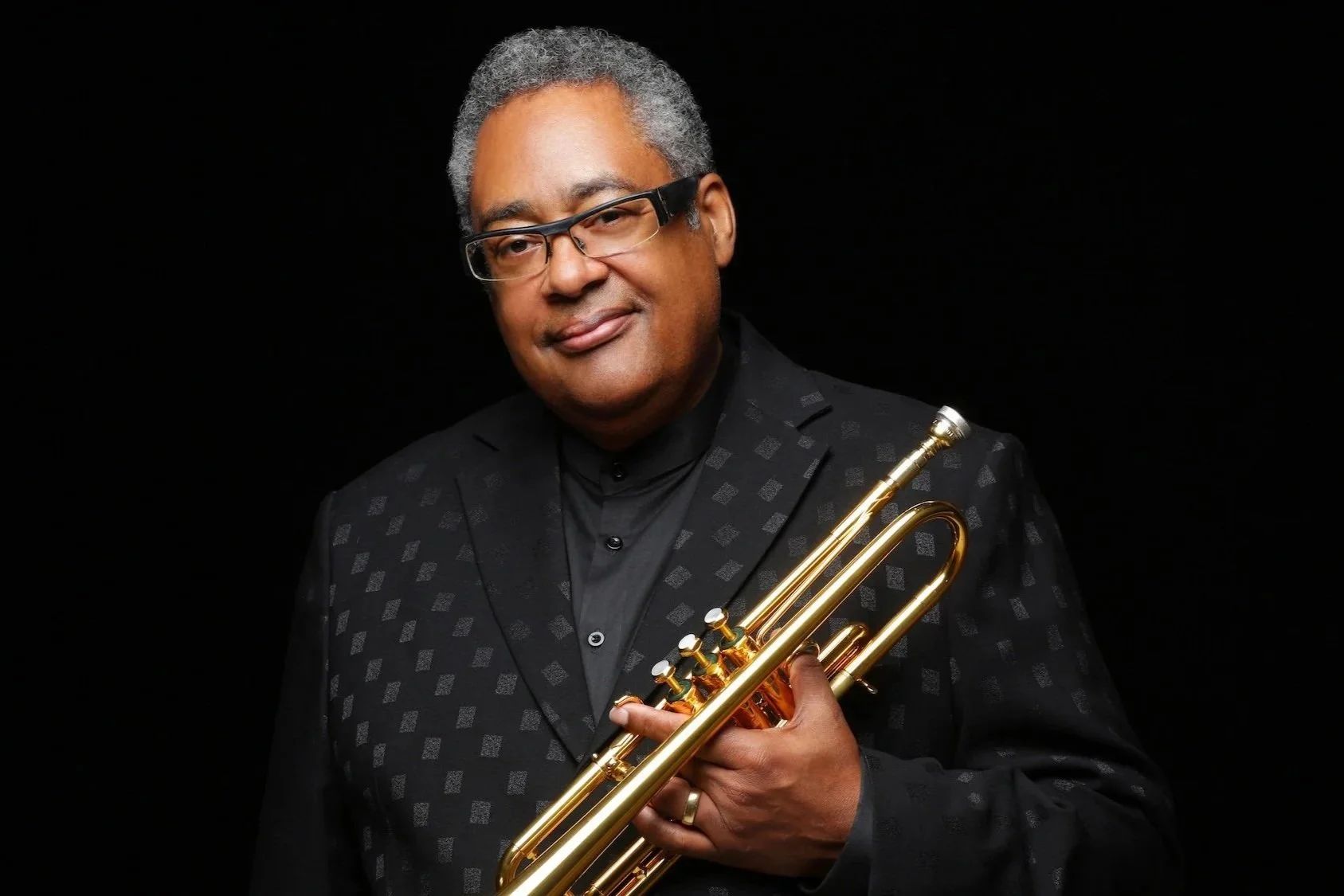
Although obviously happy to hang out with an international cast of like-minded artists—including the “American griot” Arthur Flowers, who makes a stunning guest appearance on Ruby Singh & the Future Ancestors’ most recent recording, Celestial Libations—Singh was most struck by Balinese society itself.
“I need more time to marinate in it,” he allows. “But one of the things I noticed there, particularly with the thinkers, is that there’s this ferocity in the love that they have for people. And by that we’re thinking of places like Palestine and the genocide happening there, and the love that people carry for Palestinians, or the love that people carry for those that are being more harmed in our world than anybody goddam well deserves. There is this fierceness that people were approaching this with. You could feel that fierceness and you could feel that anger, but it all felt like it was stemming out of this love for humanity, and deep respect for the willingness of things to live, and be able to live with dignity. That’s definitely one of the things I’m walking away with, for sure.”
It’s not that radical empathy is a new concept for Singh, whose projects tend to involve both social-justice activism and open-ended spiritual curiosity.
“Empathy is, to me, just the ability to feel into the human experience, and what other people’s experiences might be of that,” he says. “They might not be the same as our own. so how can we flex our compassion to be able to feel into those places?
“Hilariously enough, 30 years ago I was working for the Attorney General’s office, travelling to schools, speaking about empathy and its importance in looking at the various types of what might be umbrellaed as bullying,” he continues. “Like when we see racism, when we see homophobia, when we see sexism, when we see all these places where power structures play down on people, our empathy can lean into those to try and understand where somebody’s coming from that might not be sharing the same experience as ourselves.
“These days, I’m travelling around schools trying to get that empathy pushed into the natural world a little bit more as well, for the more-than-human kin. But, yeah, I think it’s a duty inside art and art-making to build empathy within people. I feel that within myself when I’m experiencing various kinds of art as well.”
Whether writing for the page or for the spoken word, exploring electronic interfaces between plants, fungi, and human music, or making his kaleidoscopic videos, Singh is a particularly outward-focused creator. And nowhere is that more obvious than with Future Ancestors, whose name itself is a clue to the impact it hopes to make on those who come after the present moment. Internally, too, it’s not the Ruby Singh Show.
“It’s a band!” Singh says with a laugh, when asked whether he’ll be bringing some of his cinematic wizardry to the Future Ancestors’ Friday, November 20 show at the Shadbolt Centre for the Arts. “I was actually debating that this morning, because I’ve been working on some live-camera visual feedback stuff. I was like ‘Should I incorporate that at the show?’ But these musicians are just mesmerizing enough to watch on the stage that I wasn’t thinking of having a visual component to it.
“When it’s a solo show, I have to do everything,” he adds.”On this stage, I have just powerhouse after powerhouse from my left to my right, so I can be like ‘All right! I just have do do my verses, run the tunes, and make sure that we’re all headed in the right direction.’”
Singh’s not exaggerating the talents of his bandmates. Holding down the instrumental side of things are guitarist Paul Pigat, bassist Karlis Silins, and drummer Kenton Loewen, all major contributors to Vancouver’s roots and jazz scenes. Paul Finlay handles electronics and turntablism with considerable panache. And behind the microphones, in addition to Singh there are Khari McLelland, the youngest member of the near-legendary Sojourners gospel group, and the very charismatic Holly Eccleston.
Perhaps even more importantly, Singh sees the Future Ancestors as a kind of voluntary family, with bonds that go beyond mutual respect and the inherent kinship of shared stage time.
“We get into conversations about how our families are doing, how our relationships are, what we’re hoping to do and be in the world, and other projects that we’re working on,” he explains. “So it’s really deep, longterm friendships that it all stems from. Kenton and I played the Vancouver Folk Music Festival together 20-something years ago. My first band ever was with him, and it’s a similar thing with Khari. Me and Khari were roommates; me and Holly were roommates as well. So all these folks are like family to me.”
And, as we all know, families can only function well if there’s room for both empathy and flexibility. “Everybody comes to the theme of ‘celestial libations’ in their own way, and that’s one of the things that I’m really grateful for,” Singh notes. “Growing up within the Sikhi tradition, anyway, there’s this fundamental thing that everybody’s got their own pathway to the divine, if they want to find it.
“The other day I heard a Sikhi scholar started to self-define as an atheist,” he adds. “They feel that Sikhis can fit right into that. And, well, I don’t quite understand that, but right on!” 

Related Articles