Pianist Elijah Fox on his grandparents’ influence and having a viral hit
The Los Angeles–based musician and composer’s “Wyoming”—a piano improvisation clocking in at under two minutes—has been streamed nearly 49 million times
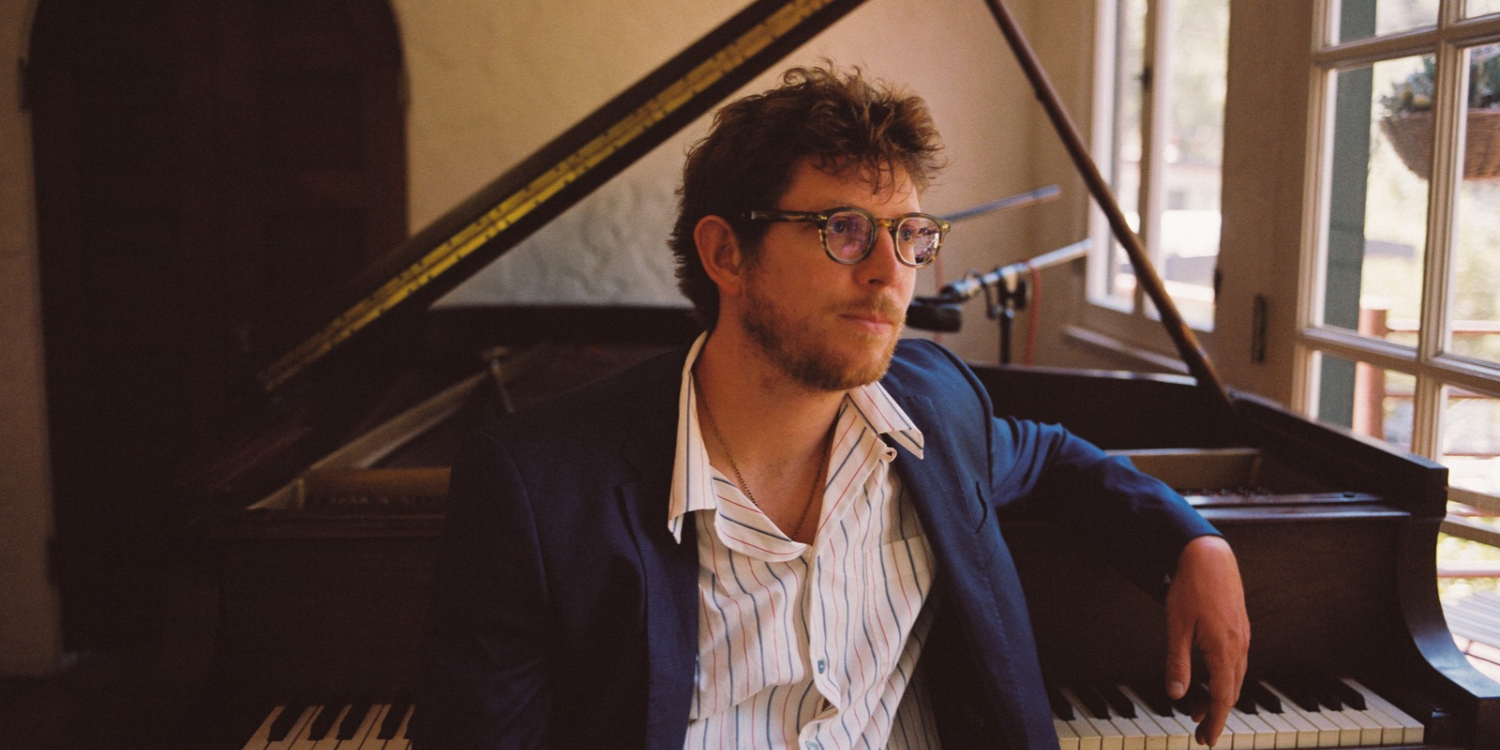
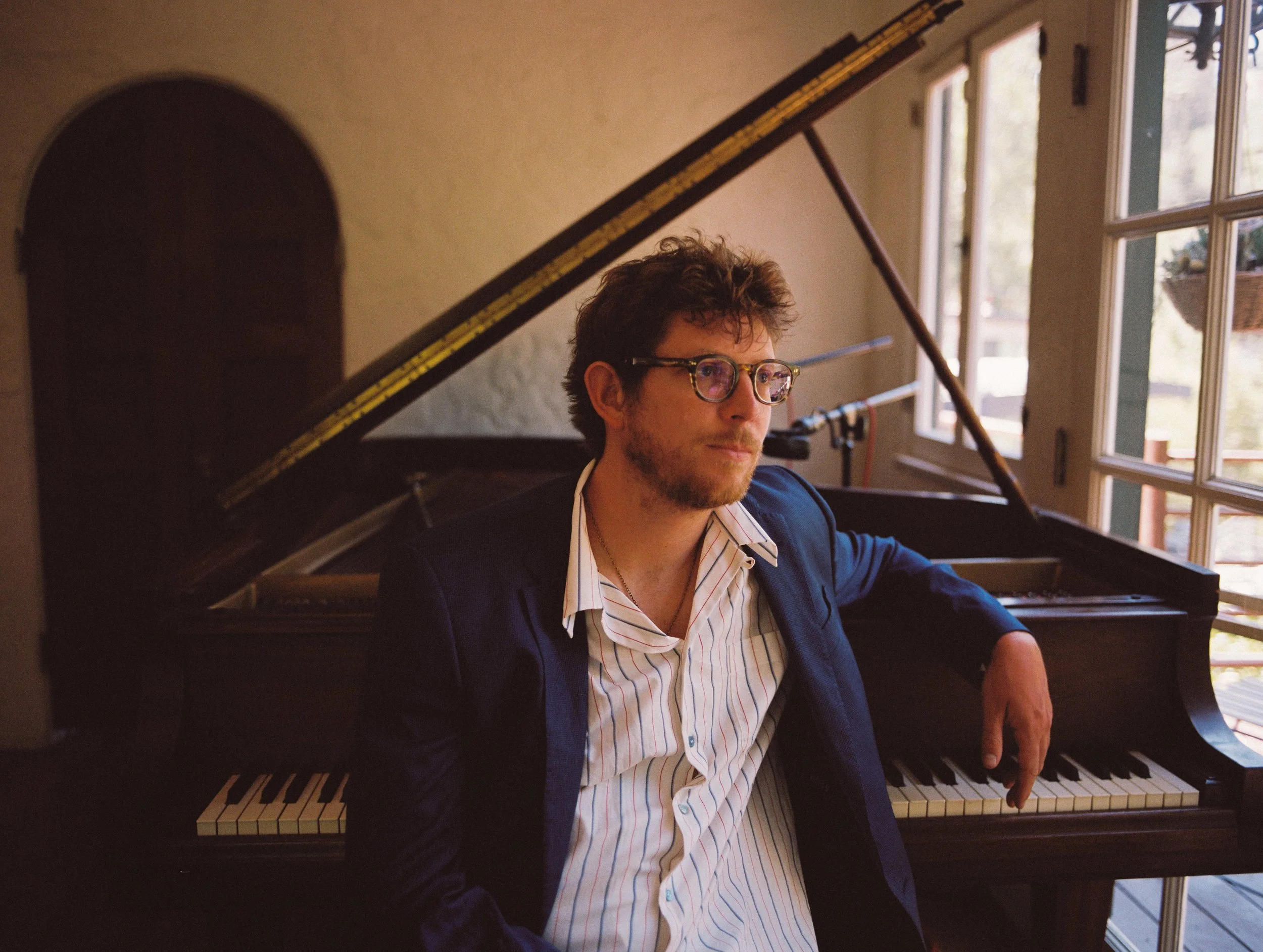
Elijah Fox. Photo by Austin Cieszko
Chan Centre EXP presents Elijah Fox at the Chan Centre for the Performing Arts on November 28 at 7:30 pm
IN THE AGE OF TIKTOK, it’s impossible to predict with any certainty what music will suddenly go viral. Remember during the pandemic days of 2020 and early 2021, when sea shanties inexplicably gained massive popularity? Even Saturday Night Live got in on it, with a sketch satirizing the whaling tune “Wellerman”.
“Wyoming”, a piece by American pianist and composer Elijah Fox, seems an equally unlikely candidate for viral success. Clocking in at under a minute and a half, the rippling improvisation walks a fine line between nostalgic yearning and a sense of Zen calm.
A YouTube user going by the handle NEOBANGPEGASUS neatly summed up the track’s appeal—“This song describes the feeling you get when you grow up and realize life is not what you thought it would be. But you’re still grateful for everything that has happened and the chance to keep moving forward”—to which another viewer replied, “Way to kill the mood.”
The second user has a point. Sometimes trying to explain something only distracts from simply enjoying it. There is, however, a backstory to “Wyoming”, and when Stir gets Fox on a Zoom call from his home in Los Angeles, he’s happy to share it.
Fox’s paternal grandmother, Ruth Peck, was a classical pianist who often played works by French impressionists. His grandfather, Russell Peck, was a scholar of medieval literature and something of an amateur Ansel Adams, training his lens on the stunning natural vistas of his native Wyoming and nearby states.
“My uncle digitized these family albums from trips that they had done to different Western landscapes,” Fox says. “And I was feeling nostalgic, thinking about hearing some of these impressionistic textures that my grandma had played. They grew up in the Depression, but my grandma would be endlessly consumed by all this music, and my grandpa could live in this world of poetry and places. I was just inspired looking at some of these images, reflecting on my childhood and some of the mystery of hearing this beautiful music in these places from my grandma playing.”
When Fox released “Wyoming” as a single on Spotify in 2022, it did about as well as you might expect—in the artist’s words, it “didn’t really pick up that much.”
“It wasn't until this random person I’d never met posted it as her original sound on TikTok and then that somehow went viral,” Fox continues. “It had, like, an audio clip over it. And then I saw it, and I reached out and she changed the name to credit me. I really still am appreciative of that.”
“Wyoming” quickly became a go-to sound for TikTok’s Gen-Z corecore aesthetic. And if the preceding sentence strikes you as a random jumble of words, don’t worry about it. Just know that the piece has been used in thousands of videos, and its popularity there has spilled over into music-streaming services. “Wyoming” is closing in on 49 million Spotify plays.
Fox says, in spite of its popularity, he doesn’t feel obligated to play “Wyoming” at every concert. That means it might or might not make the cut when the pianist makes his Vancouver debut at the Chan Centre on November 28. Even if it does, it likely won’t bear more than a glancing resemblance to the recorded version.
“I don't even play it the same way I wrote it,” Fox says. “I don’t know how to play it exactly. Even when I play it at shows, I play it different every time. I’ll extend it and keep searching for something. I have my grandma’s piano here now, at my house, and she’s passed away. A lot of times when I’m improvising, it feels like I’m sort of speaking to relatives that aren’t here. I think that was an element of it that maybe people picked up on in some way. I’ve had a lot of people send messages about how it helped them with different loved ones passing.”
Ruth Peck, who had been a professor of music at the State University of New York in Geneseo and also taught private piano lessons at her home studio, died last year. She was no doubt extremely proud of her grandson’s achievements, even if his path to learning the instrument was less conventional than her way.
“I remember when I was a kid, I would hear these textures of Ravel and Debussy and a lot of the stuff she was playing,” Fox reminisces. “I remember hearing that sort of world of sound, but then I started with classical and didn’t really like it. I switched to a teacher who was showing me how to improvise, and I gravitated way more towards that, then got another mentor who had played with Charlie Parker—this guy, Yusuf Salim, who I met at a jam session in Durham, North Carolina, where I was from.”
Fox fell under the spell of jazz pianists like Art Tatum, Erroll Garner, Bill Evans, and Keith Jarrett. Listening to those titans shaped Fox’s improvisational style, but, as heard to great effect on the New York–inspired City in the Sky (Piano Works), his compositional approach owes much to 20th-century minimalists Philip Glass and Steve Reich, as well as, of course, his grandmother’s beloved impressionists.
On last year’s Ambient Works for the Highways of Los Angeles, Fox broadened his sonic palette even further, using electric pianos and vintage synthesizers to craft a vaporous retro-futurist sound that reflects his interest in the music of Brian Eno, Aphex Twin, Radiohead, and others.
Don’t expect to hear much of that when Fox plays the Chan. For that appearance, there won’t be a Korg Prologue or a Sequential Circuits Prophet-6 in sight, though Fox promises that he’ll be bringing a few more compact toys along to keep things interesting.
“I run my piano through a set of pedals,” he says. “A lot of times when I start improvising, it’s just totally acoustic, but I’m able to also manipulate the sound and kind of stretch it with some of these different effects and still take the natural tone, but take it to new places and then have that also allow me to explore.” 

Related Articles