Theatre review: Horror resonates in Bard on the Beach’s dystopian Macbeth
Bold and bloody new take on “the Scottish Play” speaks effectively to an era of intense societal fears, with postapocalyptic atmosphere to burn
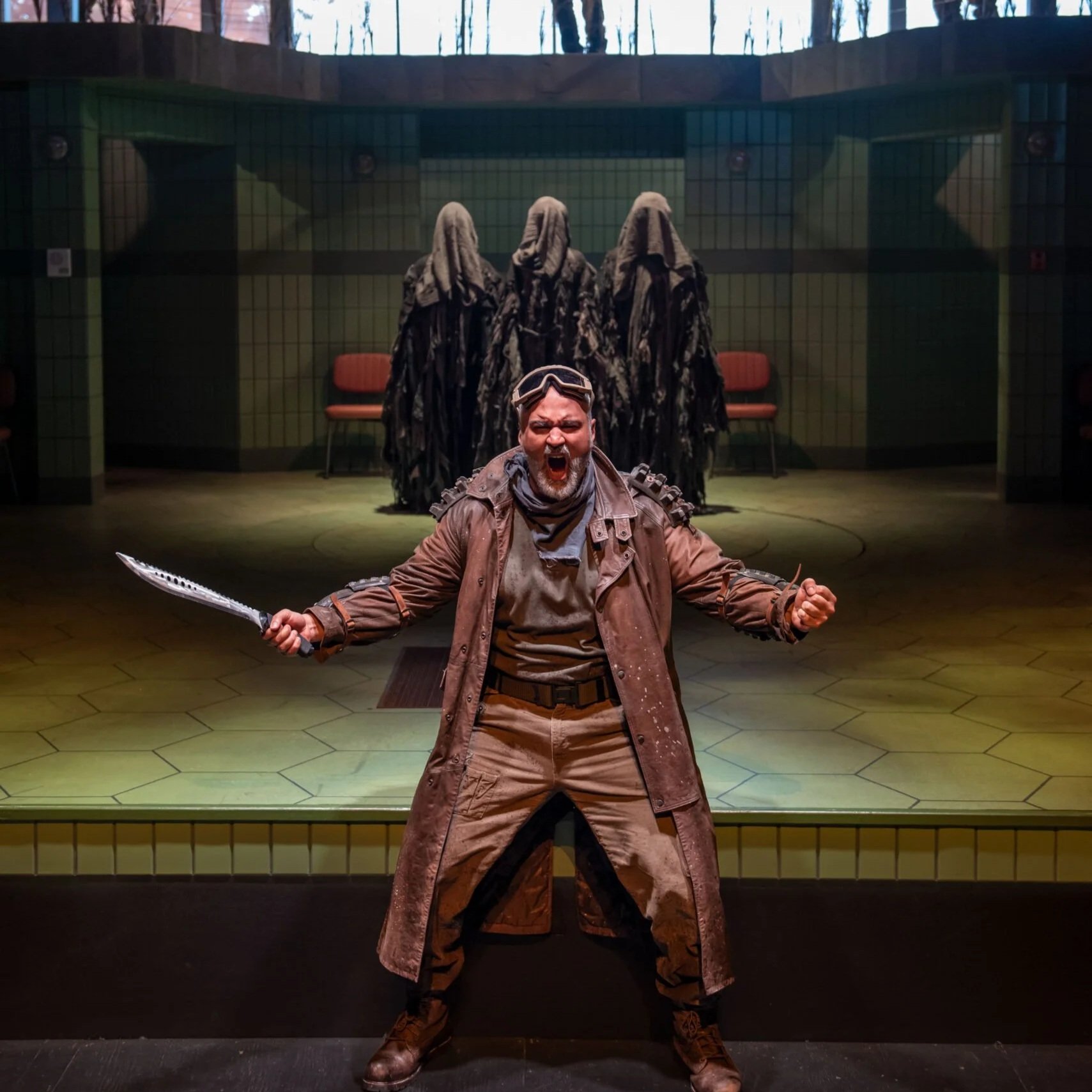
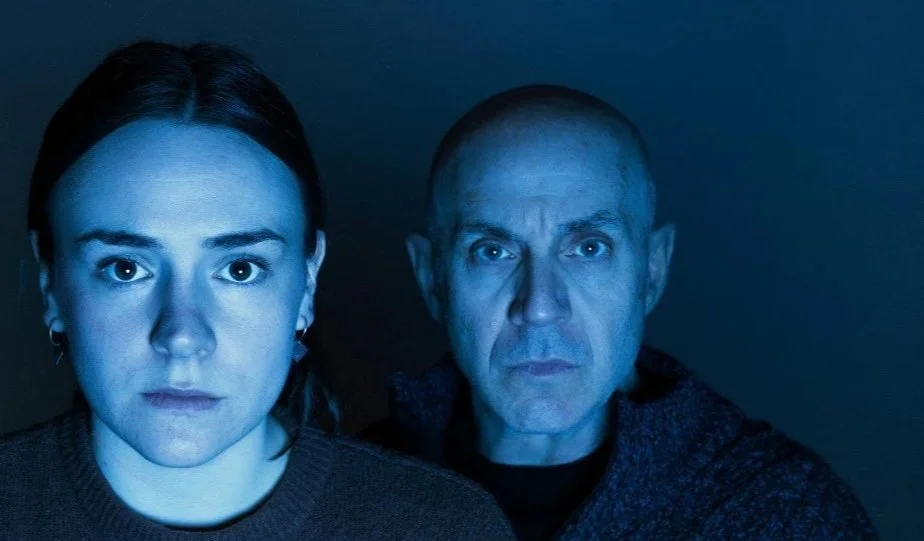
Munish Sharma as Macbeth. Photo by Emily Cooper
Bard on the Beach presents Macbeth on the BMO Mainstage to September 18
SHAKESPEAREAN TRAGEDY recast as genre horror? It’s not such a stretch with Macbeth, full as it is with blood, murder, ghosts, and witches. And a bold new adaptation of “the Scottish Play” at Bard on the Beach pushes into that genre with the gusto of Sam Raimi shooting the dancing Deadite scene.
Set strikingly in a dystopian future, the play kicks off with a battle sequence right out of The Walking Dead, where Earth’s survivors use battered buzz saws, makeshift knives, axes, and anything else they can scavenge to defeat the Thane of Cawdor’s gang. Throughout the production, three hooded figures—not traditional witches but more like goblins straight out of a Clive Barker nightmare —skulk around, portending doom in mechanically altered baritones that boom out to the tent rafters. Elsewhere, Banquo’s skull-split ghost is zombie movie–ready, and blood spatters white clothing, drips down walls, and, in one scene, pours ominously out of a faucet. (Stanley Kubrick would approve.)
Director Stephen Drover and his production design team have tried to make Macbeth as frightening as it might have been to Jacobean audiences—only using modern devices to create a visceral eeriness. Mary Jane Coomber’s bone-rumbling score and soundscape add considerably to the atmosphere, as does the metal music that accompanies the finale’s vicious fight scene. You have to marvel at the commitment across the board here.
In set designer Amir Ofek’s intense vision, an institutional-green-tiled, sterile underground compound serves as the Macbeths’ home on the lower half of the stage, while an upper walkway flanked by sparse grass suggests a burned planet. A screen even gives an eerie, apocalyptic-orangey glow to the open-back stage’s famous mountain skyline. In one of the most inspired touches, an intercom lets attendants and messengers reach their rulers.
Still, the larger question: does this dystopian setting of the well-known play actually fit with the world Shakespeare wrote about? Far from gimmicky, this deeply thought-out interpretation makes themes of power-mad tyrants, eco-doom, and larger existential fears really resonate in a world grappling with corrupt dictators, out-of-control wars, and diminishing resources.
In traditional interpretations, Macbeth can often be presented as weak, manipulated by Lady Macbeth. But here we can clearly see Munish Sharma’s protagonist growing more reckless and determined, ultimately pushing her concerns aside when he moves to kill Macduff’s wife and children, emboldened by rage and the blind momentum of fate.
Tess Degenstein’s Lady Macbeth starts out more skittish and anxious than the usual ruthless conniver. When we first meet her, reading her husband’s letter detailing the supernatural prophecies predicting his ascension to the throne, she repeatedly laughs—maniacally? Or nervously?—to herself. Throughout, she flinches and frets at every fumble and faux pas by Macbeth. In most interpretations, Lady Macbeth’s madness sets in strongly after intermission, but this take suggests an earlier onset of mental breakdown; the early speech where she alludes to the trauma of losing a baby takes on added significance.
One of the show’s highlights is a wordless scene, where the spotlit couple briefly connects, murders accomplished, placing spiky white crowns on their heads, and circling, looking at one another, on the stage’s central turntable. It is a moment of solidified power before everything falls apart.
In the second act, both the leads really hit their stride. Macbeth confronts as much as recoils from the grinning zombie-Banquo at the banquet table and believably loses all sense of fear in his final confrontation with Macduff. Lady Macbeth, in an inspired staging of the “out damned spot” scene, taps a kind of existential horror in her visions of—in this case actual—blood, and the shaking realization that “what is done cannot be undone”. Emphasizing their equal roles in the evil acts, Drover even finds a way for them to jointly deliver the “Tomorrow, and tomorrow, and tomorrow” speech—that ode to the futility of it all (instead of Macbeth in traditional soliloquy).
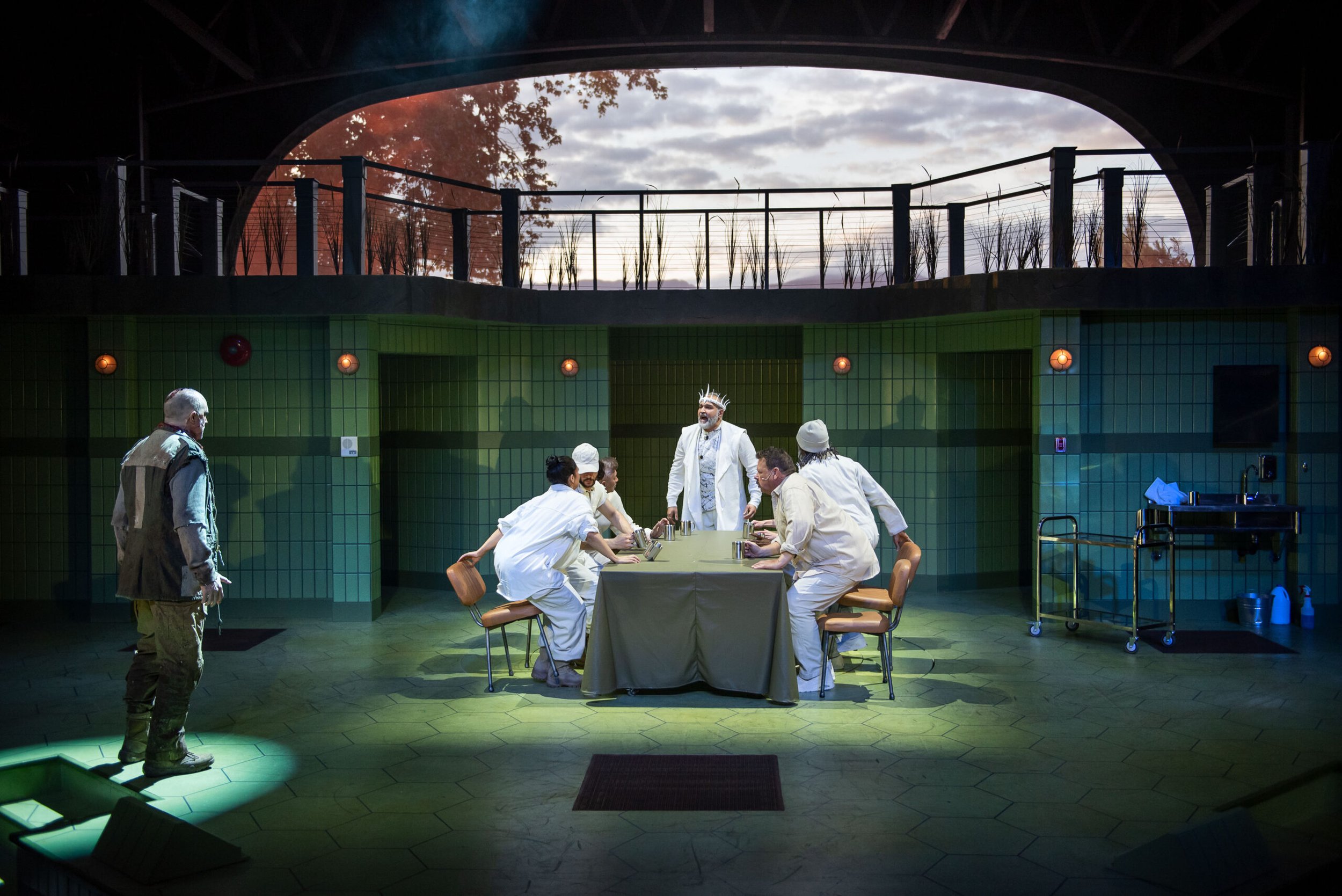
Bard on the Beach’s Macbeth. Photo by Emily Cooper
Other characterizations are also strong. Sebastian Kroon’s Banquo is movingly empathetic, and Jacob Leonard makes unexpected, impactful choices in the way he portrays Macduff’s grief. In an effective touch, Steffanie Davis’s doomed Lady Macduff treks through the postapocalypic world carrying her newborn in a makeshift baby sling over costume designer Alaia Hamer’s Last of Us–style salvaged camo and cargo pants. And wait till you see Davis’s (and Drover’s) fresh spin on a particularly drunken Porter scene, wielding a toilet brush no less.
Are there quibbles? A few, which isn’t surprising given the commendable risks this adaption takes. Some of Macbeth’s early speeches could use more roiling inner turmoil, and the words sometimes had to compete with the droning soundscape on opening night. Related, some of the storytelling is foggy up to and around the crucial offstage death of King Duncan. And—call me lowbrow—the choice to stage the demise of Lady Macbeth offstage, while traditional, feels somehow a bit anticlimactic amid this unflinching bloodbath.
But these are small issues. Drover has succeeded in staging a deeply unsettling take on Macbeth—not an easy achievement at a beachfront festival. What’s eerie is just how much the entire play resonates in these troubled times. You can’t help but think of ICE, border walls, and mass migration during Sara Vickruck’s striking final speech by Malcolm, as he pledges peace, and “calling home our exiled friends abroad/That fled the snares of watchful tyranny”.
Horror movies have a heyday in times of intense societal fear—why else do you think Obsession and Backrooms are pulling in the biggest box office this summer? This Macbeth reminds you that it reflected the same kind of scares and provided the same kind of release for its audiences back in the day. What is so cool about this production is the way it manages to draw a throughline from one era to another, and from one genre to another, without ever stepping literally into overt politics. And without, it must be said, shying away from a little blood here and there. 
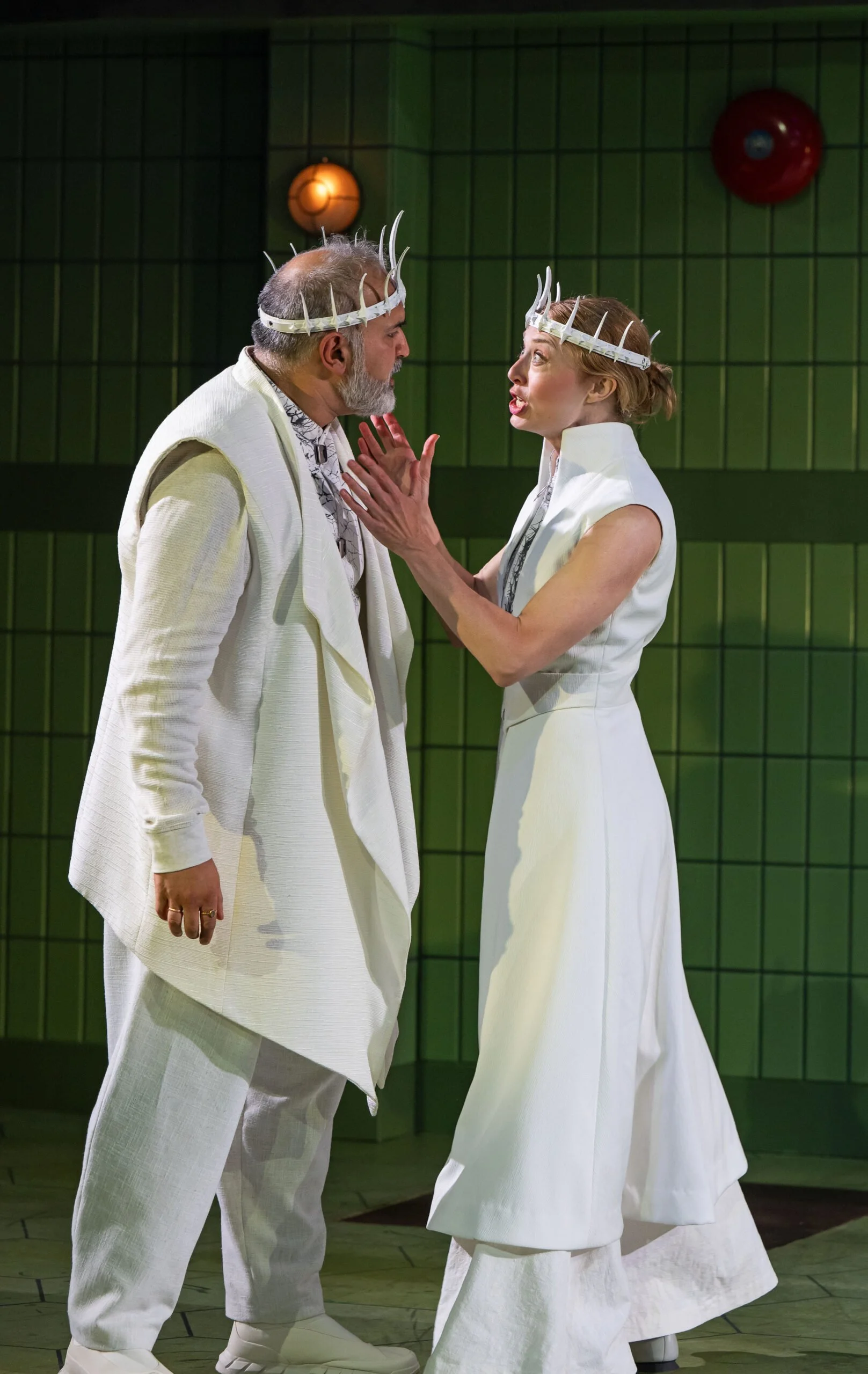
Munish Sharma and Tess Degenstein in Bard on the Beach’s Macbeth. Photo by Emily Cooper

Related Articles