Bury the Hatchet reopens the century-old case of the Borden murders
At Anvil Theatre, Sasha Wilson’s play examines the story of accused killer and “folk villain” Lizzie Borden through drama, humour, and murder ballads
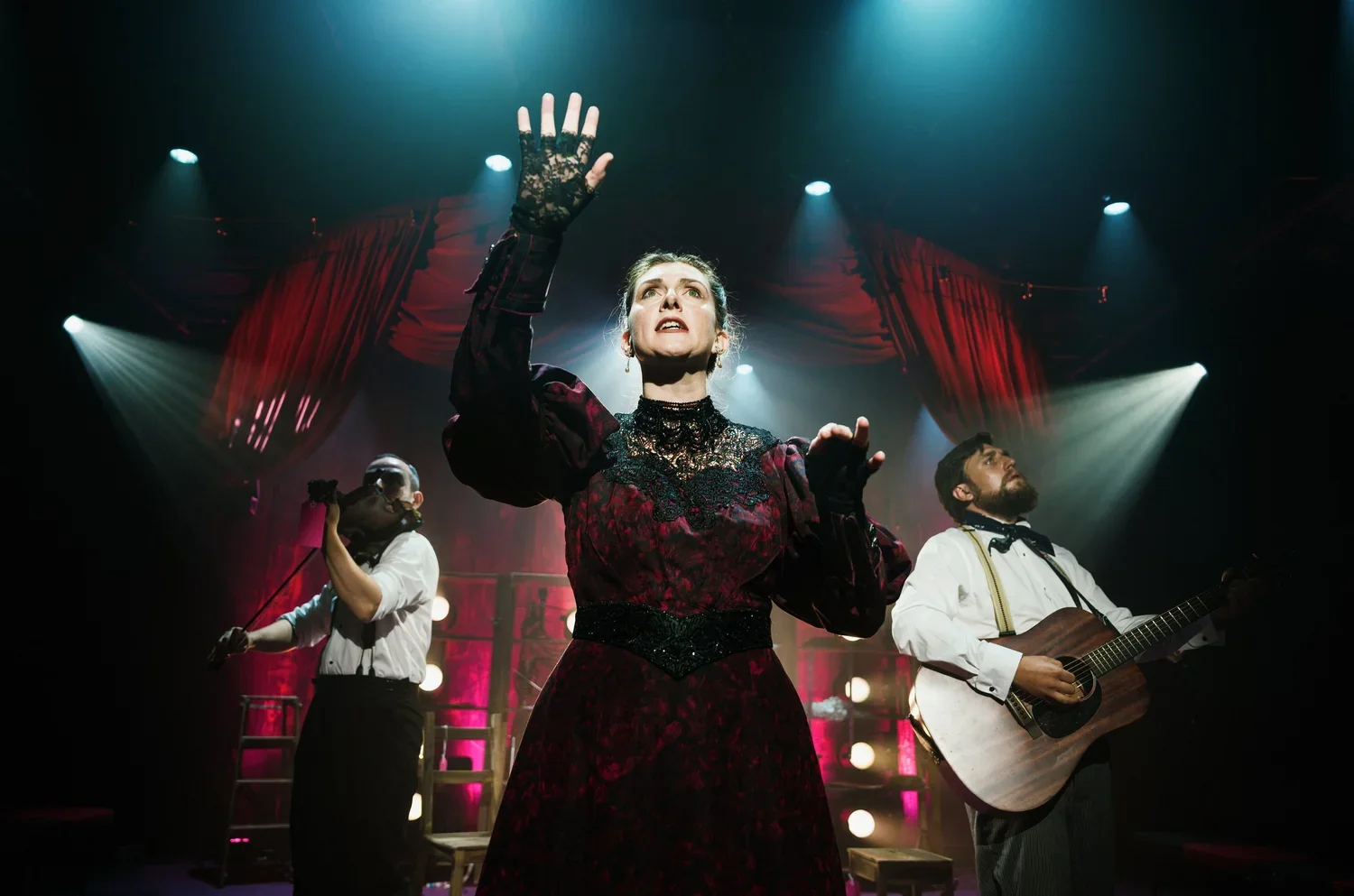
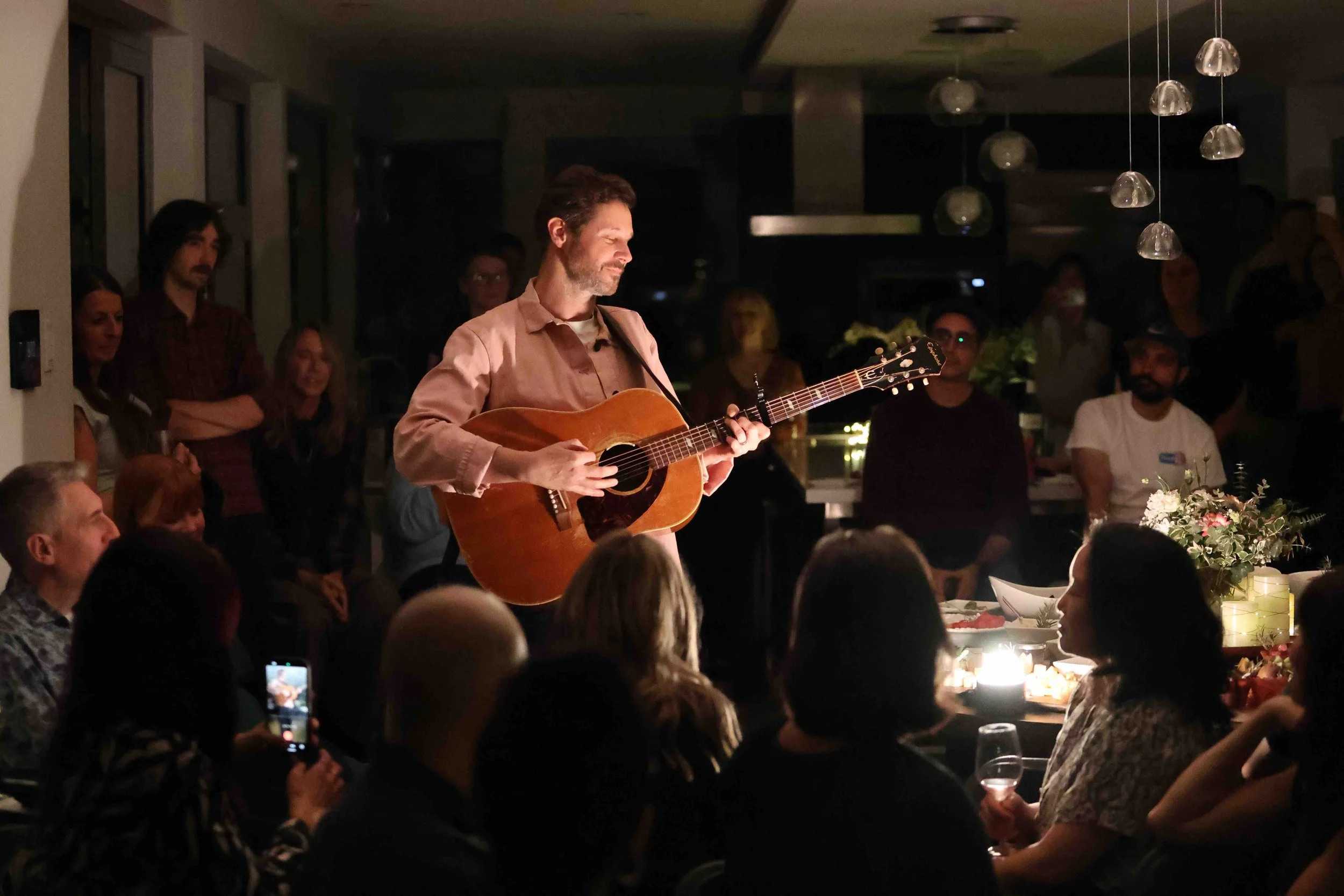
Lawrence Boothman, Sasha Wilson, and David Leopold in Bury the Hatchet.
Out of the Forest Theatre presents Bury the Hatchet at Anvil Theatre on October 17 at 7:30 pm
IF SOMEONE WHO died nearly a century ago can be said to be “having a moment”, then 2026 is arguably Lizzie Borden’s time. For that, we can mostly thank Ryan Murphy and Ian Brennan, creators of the Netflix anthology series Monster, which dramatizes high-profile U.S. homicide cases. After focusing on Jeffrey Dahmer, Lyle and Erik Menendez, and Ed Gein, Monster turned its lens on Borden for its fourth season, which premiered on September 17.
Even if you know nothing else about her story, you’re likely familiar with Borden’s name through the perennial schoolyard rhyme:
Lizzie Borden took an axe
and gave her mother forty whacks.
When she saw what she had done,
she gave her father forty-one.Andrew Borden now is dead,
Lizzie hit him on the head.
Up in heaven he will sing,
on the gallows she will swing.
In 1892, someone wielding a hatchet murdered Andrew and Abby Borden—Lizzie’s father and stepmother—in their Fall River, Massachusetts, home. Lizzie was tried for the murders in 1893, and a jury acquitted her. Even so, Monster unequivocally depicts her committing the gruesome crimes, and even throws in an unsubstantiated secret romance between the alleged killer and the family’s live-in maid, Bridget Sullivan.
None of this sits right with Sasha Wilson, who wrote and stars in Bury the Hatchet, a stage musical based on the Borden case that’s coming to New West’s Anvil Theatre.
“You have to be mindful of the fact that these were living, breathing human beings with wishes, dreams, fears, hopes,” Wilson tells Stir on a Zoom call from her home in London. “You can’t just turn this into a lesbian murder fantasy because you feel like making a new season of television. Ryan Murphy went off the rails when he didn’t even approach the victims’ families when he was making Dahmer to say that it was even happening. So it’s being approached with a complete sense of ethical bankruptcy, as far as I’m concerned.”
In spite of Borden’s acquittal, there were those in her time who remained convinced of her guilt. If Monster is any indication, not much has changed in the century since. Wilson has seen firsthand just how solidly the image of Borden as, well, a monster has been fixed in public perception. The playwright and performer currently lives in the U.K., but she was raised in Lexington, Massachusetts, not far from Fall River.
“To say that I knew a lot about it would be a misrepresentation, but certainly she was this folk villain,” she recalls. “She was the big bad, you know? She was definitely in the groundwater when I was growing up.”
In writing Bury the Hatchet, Wilson was careful to avoid convicting Borden more than a century after her day in court.
“It’s really a case study about why we love to devour women in the public eye and in the media in the way that we do,” she says. “So everything in the show is presented as ‘This is how it could have happened. Here’s this theory,’ and then we argue amongst ourselves. So we’re coming from a place of questioning received wisdom, or even received research, as it were.”
Bury the Hatchet isn’t the only musical inspired by the Borden case. There’s also one titled simply Lizzie, which is a riot-grrl-style show featuring an all-female cast and a live band playing original punk-rock songs written by the production’s creators (who are all men, for what it’s worth). Wilson’s show, on the other hand, leans in a different direction, musically, and features a number of classic folk and bluegrass numbers performed by the cast; Wilson plays the mandolin, and her fellow actors Lawrence Boothman and David Leopold double on fiddle and guitar, respectively.
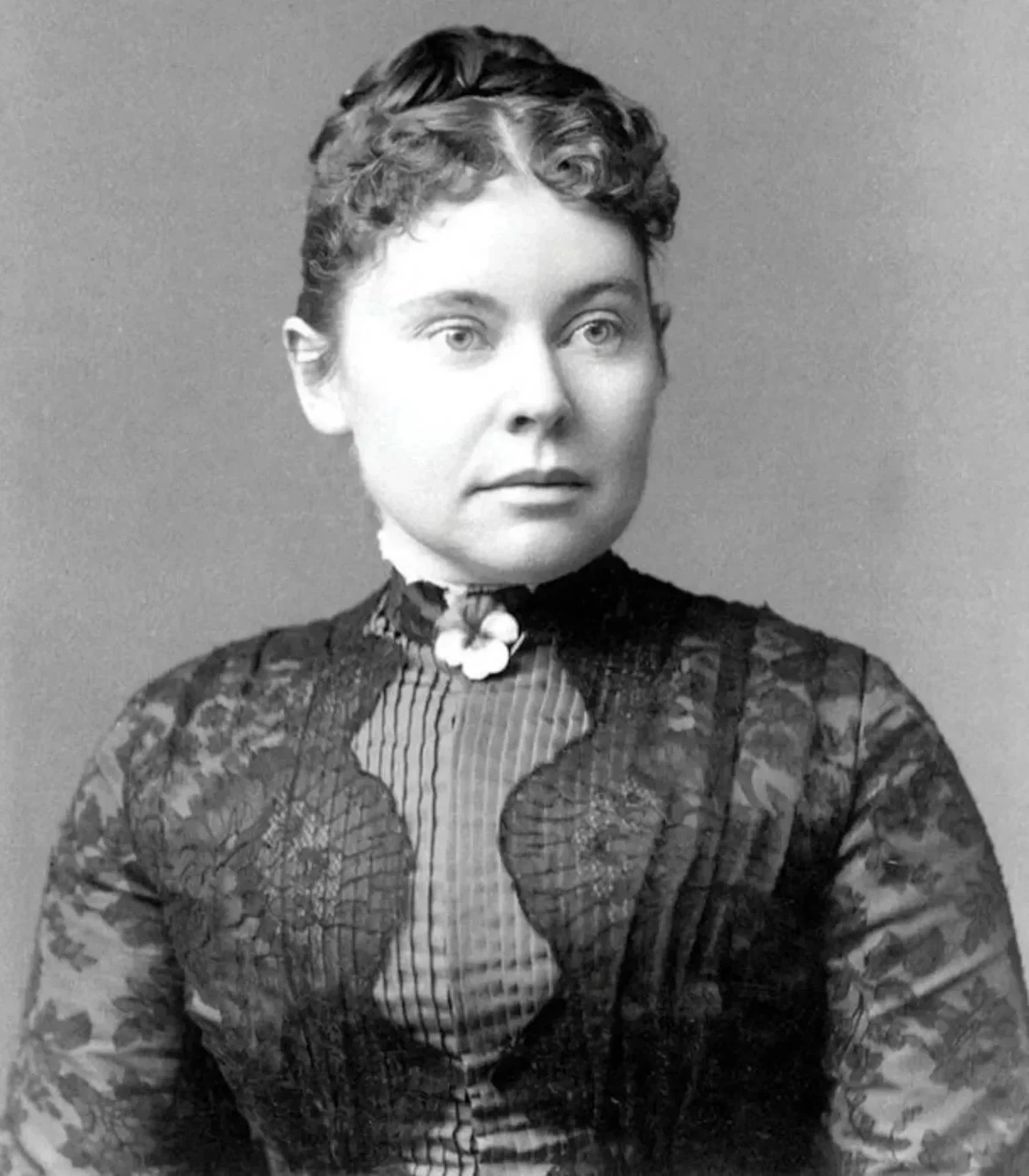
Lizzie Borden
“When the show first originated, way back when in 2018, I had not long graduated from drama school, and as you might imagine, I was broke,” Wilson says. “I was trying to put on this play, and I could beg, borrow, or steal some costumes, and I went, ‘How else can I conjure 1892?’ I’ve always found music to be incredibly vivid. I’m a big lover of folk, and I was aware that there was this rich and robust tradition of murder ballads. It was something that originated in the U.K. and then the settlers came over to the United States, and it’s really been preserved as a tradition up and down Appalachia.”
From the foot-stomping tunes to the cast’s tendency to break character—and the proverbial fourth wall—to debate various details of the case, Wilson says Bury the Hatchet is an entertaining show, but never in a way that makes light of the real-life tragedy at its centre.
“The elements of comedy and fun that we have mostly stem from the interplay of the three of us actors in the present day, kind of unpicking the narrative and taking the piss out of each other,” she says. “We are never, ever punching down at the people within the story, I would say. But even still, in order for there to be shade, there must be light. If it was just one broad brushstroke of drama and sadness, everyone would be like, ‘When’s the interval, and when can I go for a cocktail?’ Or at least that’s my belief.” 

Related Articles