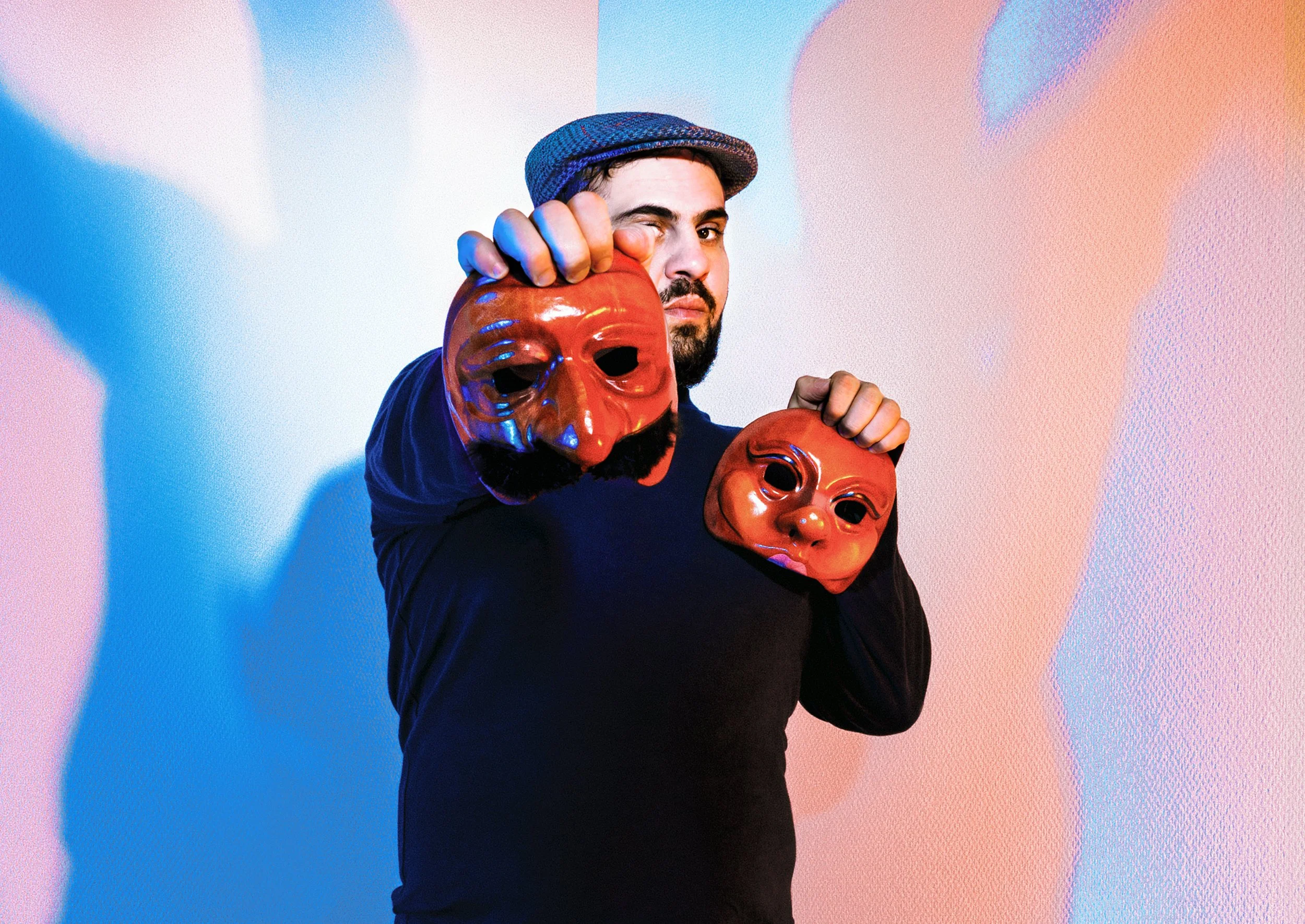
Theatre review: In a party atmosphere, Danceboy explores movement and identity
Pi Theatre show at Vines Den is Munish Sharma’s personal look at Bollywood, masculinity, and more
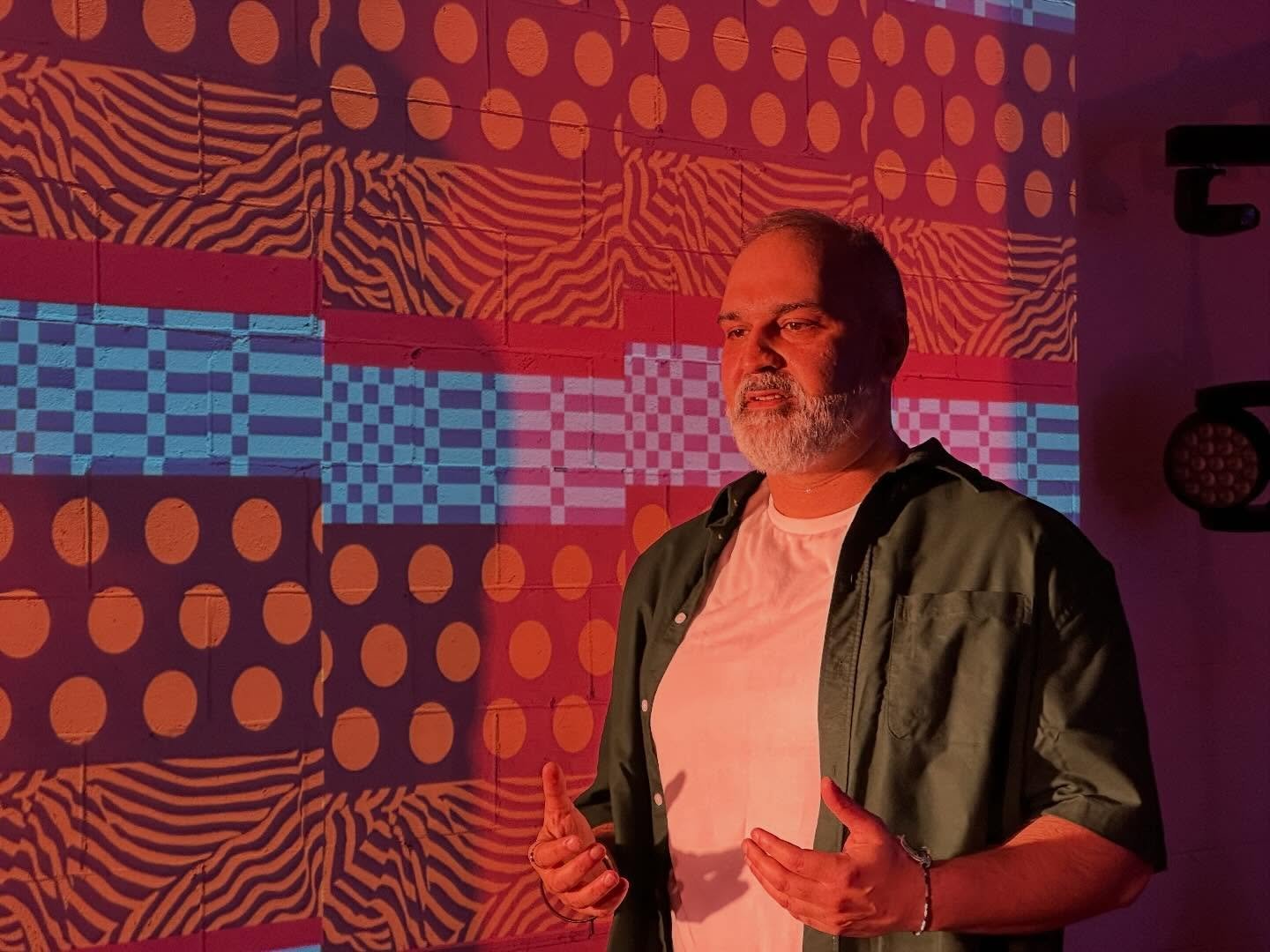
Munish Sharma in Danceboy. Branden Sugden photo
Pi Theatre and Touchstone Theatre present Theatre Conspiracy’s Danceboy at the Vines Den to March 22
A DANCE FLOOR CAN be many things: a place of possibility, a place of sweaty disappointment. It can let inhibitions fall away or do the opposite, making you too aware of your body, of how you look, how you’re moving, who might be watching. In the words of Britney Spears in “Circus”, the dance floor’s also a stage.
Munish Sharma has amassed a solid reputation as a theatre actor in Vancouver with roles at Bard on the Beach and in Zee Zee Theatre’s Men Express Their Feelings. In Danceboy, created and performed by Sharma and directed by Gavan Cheema, it becomes clear that his first stage was the dance floor—whether that was in his parents’ living room, his bedroom, or the clubs he frequented, and still frequents, now with the gnawing awareness (as he self-reports) of being the oldest person in the room.
Sharma is not a professional dancer but a self-professed danceboy, and in this solo show, he considers how his love of dance has shaped his identity, not just as a performer but in ways that we can all relate to, sometimes uncomfortably so.
The show is deeply personal and rooted in first-person storytelling. Wearing red Jordans, a white T-shirt, and jeans, Sharma addresses the audience directly in a breathless, sweaty hour of speaking, dancing, shadow puppetry, and spoken word. Then he invites everyone to dance.
But before Sharma extends that invitation, he makes his case for dancing in front of other people. The performance moves loosely from anecdotes about formative childhood experiences in the ’80s to tales about the present. Through these stories, along with songs, Bollywood starts to come into focus as the source of that pull, where it all seems to have started.
He reminisces about being drawn to the virile presence, the rhythm, the strength, and the cool of Indian actor Amitabh Bachchan. Later, he opens up about the limits of that fantasy, its connection to a more rigid, chauvinistic masculinity. But his bond to Bachchan is hard to break. At one point, he dances in perfect sync with a clip from the 1978 Hindi film Don projected on the wall, performing with an easy charm that keeps up with his childhood hero’s.
Sharma’s delivery is confessional and down-to-earth, and occasionally catches you off guard comedically. He switches between speaking and dancing in his own energetic, loose, idiosyncratic way.
The show’s needle drops follow him there. They stretch across time and genre, mapping out his own mix of references: a school talent show performance of “ABC” by the Jackson 5 that finally earned him cred, and his first taste of reciprocation with a girl while grinding to Ginuwine’s “Pony” as a tween. Later, club anthems and their painful associations with countless rejections turn into more reflective moments.
At a certain point, we learn that Sharma turned to spoken word as another outlet. As he performs from his collection of poetry, he reaches into the same themes that run throughout the show: rejection, approval, romantic fantasy, the gendered negotiations of the dance floor, self-image, et cetera. But with so much already in motion, the spoken word can feel adrift from the rest of the piece, even if it remains consistent with his self-confessional style.
Vines Art Society’s space is a white studio, something like 1,000 square feet, which you really feel once everyone’s in there together. Lighting designer V Bell’s low, colourfully shifting lights move with Ruby Singh’s sound design, projections on the wall, and club airhorns announcing Sharma’s entrance. It all has the atmosphere of a crowded party.
But there’s less audience interaction than you might expect, at least in the show’s first half. When it does happen, it comes more as a general invitation than anything one-on-one. There is, however, a closeness as Sharma zips, shimmies, sways, and bounces through the space, sometimes brushing by you. If you’re near one of the two corners where he performs most often, climbing onto raised platforms for easier viewing, you can find yourself in a tango of proximity with him.
With immersive shows where you’re choosing where to look and what to follow, there’s sometimes a sense you missed something. Danceboy and its shifting storytelling modes, quick anecdotes, and quick moves, can feel that way. But with one performer holding the room, your attention stays put, especially when Sharma turns it back on you. 

Angie Rico wrote this review as part of Page Turn, a professional development network for emerging arts writers, funded by the Canada Council for the Arts and administered by Neworld Theatre.
Related Articles