At The Cinematheque, David Lynch retrospective In Dreams delves into Hollywood’s dark side
Legendary director’s groundbreaking movies and TV work create a visual language that reflects on some of film history’s most sinister figures—and mushroom clouds
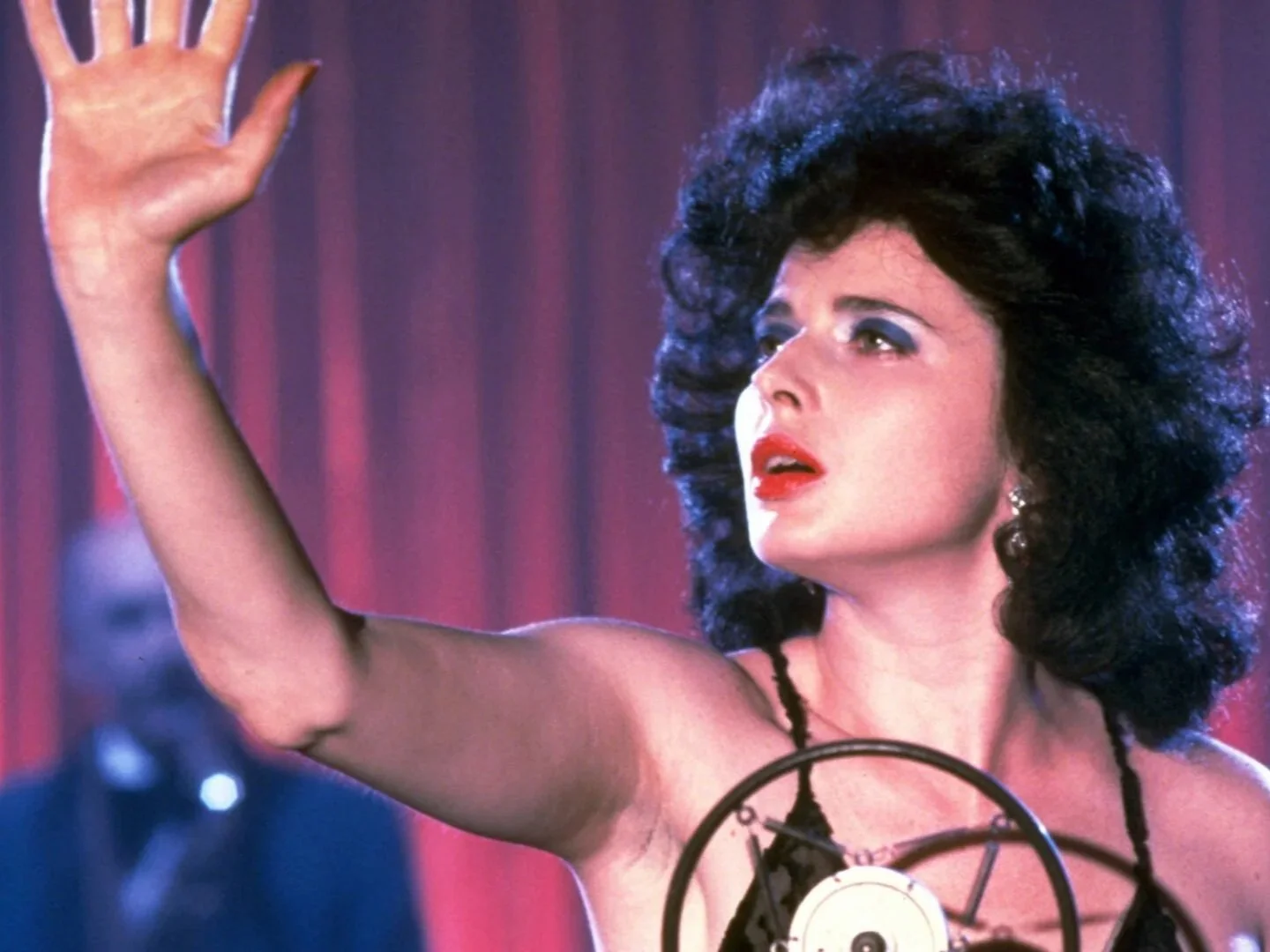
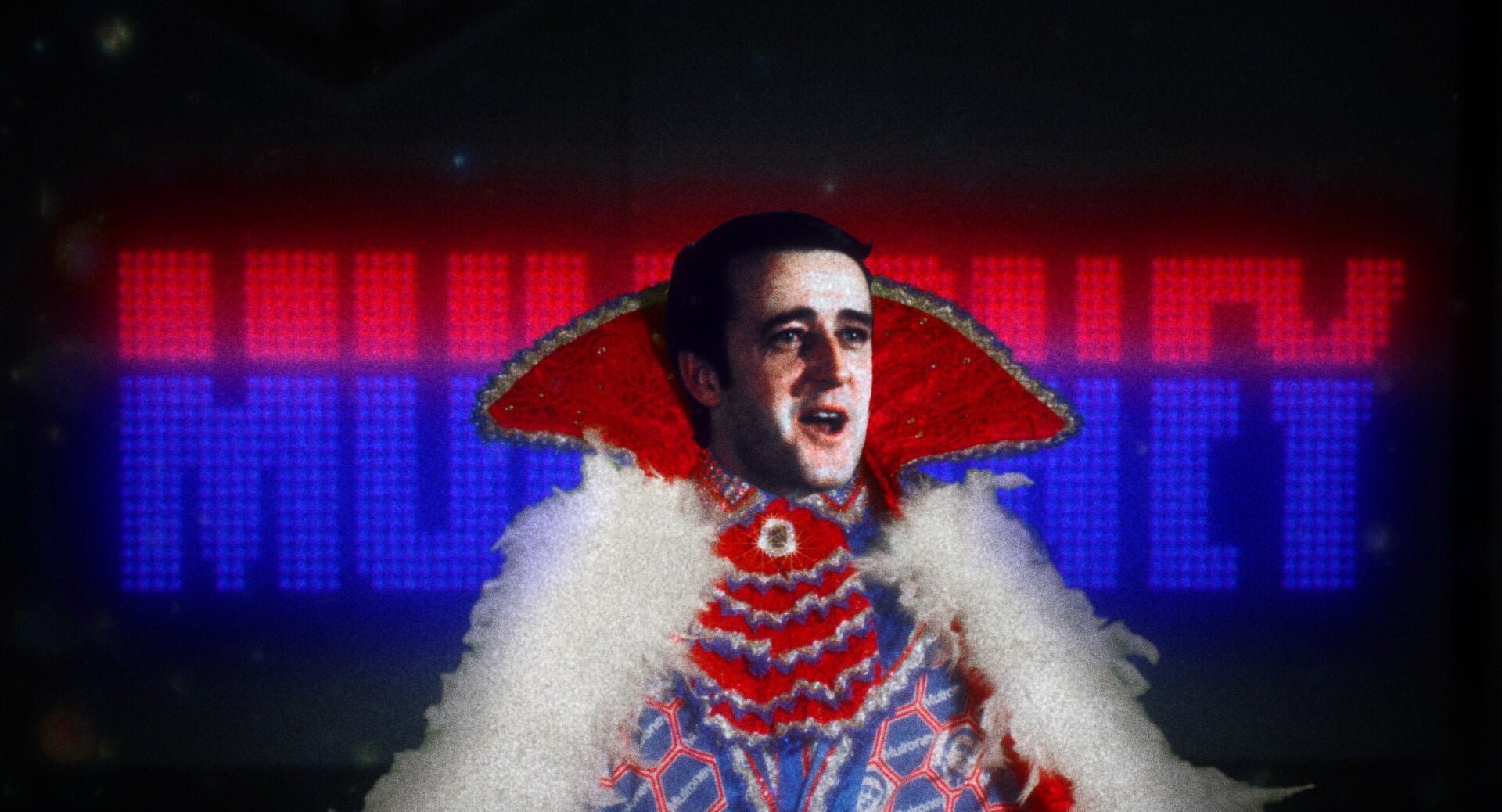
Blue Velvet
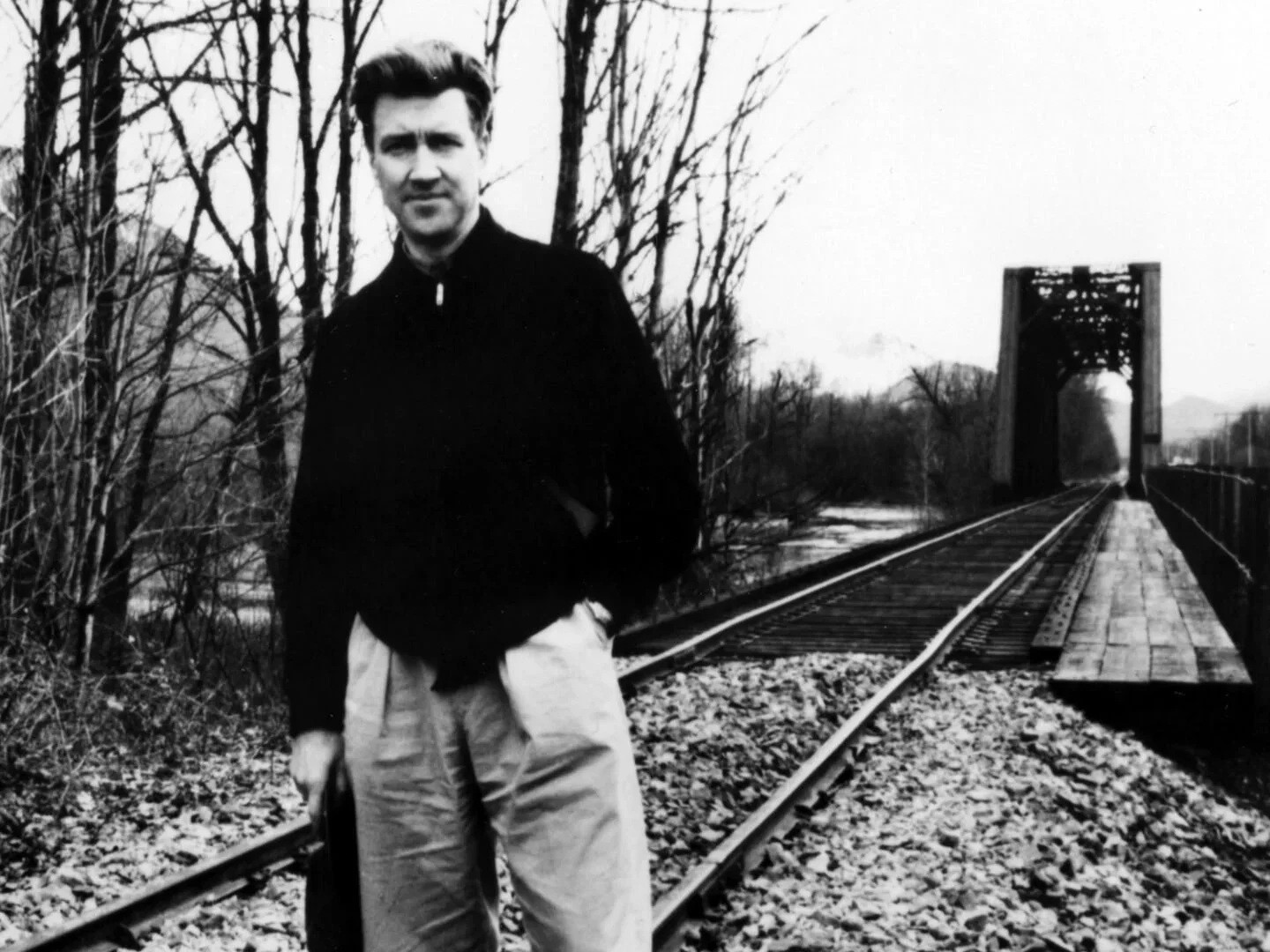
David Lynch
The Cinematheque presents In Dreams: A David Lynch Retrospective from December 11 to January 5
IN 1987, WITH Blue Velvet hitting U.K. theatres, David Lynch made a candid appearance on the BBC arts program Arena. The Lynch who passed away in 2025 was a world celebrity. But in the ’80s he was still a barely known quantity, a somewhat distracting weirdo whose early career added up to one little-seen midnight movie (Eraserhead), one unlikely mainstream hit (The Elephant Man), and one grotesque and humiliating flop (Dune).
Blue Velvet changed that, and as the fame, success, and interest grew—from the Cannes-dominating Wild at Heart in 1990 through to Twin Peaks, Mulholland Drive, and beyond—Lynch would habitually mystify or otherwise deflect any inquiry into his work. With The Cinematheque’s mammoth retrospective on the horizon—kicking off, fittingly, with Blue Velvet on December 11, and including a selection of shorts and all 10 feature films, plus the broadcast premier of Twin Peaks and the entire 18 episodes of his career-topping masterpiece (with Mark Frost) Twin Peaks: The Return—it’s a good time to go back to that otherwise minor artifact from almost four decades ago.
You can watch Lynch’s cameo on Arena on Vimeo under the title “Ruth, Roses, and Revolver”. Sitting in a Hollywood movie theatre, the young filmmaker introduces a handful of early shorts by surrealists including Marcel Duchamp, Jean Cocteau, and Man Ray. What’s immediately striking is how liberally Lynch quotes or borrows from his predecessors to build his own visual language. Even more notable is how consistent that language remained right till the very end of his life and through sweeping technological shifts.
His indebtedness to those who came before him is present in the antique use of double exposure in Eraserhead (December 13 and 22 at the Cinematheque) and The Elephant Man (December 14 and 29). Henry’s floating head is assailed by cosmic jism in the first film; John Merrick’s mother appears as a saintly cameo in the second. We see it again and again all the way to Twin Peaks: The Return—recall Major Garland Briggs’s beneficent, levitating face in the Mauve Zone—where the handmade feel of the image is tweaked to flaunt rather than conceal its digital origins.
There’s a celebration of process in Duchamp, Cocteau, and Man Ray’s early- to mid-20th-century shorts and gleeful parading of artifice. A visceral fine artist, mechanic, and craftsman as much as anything else, Lynch carried that strategy into the digital age. Seeing him at work in behind-the-scenes footage from The Return and 2006’s shot-on-DV Inland Empire, it’s thrilling to discover that some of his effects are achieved by Lynch himself doing no more than violently shaking a small hand-held camera.
Now casually accepted as one of the most astonishing hours of TV ever conceived—and screening at The Cinematheque on January 3 (better come early!)—Episode 8 of Twin Peaks: The Return (“Gotta Light?”) brims with the aesthetic garmonbozia Lynch imbibed from the early surrealists. As we enter the hysterical quantum heart of an atomic explosion, it’s impossible to not see what Lynch inherited from abstract visualists like Man Ray, whose 1926 short “Emak Bakia” is quoted directly in the sequence. We also feel the presence of experimental masters who go unidentified, like Stan Brakhage.
One person’s work you won’t see on the Arena program is experimental American filmmaker Kenneth Anger, who used Bobby Vinton’s “Blue Velvet” to indelible effect in 1964’s iconic “Scorpio Rising”. According to Paul Schrader, Lynch claimed that he didn’t catch Anger’s classic short until after finishing his own feature, which may or may not be true. (Can we not allow that he fabulated some of his own story?) But there are other provocative connections evident throughout his career to the strange world of Anger (otherwise infamous as the author of the ultra-sleazy Hollywood Babylon, not to mention a perennial ill-tempered bitch queen and practising witch).
It’s been little remarked upon that Lynch very early in his career began to collect certain personalities from a Hollywood that was in reality Babylonian. Dennis Hopper, Dean Stockwell, Diane Ladd, and Harry Dean Stanton (cast in Twin Peaks: The Return as the weary paragon of goodness) were all drawn from a certain time and place. While it’s more immediately explicable that these people connected Lynch to a hip demimonde dating back to Roger Corman and the late ’60s advent of New Hollywood, it’s also true that they inhabited a more occluded and spooky L.A. history.
In the early ’90s, Lynch furnished arguably his darkest work, Lost Highway, with a young member of the supremely degenerate Getty family (Balthazar Getty played the young mechanic Pete Dayton) who was put down by David Foster Wallace as “puerile, uninteresting, and narcissistic” in a well-known article he wrote for Premiere about the film—which in any case was ultimately stolen by a man who’d soon face arrest for the murder of his wife.
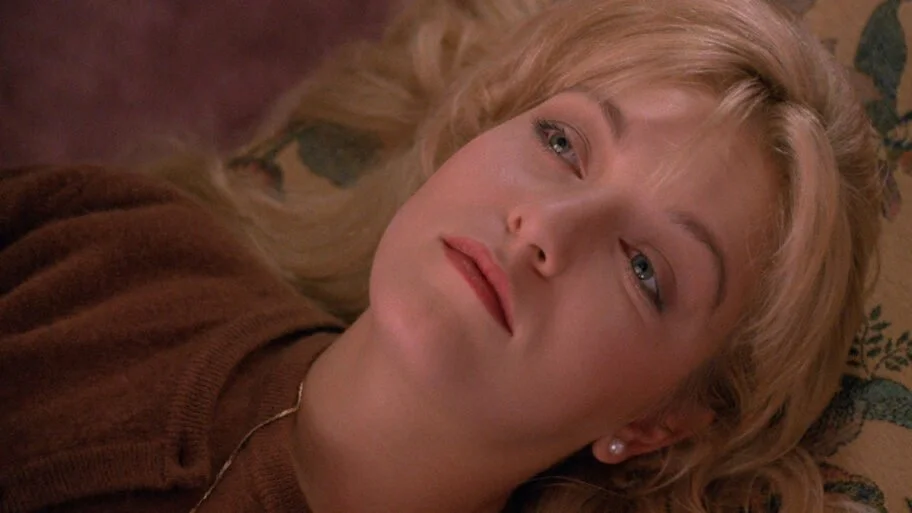
Fire Walk With Me
In 2001, the same year that Bonnie Lee Bakley was killed by Robert Blake, Lynch unleashed Mulholland Drive, his most fearful impression of Hollywood diabolism. If the interests of Montana-born David Lynch gravitated toward the sinister, Hollywood provided an unparalleled locus of wickedness and corruption. Lurking in the background of Mulholland Drive (screening December 20, 26, and 28) you might sense the presence of Elizabeth Short, ritually sacrificed in 1947 to the hungry demons of Tinseltown in the Black Dahlia murder, allegedly at the hands of Satanist Dr. George Hodel, a wealthy Hollywood insider, libertine, incestuous pederast—and a close friend of Man Ray.
If that’s already a Lynchian scenario, consider this: Hodel also consorted with Jack Parsons, the fabled rocket scientist and co-founder of the Jet Propulsion Laboratory who, with the endorsement of Aleister Crowley, led the debauched California branch of the OTO from his Pasadena home. Among the enthusiastic participants in a star-studded, never-ending orgy of sex magick at “the Parsonage” was the pre-Dianetics L. Ron Hubbard, who would join Parsons in 1946 in a series of rituals called the Babalon Working. Their goal? To manifest the Thelemic goddess Babalon, i.e., the Scarlet Woman. The result? In walks the flame-haired character Marjorie Cameron, recognized instantly by Parsons as his “elemental.” They were married the same year.
Marjorie Cameron quietly belongs among the most interesting figures of the 20th century. Following her husband’s curious death by explosion in 1952, Cameron would become an influential and somewhat feared presence inside fringe Hollywood circles. Anaïs Nin described the “aura of evil” around Cameron when they were both cast in a project directed by Kenneth Anger and his friend Curtis Harrington, two young Crowleyites who’d won the sponsorship of Jean Cocteau.
So profound was Cameron’s charisma that she eventually usurped the role played by Nin in the film that would become “Inauguration of the Pleasure Dome” (1954). If you haven’t seen it, you’ve likely stumbled on the iconic image of Cameron as the Whore of Babylon, splendidly outfitted in kimono beneath blazing crimson hair.
You can take a good look at Marjorie Cameron in a 10-minute profile made by Harrington in 1956 and available on YouTube called “The Wormwood Star”. He also cast her beside a very young Dennis Hopper in his haunting and poetic 1961 feature Night Tide, and he collaborated with his pal Diane Ladd on three features in the ’70s. All of which brings us back to Lynch, who surely was aware of the alternative history of his adopted city and the esoteric underbelly of the industry that welcomed him.
In Twin Peaks, portals yawn open and something is born into the world with the splitting of the atom, and it enhances our appreciation of The Return to consider what’s inside that mushroom cloud. Set to Penderecki’s “Threnody for the Victims of Hiroshima”, that furious dance of the elements permits entry into the baleful unconscious of 20th-century America, fusing avant garde art with exotic military tech and the dirty secrets of murder, ritual, and black magic that unite them.
Too speculative? Too far-out? The entity who appears as Diane in the penultimate episode of Twin Peaks: The Return (“The Past Dictates the Future”—screening January 5) seduces Cooper in a night of ominous motel-room sex before abandoning him to the final, cosmic dread that awaits. Played by Laura Dern, child of Diane Ladd, the character is presented without ambiguity. She wears a kimono and a blazing red wig. Remind you of anyone? 

Related Articles