Theatre review: Postcards to my Younger Transexual Self captures the soft ache of reaching for somebody across distance
In playwright-performer Christina Cook’s new show, reality-bending correspondence plays out across a stage loosely divided between the three generations of women

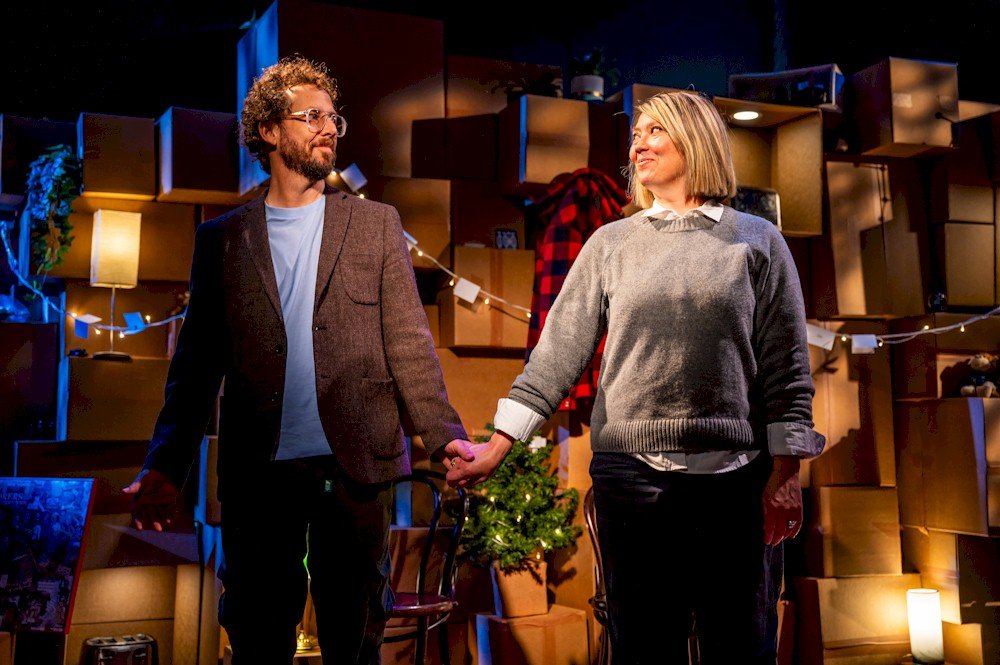
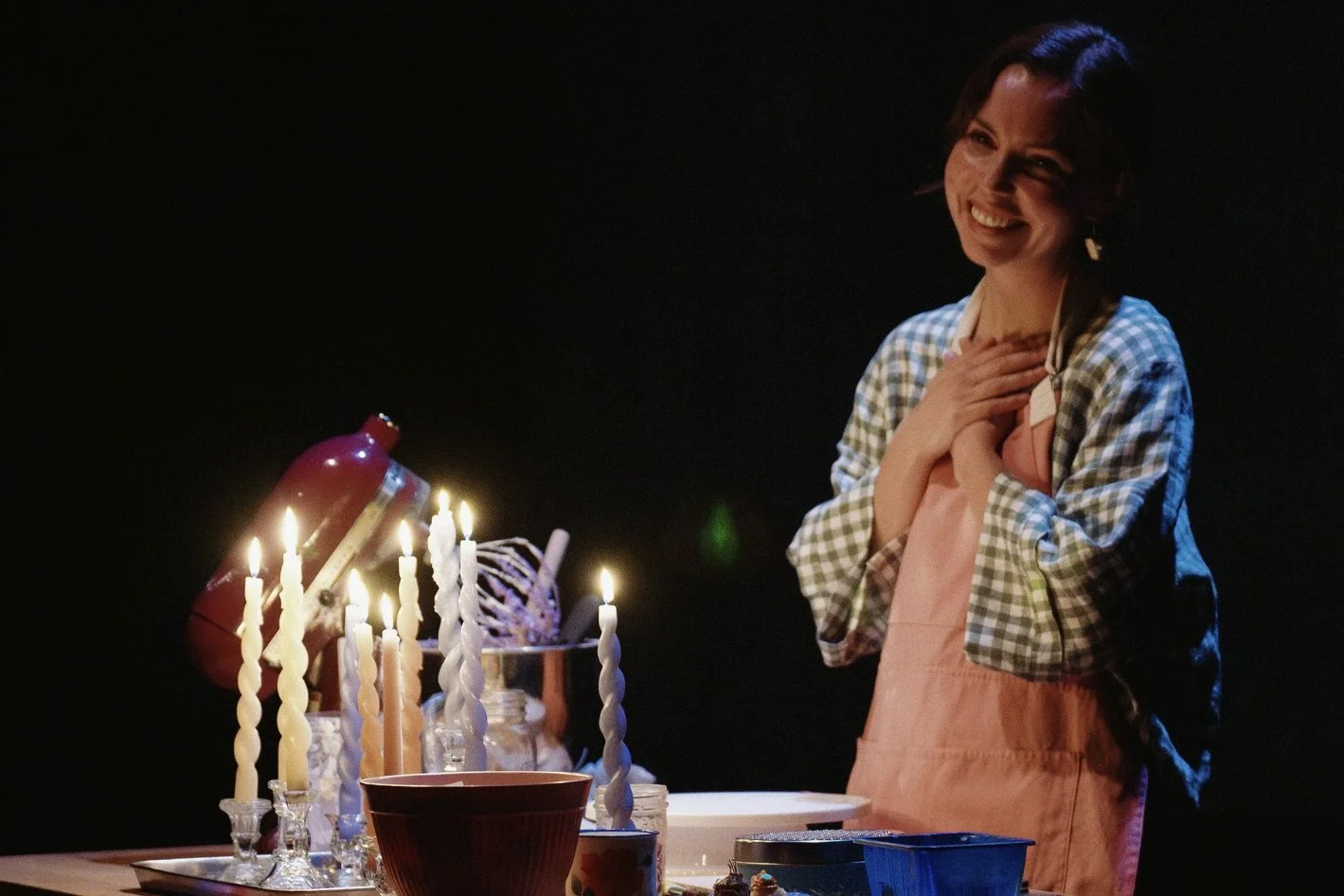
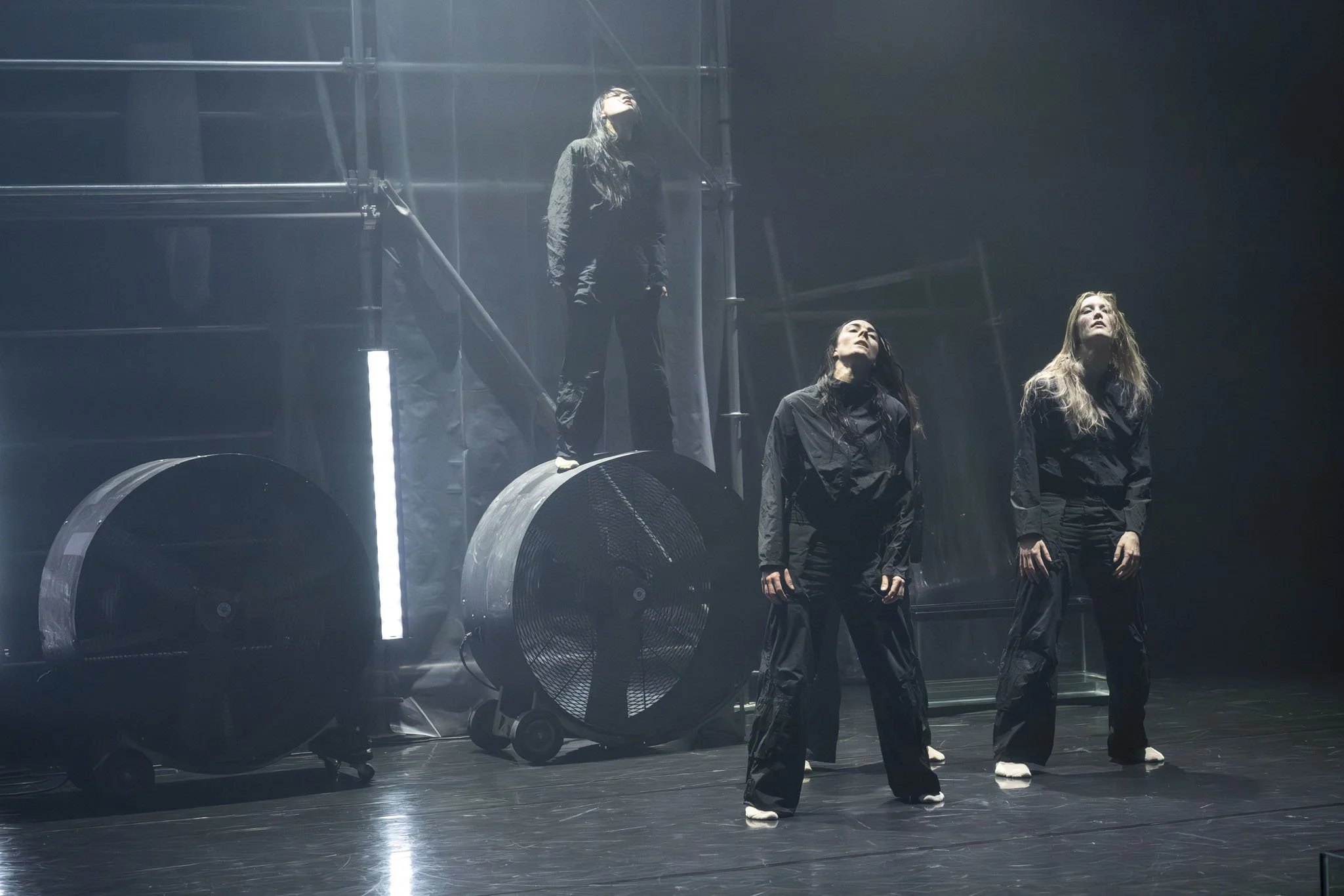
Christina Cook and Rae Takei. Photo by Matt Reznek
Neworld Theatre and Playwrights Theatre Centre present Postcards to my Younger Transexual Self(or YTS), Ages 0–119 at PAL Studio Theatre to August 30
A POSTCARD IS A funny invention. You go somewhere far enough away to be worth announcing, and send back proof of your presence and of having thought about someone else. There’s a picture on one side, a few sentences on the other, a date, a place, a signature. “We got here yesterday, it’s beautiful. We’re going to the beach tomorrow.” It takes a while to get to the recipient, so by the time it arrives, tomorrow has come and gone, and the person writing is probably somewhere else too.
There’s something tender and melancholy about the whole arrangement. Postcards to My Younger Transexual Self (or YTS), Ages 0–119 makes a home inside that soft ache of reaching for somebody across distance.
Playwright and performer Christina Cook plays Spiling, folding details of her own life into the show’s more fantastical inventions. We meet Spiling as a grad student studying psychology and navigating academia while publicly expressing her trans identity. She reads postcards addressed to her younger selves and spends time with the things her grandmother left behind, including a science-fiction story dedicated to her “future granddaughter”. Gradually, the past and future begin talking back.
A grandmother writes to a granddaughter who doesn’t exist yet; Spiling writes to versions of herself who no longer exist, or haven’t yet come to be. Spiling’s mother, meanwhile, calls from the present, only to be met with the answering machine. Cook is sensitive to the ways absence can become its own kind of presence. The people we love persist in memory, in the versions of them we hold on to, and the living can become distant to one another. To know someone, the play suggests, is always partly to know them out of time.
Spiling’s time at university finds echoes in the lives of both her mother and her grandmother, both academics. Time passes, but some things never change: each of them comes up against the misogyny of her respective field, separated by decades but caught in familiar structural pitfalls. Postcards is less interested in cataloguing these injuries than in tracing what gets carried forward, where the intensely personal brushes up against the unavoidably political.
There are commonalities, misunderstandings, and contradictions between the three generations. Spiling tells her long-dead grandmother about the difficulties of her first year as a trans university student. “I’m not sure I understood all that, but I hope writing it made you feel better,” her grandmother replies warmly. The two commiserate over their university experiences and books, quite literally sending postcards back and forth through time.
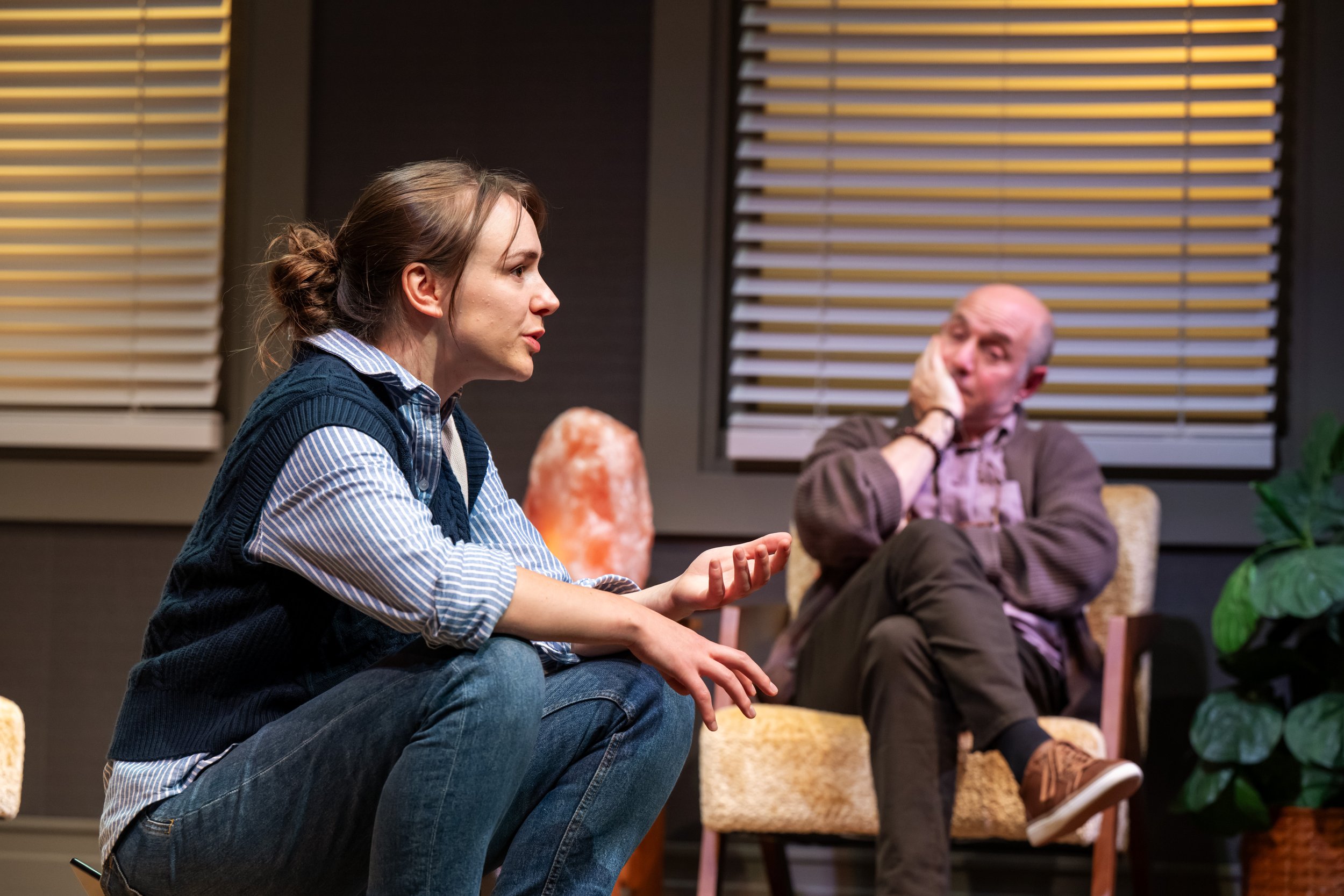
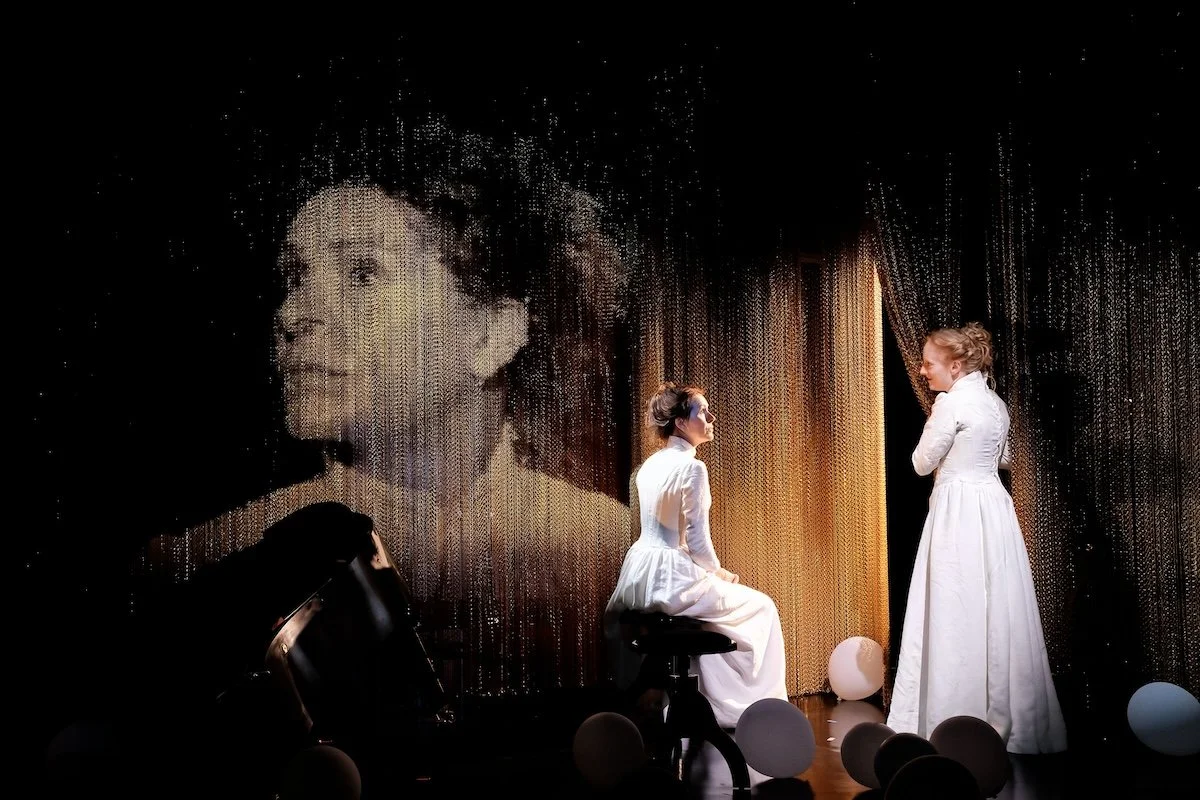
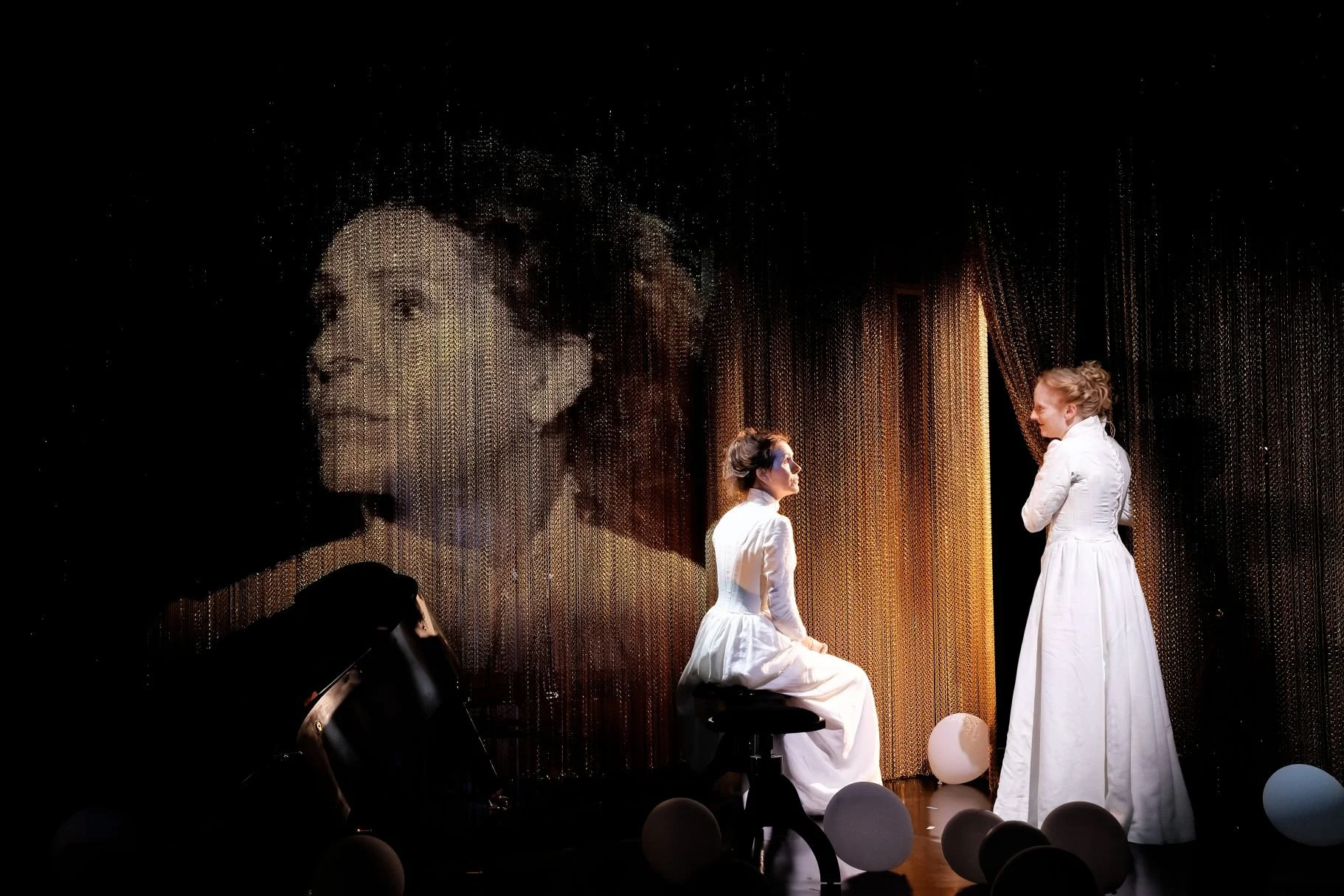
Their reality-bending correspondence plays out across a stage divided loosely between the three women: Alia Rusu-Tahir embodies the departed grandmother at one end, Tara Cheyenne Friedenberg’s mother occupies the other, and Cook moves between them. The women largely inhabit their own pockets of space, their stories unfolding through monologues that answer one another across the room, rather than through conventional scenes together.
Rusu-Tahir fills the character of the grandmother with a lively curiosity, bright and almost innocent at first. It’s a curiosity she shares with Spiling, making their transgenerational kinship feel intimate.
Spiling’s mother is keenly aware of the irony: her daughter has found a way to talk to the dead while barely talking to her own parent. “Leaving messages on the phone is a fictional relationship,” she says in a voicemail to Spiling. Friedenberg gives the character a lovely directness, unafraid to challenge her daughter on her emotional distance but never turning cruel or dismissive. Where the grandmother remains largely tethered to her own corner of the stage, Spiling’s mother occasionally crosses into her daughter’s space, bringing them into more direct contact. Those interactions become the emotional core of the play, pulling Postcards out of the fantasy and toward something more immediate.
If this all sounds heady, it is, partly. The monologues in this play can be lengthy and dense, rife with detail and specificity; Cook’s is an intelligent script that expects its audience to keep up. To the play’s benefit, Cook herself has an unhurried presence, and yet there’s an earnestness to her performance too, fitting for a character who makes her own transition into something to study and perfect: “I’m trying to get an A+ in electrolysis,” she says.
Throughout, the playwright’s words carry a whimsical rhythm that’s perhaps most buoyant when describing the pleasures of gender euphoria: “I used to collect ‘ma’ams’ like diamonds. Diamonds I could eat.”
That buoyancy is also beautifully punctuated by Hayley Sullivan’s live musical accompaniment, a constant presence throughout the show. Moving between an eclectic assortment of instruments and even her own voice, Sullivan gives the production a lush sound that feels as curious and free-ranging as Spiling herself.
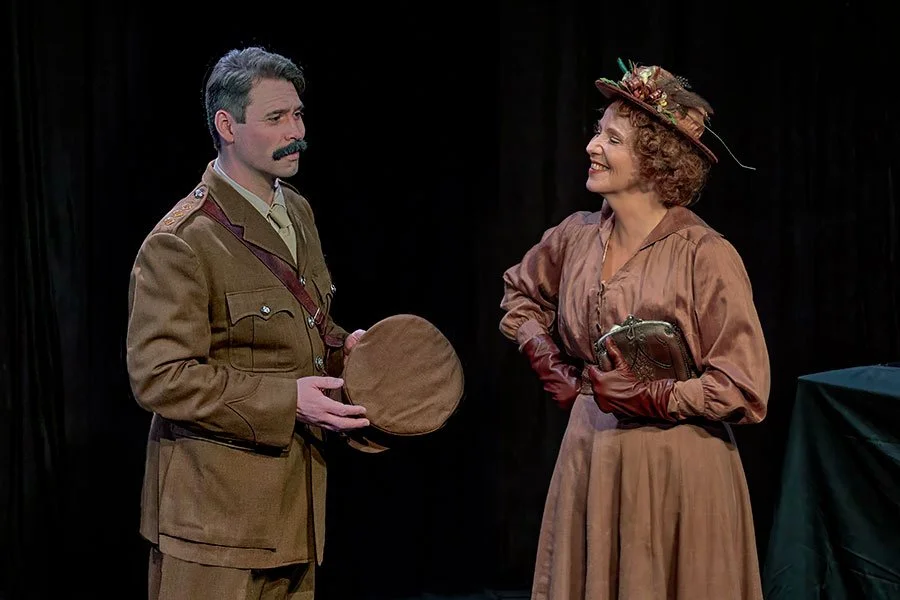
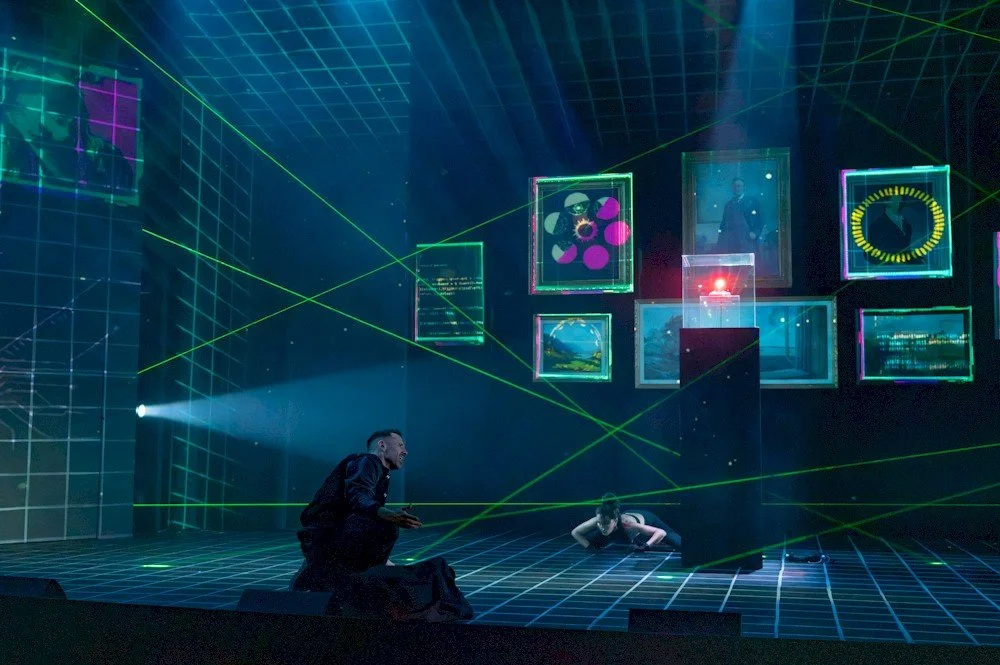
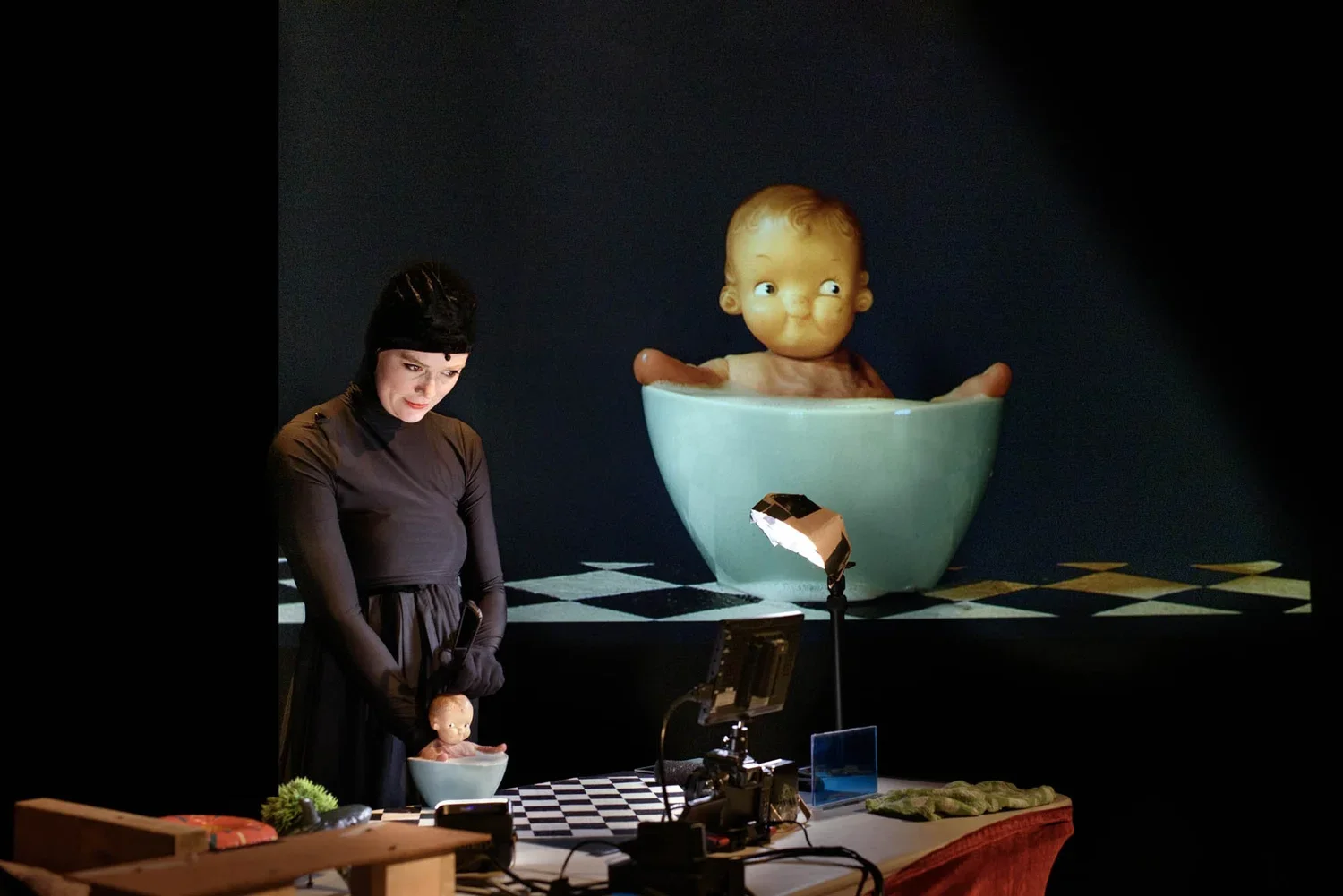
The play has some even stranger registers, from the grandmother acting out her own science-fiction story to the increasingly absurd bureaucrats and academics played by Rae Takei—a highlight of the night is a professor's painstaking lectures on gender-neutral pronouns that devolves into a dance routine. These diversions work better at some moments than others, but the occasional structural vagueness feels minor in a production this sensitive and bold. Dramaturge and codirector Joanna Garfinkel handles the shifts with a gentle touch, while Jamie Sweeney’s set and Victoria Bell’s lighting send waves of colour through the space to match the at times errant pace.
There are two moments toward the end of Postcards when the whole production seems to reach for transcendence, for that feeling Spiling describes again and again as “floating”. For a moment, it’s transporting to simply hang there, held across all that distance, waiting to be caught. 
Angie Rico wrote this review as part of Page Turn, a professional development network for emerging arts writers, funded by the Canada Council for the Arts and administered by Neworld Theatre.

Related Articles