Theatre review: Candle-lit Rosmersholm is haunted by shadows of an inescapable past
Innovative inaugural production by Company Research brings Henrik Ibsen’s play to life in a spare, echoing space far from its original 19th-century setting
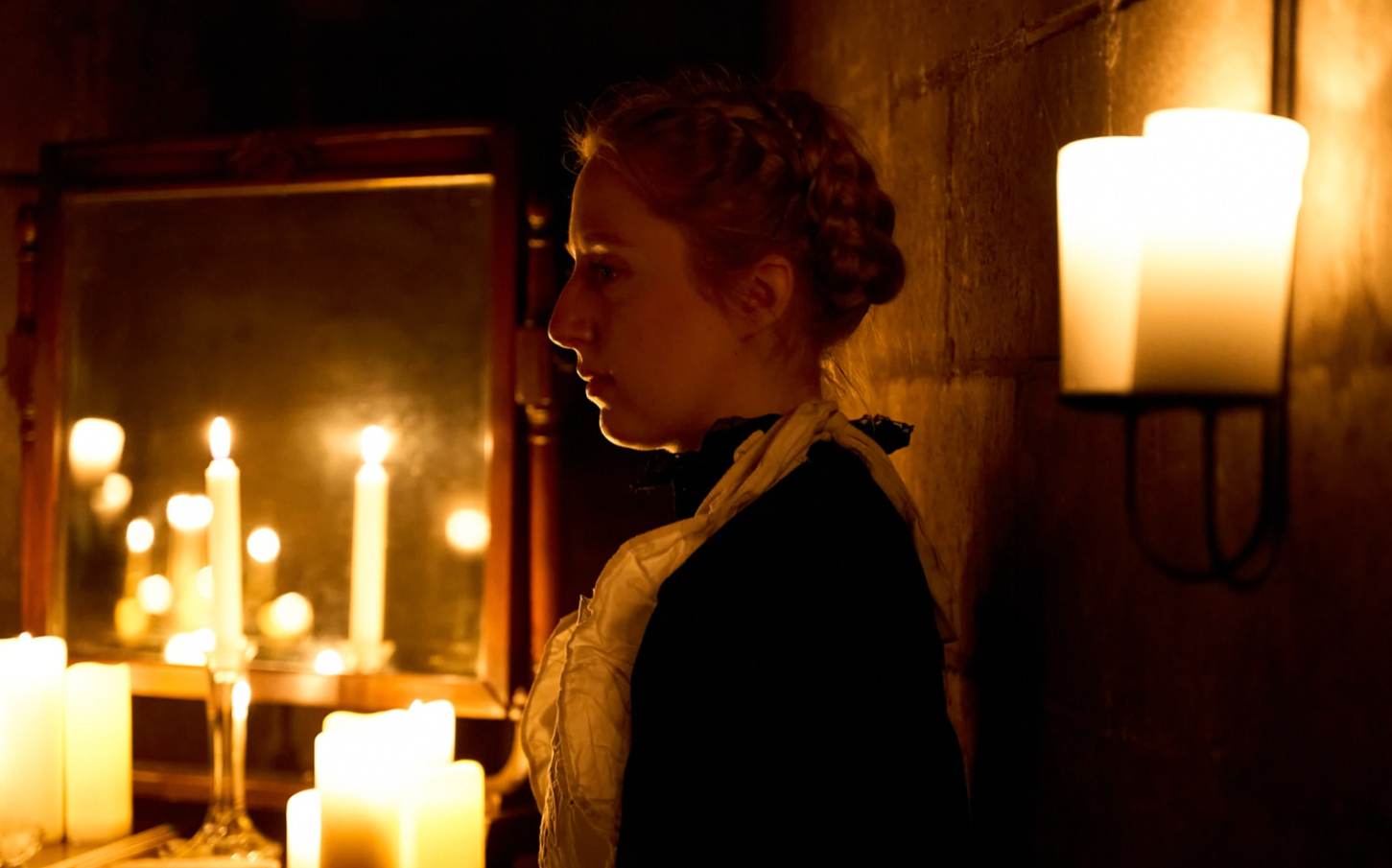
Rosmersholm. Photo by Pascal Lamothe-Kipnes
Company Research presents Rosmersholm to November 29
THE TROUBLE WITH wanting a new life is that you generally have to bring your old one with you.
This is the predicament facing the protagonists of Henrik Ibsen’s Rosmersholm. Rebecca West, an idealistic, intellectually ambitious woman, arrived at the Rosmer family’s ancestral manor while its mistress, Beata, was still alive. A year after Beata’s death, she’s still there, having become the closest confidante of Beata’s widower, Johannes Rosmer. The former pastor has recently renounced his religious faith, and together, the two of them entertain the possibility of a new life, free from the convictions and conventions that have long governed Rosmersholm—though the house may have other ideas.
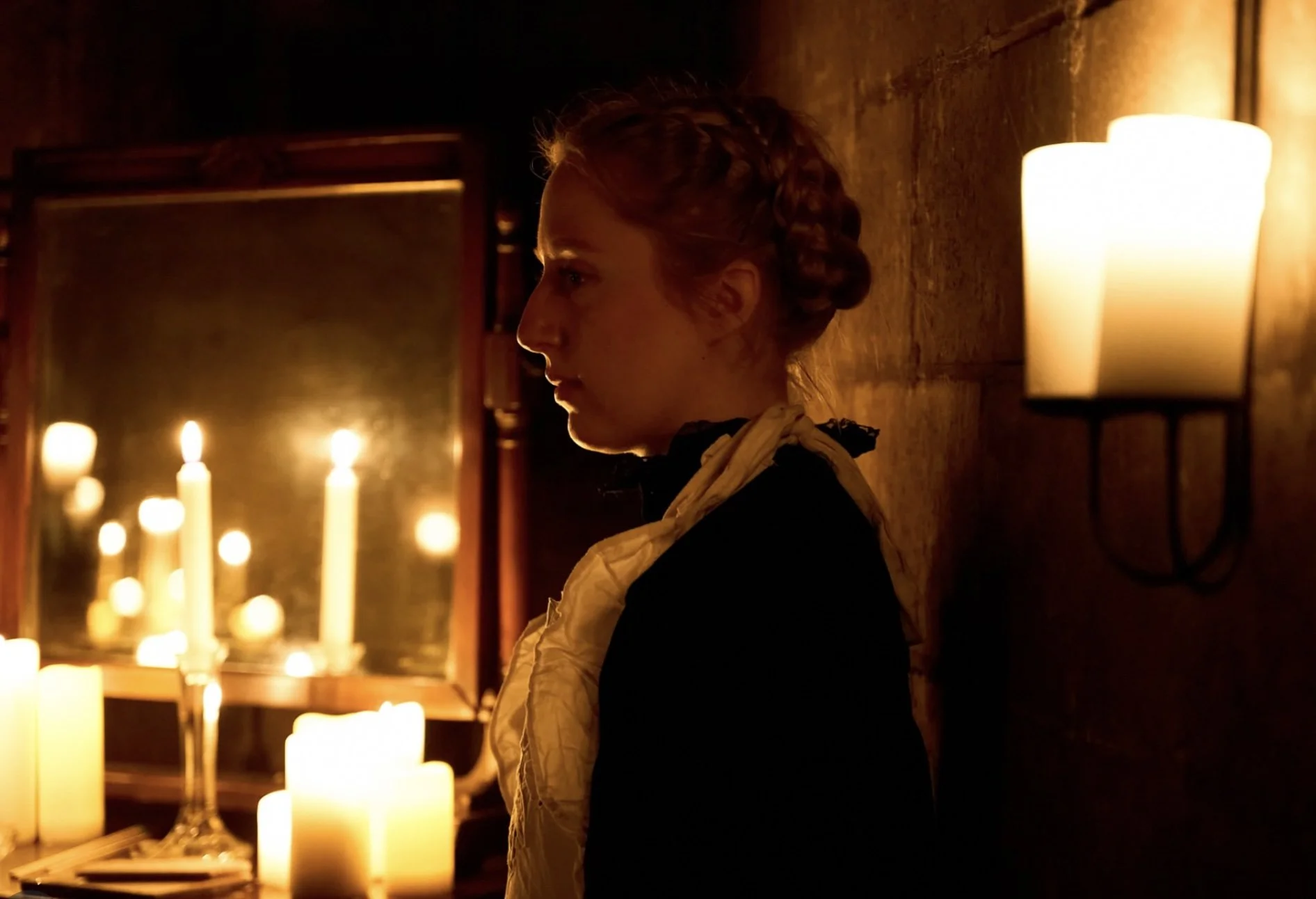
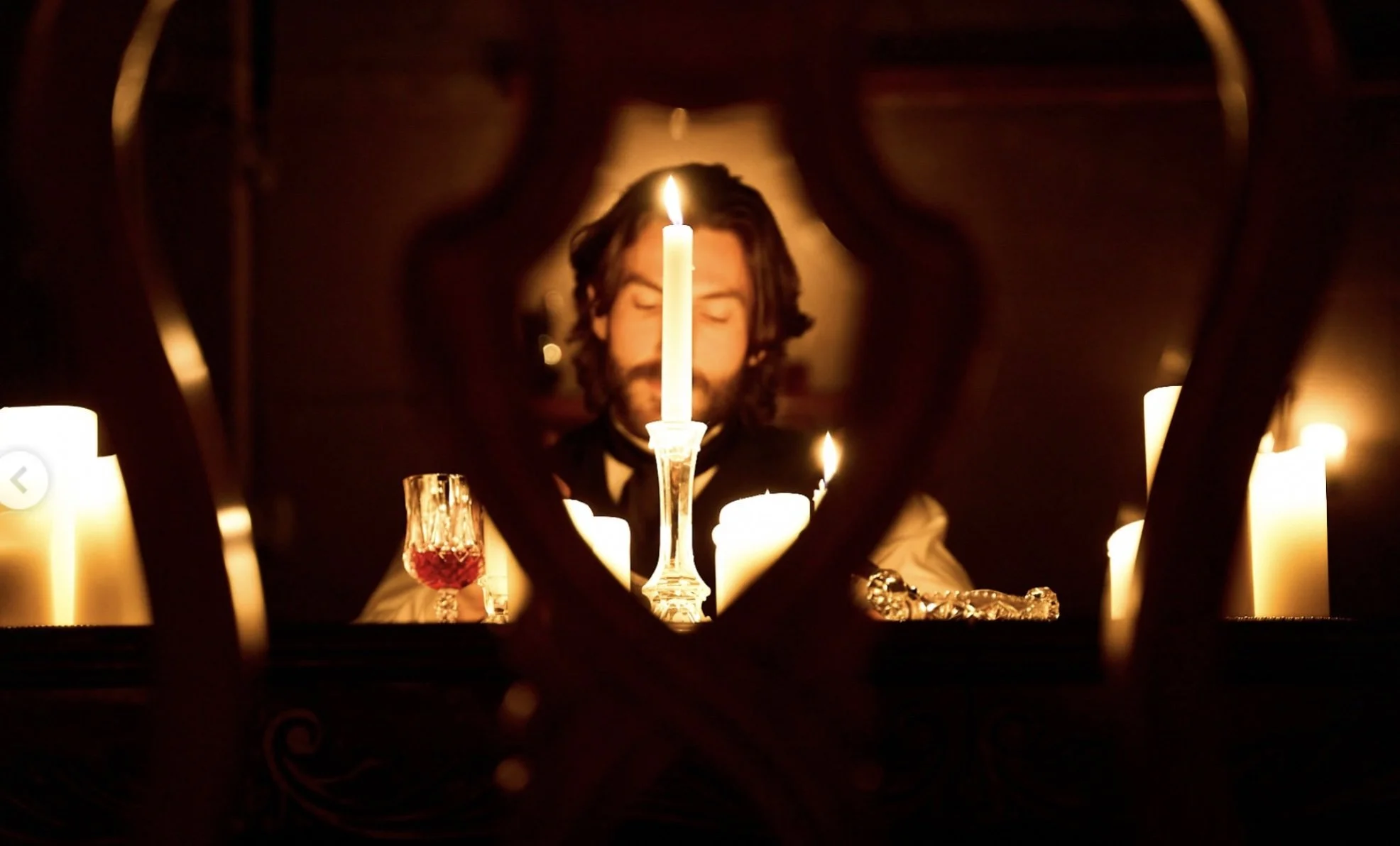
For its inaugural production, Company Research has taken Henrik Ibsen’s Rosmersholm, adapted and directed by Alexander Steele Zonjic, to a rather unlikely setting: a building in Mount Pleasant that looks and feels like an office block after hours. An actor playing the housekeeper, Miss Helseth, ushers the audience into a room with echoing concrete walls and high ceilings. There are about thirty attendees every night, seated around the room, which is lit entirely by candles. Every so often, the clacking of Miss Helseth’s footsteps announces another group of arrivals, and the door swings open, letting in just enough hallway light for you to notice someone in 19th-century clothes standing against the wall who, until that moment, you probably had no idea was there.
The room has no backstage for the actors to disappear into. Whether the resulting unease is entirely intentional is hard to say, but it works rather well for one of Ibsen’s most gothic plays, about an old estate hemmed in on all sides by death and history.
Rebecca, played by Siona Gareau-Brennan, seems determined to find a way out of the gloom. “Come see for yourself,” she urges Rosmer, she urges Rosmer, coaxing him to stand on the stately dining table, around which much of this very talky play unfolds, to look at the world he’s known all his life from a different angle. She’s witty and seems to take particular pleasure in a good argument, her face brightening whenever someone gives her one. It’s not hard to see why Rosmer is so taken with her. Gareau-Brennan is no less compelling when the circumstances of Beata’s death come into sharper focus and Rebecca begins to unravel, growing increasingly desperate without losing the conviction that made her so captivating in the first place.
Rebecca has more faith in her prospects than Zonjic's production seems to. From its blood-curdling opening scene, it sustains an almost merciless atmosphere. Though Rebecca searches for little corners and cracks where inspiration might creep in, the darkness here is eclipse-black.
The master of the house seems especially susceptible to its pull. He is still grieving his wife and the faith he has recently abandoned, and his initial excitement at the possibility of what else there might be is almost heartbreakingly naive. Cesare Scarpone leans into Rosmer’s pliability, maybe a little too much. His gentleness is affecting, but he sometimes seems less torn between competing beliefs than at the mercy of whoever happens to be speaking to him.
Rosmer may be weighing his place in the world, but the servants of Rosmersholm have little say in theirs. Alongside Miss Helseth (played by a solemn Reece Braaten) are three other maids, who linger at the edges of the room, tending to the house, dusting furniture and occasionally singing in Norwegian, though none except Helseth speaks a word. Their gestures suggest cloistered inner worlds, darting eyes betraying the thoughts swirling beneath stern exteriors. They seem to belong to the house more completely than any of its living inhabitants do.
Ibsen’s play has seven characters, all living; Zonjic adds an eighth, bringing Beata back to stalk the protagonists and haunt Rosmersholm, giving her a physical presence in a house already crowded with her memory.
Her addition is one of the production’s better choices, especially in the opening and closing scenes. Her repeated ringing of the servant’s bell becomes a little overdone, though it does lead to a clever (and wholly original) moment with Rebecca. Elsewhere, the staging can be a little too eager to make its point. When Rosmer and his conservative brother-in-law Theodor Kroll find themselves ideologically opposed, they take seats at opposite ends of the room. Having the actors remain in the room even when they're not part of a scene can also be distracting, particularly when Rebecca hovers around conversations she's not part of, which is perfectly in character.
Rosmersholm. Photo by Pascal Lamothe-Kipnes
The staging has its limitations, but the actors navigate it well. Kroll is played with wicked impatience by Spencer Lord. He comes and goes as he pleases, getting some surprising laughs from his world-weary exasperation and caustic one-liners.
Nathan Kay plays Ulrik Brendel, Rosmer’s former classmate, a shabby intellectual who turns up drunk and full of his own importance. Kay brings a carefully balanced absurdity and pathos to the role, injecting some welcome unpredictability into the evening just as it threatens to stall. As Mortensgaard, the newspaper editor whose politics put him at odds with Kroll, Elijah Silva gives the most relaxed performance of the night, treating political manoeuvring with easy, matter-of-fact pragmatism. He’s a nice contrast to Kroll’s indignation, though the two men share an ambition to use the influential but vulnerable Rosmer to their advantage.
Company Research’s production of Rosmersholm can be too fond of its own gloom, and some of its choices are more effective than others. Still, there’s much to admire in the way this young company has translated the oppression of a 19th-century household to an unlikely room in Mount Pleasant. Its well-constructed, unrelenting atmosphere can occasionally threaten to stifle the drama itself, but at its best, it gives Ibsen’s old ghosts a rather unnerving new home. 
Angie Rico wrote this review as part of Page Turn, a professional development network for emerging arts writers, funded by the Canada Council for the Arts and administered by Neworld Theatre.

Related Articles