Theatre review: Vascular Necrosis is a monster mashup of romance, comedy, and zombies
A patchwork wall of TV screens, fun nods to found-footage horror, and other genre touches heighten allegorical messages of queer self-acceptance in Touchstone Theatre and Glitch Theatre show
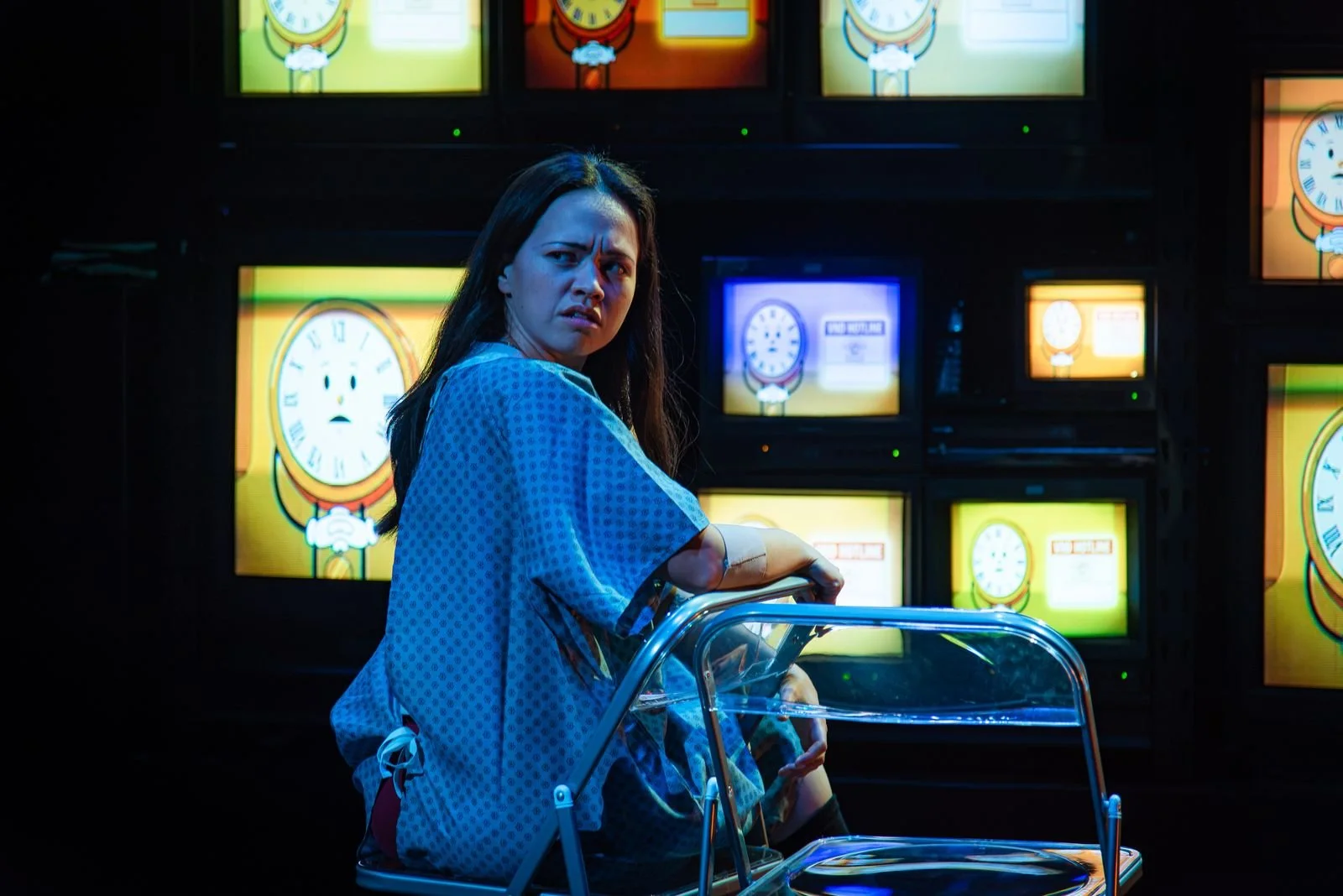
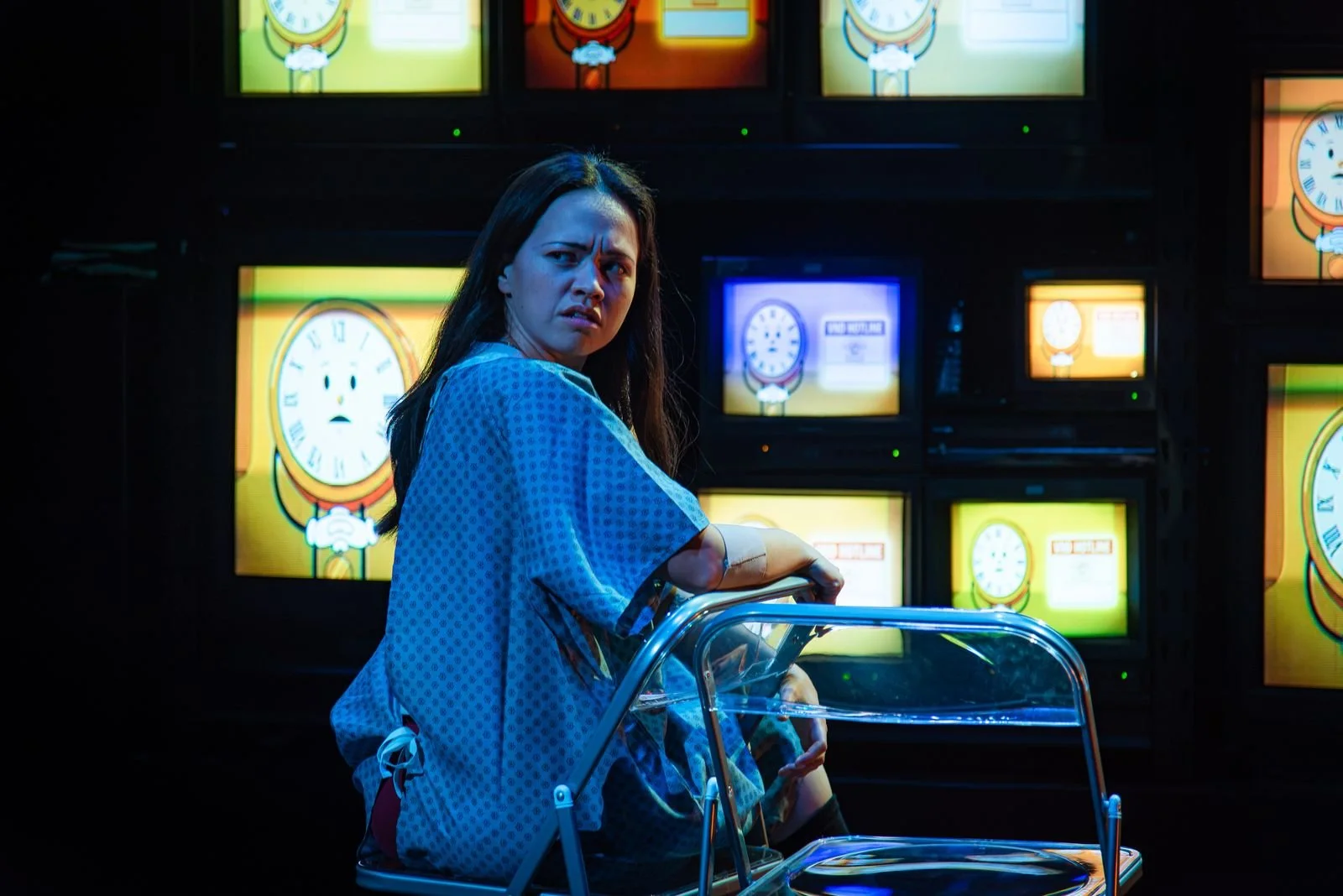
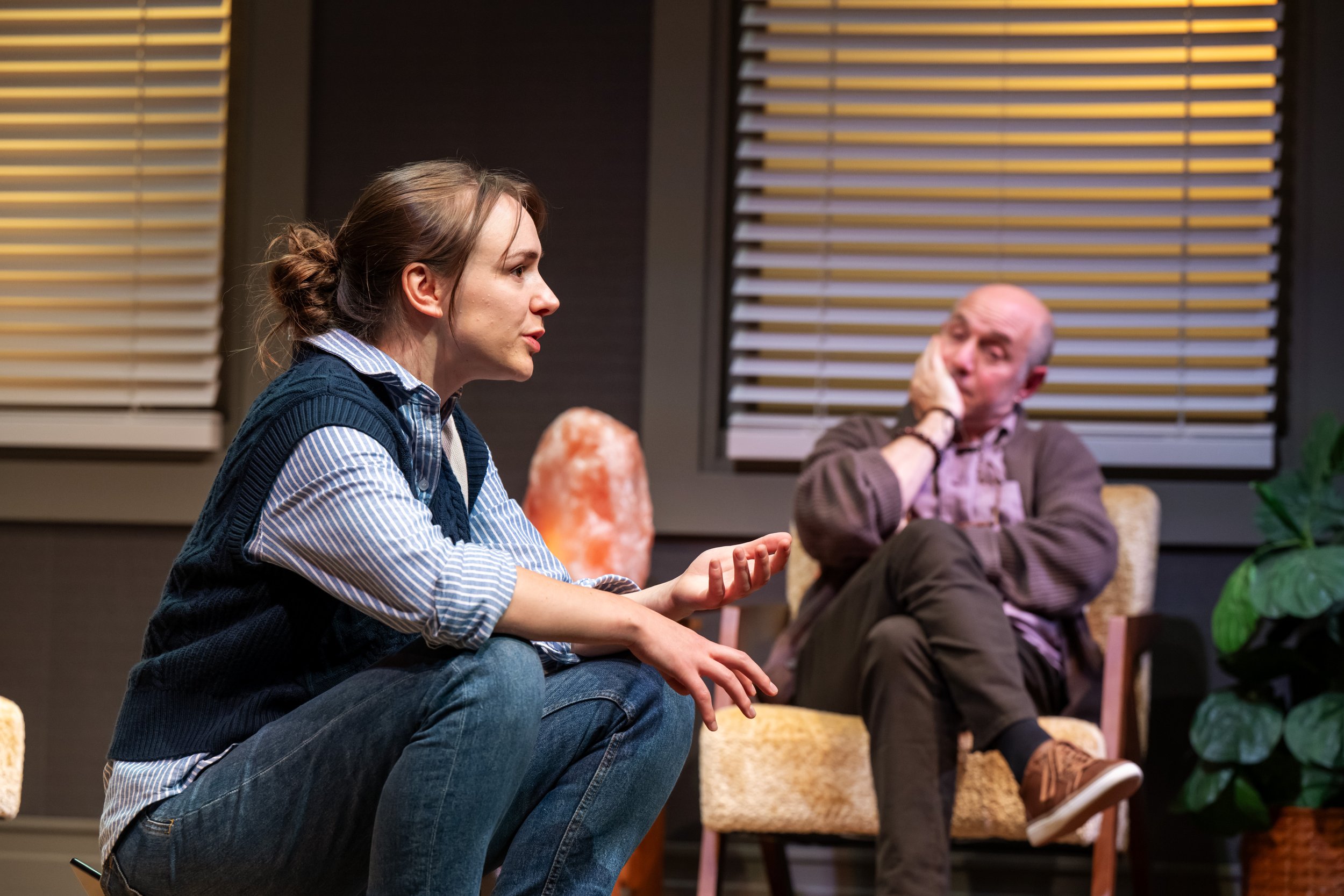
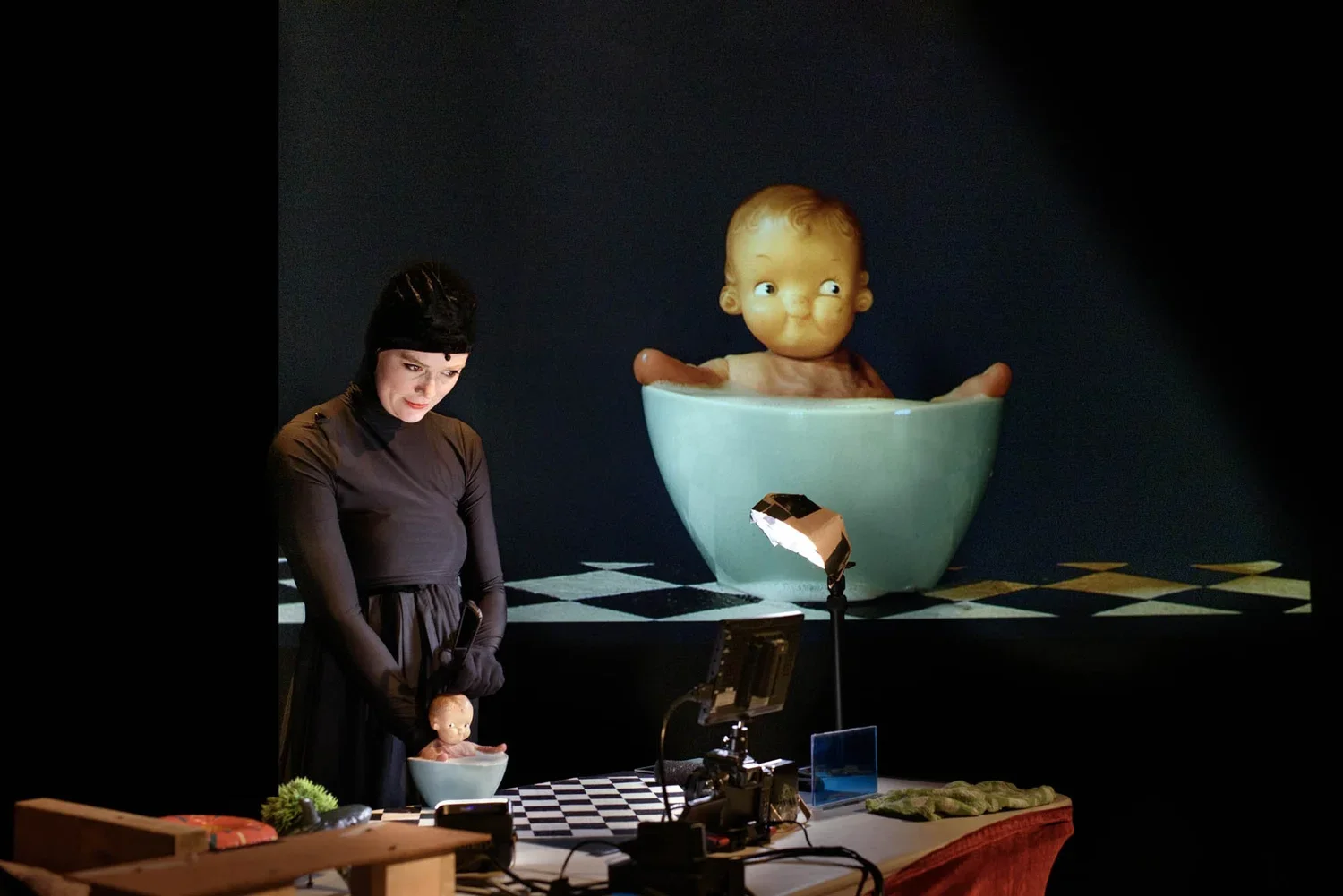
Gabrielle Nebrida-Pépin in Vascular Necrosis. Photo by Chelsey Stuyt
Touchstone Theatre and Glitch Theatre present Vascular Necrosis at The Nest to October 18
GABRIELLE NEBRIDA-PÉPIN’S Penelope, the protagonist of Jordyn Wood’s new queer-zombie-romance play Vascular Necrosis, never wanted to be undead. She pretty much just wanted the “dead” part.
Five years ago, Penelope intentionally overdosed in the bathroom of an apartment she shared with her fiancée, Charlie, played by Evelyn Chew. By the time Charlie had called the paramedics, Penelope was gone. Now she’s back, though the return wasn’t seamless.
Waking up in a hospital bed, she’s informed by her doctor that she, along with hordes of her recently dead compatriots, rose from the grave, complete with the unconventional appetites that tend to accompany that. With the help of newly developed “de-necrotizer” drugs that suppress the effects of the zombie virus, she’s back in control of the life she tried to end.
The setup is a familiar one—2013’s zombie rom-com Warm Bodies and the 2018 Disney Channel musical Zombies charted the territory of a cured zombie infection allowing the undead to rejoin society. It’s the intriguing complication of Penelope’s suicide that keeps Vascular Necrosis feeling fresh, and the show, directed by Daniela Atiencia, is at its best exploring her relationships with death, undeath, and her unwanted life.
Vascular Necrosis’s set, designed by Paula Viitanen Aldazosa, delightfully translates the hectic outbreak-day news montage from films like Shaun of the Dead to the stage with a patchwork wall of working TV screens. Pre-recorded newscasts, advertisements for de-necrotizers, and episodes of a zombie soap opera, all organized by sound and video designer David Mesiha, play at points throughout the show and offer exposition and worldbuilding in a natural, playful way.
The screens also double as mood setters, flashing with gory images when Penelope snaps back to her time as a zombie. In one memorable scene where Penelope watches an old tape recording, several cast members take the stage with a camera connected to the screens. It’s a fun nod to found-footage horror films that uses the set to the fullest.
The execution of Penelope's suicide—the play’s opening scene—is an early stumble. The choice to outfit Nebrida-Pépin with a torn-open prosthetic stomach, out of which comically large pills tumble and clatter to the ground when she lifts her shirt, feels insensitive, a gory stab at shock value. But Penelope’s suicide and her subsequent stint as a flesh-eating monster are more subtly explored in a series of monologues contextualized as support-group meetings, where Nebrida-Pépin ably swings between confusion, despair, hope, and disgust at the half-remembered actions of her zombified self.
These monologues, elevated by Nebrida-Pépin, are some of Wood’s best moments as a writer, and they’re an example of one of Vascular Necrosis’s strengths: the play, developed through Touchstone Theatre’s Flying Start program, takes the premise, silly as it may seem, seriously. It asks and answers interesting questions about its characters and the world they live in. Penelope’s descriptions of her new half-life—mostly human but not quite, always in danger of slipping into a daze that feels like nothing before snapping back in a moment of elation—are evocative, making it easy for listeners to buy into the play’s world and empathize with its allegorical messages of queer self-acceptance.
It’s in these support group meetings that Penelope meets Bela, memorably played by Marguerite Hanna. Bela—like Lugosi, not Swan—is a zombie, too, though they feel decidedly less shame about that fact than Penelope, who is trying her hardest to adapt to life back with her human partner, Charlie.
Chew’s performance as Charlie gets off to a rocky start—her chemistry with Nebrida-Pépin is much stronger late in the play, when the two are fighting, hurling accusations about each other’s violence during the epidemic. She doesn’t quite feel natural as a romantic partner to Penelope, though that is, at least partially, the point—they’re just not right for each other.
Hanna’s Bela, on the other hand, would feel natural anywhere. They quickly strike up a rapport with Penelope, whose infatuation is kindled by Bela's easy, amphetamine-chic charisma. It’s a familiar archetype, but Hanna’s grounded performance in the play’s more emotional moments keep Bela from feeling like just another “manic pixie” trope.
The rest of the cast is filled out by Brynna Drumond and Terrence Zhou, each playing multiple characters. Drummond is most memorable as Charlie’s dorky-but-lovable friend, and as the delightfully demonic Evil Dead–style nurse who torments Penelope when she stops taking her de-necrotizers. Zhou is best as Penelope’s guilt-ridden support-group companion, but he also switches believably between Penelope’s frustratingly chipper doctor and Charlie’s frat-bro friend.
Costume designer Emily Friesen plays a big hand in making all these characters feel distinct, even when they’re played by the same actors. Her style here is mostly casual, flannel shirts and denim jackets over tank tops, corduroy and jeans. But when the setting gives her opportunities to experiment with staples of the genre—Zhou as a menacing, gore-crusted zombie, Chew as a hardened apocalypse survivor—she rises to the challenge.
Her best work, though, is on the two leads, Penelope and Bela, especially during a highlight scene toward the play’s midpoint where they take Charlie to the Raveyard, a zombie club. Bela’s orange-mesh rave top is countered nicely by Penelope’s bloody-bandage-and-rags-style crop. The costumes, along with Jonathan Kim’s lighting design, go a long way toward selling the Halloween club look.
Vascular Necrosis pays tribute to the decades of zombie media that came before it, and fans of the genre will recognize overt nods as well as more subtle moments of inspiration. The story’s intimate characterizations, as well as the skill of the team who animates them, are enough to bring old tropes back from the dead. 
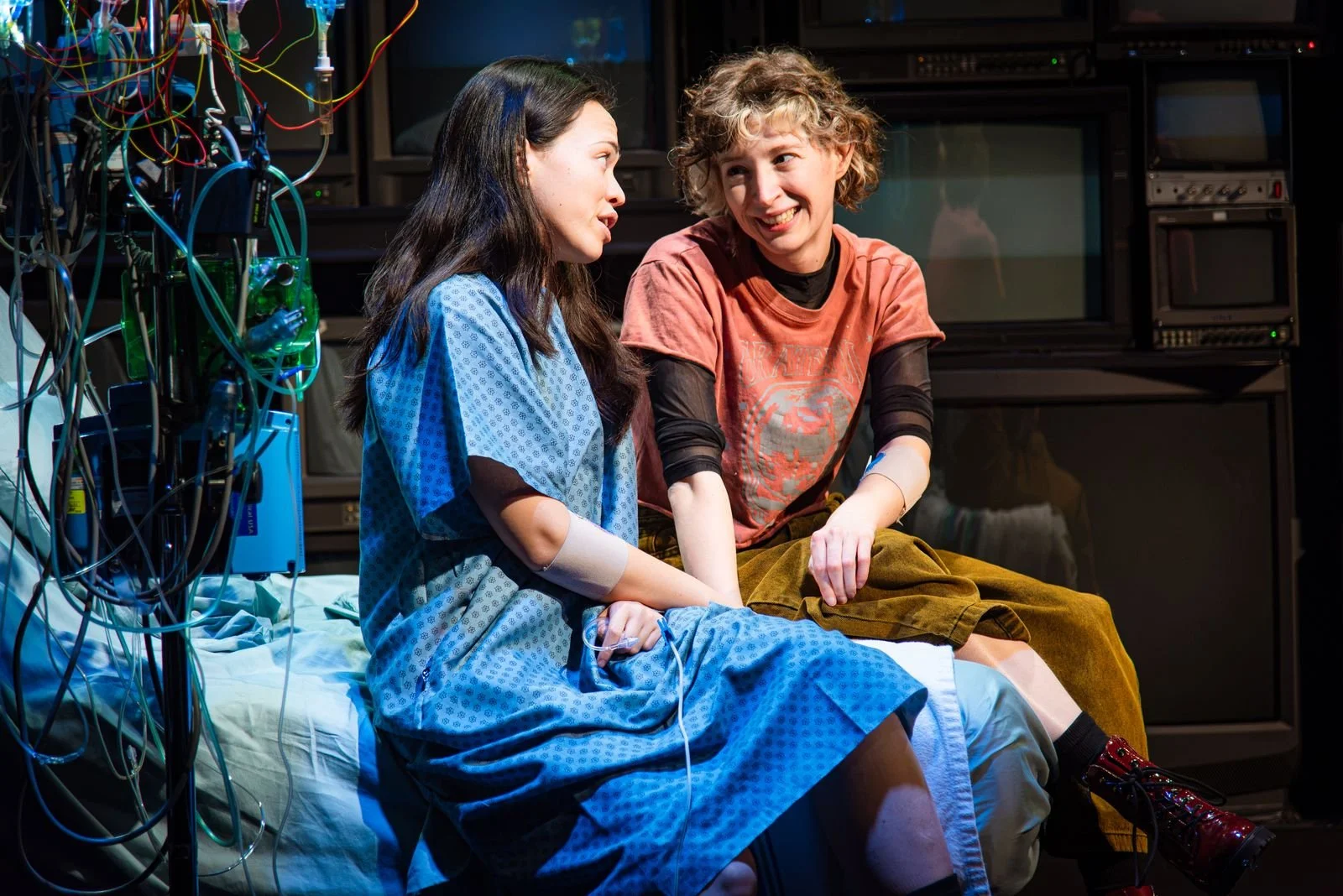
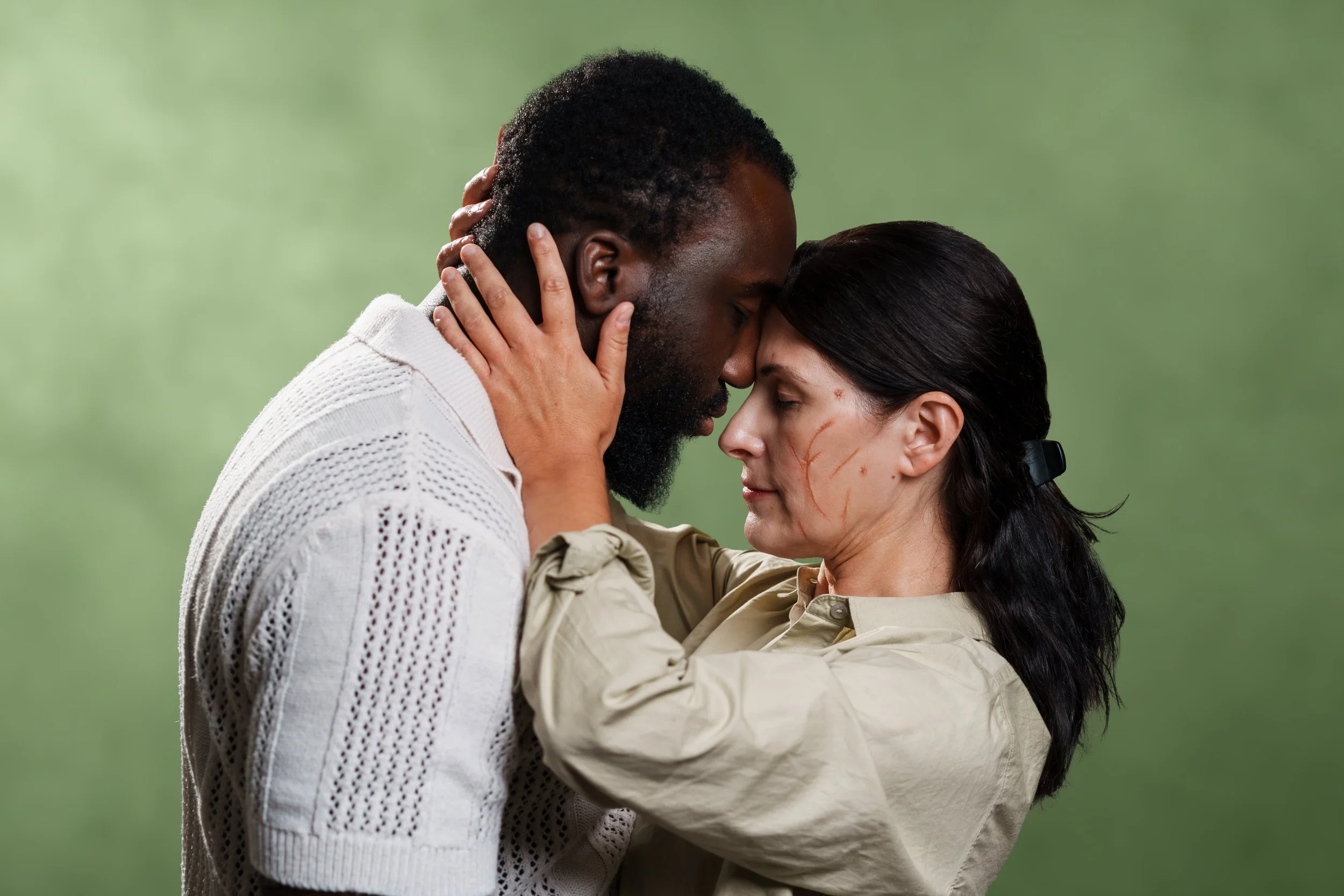
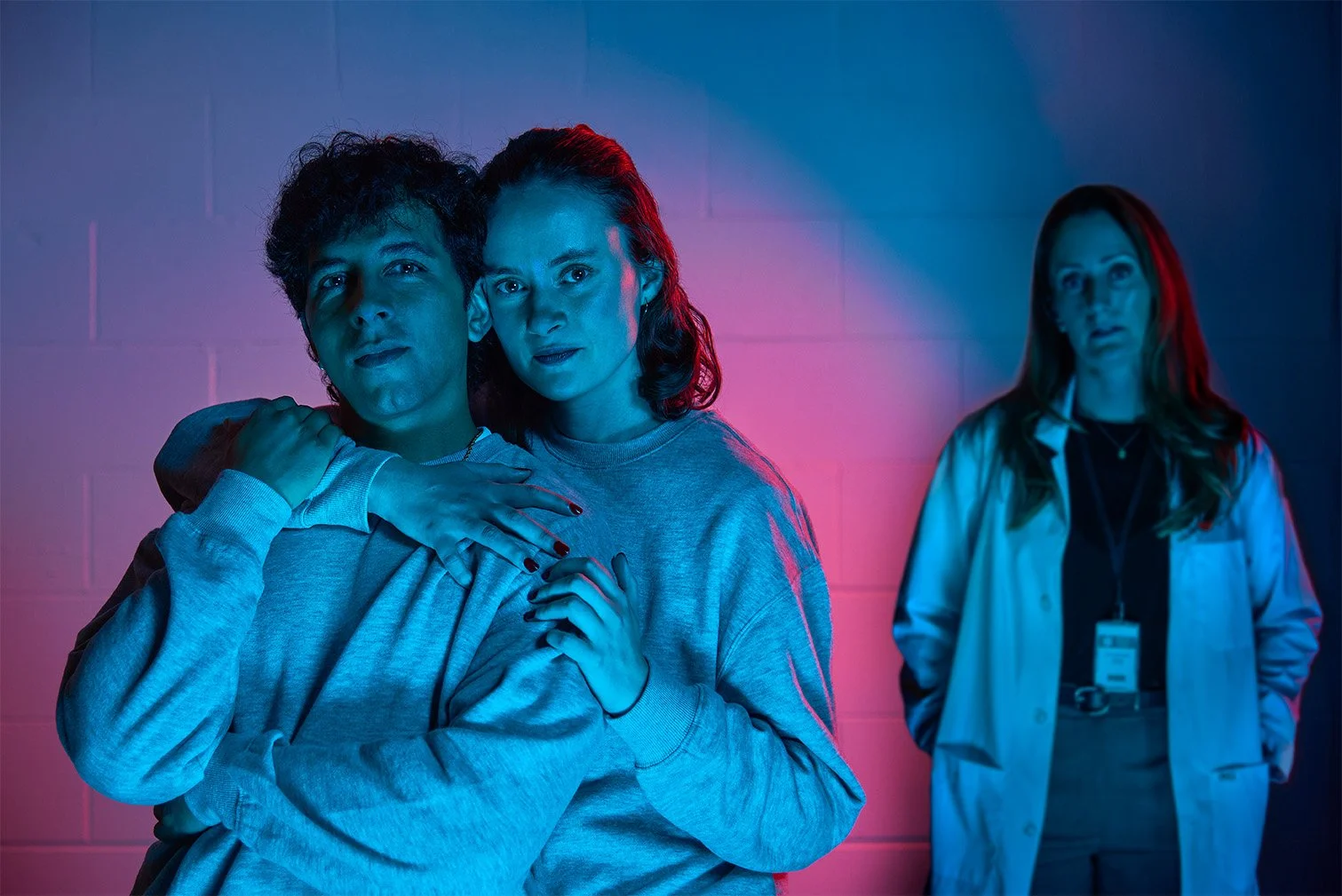
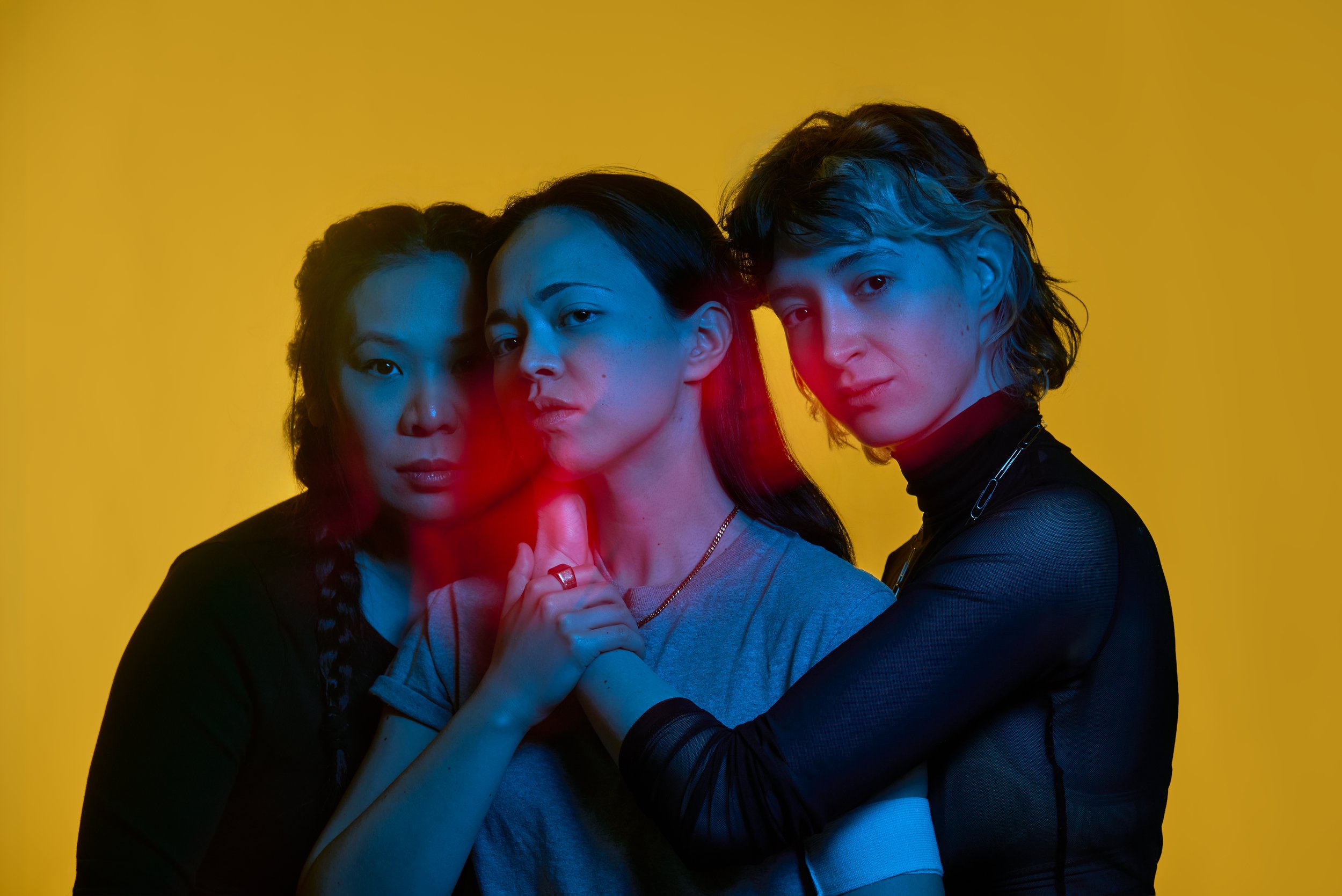
Gabrielle Nebrida-Pépin and Marguerite Hanna. Photo by Chelsey Stuyt

Related Articles