Museum of Anthropology displays a visionary artist’s collection in I Use My Haida Eyes: The History Robes of Jut-ke-Nay–Hazel Wilson, opening May 14
Wilson’s 50 painted and appliquéd robes document specific episodes of Haida history, representing an expansion of traditional Indigenous form
SPONSORED POST BY Museum of Anthropology at UBC
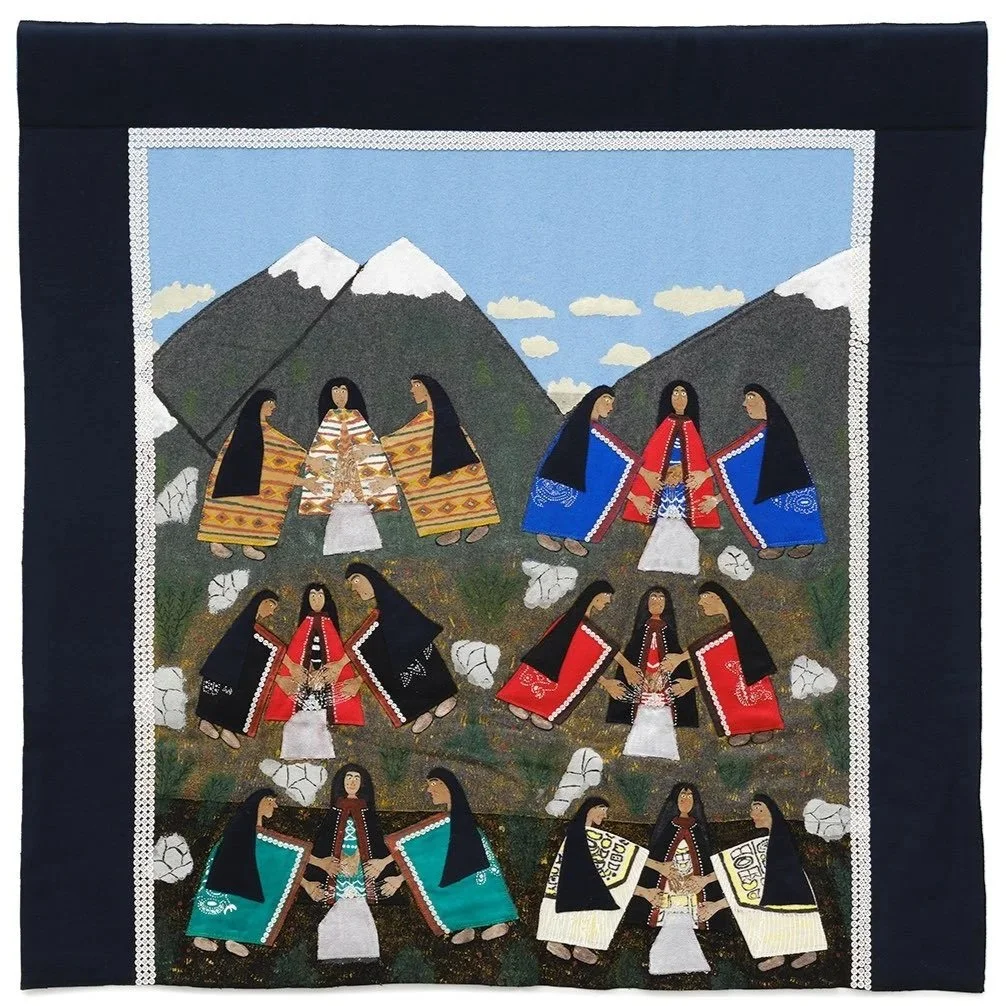
Jut-ke-Nay–Hazel Wilson’s All the Nations Came Together (Putting Away the Magic), 2006–07. Photo by Rachel Topham
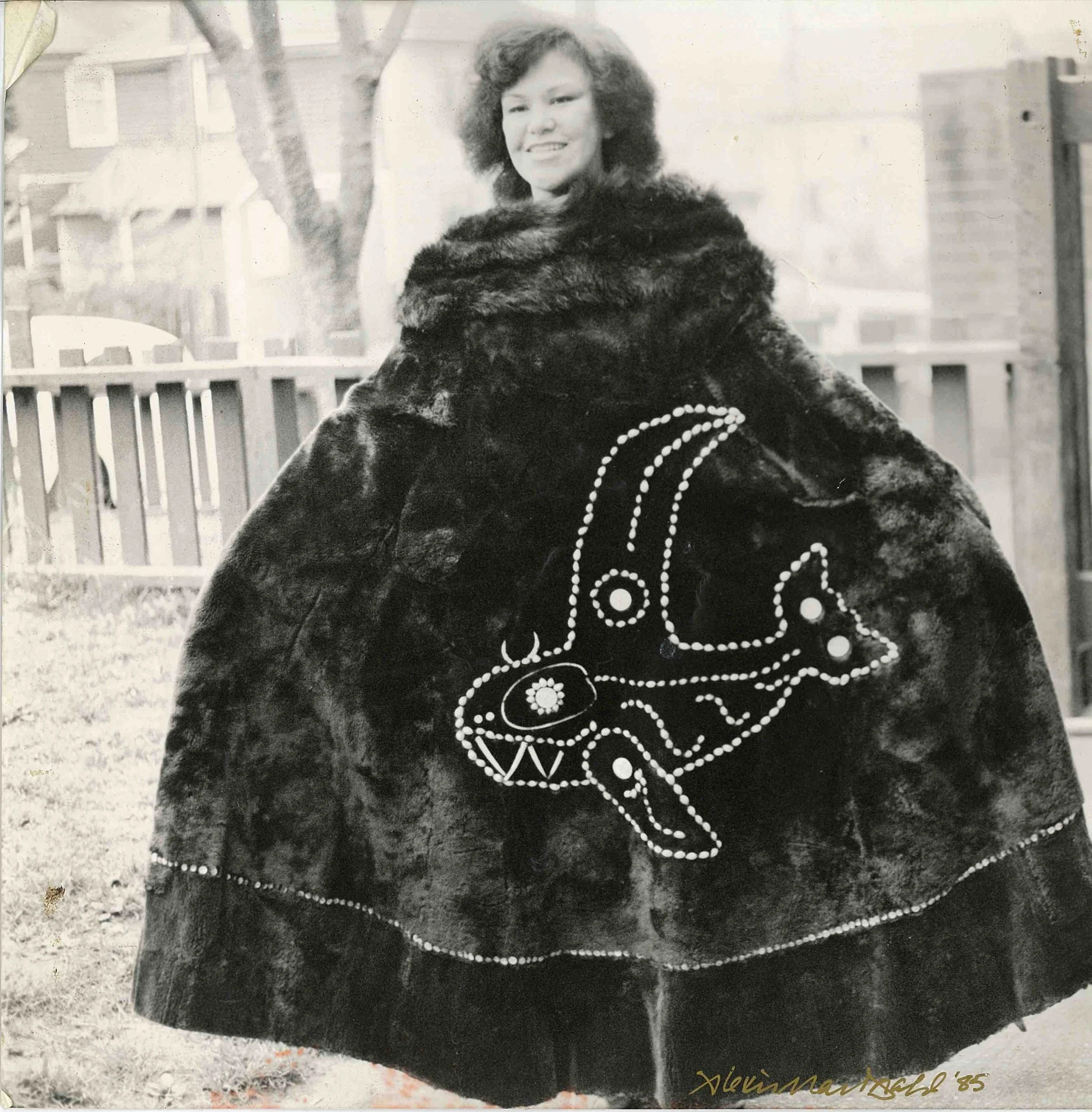
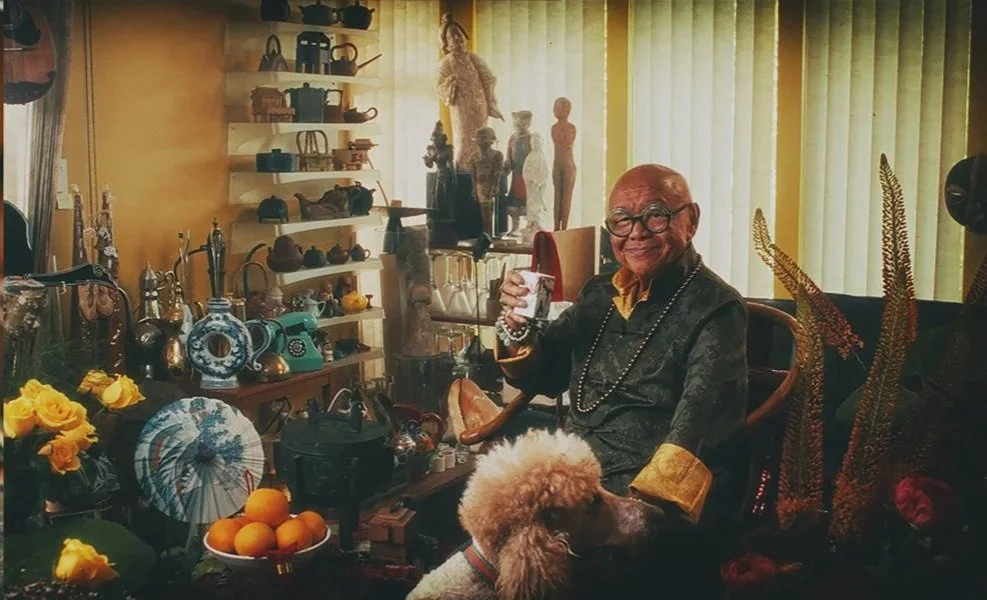
Jut-ke-Nay–Hazel Wilson models a fur cape, circa 1985. Photo courtesy Robert Kardosh
The Museum of Anthropology at UBC presents the world premiere of I Use My Haida Eyes: The History Robes of Jut-ke-Nay–Hazel Wilson, on display from May 14 to October 12.
Curated by ɬəkʷəlqinəm–Jordan Wilson (no relation to the artist), who is MOA’s curator of Pacific Northwest and contemporary Indigenous art, the exhibition features an epic collection of 50 “history robes” by Jut-ke-Nay–Hazel Wilson (1941–2016), a Haida artist who dedicated her life to Haida cultural and artistic work.
Over a brief period from 2005 to 2006, Wilson created this series of robes which document specific episodes of Haida history, ranging from Haida ancestral narratives to accounts of settler-colonial acts of oppression. The robes also speak to Wilson’s childhood memories of gathering and harvesting on the Haida Gwaii landscape. Drawing on the techniques of Northwest Coast “button blankets”, robes typically adorned with an individual’s family or clan crests, Wilson’s works index the ways in which Indigenous artists expand on traditional forms to address a changing world.
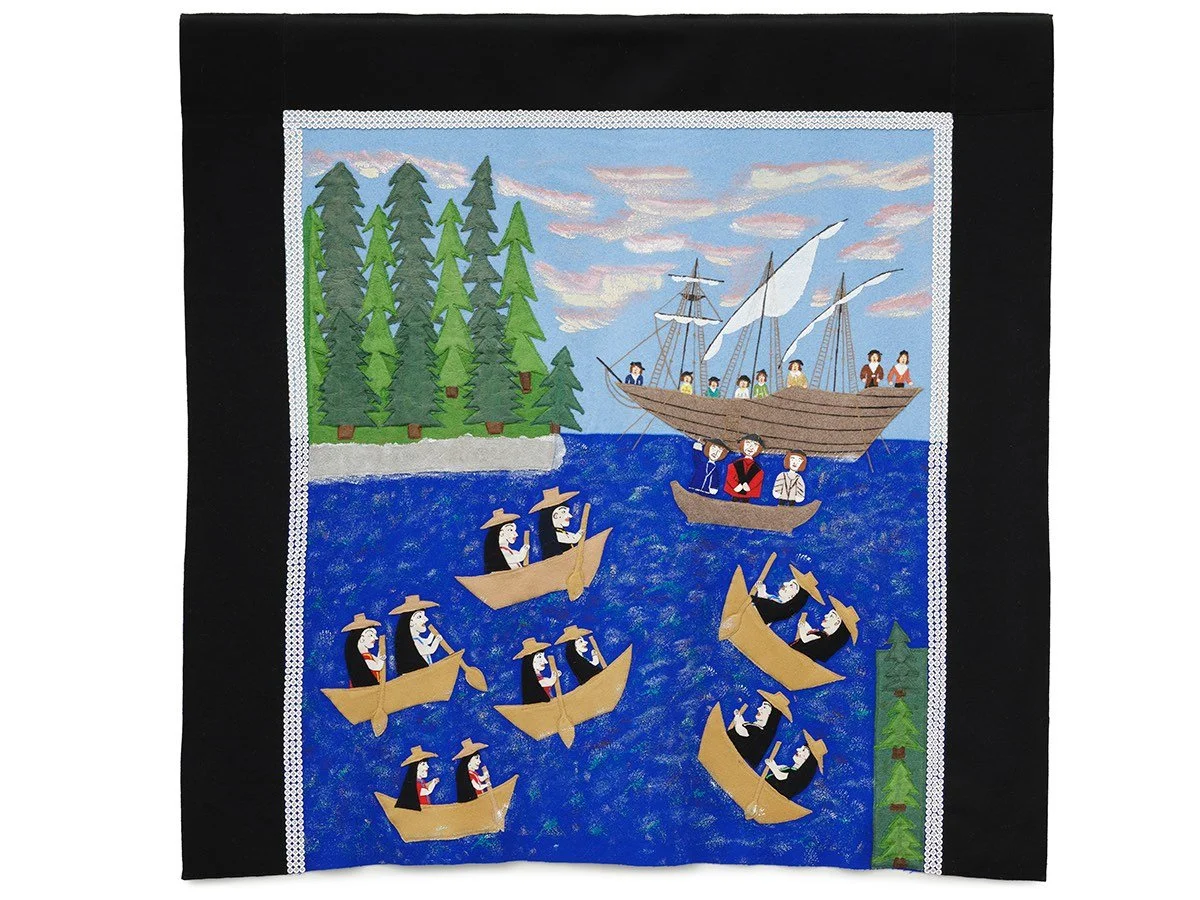
Jut-ke-Nay–Hazel Wilson’s The Mistake, 2006. Photo by Rachel Topham
While Wilson’s robes have been spotlighted in various ways—including a 2022 book Glory and Exile: Haida History Robes of Jut-ke-Nay Hazel Wilson, published by Figure 1 Press and the Haida Gwaii Museum—this is the first time that her entire collection of robes, but one, will be on display together. Each robe is accompanied by text handwritten by the artist that tells the story depicted.
Noteworthy history robes include Guidance, portraying the moment Hazel’s Elders inform her that she will bear the responsibility of carrying forward Haida culture by making button blankets; The Mistake, depicting the Haida’s first encounter with European explorers and their devastating diseases; and All the Nations Came Together (Putting Away the Magic), representing how Indigenous women put away their “magic” for safekeeping from settlers.
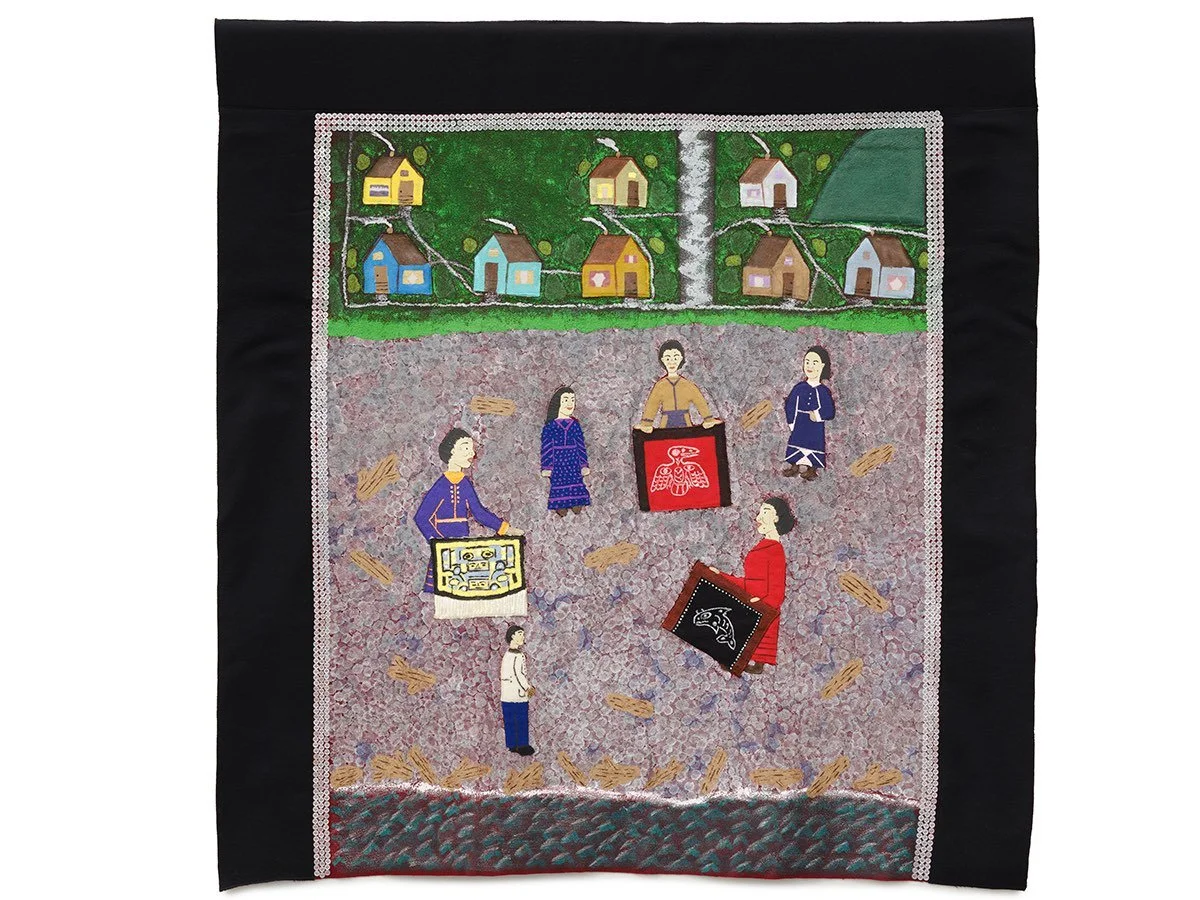
Jut-ke-Nay–Hazel Wilson’s Guidance, 2006. Photo by Rachel Topham
Two of Wilson’s daughters—Dana Simeon, a button-blanket maker, and Avis Simeon, a beadworker—were advisors on this exhibition, and helped inform its representation of their mother.
MOA will celebrate the opening night of I Use My Haida Eyes on May 14 from 6 pm to 9 pm, with free museum admission. To learn more about the exhibition, as well as ancillary events, visit moa.ubc.ca.
Post sponsored by Museum of Anthropology at UBC.
Related Articles
Featured