At The Polygon Gallery, Photolithics presents a decade of Tania Willard on an epic scale
The large, provocative works in the Secwépemc artist’s biggest solo exhibition to date mesh with uniquely luminous spaces
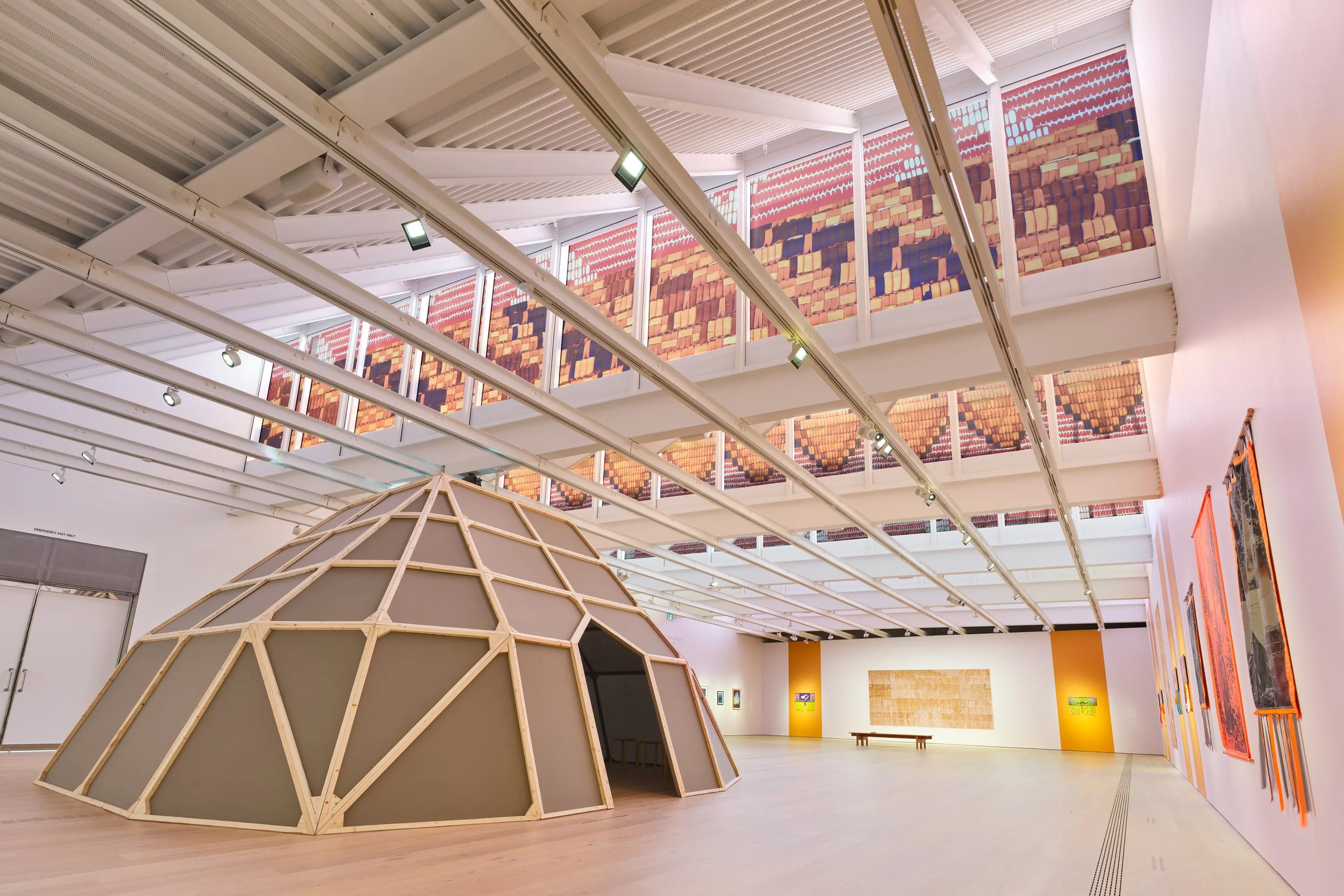
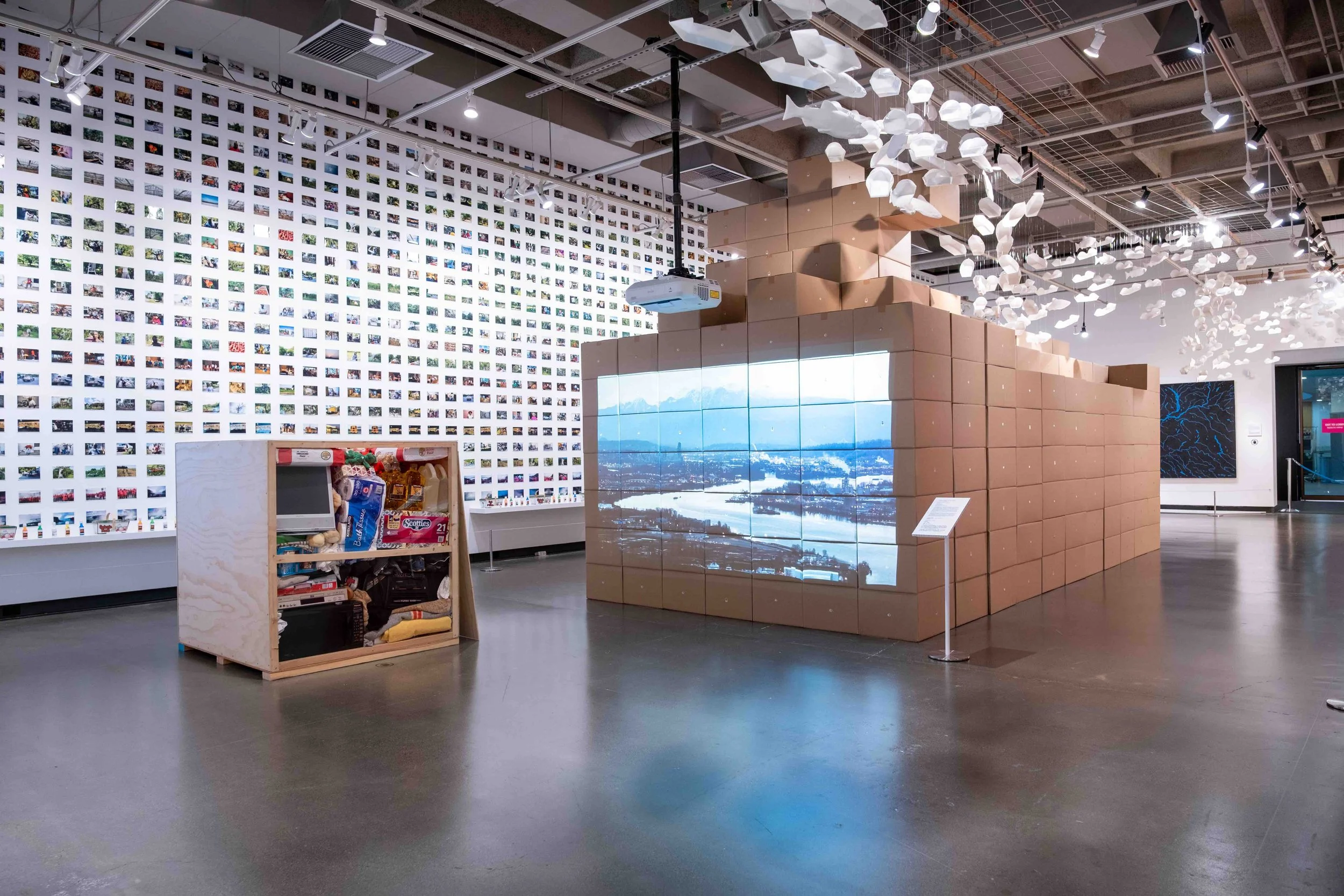
Installation view of the exhibition Photolithics by Tania Willard at The Polygon Gallery, 2026. Co-curated by Monika Szewczyk and Serena Steel. Photo by Dennis Ha
The Polygon Gallery presents Photolithics to May 24, as part of the Capture Photography Festival
AFTER RECEIVING THE prestigious Sobey Award last year, artist, curator, and scholar Tania Willard brings her transformative lens to The Polygon Gallery’s luminous, scenic space with Photolithics. As a 10-year survey and Willard’s biggest solo exhibition to date, the retrospective unfolds on an epic scale and highlights her approach to presenting work across lands and communities in ways that deepen local engagement.
Willard’s impact on The Polygon dates to 2016, when the gallery was known as Presentation House and she cocurated the exhibition NANITCH, contributing the catalogue essay “Witnessing the Persistence of Light”. In redefining photography as a medium that dates back millennia, not centuries, Willard’s practice brings an expansive lens to historical materials.
“The exhibition has been years in the making,” says The Polygon’s Audain Chief Curator, Monika Szewczyk. It won’t take visitors long to see why.
The scope of Willard’s work is felt not just in the volume and timespan of Photolithics, but in its physical scale. This begins at The Polygon’s main stairwell with the series Through and Through. Large images of her Secwépemc homelands have been rendered through ulexite crystals (colloquially known as the “TV stone” because of its fibre-optic qualities) and adorned with fringe tassels inspired by Indigenous ceremonial textiles. As the series lead visitors to the upper-level exhibition hall, the works’ interactions between light, land, and culture not only function as a decolonial photographic lens, but activate The Polygon’s space by drawing on its architectural grandeur. Serena Steel, the exhibition’s assistant curator, expands on this in her “Notes on Art, Environs, and Infrastructure”, from the exhibition catalogue.
“Treating the building as an active participant in the artwork, rather than a temporary holding place, she engages the gallery top to bottom: from the rooftop with her window work Safelight, down to the floor where she has worked with The Polygon’s installation team to construct a kekuli, the only structural intervention within the exhibition,” Steel writes.
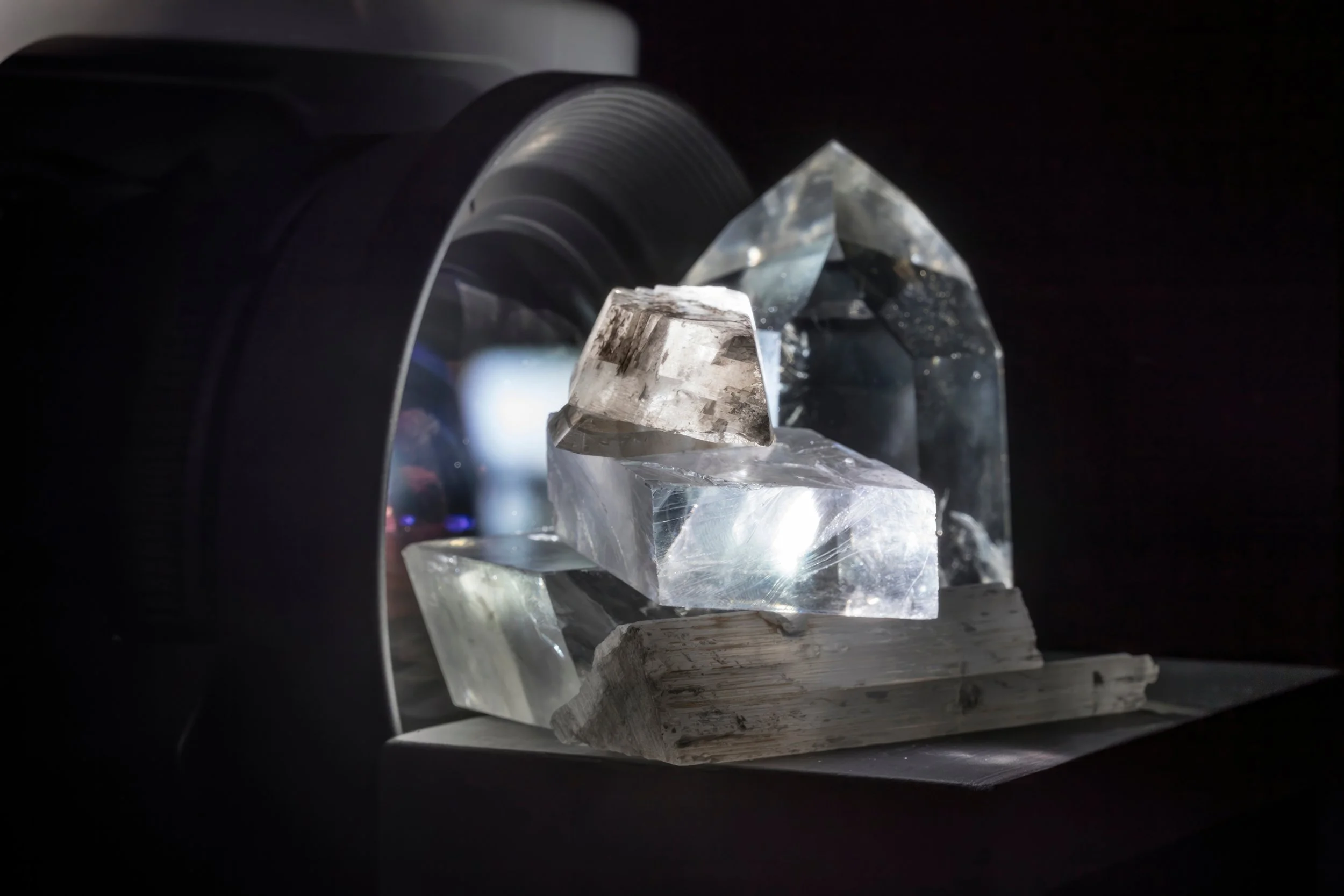
Tania Willard’s Only Available Light (detail), 2016, archival film (Harlan I. Smith, The Shuswap Indians of British Columbia, 1928), projector, quartz crystals, and photons. Original composition by Leela Gilday. Photo by Toni Hakfenscheid, courtesy The Blackwood, University of Toronto, Mississauga
The kekuli, a structure historically used by Indigenous communities in the Plateau region of Canada for social gatherings, is recreated inside the exhibition hall, encircled by Willard’s work in the adjacent walls, and the aforementioned window work above.
The structure houses Only Available Light, in which Harlan I. Smith’s 1928 archival film The Shuswap Indians of British Columbia is projected through a set of rotating quartz crystals and scattered into refracted imagery that moves across the kekuli’s surfaces like a constellation. Entrancing vocalizations and instrumentation by composer Leela Gilday permeate the structure, which can house up to eight visitors. Conceived in 2016 and presented in exhibitions such as 2018’s #callresponse without the kekuli, Only Available Light has been updated for Photolithics and shows a more fully realized vision of Willard’s work. Its impressive scale in the column-less exhibition hall works well as a structural anchor for the exhibition.
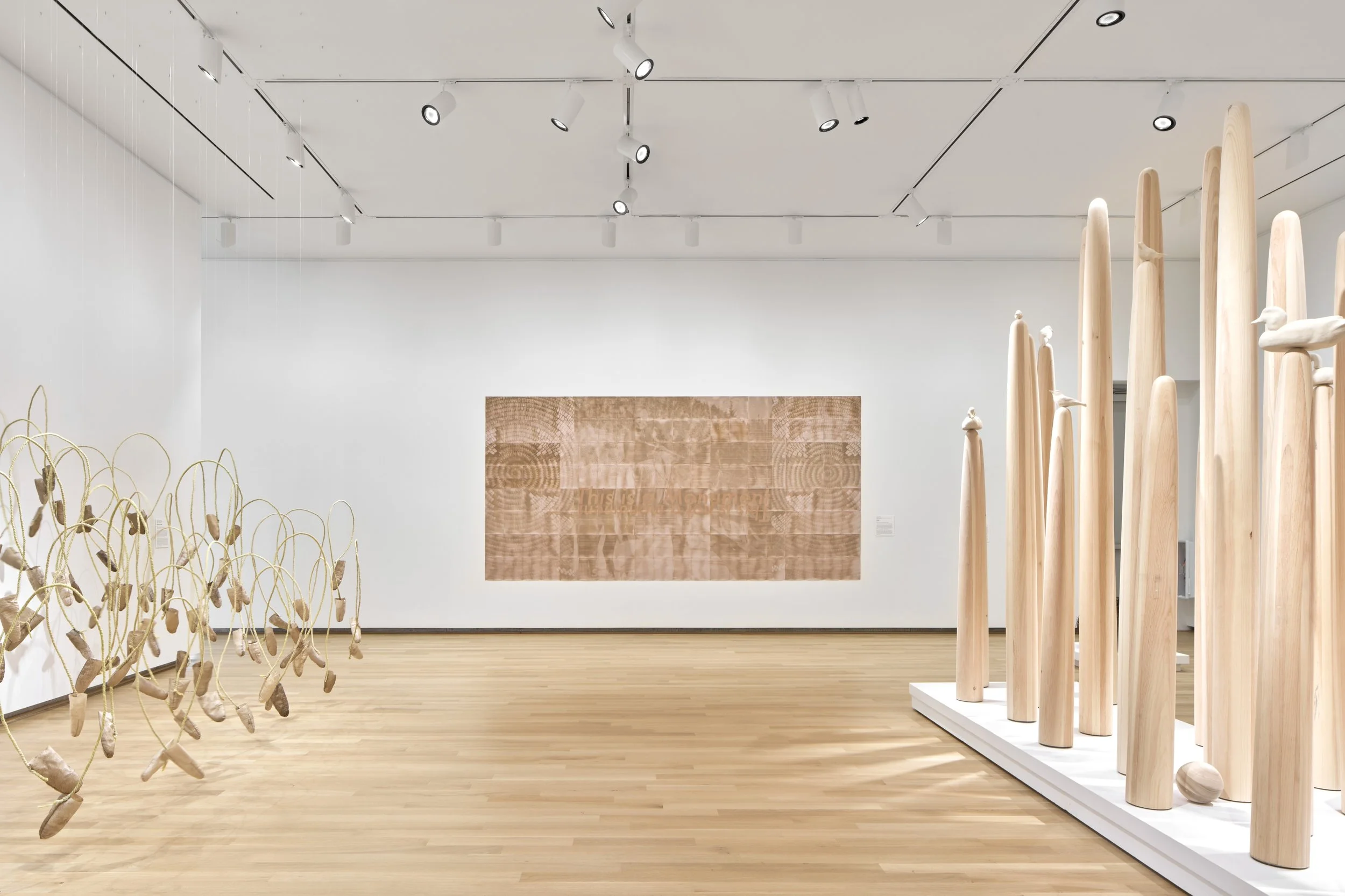
Tania Willard’s Vestige (installation view), 2022, laser etching on garnet sandpape), copper nails, Forge Project Collection, Traditional Lands of the Moh-He-Con-Nuck. Photo by Steve Paneccasio
“Not much is entirely finished for me,” Willard says, during a tour of the show at The Polygon. “What’s really striking for me about this film—which was made into a series—is that they were filmed within our territories, but they were screened to auditoriums full of non-native children at museums in Ottawa. At the same time, those years are the years of mandatory residential schools. This work is a caring, sensitive way to disrupt some of that history by questioning the ways we’re looking at an image like this.”
As another example of the Willard’s all-encompassing vision, Safelight is Willard’s gallery-wide installation that capitalizes on The Polygon’s glorious skylight windows. Inspired by years of research and working with Niskonlith basketry artist Delores Purdaby, earthy palettes of cedar root basketry patterns are placed against the windows to cast a warm glow across the space, one that can move and shift with natural lighting. As Steel notes, the imagery of basketry in the exhibition functions as a container rather than an object, creating an environment that seeks to balance the emotional and challenging aspects of archival work, even if only marginally.
“In a sense, the gallery itself becomes a basket,” Steel explains in the catalogue essay. “The room remains open. Without the addition of any walls, it gives itself over to the act of holding, both the artwork and the people viewing it.”
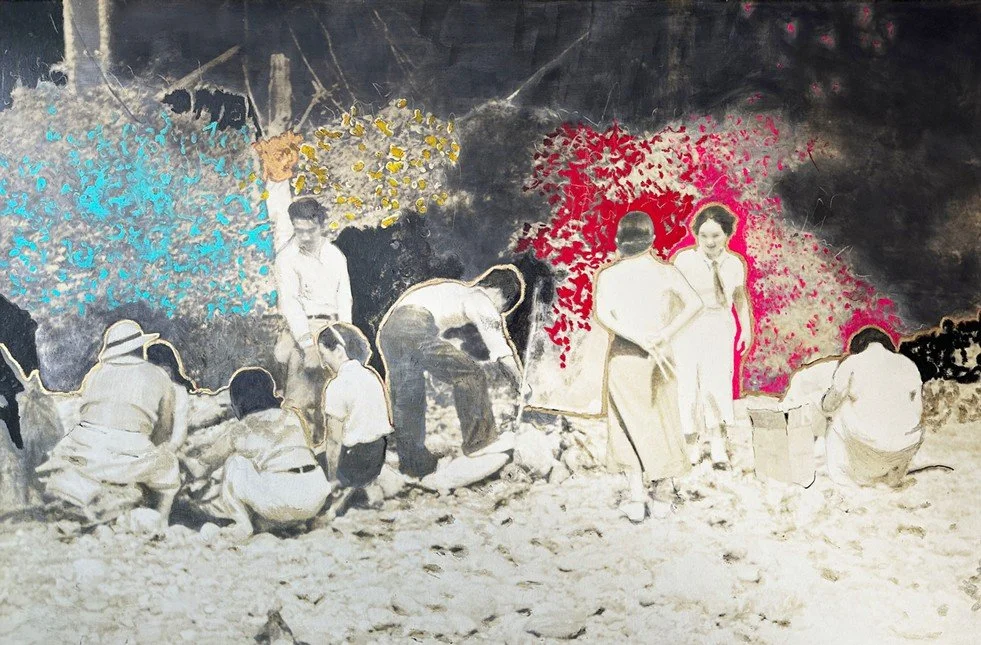
Willard’s sunlight and land-based process can be better observed across different canvas materials, particularly through the large works Vestige, Votive and Visiting. Here, postcards and historical records from museums and archives are enlarged onto sheets of tiled garnet and corundum sandpaper (160 sheets of sandpaper were used for Vestige alone). By magnifying these images through an intentionally painstaking process, there is a deliberate invitation to slow down and acknowledge forgotten and misappropriated history, inspired by Willard’s mixed Secwépemc and settler-Scottish ancestry, and the unceded territories of the Salish Nations here in B.C. When experienced at full scale, the details of cultural erasure can no longer be commodified, but become as harsh and grating as the materials themselves.
While Willard’s large installations will surely draw attention, there is plenty more to discover across the exhibition hall. In the adjacent Denna Homes Gallery, Willard’s sculptural works are introduced against a south-facing, basketry-inspired window work, spotlighting the layered nature of her work in a more intimate space. In mixing traditional fine art presentations and site-specific installations, Photolithics invites us to move beyond the conventional gallery experience by engaging with the land and history around us.
Taken together, Willard’s work breathes, moves, and reflects stories that are ongoing and unfolding across territories. Photolithics delivers on the promise of a decade-long view of Willard’s evolving practice, and is a timely reminder of the complex power of images and photography. 
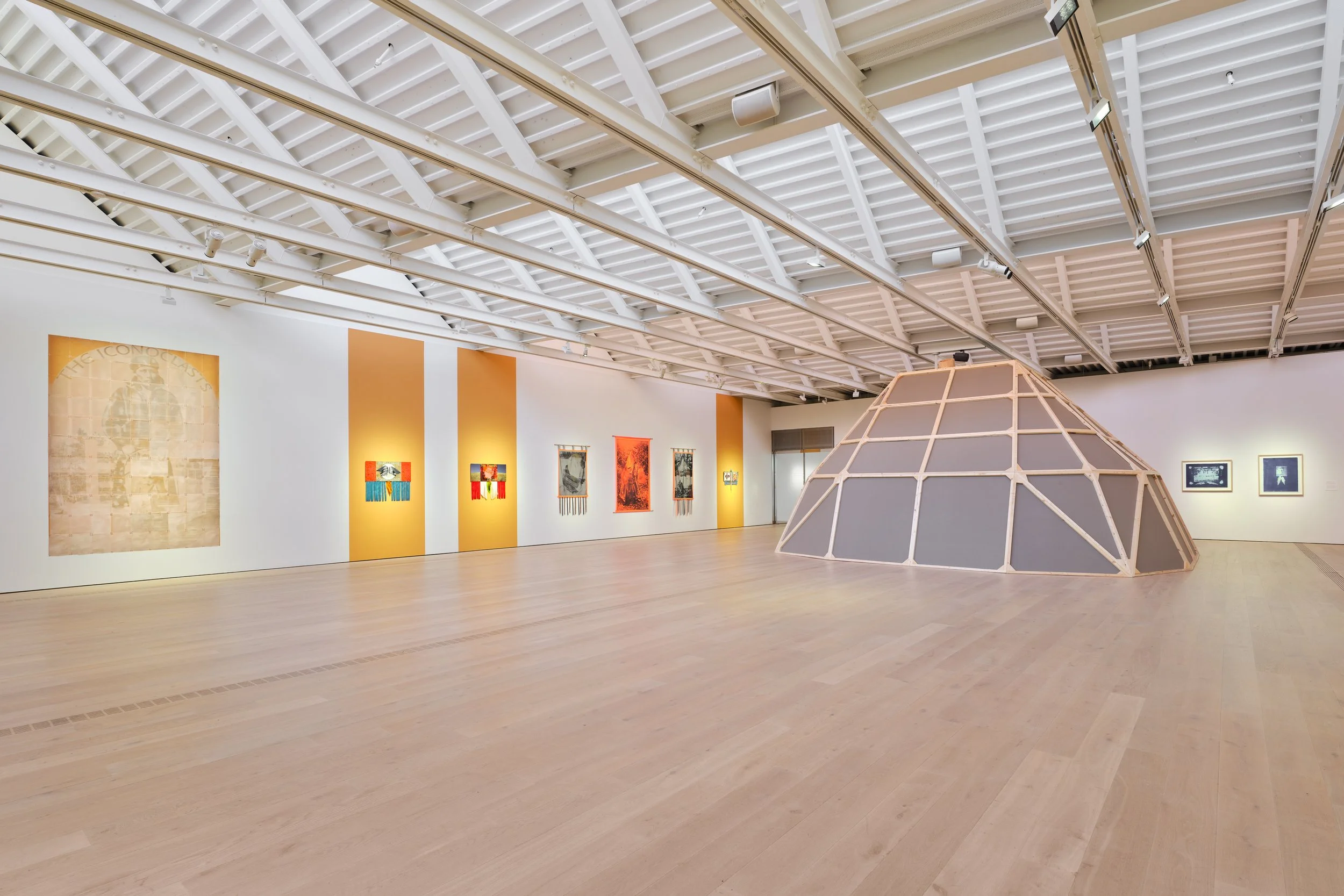
Installation view of the exhibition Photolithics by Tania Willard at The Polygon Gallery, 2026. Co-curated by Monika Szewczyk and Serena Steel. Photo by Dennis Ha

Related Articles