Museum of Anthropology at UBC’s new exhibition finds the cosmos in the Andes
With intricate symbols and objects, Tupananchiskama: Ancient Andean Cosmovision moves through millennia-old realms of spirit, earth, and fertility
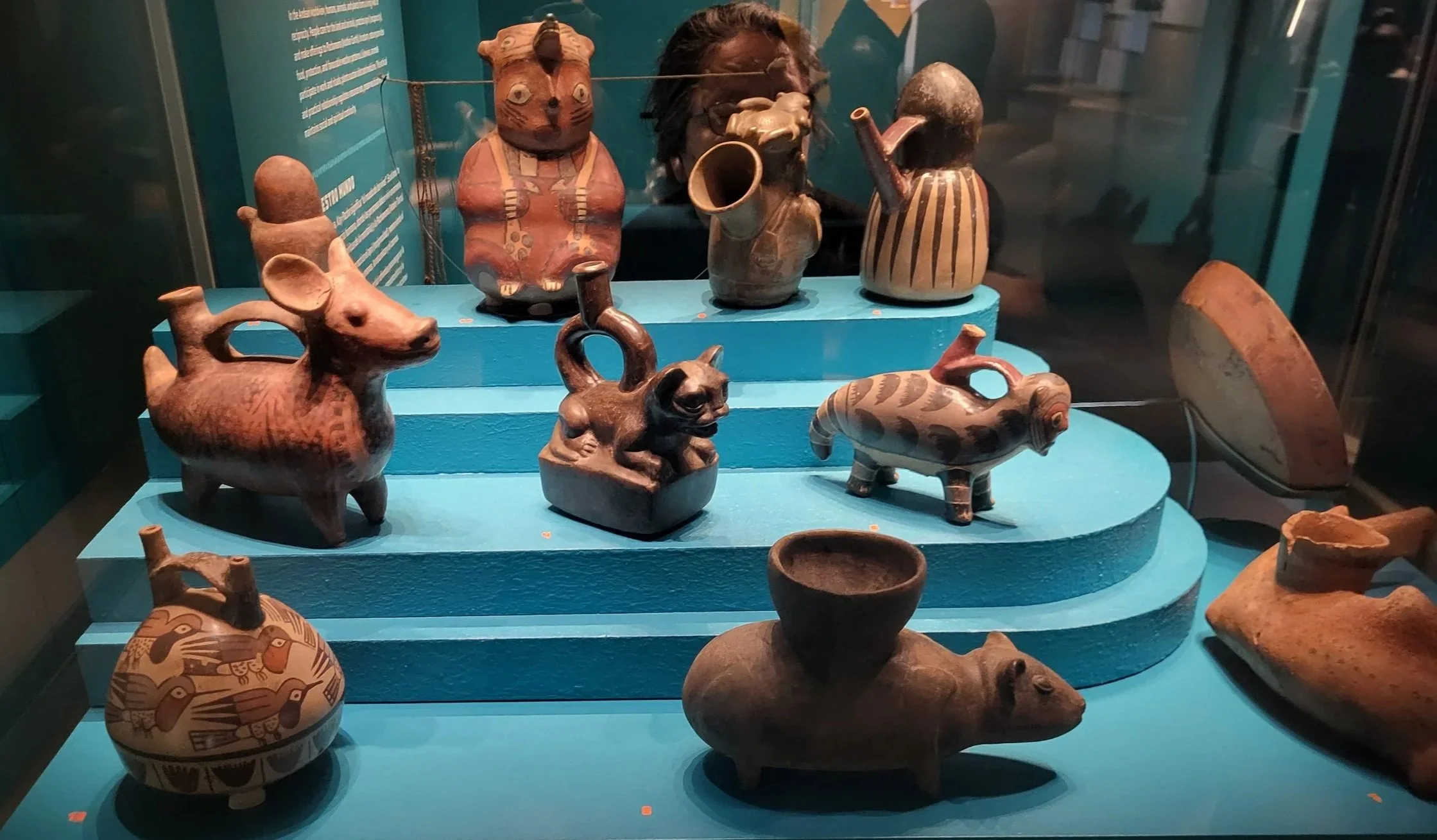
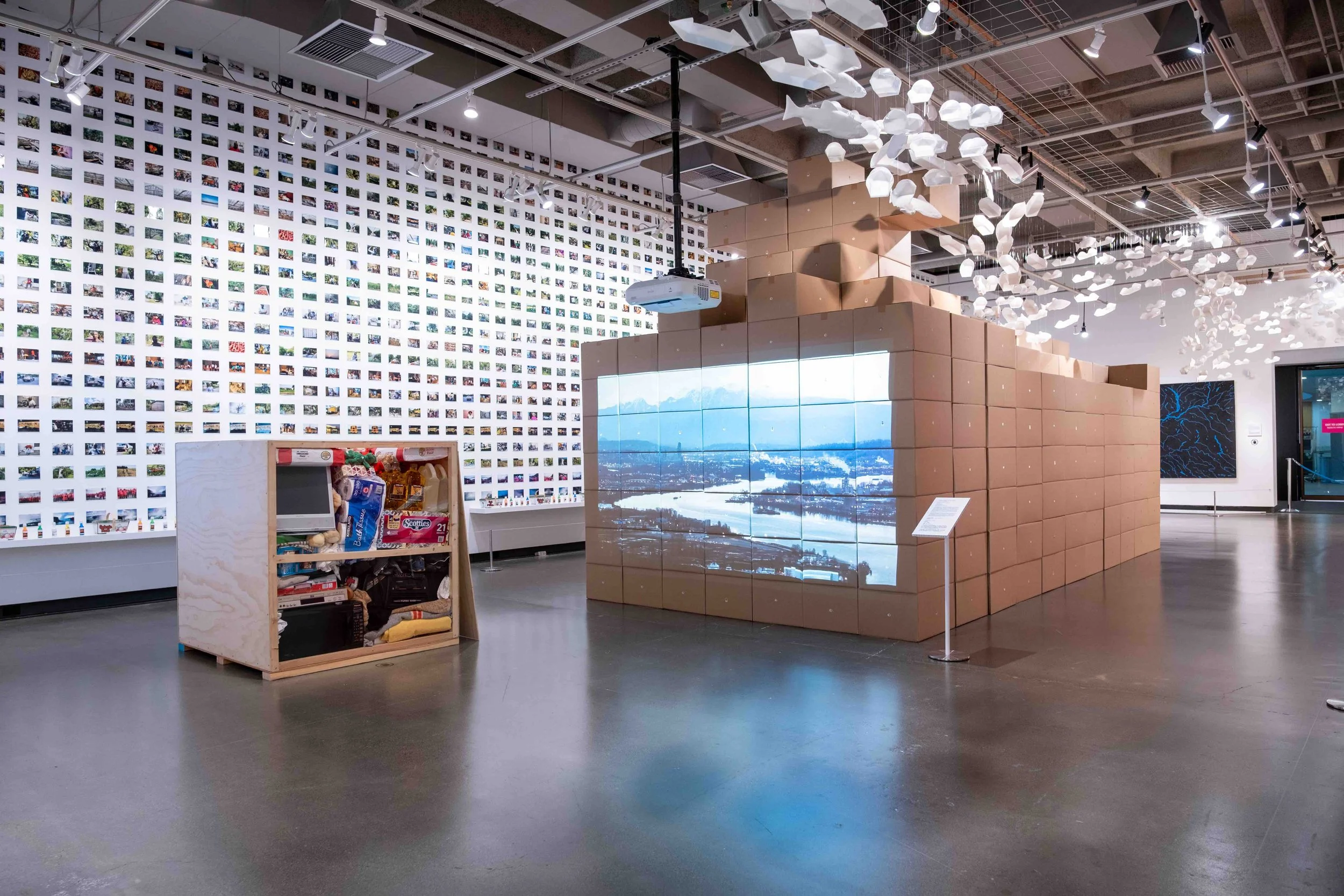
Installation view, Tupananchiskama: Ancient Andean Cosmovision. Photo by Julian Coyle Forst
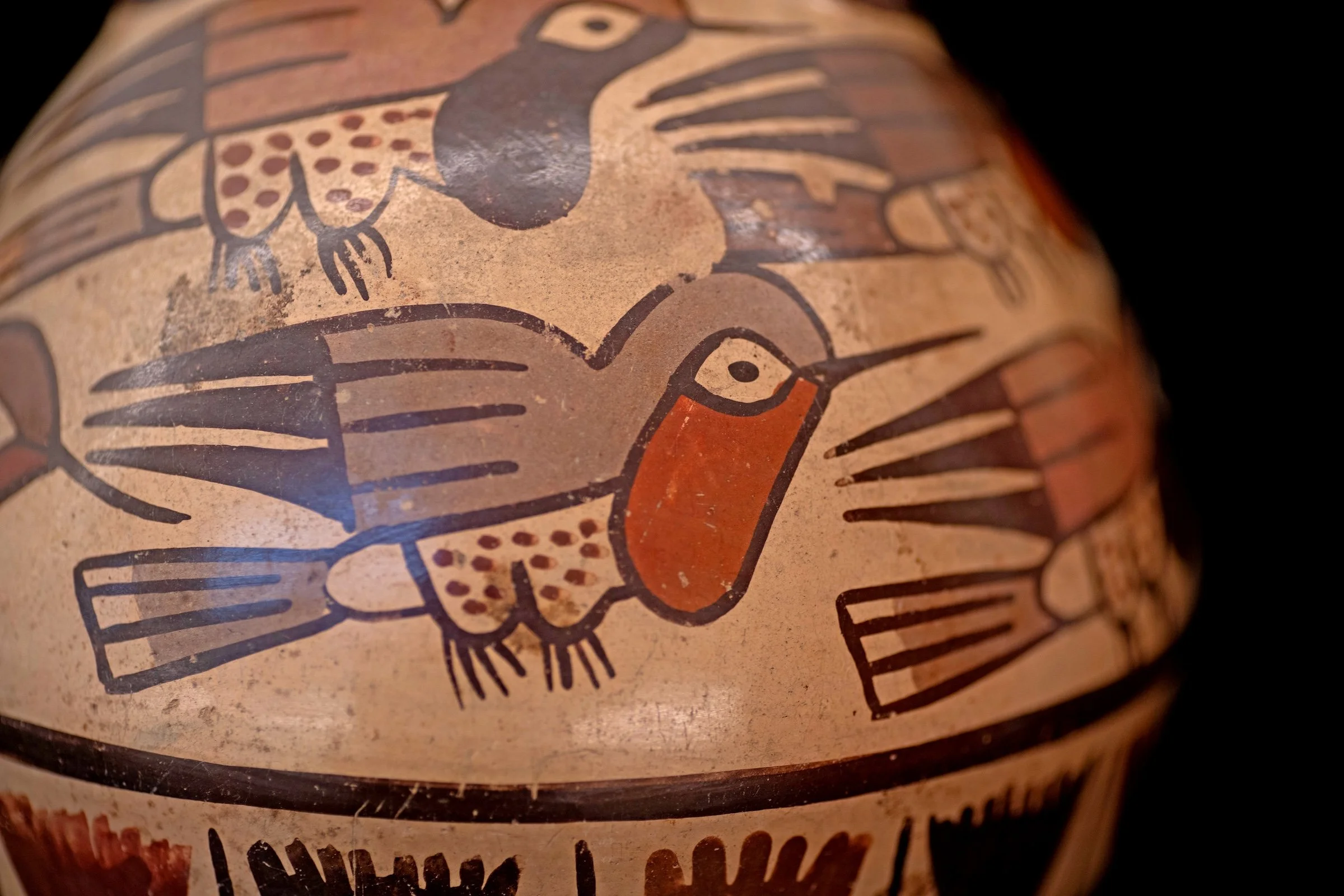
Hummingbird bottle, Peru: Ica, Early Nasca 100 BCE–400 CE, MOA Collection. Photo by Joshua Doherty
The Museum of Anthropology at UBC presents Tupananchiskama: Ancient Andean Cosmovision to January 3, 2027
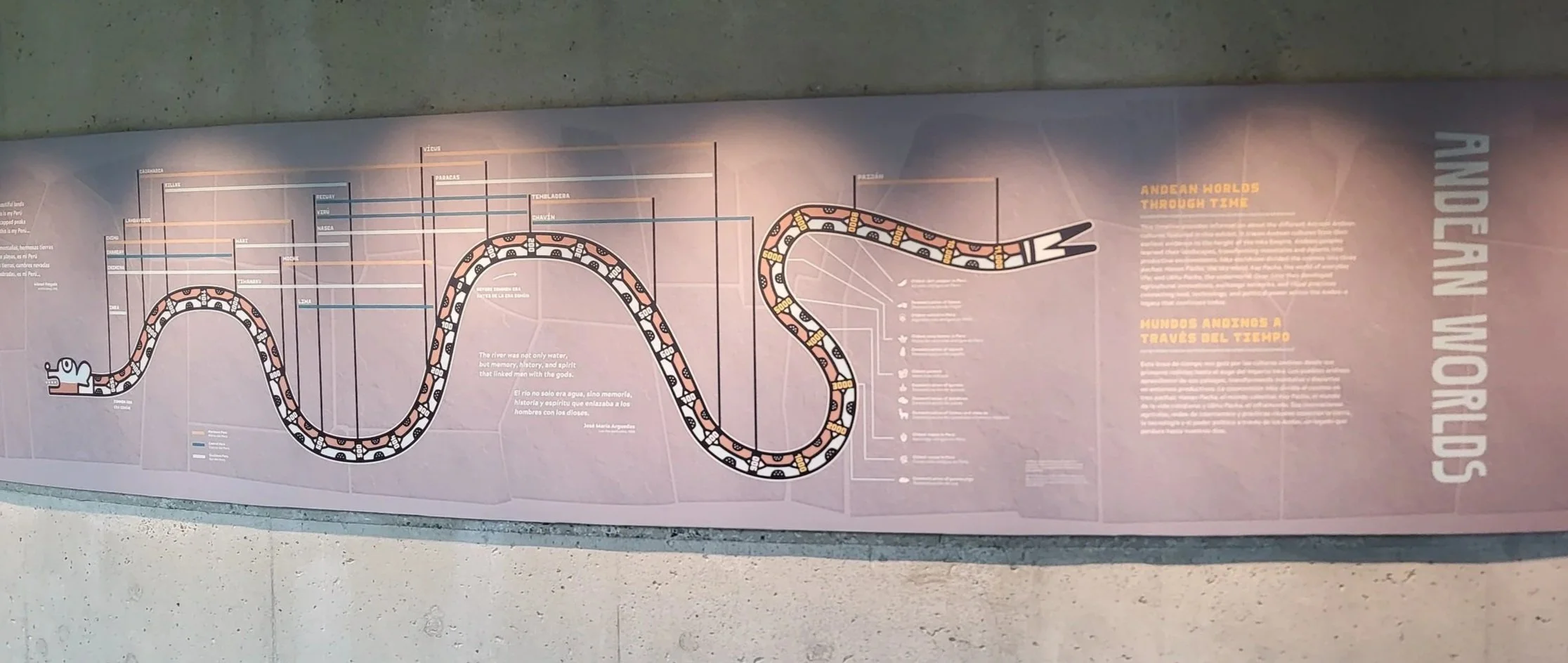
IN THE COSMOLOGY of the ancient Andes, the serpent is a symbol of time and continuity, of rivers and their eternal cycles.
In the Museum of Anthropology at UBC’s newest exhibition, Tupananchiskama: Ancient Andean Cosmovision, the serpent is a timeline, adorned with the names of over a dozen ancient civilizations and the years in which they rose, reigned, and fell. The new show focuses on the religions that developed between the peaks and plateaus of South America’s largest mountain range.
As Peruvian archaeologist and guest curator Luis Manuel González explained on a recent exhibition tour, he chose to represent the timeline of Andean civilization with a snake as a gesture to the animal’s deep philosophical impact in Andean culture. That philosophy is the focal centre of Tupananchiskama, a title that means “until life brings us together again” in the Indigenous language Quechua. The show explores the stories and images that ancient Andeans used to make sense of the world around them.
The archival collection that González drew from to create Tupananchiskama was donated to the MOA by the daughter of late art historian Alan R. Sawyer. Most of the pieces on display are ceramic bottles decorated with figures of animals, plants, and people. These aren’t simple dishware—ancient Andean pottery is a medium in itself, a system of storytelling where clay is the page and the image replaces the word. González said an Andean pot “can be [an] atlas, the Encyclopedia” of the ancient world.
Take, for example, the first artifact you’ll see on your way into the gallery. It’s a three-peaked stirrup spout vessel—a common form in Andean pottery where three tapered points protrude around a central spout with two handles. Those points represent the mountains, and they’re engraved with images of plants and animals whose placement on the vessel corresponds to the altitudes at which they live. Low-lying mesquite and soursop trees decorate the base, while pumas and mountain lions prowl arid peaks among the cacti.
This is the language of Andean pottery, and the stirrup spout vessel is just a primer. It introduces guests to a cyclical, segmented world where everything comes in layers. Beside the timeline on the wall, a display explains the specialized agricultural techniques that Andean farmers developed for each of the region’s distinct environments: tiered terraces for the mountains, canals and roads for the valleys and rainforests.
After a set of displays showing differences between the distinct but interconnected pottery practices of pre-Inca civilizations—the Nazca, the Recuay, the Moche—Tupananchiskama features a set of ancient wind instruments fashioned from shells and ceramic. Arranged against the wall in a glass display adorned with hanging blue drapes, each instrument is intermittently lit by a small spotlight, and a speaker system plays a recording of González blowing through it.
One conch horn stands out from the rest—it’s made of clay, not shell. González doesn’t know why an ancient Andean musician would spend hours imitating the shape of a shell they likely could have found on the beach, but he has a theory. Because of their natural orientation, most Andean conches must be played with the right hand. This ceramic conch, though, is inverted, perhaps in an early example of a lefty instrument.
González has some experience playing ancient flutes like these. During an excavation of La Real, a mortuary site in southern Peru dating back to the Middle Horizon period (600–1000 CE), González and his team found several ocarinas and whistles made from animal bones. To understand the experience of using them, González and another archeologist recorded themselves playing the instruments and documented their findings in a paper published in 2022. When he asked to make similar recordings for Tupananchiskama, the MOA staff were happy to oblige, after some thorough cleaning of the mouthpieces.
González envisioned this section, with its woodwind instruments and flowing drapes, as a transitory stage with the theme of wind, which would carry guests from the terrestrial world—represented by the three-peaked vessel and the agriculture display—into the world of spirits and stars. The rest of Tupananchiskama is dedicated to Andean conceptions of space, time, and the heavens. In Inca mythology, these are connected by the three “pachas,” meaning “place” in Quechua. González said that translation is too literal.
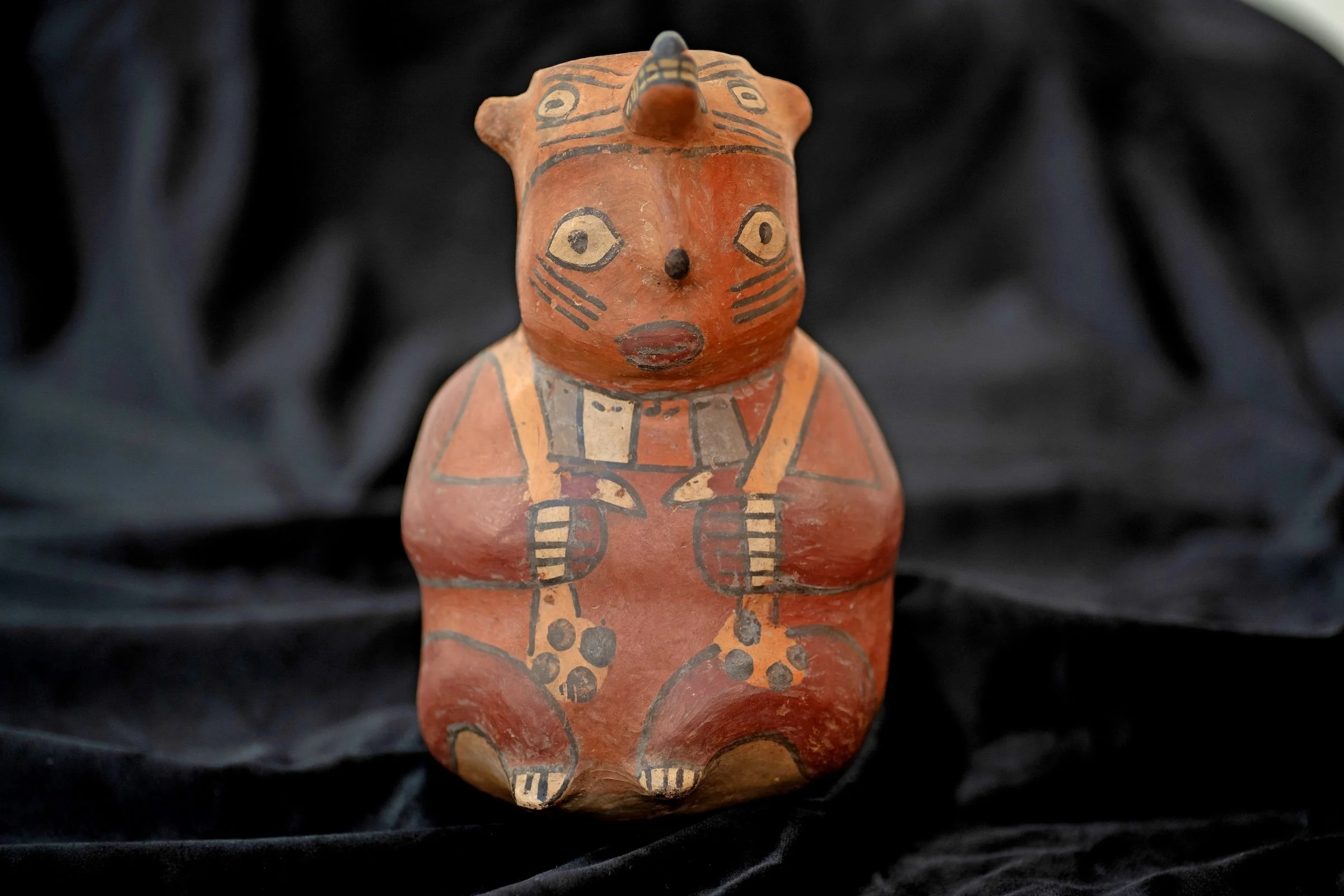
Fox Vessel. Peru: Ica, Early Nasca 100 BCE–400 CE, MOA Collection. Photo by Joshua Doherty
He said the Incas divide existence into three worlds. The Hanan Pacha is the upper world, the realm of spirits and gods. The Kay Pacha is the middle world of living humans, plants, and animals. The Ukhu Pacha is the lower world, the land of fertility and the ancestors, of death and rebirth. That archetypal, stepped pattern you probably associate with the Incas is a geometric representation of these pachas. Three display cases are arrayed around a plaque explaining this triple cosmology, each dedicated to one of the three pachas.
The Kay Pacha display, the largest of the three, holds pots depicting animals and humans wearing animal skins—a common theme in ancient Andean art. It also contains a quipu, an Andean record-keeping device constructed by knotting pieces of plant fibre or animal hair in sequential patterns to form numbers.
The Hanan Pacha display contains one of the largest pieces in the exhibition, a ceramic bowl decorated with human and cat heads wearing large headdresses. These are likely the Apus, the mountain spirits that dwell in the upper world. The case dedicated to the Ukhu Pacha, the world of fertility, displays pottery in the shape of seeds and roots alongside a large bottle painted with the image of a woman holding pepper sprouts. González said this is likely a representation of the Pachamama, the Mother Earth of the Andes.
The final section of Tupananchiskama is devoted to Andean astronomy. The Incas in particular had a unique way of looking at the night sky. While most cultures found images by connecting the dots between stars, the Incas also saw animals in the darkest parts of the sky. These starless blotches represented animals like the llama, the serpent, and the toad. Tupananchiskama displays an artist’s representation of the Andean sky on a screen above the exit, with a narrator explaining various myths in English and Spanish as the animal shapes are highlighted.
González said he chose the artifacts in this section—bottles in the shape of birds, knitted figures of frogs and llamas—because they correspond with the animals the Andeans saw in the sky. This section also explains the significance of the Chakana, the Andean cross, which some anthropologists believe represents the Southern Cross constellation.
It’s true that the MOA’s exhibition, like most representations of the pre-Columbian Andes, focuses more on the Incas than on the societies that surrounded and predated them. González said this is one of the major challenges facing South American archaeologists. Because the Incas were the dominant nation when Columbus arrived in the Americas, written records of them are far more robust than those concerning any other civilization. “We have nothing before,” González said. Despite this, he believes that we need to talk about the people who came before the Incas. Tupananchiskama is his attempt to start those conversations.
The exhibition ends where it begins, with the serpent slithering across the night sky on the screen above. A plaque by the exit reiterates that the Andeans saw time as cyclical and predetermined. A farewell, it says, is not an ending. It’s a chance to meet again. 
Tupananchiskama: Ancient Andean Cosmovision, MOA. Photo by Julian Coyle Forst

Related Articles