Theatre review: Canadian Psycho attacks with satirical questions about white-male hold on serial killing
At the Firehall Arts Centre, Marlene Ginader’s comedic solo show sinks its teeth into media myths fuelled by true crime
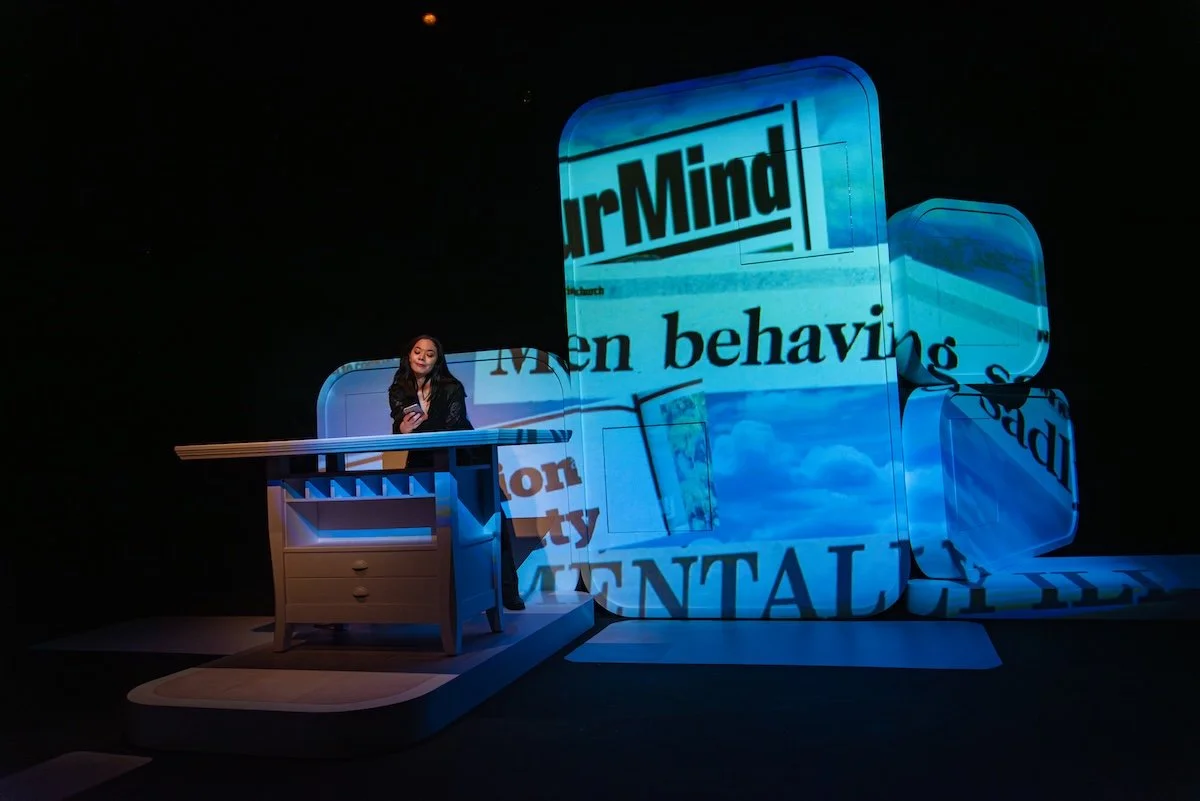
Canadian Psycho. Photo by Chelsey Stuyt
The Firehall Arts Centre presents the ITSAZOO and vAct production of Canadian Psycho at the Firehall Theatre to April 12
ONE OF THE RECURRING bits in Canadian Psycho parodies Vogue’s YouTube series “73 Questions”. The real thing, for those unfamiliar, is a staged-to-feel-candid interview show where celebrities, typically filmed dawdling around their perfectly styled homes, answer personal but inane questions. Canadian Psycho imagines a world where famous serial killers get the same star treatment.
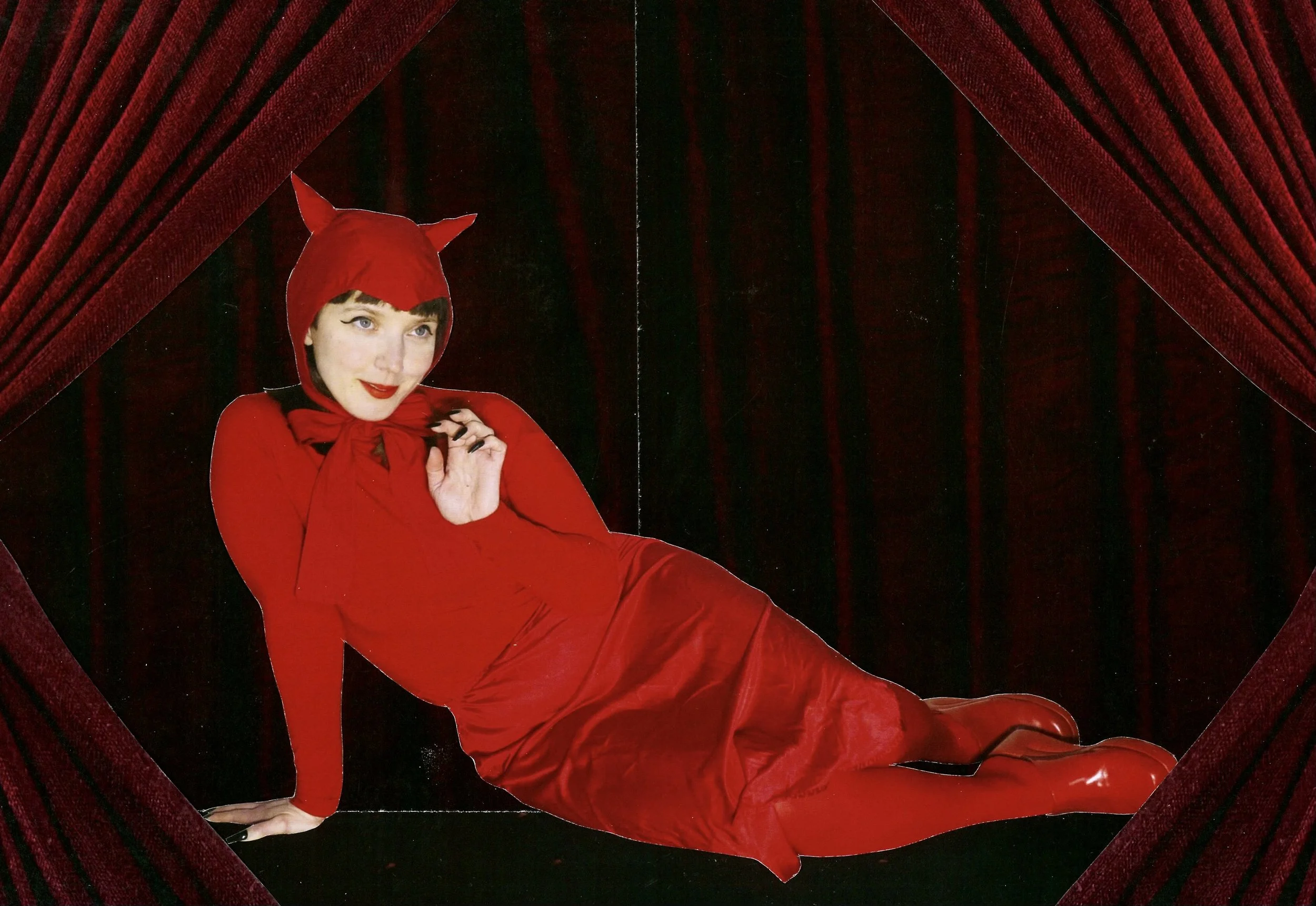
Marlene Ginader, who writes and performs the solo show, throws on oversized aviators and a mumbling voice as Jeffrey Dahmer, or breaks into dance as a scraggly, non-verbal Charles Manson. These caricatured, anti-social personifications are one part of her satirical arsenal. The sharper target is the media machinery—maybe not quite Vogue, but definitely Netflix documentaries, true crime podcasts, salacious Ryan Murphy shows, et cetera—that turns these figures into something mythic and endlessly consumable.
The show’s protagonist, who’s also named Marlene, is an Asian Canadian actor who finds something uniquely off about all of this: Where’s the representation? Tired of playing one-dimensional, basically invisible supporting characters, she wants something that she can sink her teeth into. The problem is that the meaty roles she covets belong, almost exclusively, to white men. She rattles a question in her head: Can a model minority be a serial killer?
Marlene tests out her murderous aptitude as the show pushes the limits of the conceit. She tries going Ted Bundy–style, arm in a sling, asking for help, a tactic the notorious killer famously used to lure his victims. It backfires immediately. She ends up being coaxed to help a male customer after being mistaken for a grocery store employee. “Why did I think I could be superficially charming? I can’t even be noticed.” She goes into a musical number, lamenting this fact. It’s over-the-top, but there’s something harsher underneath it about race and gender that gives the loaded comedy some actual bite.
The pursuit of infamy propels the protagonist forward, but the show itself starts to lose momentum as it breaks into comedic bits running parallel to the main plot. There are the interview parodies, a recurring Nancy Grace–style character whose soapbox turns into a quasi-feminist rallying cry about the lack of women committing murders, and Marlene’s ongoing use of AI as a therapist, with predictably disastrous results. Ginader’s satirical focus turns to that too, making a point about AI’s own psychopathic tendencies.
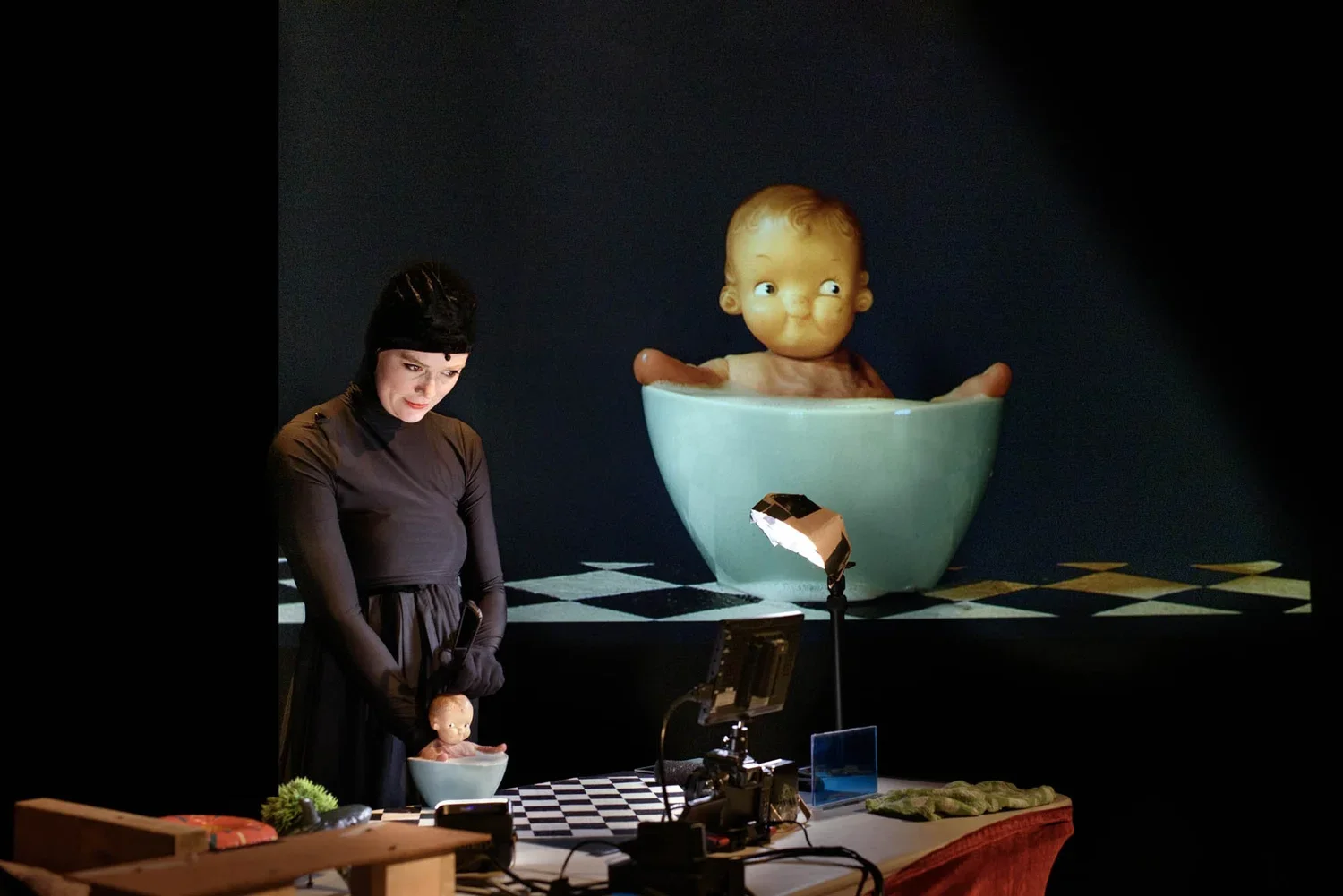
The format gives the writer-performer room to take risks and insert some occasional meta-commentary on representation—for example, Ginader playing the roles her protagonist Marlene is denied. Ginader’s clearly a versatile performer, shifting between kooky characters and different tones. Under Jenna Rodgers’s direction and a well-realized multimedia approach to the staging from the design team, the production keeps pace as it moves through the rotating cast of personas and scenarios.
But there is a trade-off. As the parody starts covering a lot of ground and the jokes come fast, the 70-minute show at times stops feeling like it’s going anywhere and is instead drifting through Marlene’s media-addled reality, where everything’s about being seen.
The show resolves its central conceit in a way that turns out stranger than you might expect. Canadian Psycho doesn’t always hold together, but it keeps valiantly and unconventionally pushing at that same strange version of that role. 

Canadian Psycho. Photo by Chelsey Stuyt

Related Articles