Lukas Malkowski’s Microphone Controller is a rock ’n’ roll show with a difference
The choreographer and performer’s character-driven Dancing on the Edge piece is informed by his perspective as the child of a Deaf parent

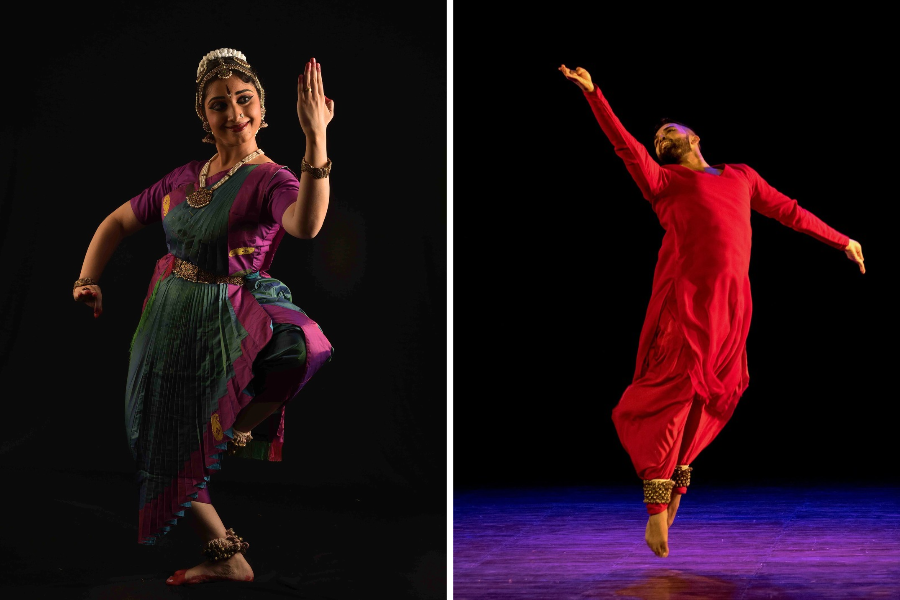
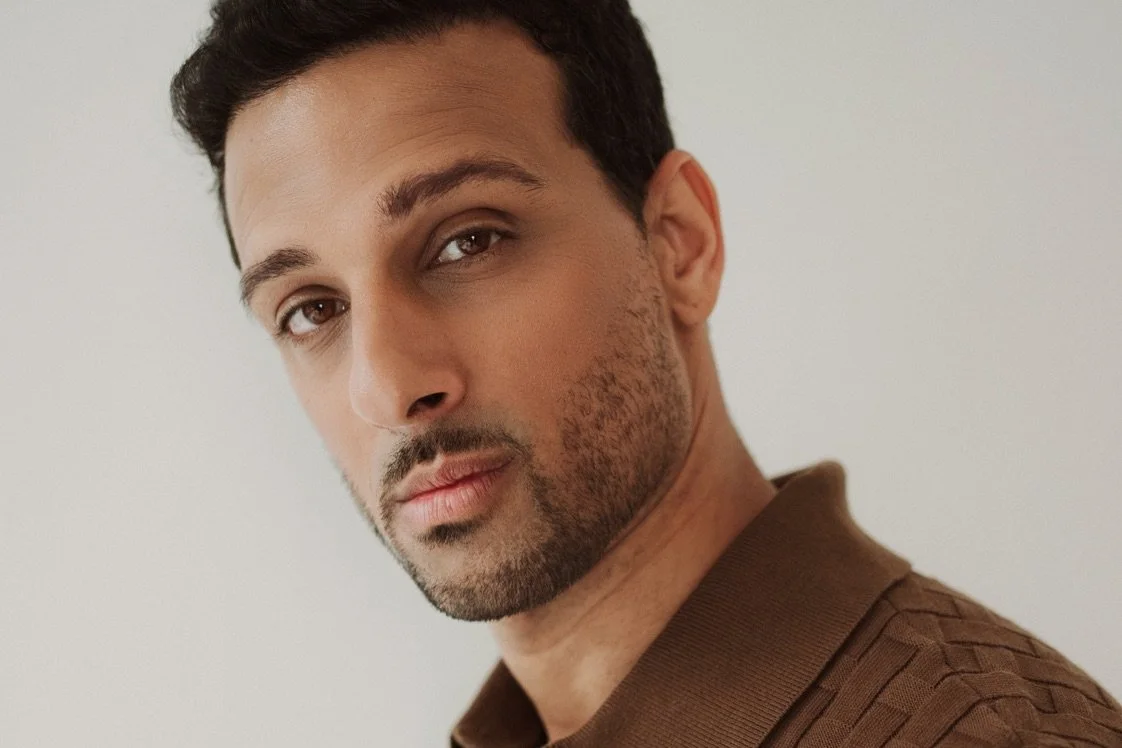
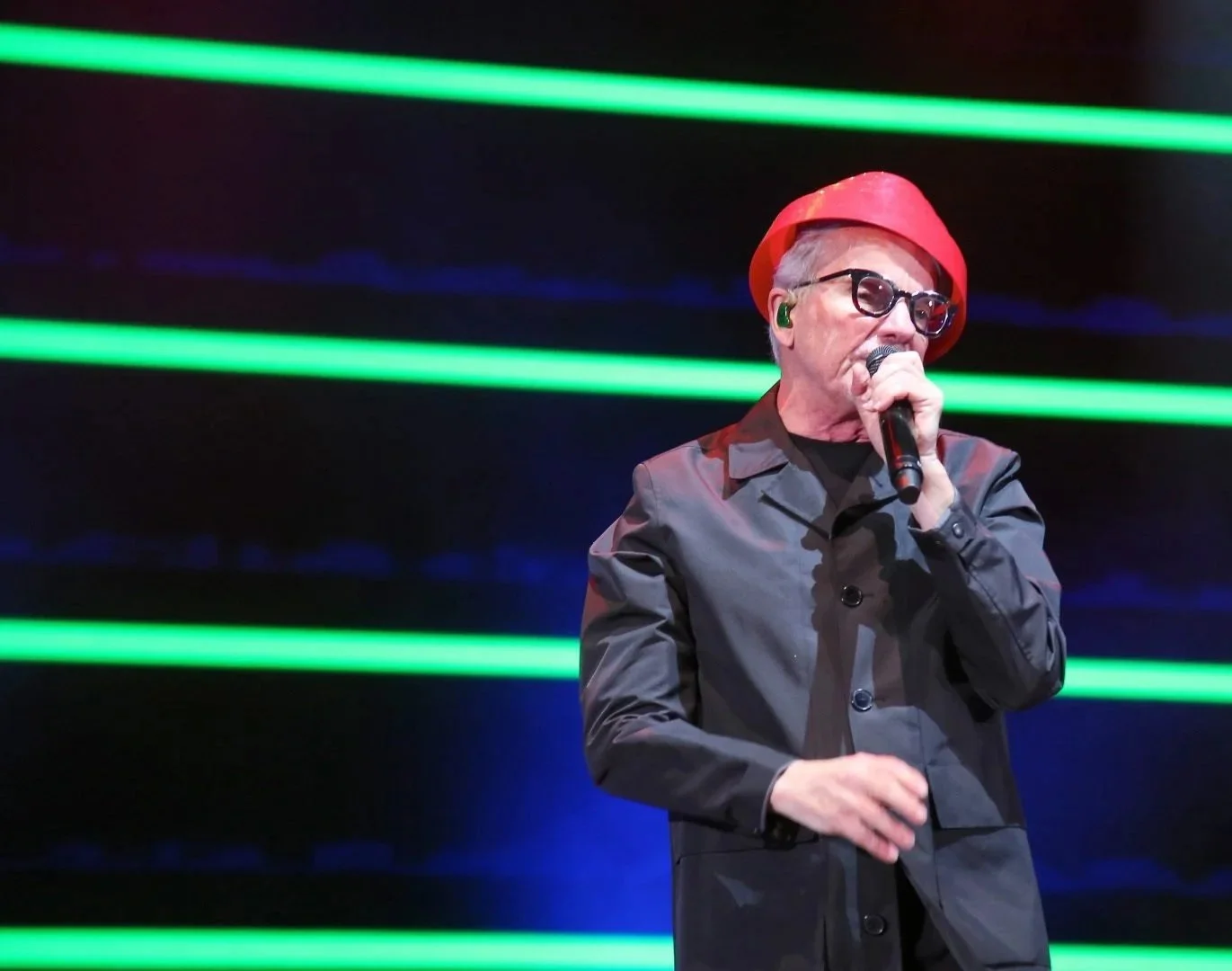
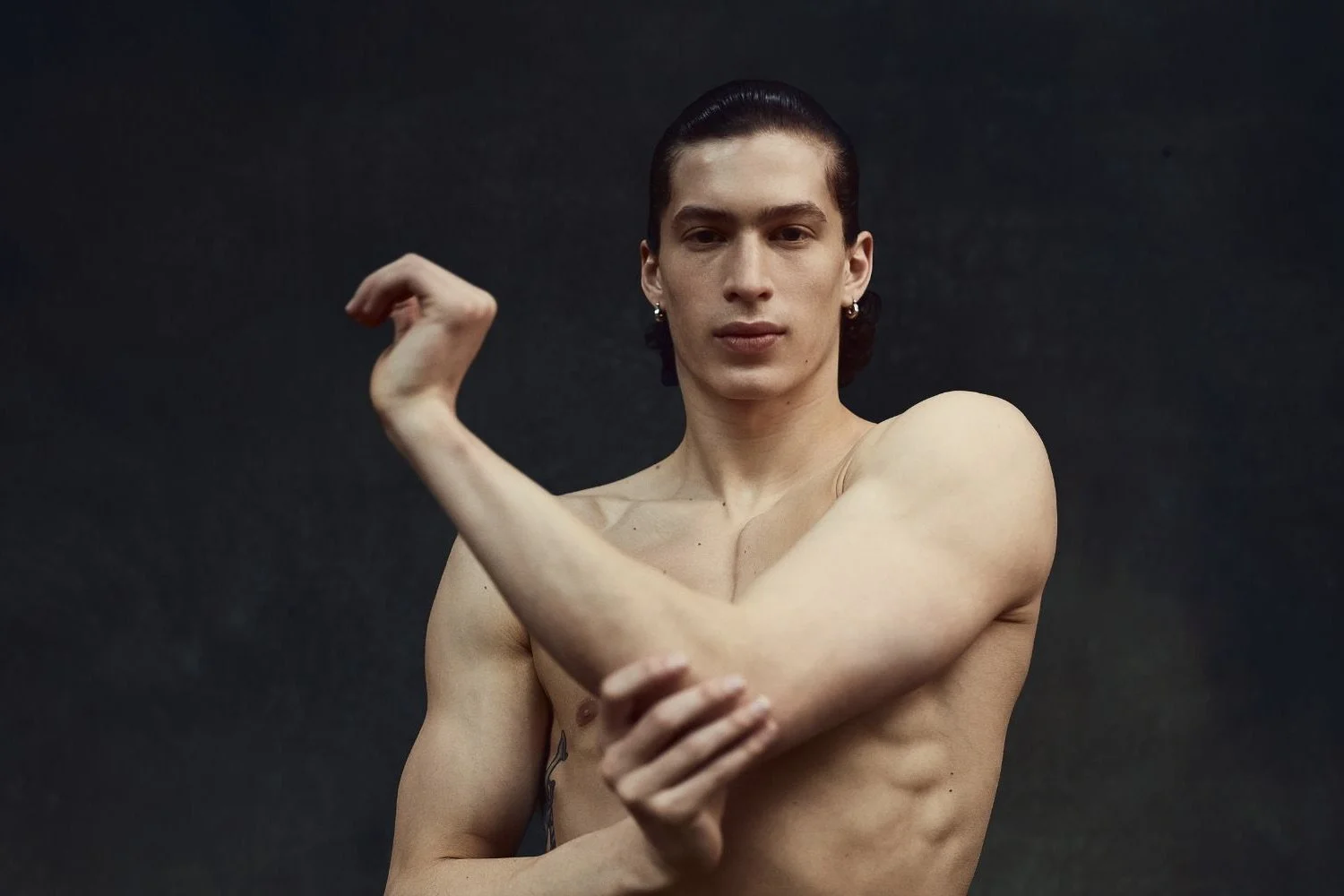
(Left to right) Microphone Controller, Lukas Malkowski (photo by Drew Berry)
As part of Dancing on the Edge, Lukas Malkowski performs Microphone Controller at the Firehall Arts Centre on June 8 at 7 pm and June 9 at 9 pm
ANYONE WHO HAS ever felt the pyrotechnic heat at a Rammstein show, experienced the bowel-rumbling bass vibrations of a Skrillex set, or been dazzled by one of Coldplay’s arena-sized confetti drops could tell you that the most memorable concerts are about more than just the music.
That multisensory reality is one of the driving forces behind Microphone Controller, a 55-minute solo piece by choreographer and performer Lukas Malkowski. “The concept is that it’s a rock ’n’ roll concert that’s supposed to rock all your senses,” Malkowski tells Stir over the phone from Toronto. “Music is not just experienced through your ears. It’s experienced through your eyes, through your skin, through vibrations, lights, and movement.”
Although Malkowski can hear, he spends a lot of time considering how the Deaf experience various types of performances. Raised by a Deaf father, Malkowski identifies as a CODA, i.e., a child of a Deaf adult.
“Being CODA means, for me, that I grew up with American Sign Language [ASL] as my first language—I learned how to sign before I learned how to speak—and that my art and my identity is informed by my membership in the Deaf community,” he says. “It’s kind of a Deaf-adjacent identity. It means I’m culturally Deaf through my heritage, my lineage. I’m a member of a cultural community. It’s probably the closest you can get to being in the Deaf community without actually being Deaf.”
Malkowski, who premiered Microphone Controller at The Citadel: Ross Centre for Dance in Toronto in January, says that his CODA identity has shaped who he is as an artist.
“It informs a lot of things in my choreography,” he says. “It informs how I approach performance. It informs who I make my work for. I would say I’m always considering Deaf audiences, consciously or subconsciously, in everything that I make. My knowledge of sign language definitely shapes the way I move, the way I choreograph, the way I think about movement, the way I use my face in performance, the way I write music.”
Yes, there is music in Microphone Creator; this is a rock show, after all. Although it’s Malkowski alone on the stage, he created the show’s songs in collaboration with musicians Stephen Joffe and Roland Meyer de Voltaire, with Dawn Jani Birley and Gaitrie Persaud-Killings assisting with the ASL lyrics, and his brother, Chris Malkowski, designing the lighting.
“I think a lot about visual rhythms, and I think a lot about visual representations of sound,” Malkowski says. “So one of the ways I do it in choreography, in Microphone Controller, is that I think about how my movement or gesture accompanies my voice, when I’m signing, and also when I’m singing.”
To illustrate this approach, he points to Queen’s myth-making Live Aid performance at Wembley Stadium in 1985, in which the band’s iconic frontman conducted the entire crowd of 72,000 in repeating his wordless vocalizations, starting with a thunderous echo of “Ay-oh!”
“If you watch Freddie Mercury’s hands while he’s doing it, he’s kind of showing it visually,” Malkowski points out. “This show is really inspired by a lot by people like Freddie Mercury, David Bowie, and Prince, these frontmen who could move, and have this way of moving while singing.”
Beyond the charismatic frontman, of course, no rock show is complete without the energy of the band, and Malkowski has that covered too. “There are also these moments where there are these guitar solos and I will create this huge air-guitar choreography that is like a visual representation of how the guitar feels to me,” he says. “It’s kind of like a synesthesia thing, where I’m not just miming playing the guitar or miming playing the drums, I’m taking a lot of creative license with that, and trying to create these choreographies that are not just literally descriptive of what I’m hearing, but also poetically descriptive or emotionally descriptive.”
Microphone Controller isn’t just the title of the show. It’s also the name of the character Malkowski is portraying. Like Bowie’s Ziggy Stardust or Pink, the Roger Waters stand-in played by Bob Geldof in Pink Floyd—The Wall, Microphone Controller is a larger-than-life rock idol struggling with the burden of his audience’s expectations.
“There is a kind of crash-out that happens,” Malkowski says. “You kind of realize that something is wrong with Microphone Controller a little bit, the same as with a lot of rock stars. He’s come to maybe a crossroads in his life where he doesn’t know if he can keep doing this. He doesn’t know why he’s doing it anymore, and he has to deal with what his father thinks of him—his Deaf father, who was a politician.”
There’s an autobiographical element to some of these details of the Microphone Controller story. The choreographer’s own father was in fact a politician. Representing the riding of York East in the Legislative Assembly of Ontario from 1990 to 1995, Gary Malkowski was Canada’s first Deaf parliamentarian, and also the first Deaf parliamentarian in the world to address a legislature in a sign language.
Microphone Controller might not be explicitly political, but in many ways, its creator is following in his father’s footsteps. It’s all about using his voice, Malkowski says.
“As a CODA, I don’t just think about my voice as something that exists through speech. I have a signed voice; I have a voice that is expressed through my hands and through sign language. As a choreographer, my voice is expressed through movement. Sometimes it’s spoken, sometimes it’s signed, and sometimes it’s danced.” 

Related Articles