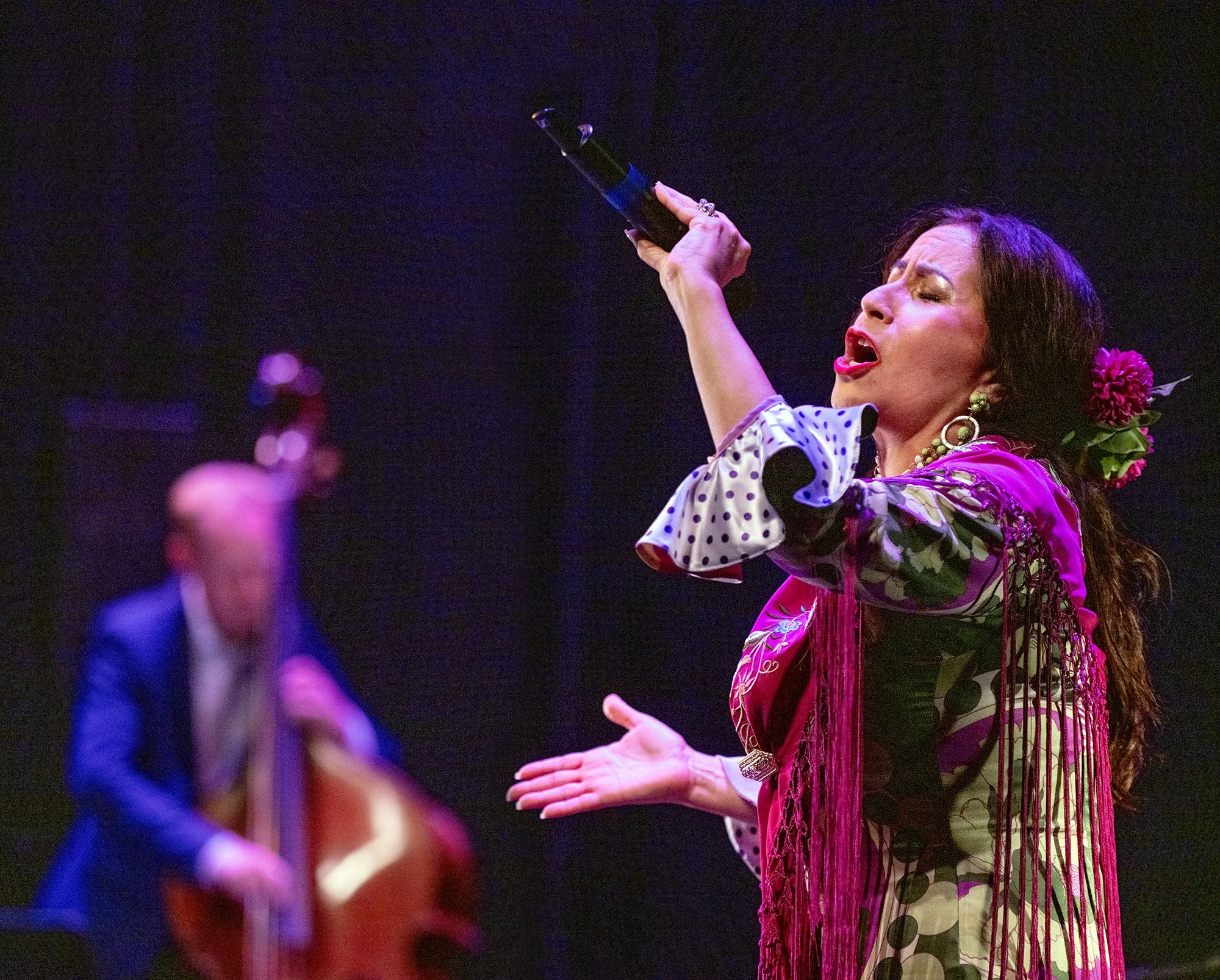
With Kin & Doves, Belle Spirale Dance Projects draws on deep connections in Vancouver scene
At Dancing on the Edge, Alexis Fletcher and Sylvain Senez develop a new piece alongside one by Ballet BC’s Sid Chuckas

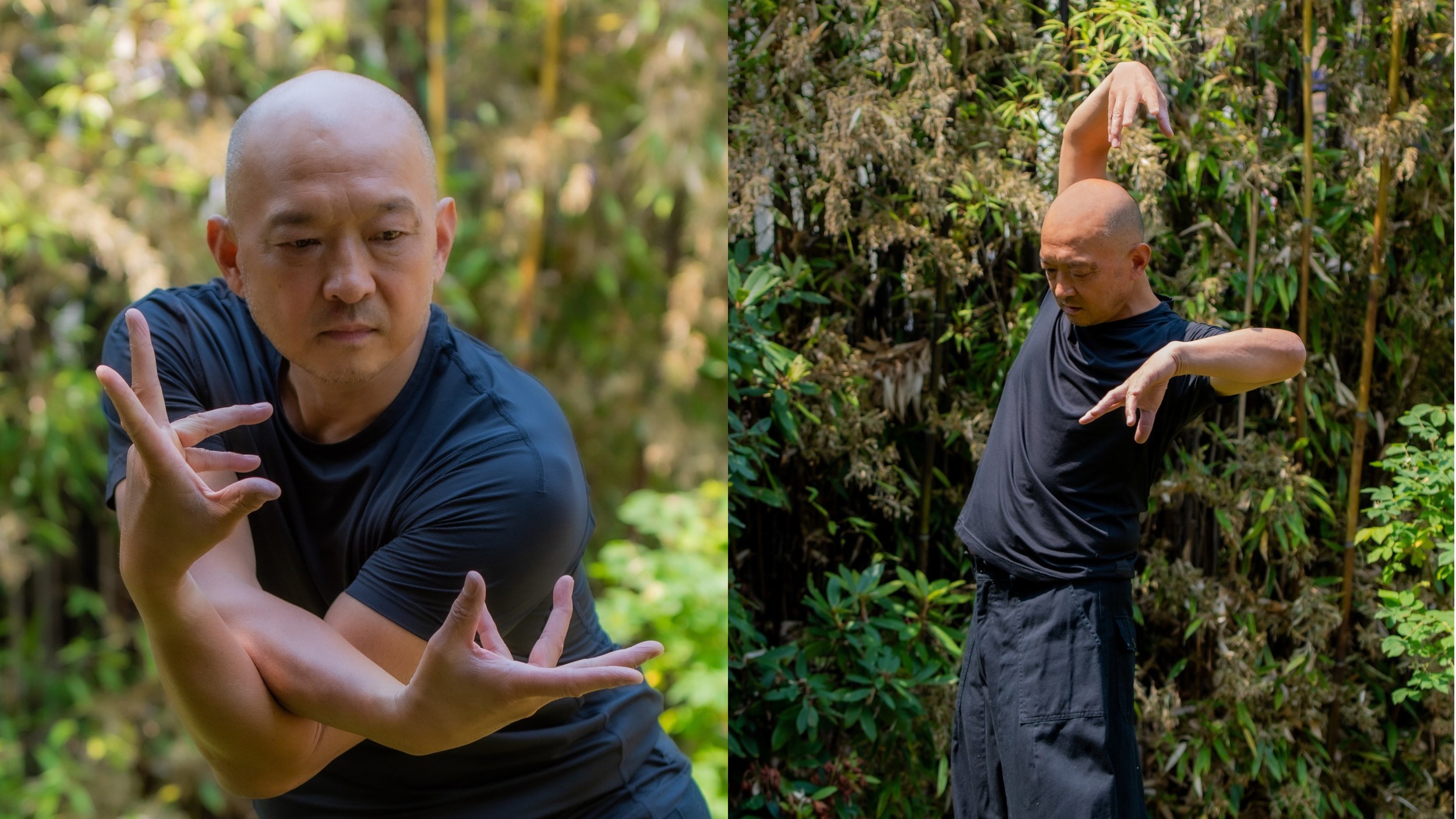
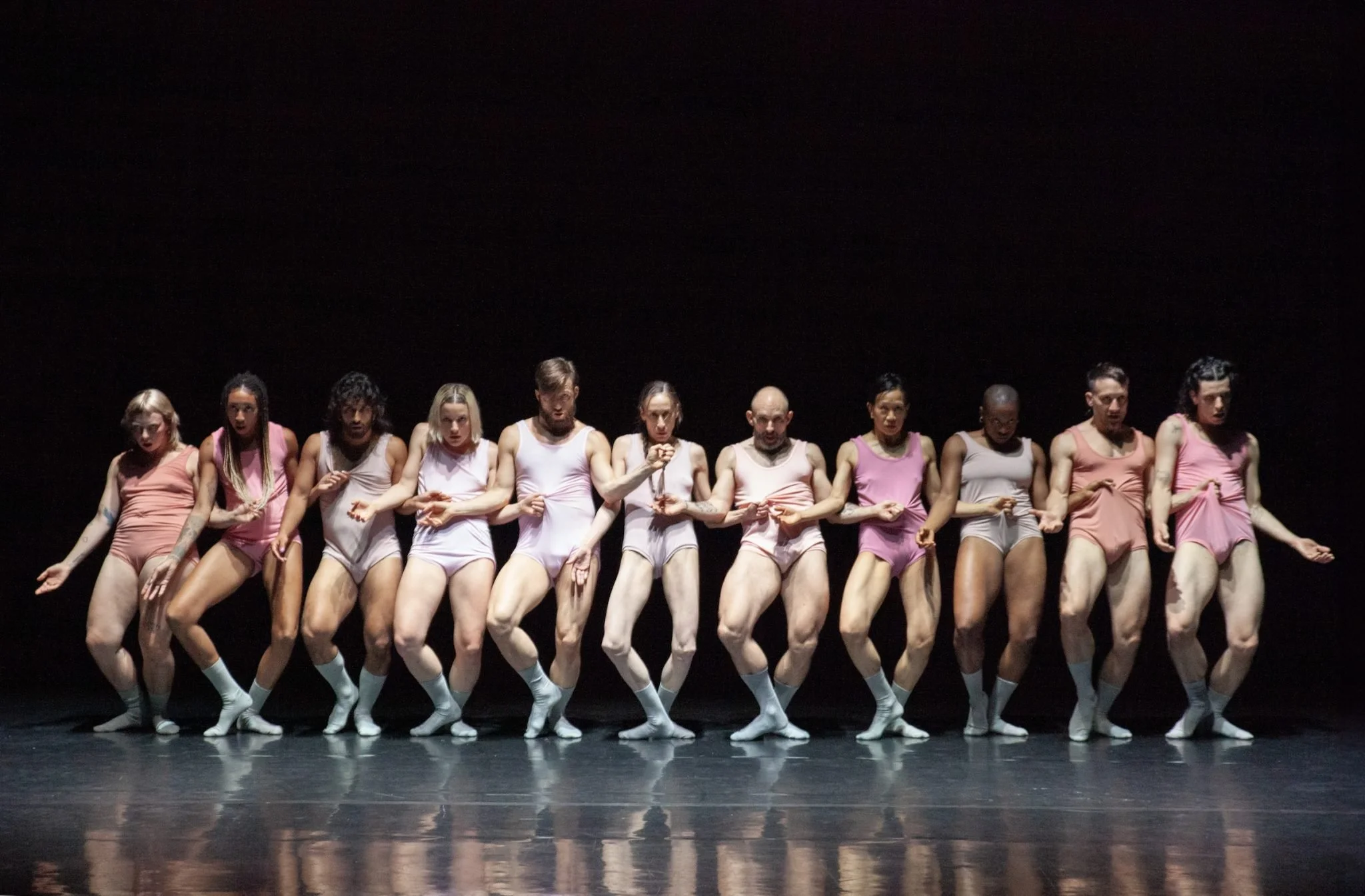
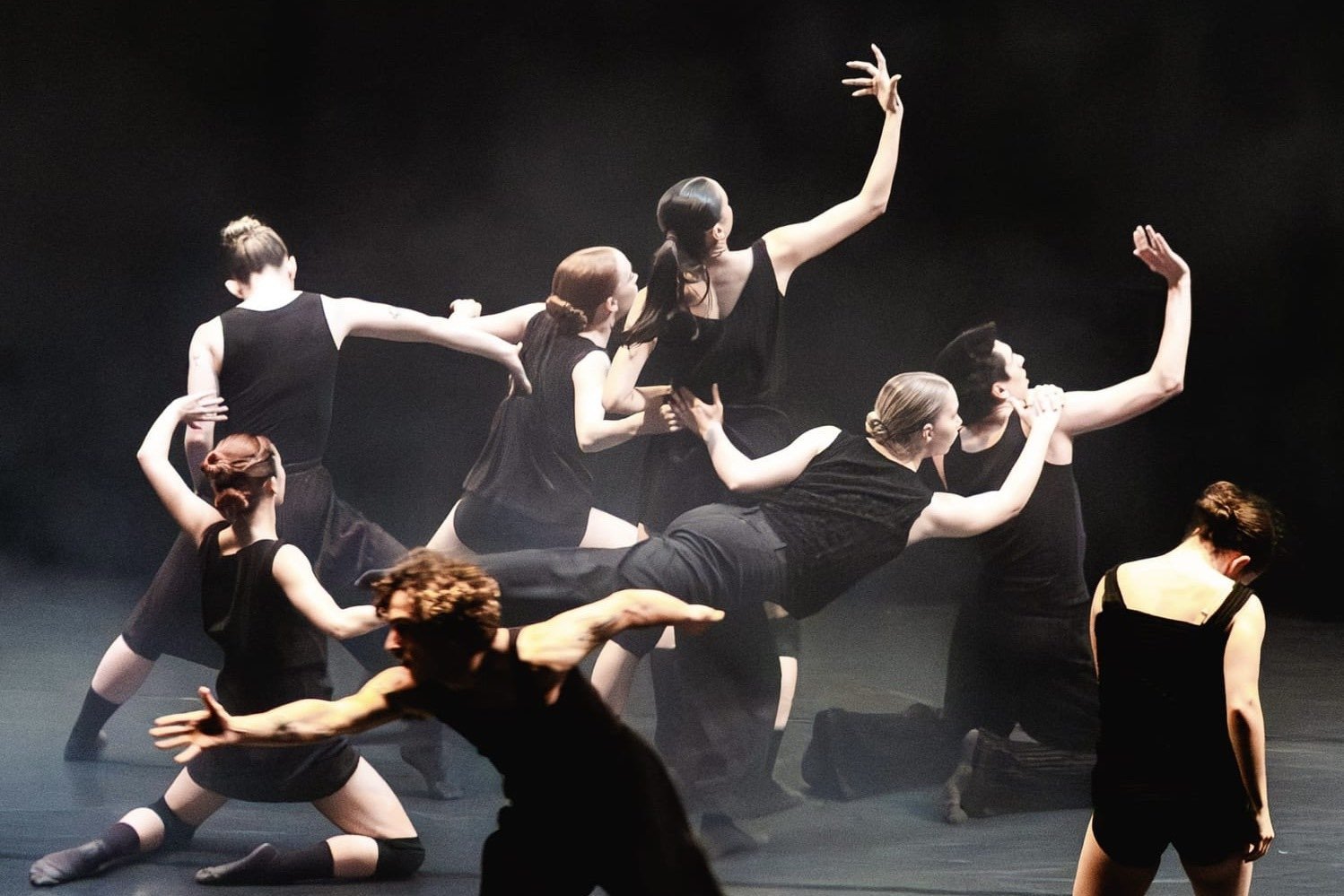
(From left) Lazaro Silva (Michael Slobodian photo) and DOVES (Millissa Martin photo, courtesy of Ballet BC)
Dancing on the Edge presents Kin & Doves at the Firehall Arts Centre on June 12 and 13
AS IT PREPARES to wrap up its season with the double bill Kin & Doves at Dancing on Edge, Belle Spirale Dance Projects continues to overlap, interweave, and knot together its own history with new threads from the city’s arts scene.
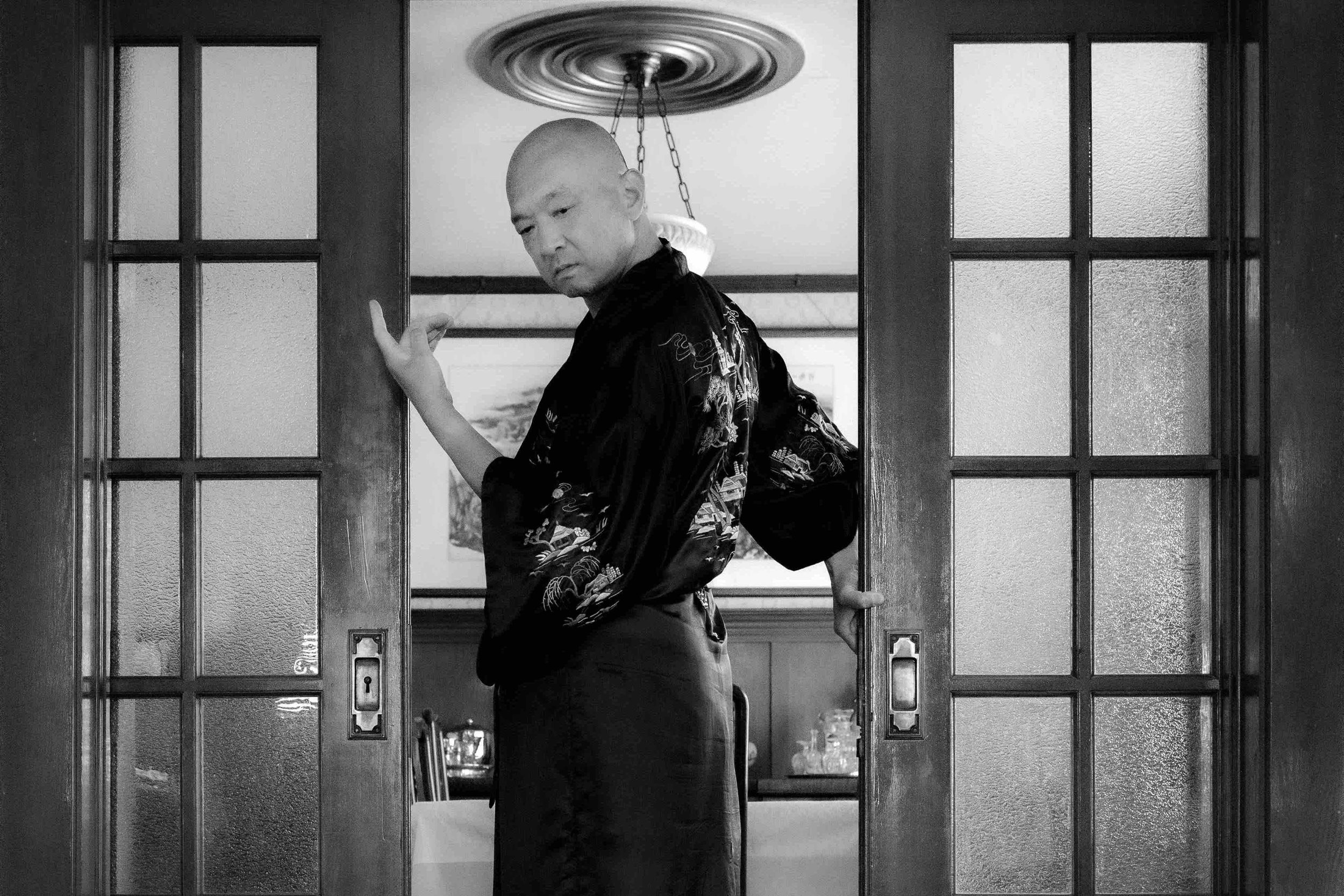
The two-part program features three dancers from Ballet BC, the company where Belle Spirale founders Alexis Fletcher and Sylvain Senez once danced, and where Fletcher is now guest rehearsal director. Doves is a fractured, dream-like creation by another one of Ballet BC’s artists, Sid Chuckas—whose own choreography has been partially developed not only at Ballet BC’s Take Form platform, but also on Belle Spirale’s casual, outdoor summer event Dance Deck. Three other independent local dancers round out Chuckas’s work—and Fletcher and Senez’s Kin features two new faces, Ysadora Dias and Lazaro Silva, a collaboration that integrates Portuguese text and explores immigration and belonging.
In the process, Belle Spirale is showing how independent companies can make a go of it on Vancouver’s small but thriving dance scene by nurturing their connections—especially new voices in dance—while continuing to create their own work.
“Our vision is that Belle Spirale is a platform for Sylvain and I to create with our incredible core group of dancers, but also to commission original works from both emerging and established creators,” Fletcher tells Stir in a Zoom call, alongside her partner in life and art, Senez. “We’re really wanting to nurture that local talent and give these freelance artists access to this kind of repertoire. There’s this range in the group of experience levels, and that really feeds and inspires across that whole spectrum.”
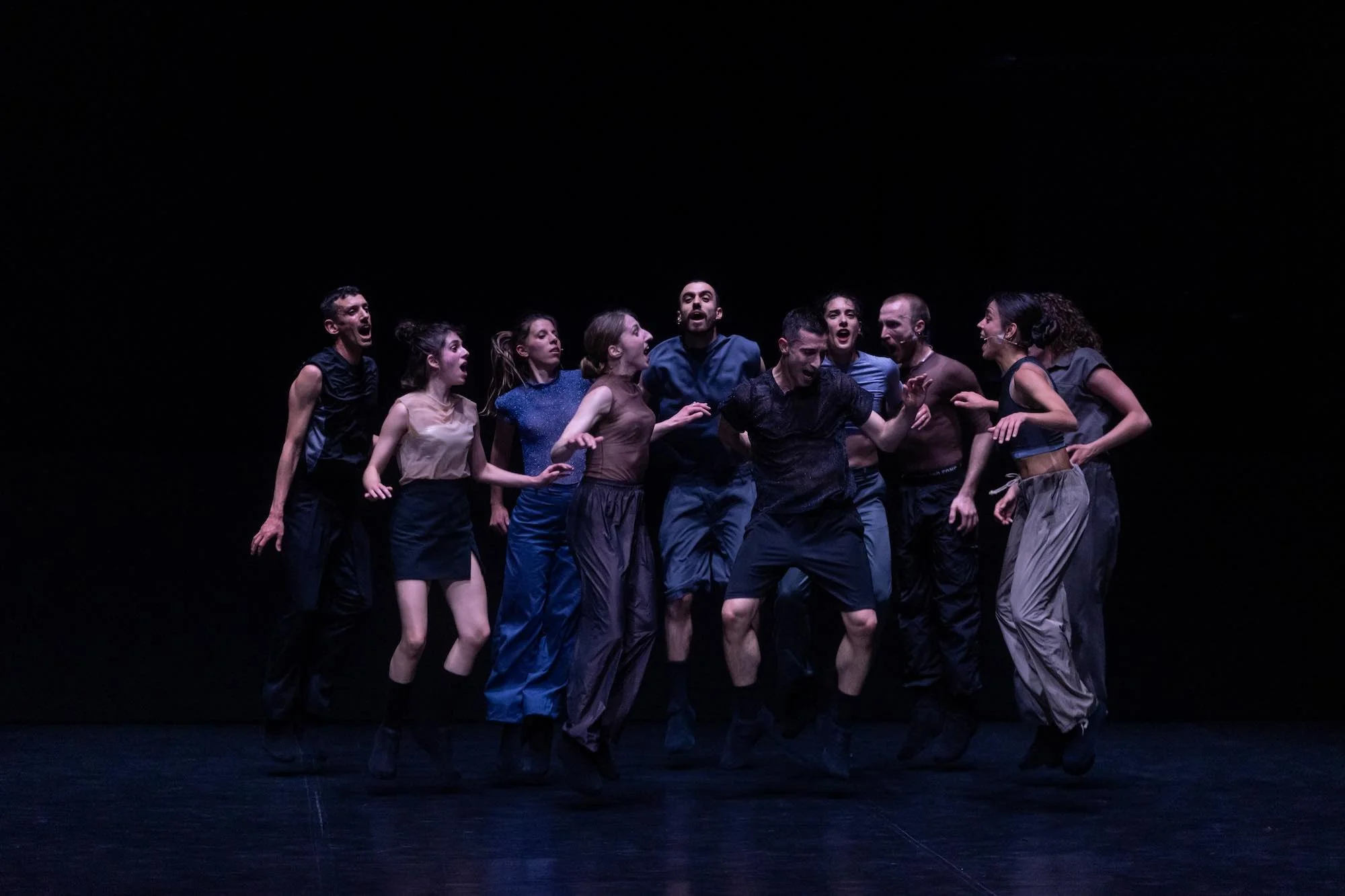
First developed as a work in progress at the 2023 STAND Festival, their Kin draws on the journey of Brazilian dance artists Dias and Silva.
“There’s a lot of soundscape I’ve created with the Portuguese language, and there are some poems in there,” Senez explains. “We hear sounds of trains and planes and different languages, and this kind of path that they’ve been through before they ended up in Canada, and so this is sort of a personal journey on both of them, explored basically through sound.”
“So much of the movement language has been their responses to the found text, and their personal stories of their literal path of immigration to Canada,” Fletcher adds. “But we’ve also been speaking a lot about the universality that we experience as dancers where, in an art form that is constantly being witnessed and doesn’t really exist in a certain way without a viewer, we’ve been talking about that sort of inner fortitude and tenacity that is required to constantly be showing up in new spaces. You’re constantly going through this act of auditioning or having to prove yourself in a specific way—or, in their case, not only doing that as artists that we are all doing, but doing that in a new country, in a second language.”
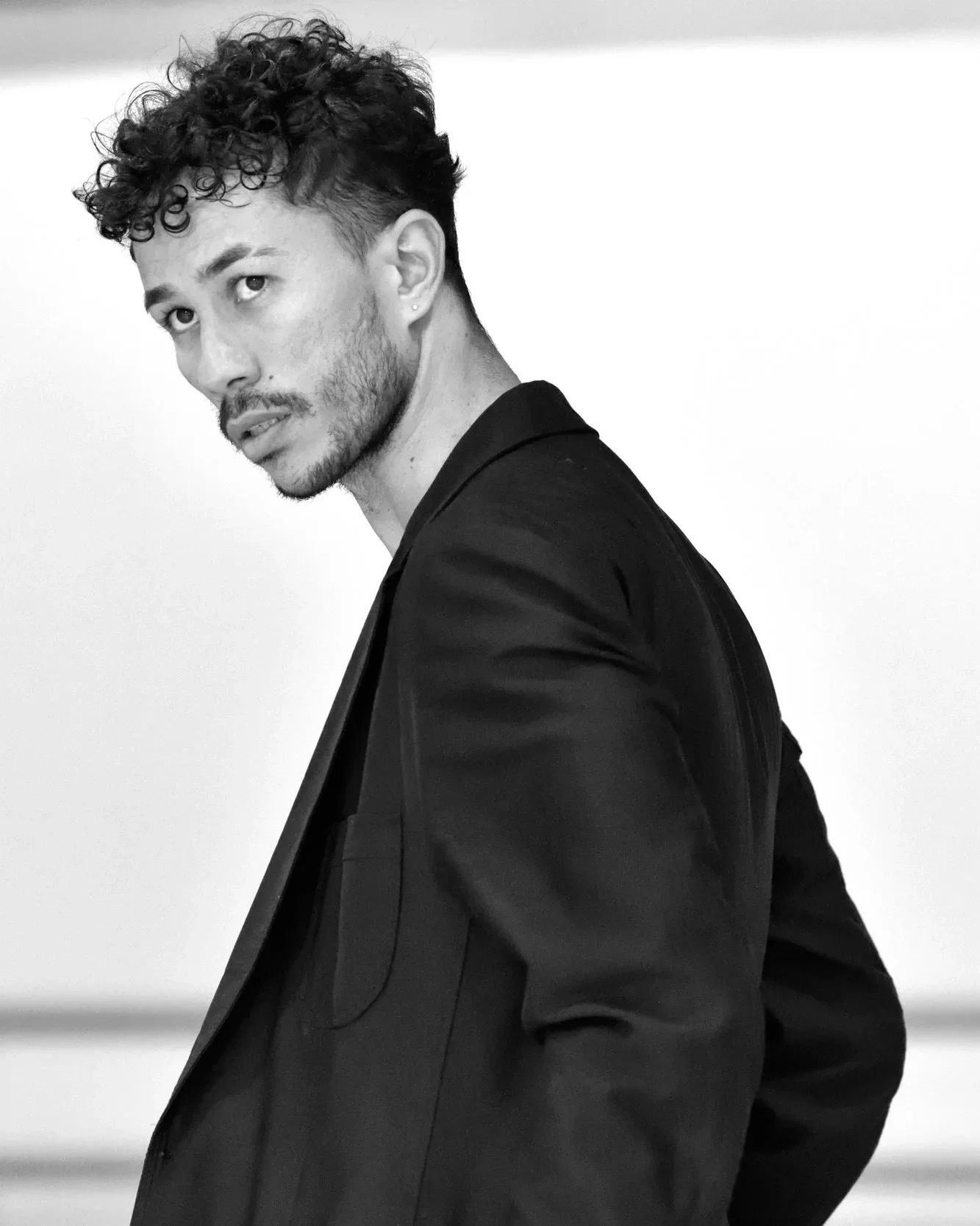
Lazaro Silva. Photo by Michael Slobodian
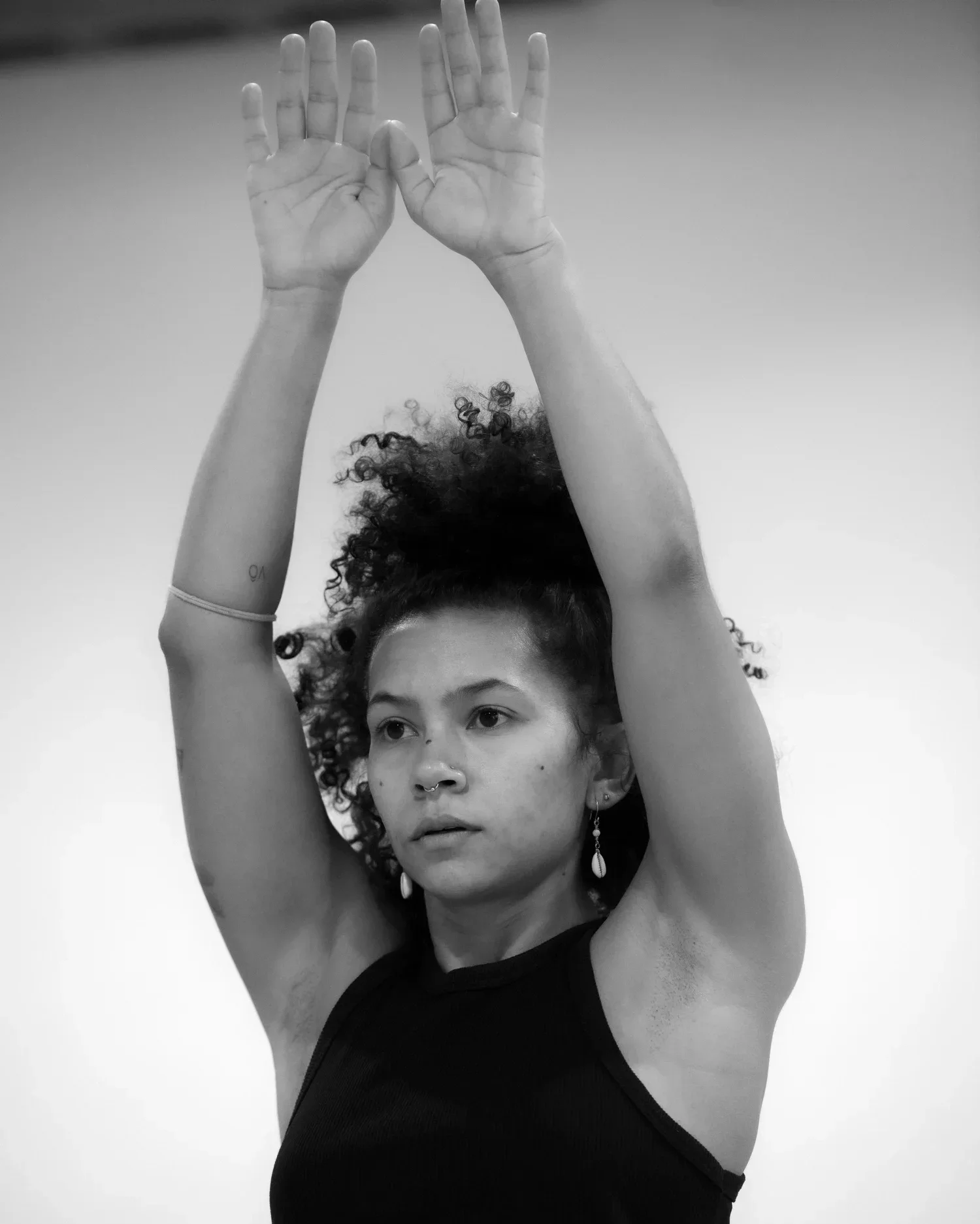
Ysadora Dias. Photo by Sylvain Senez
Much of the Portuguese, recorded or spoken in the work, is left untranslated, Fletcher reveals—allowing the dancers to move within the comfort of their mother tongue, and the audience to experience a bit of that navigation of the unfamiliar.
“The piece is about this cellular memory and lineage—how that carries us into all of these new and different places as we move through the world. And what does it mean to arrive in a dance studio in a new country, in a new part of the city, in a new space with people that you haven’t worked with before?” Fletcher elaborates.
“There’s this constant sense of arrival that I find really interesting, and we’ve kept these conversations between Lazaro and Ysadora that happen in the room—there’s a number of times where they just drop into an improvised conversation in Portuguese in the piece,” she adds. “It was such a beautiful dynamic that we really wanted to keep it alive and not change.”
DOVES, BY CONTRAST, takes viewers into a more surreal, liminal place. Chuckas tells Stir in a separate call that it was inspired by the artist’s own struggles, as a child, with insomnia, nightmares, and night terrors.
“I think ever since that young age I was really fascinated with the mind and all it was capable of, and I really wanted to celebrate that in movement and dance,” Chuckas says.
When they first developed it as a short, 10-minute piece for Ballet BC’s Take Form—a platform for dancers to try their hand at choreography—Chuckas developed a “look book” of imagery and writing. It speaks to the artist’s own love of art and architecture and the strong role visuals play in their work—including a central painting of feverishly rendered figures called Reborn Sounds of Childhood Dreams, by Ibrahim El-Salahi.
“I’m a super visual person, so imagery was really important for this work, particularly because a lot of it operates in a quite dark space,” Chuckas says. “I was really drawn to this painting just because of the three faces and the perceived meaning behind it.”
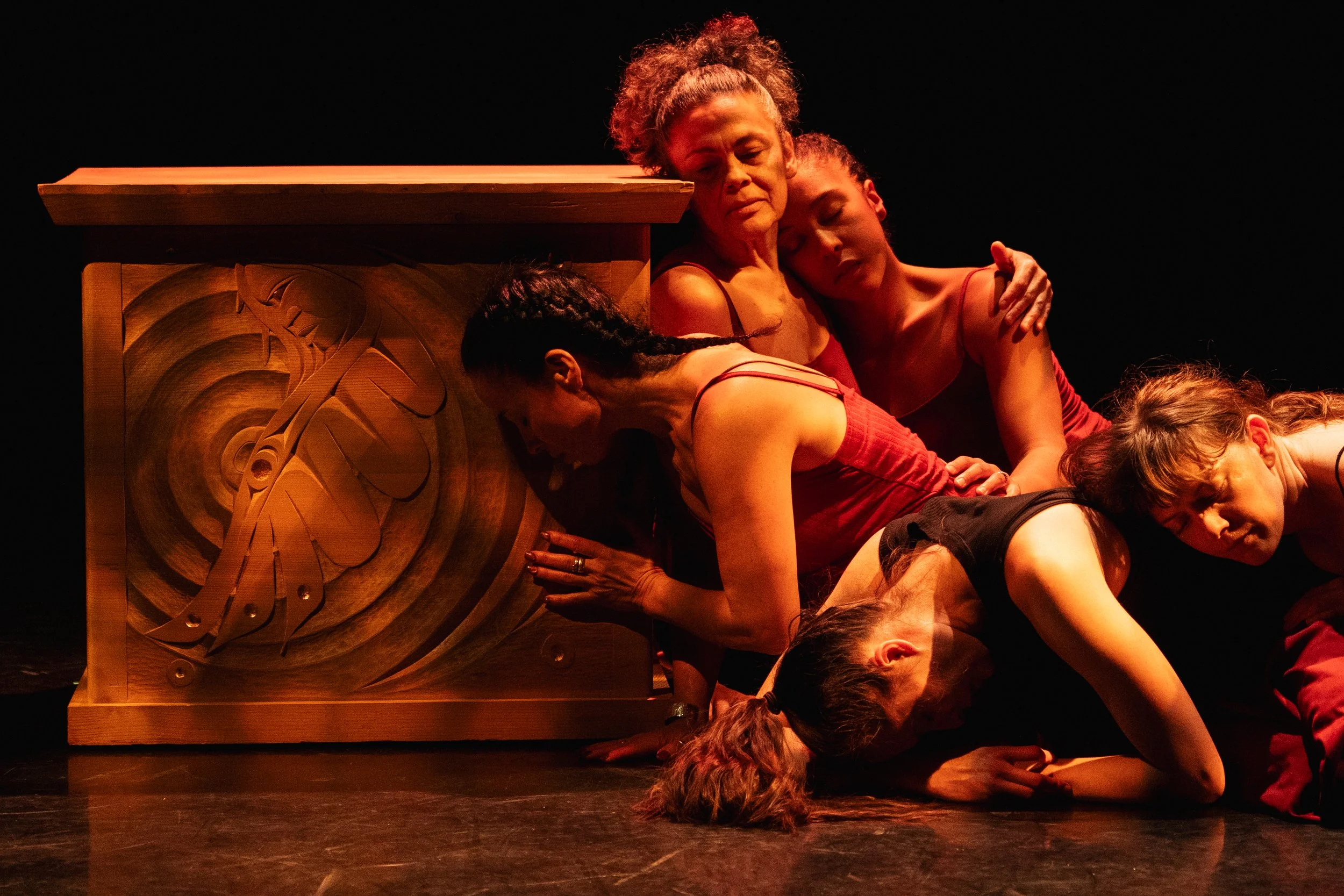
The action unfolds around a central, human-like sculpture of salvaged bubble wrap and wood by Chuckas. The lighting, developed here with Victoria Bell, becomes a key element in building the hallucinatory space of the work, bathing the action in an orange-peach glow that feels otherworldly.
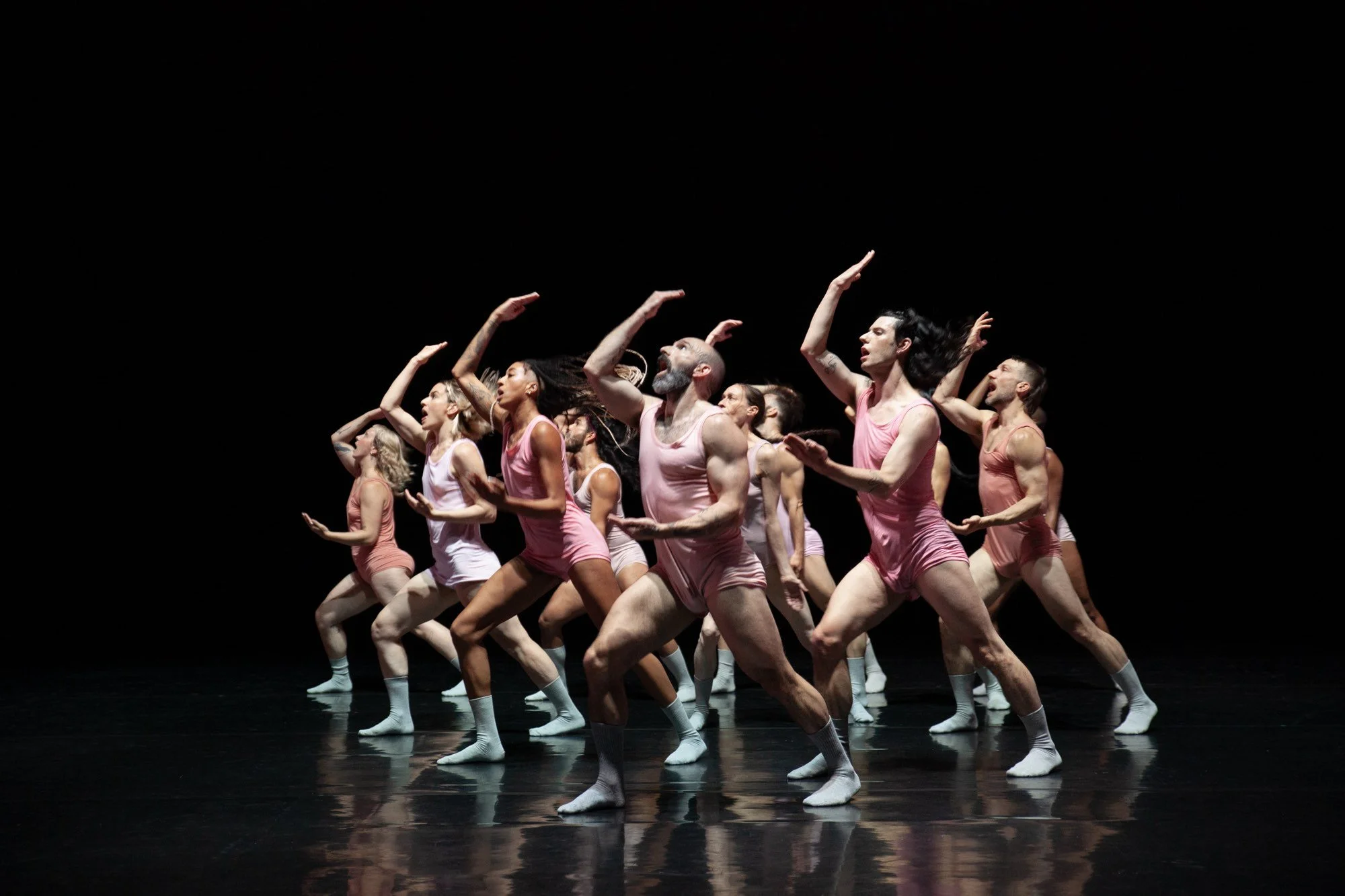
Chuckas has expanded Doves from four to six dancers and from 10 minutes to a full half hour.
The artist says they’re trying to conjure “this extremely vivid and boundless dreamscape that we have as children, where our imagination becomes both a refuge and also our reality, because we learn a lot through our dreams. Our dreams shape us and the way we see the world.
“There’s a lot of play between the emotional extremes, you know, fluidity; there’s tenderness and terror, softness, fury, and I try to inhabit in a physical way the shifting landscapes that mirror the emotional logic of dreams themselves—because dreams often make no sense,” they add. “I’m using four pieces of classical music, and they’re interwoven with these environmental soundscapes—children playing, rainfall, the forest… And it kind of evokes this familiar place that feels both intimate and unreachable, of what it’s like to physically be inside of a dream.”
It’s performed by three dancers Chuckas shares the Ballet BC stage with—Kylie Miller, Kaylin Sturtevant, and Stan Tonin—plus members of Belle Spirale’s developing corps of dancers: Ariana Barr, Nathan Coburn, and Brenna Metzmeier.
For the Chicago-born Chuckas, who has also created works for Arts Umbrella and Lamondance, developing Doves has meant spending many late nights amid a rigorous touring and performing schedule at Ballet BC. But they say choreographing work, at Ballet BC, Belle Spirale, and beyond, has become integral to their practice. And they’re grateful to have found so much opportunity to do it here.
“I just feel so blessed that I’m in the community I’m a part of,” Chuckas says. “My parents say I was born to be a creator from a young age, and I think, actually, I feel very seen in these communities, because of people like Alexis and Sylvain; they understand that it’s an important part of who I am—they aren’t separate. It’s an incredible opportunity, and I just feel so fortunate and so seen.” 

Sid Chuckas. Photo by Marcus Eriksson

Related Articles