Dance reviews: Rising voices, fresh talent, and vivid worlds at Dancing on the Edge's second week
Quick takes on three atmospheric works: Modus Operandi’s Wound, Dance//Novella’s Soft Animals, and O.Dela Arts’ Where You Go
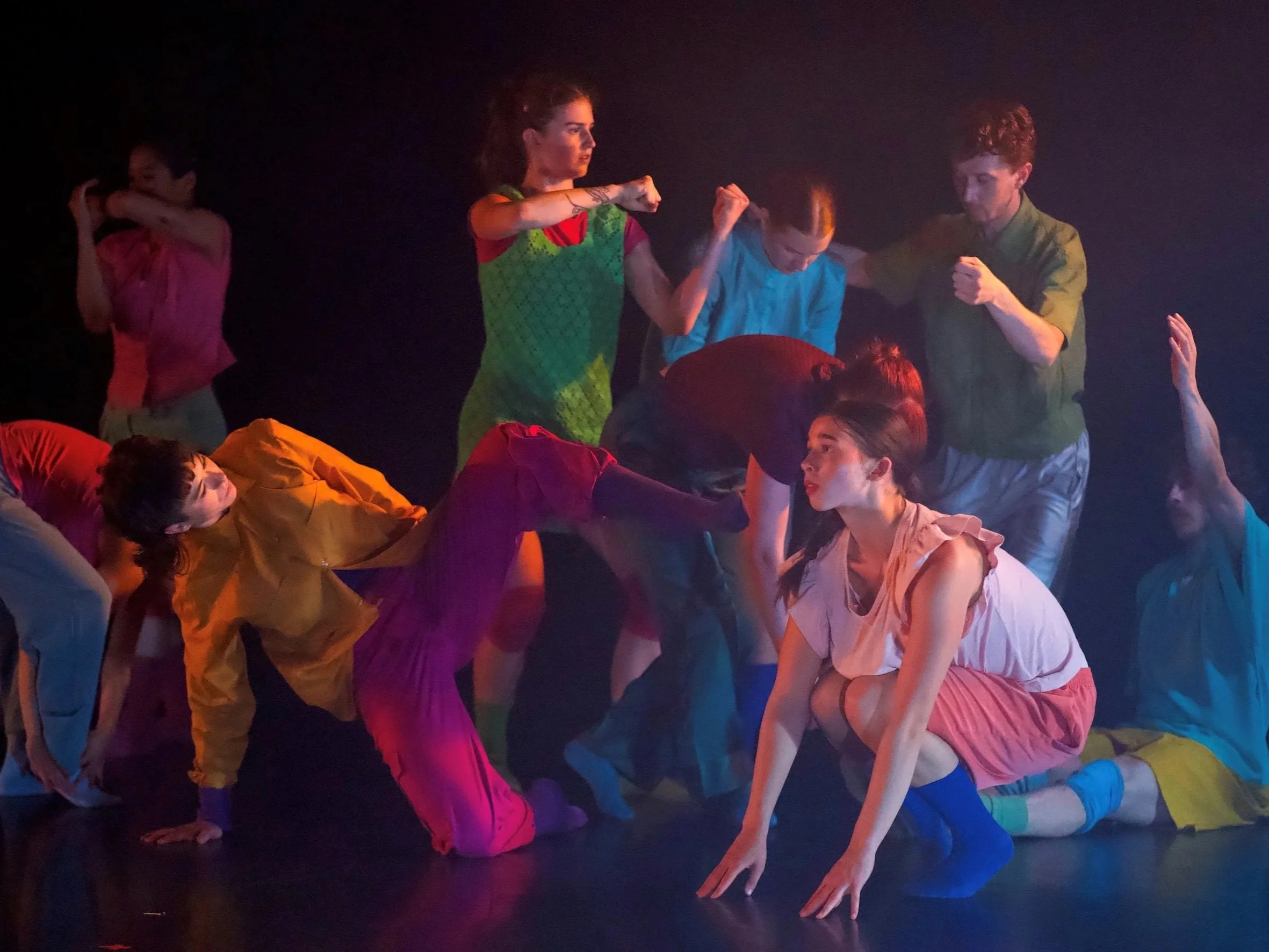
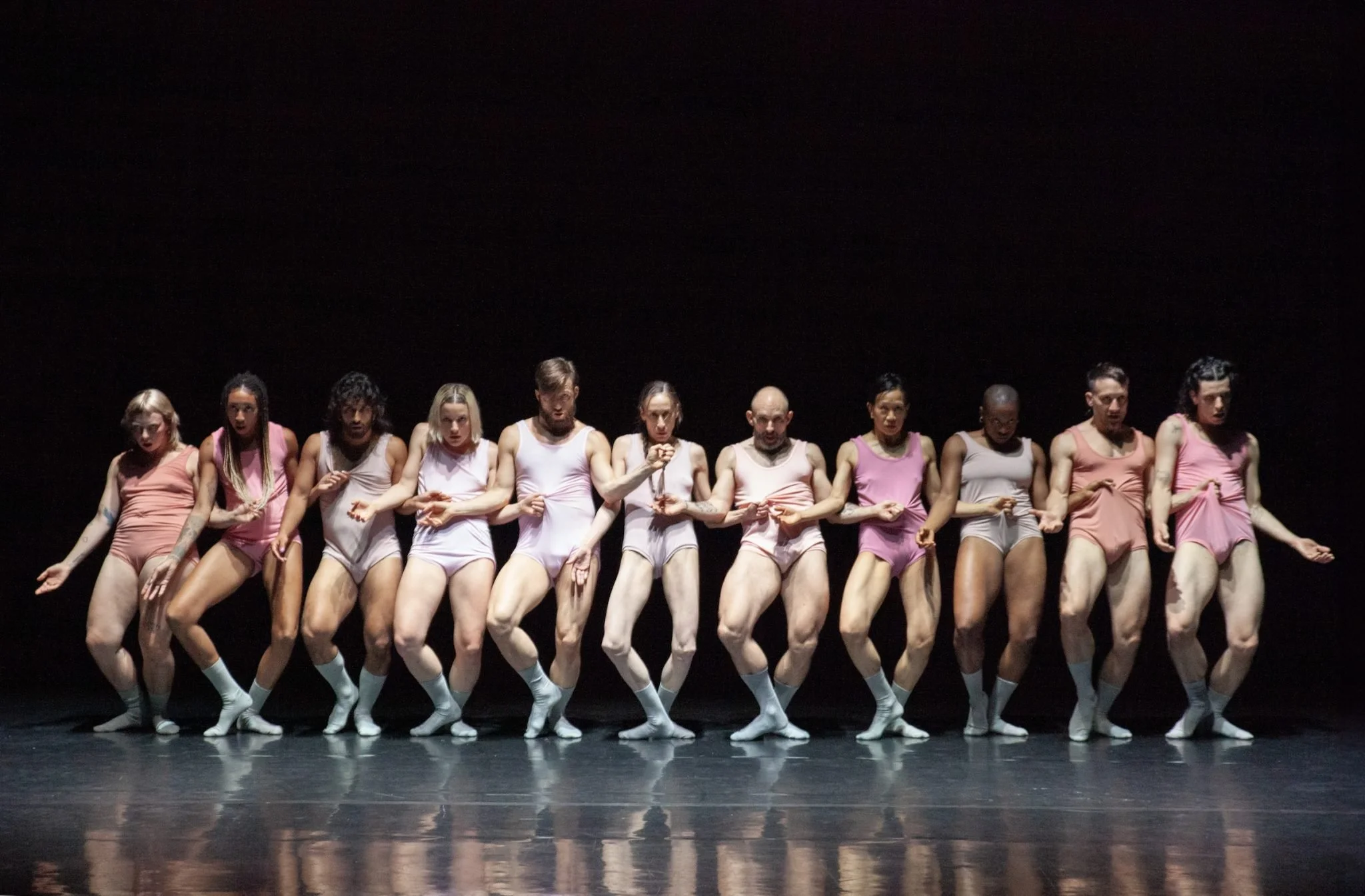
Modus Operandi’s Wound. Photo by David Raymond
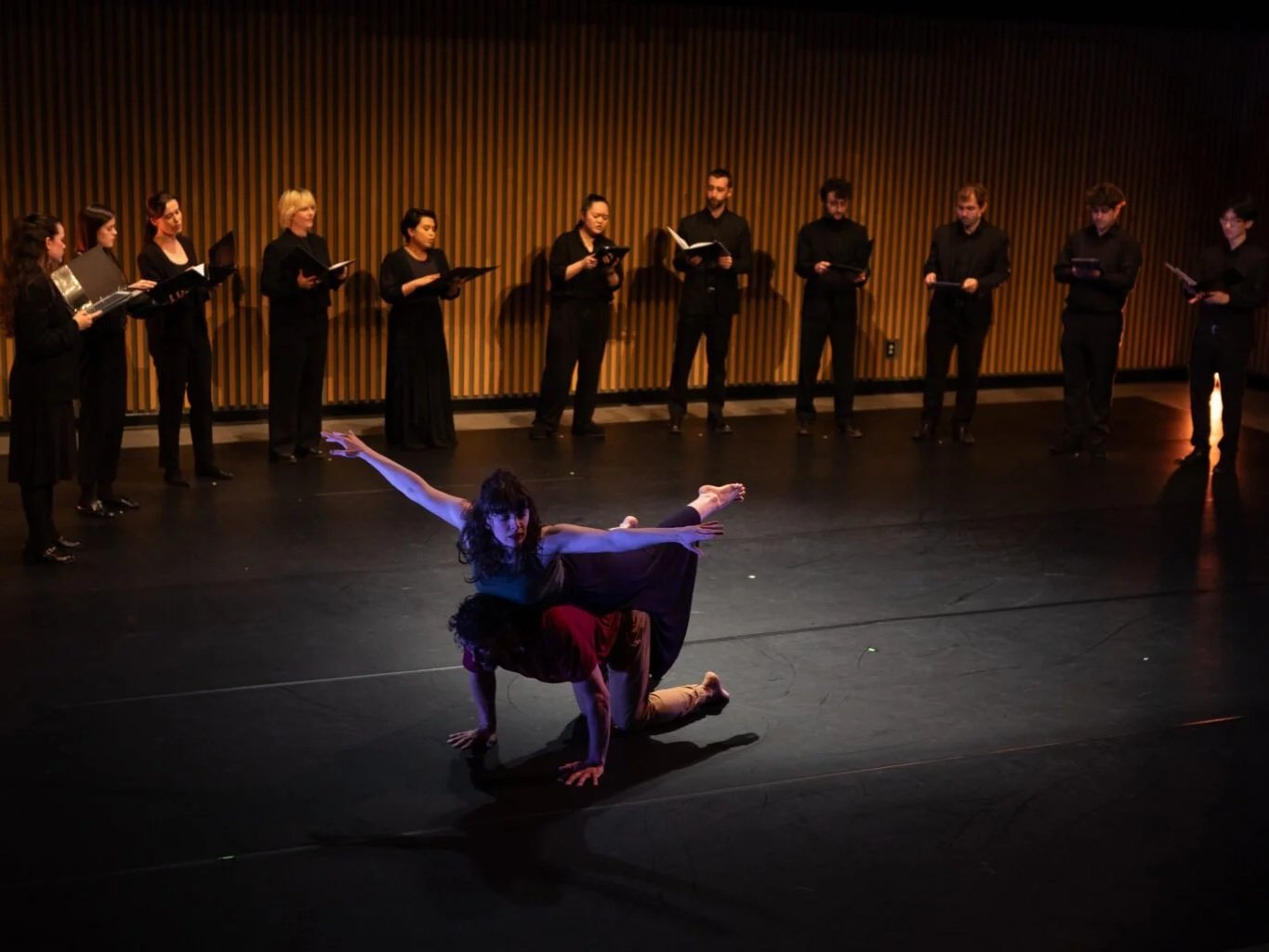
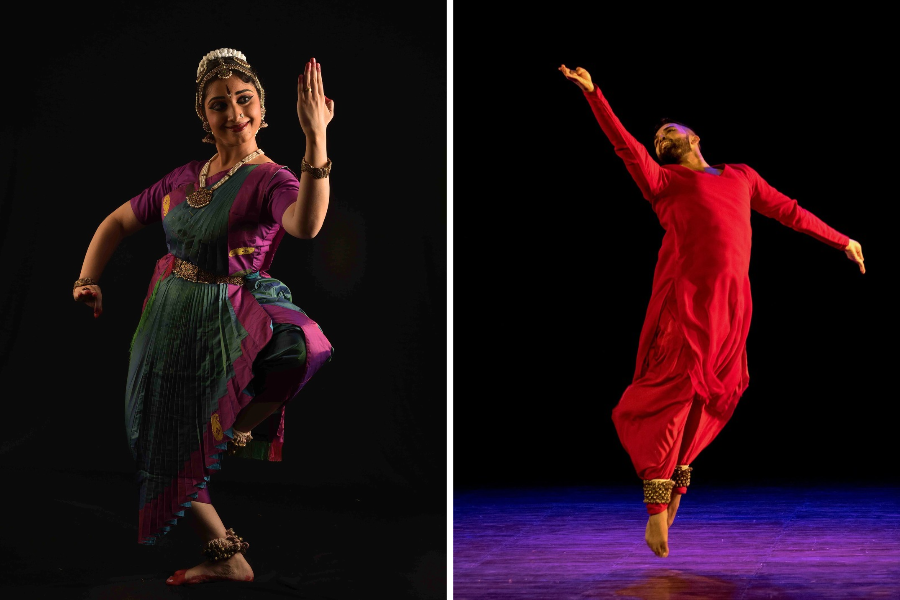
O.Dela Arts’ Where You Go. Photo by Luciana DAnunciao
Dancing on the Edge presents Where You Go again on June 12 at 9 pm, while Dance//Novella’s Soft Animals and Modus Operandi’s Wound continue on the Edge 4 program June 13 at 9 pm
A DIVERSE ARRAY of works at the Dancing on the Edge fest this week explored the supernatural, the artificial, and the vulnerably human. What all three pieces had in common was a knack for conjuring atmospheric worlds, whether through lighting, sound, or striking movement.
Some of the freshest choreography, and faces, came care of Modus Operandi’s playful yet unsettling Wound on the Edge 4 double bill. At a time when AI and the controversies around it have dominated news for months, it also took on sharp relevance.
Choreographer Kate Franklin’s work, originally created with her dancers in 2025, was inspired by Kazuo Ishiguro’s Klara and the Sun, a dystopian novel about a future society’s Artificial Friend. The piece featured a steady parade of 13 of the professional training program’s young dancers, decked out in bright greens, pinks, and blues, moving across the stage in different mechanized, glitching ways that, as the program aptly put it, were “not quite human”. What made this movement so innovative was that it was not quite robot either, sampling as it did from human gestures. Arms sawed like pistons and swung like pendulums, but then a hand waved so frantically it became a blur. Feet hopped and skittered on repeat, knees and elbows jutted at odd angles. The intricately detailed piece cast a spell, thanks to the dancers committing to its quirky universe, but also to the alien idiosynchracies of each character—all of it set to Jeremy O'Neill’s sci-fi score of electro static and synthesizers.
It was fun and innovative but thought-provoking, too—a chance to see young artists explore the themes of a book, and an issue, that speaks directly to them, and increasingly, to us all.
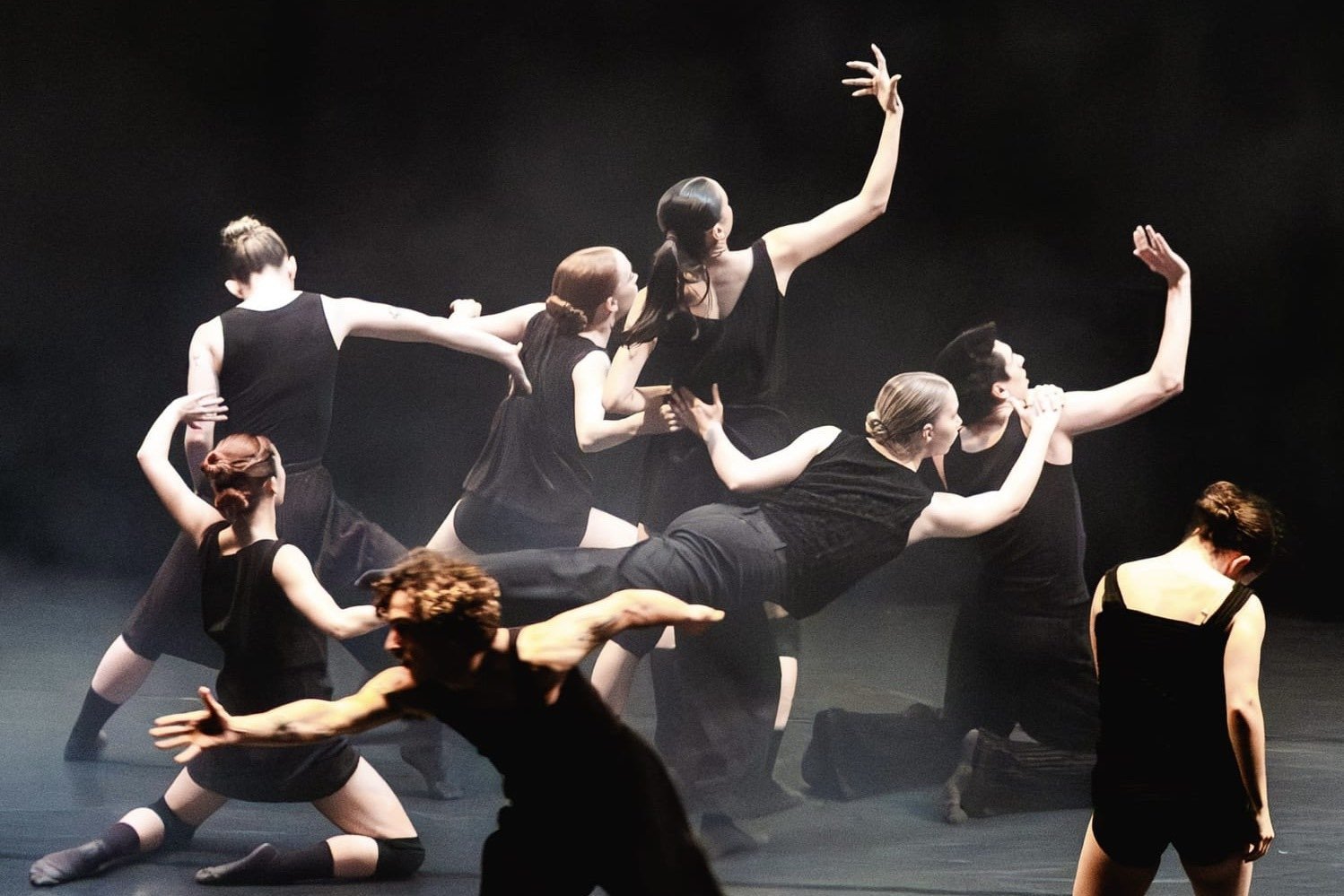
On the same program, Dance//Novella’s ambitious, six-dancer Soft Animals showed choreographers (and Ballet BC alumni) Brandon Lee Alley and Racheal Prince’s strengths in conjuring fully realized theatrical worlds, complete with atmospheric lighting, evocative soundscapes, and striking imagery. There was a haunting, abstract, elusive quality to Soft Animals, which loosely followed a group of women who had lost their connection to the past, but worked together to reclaim it.
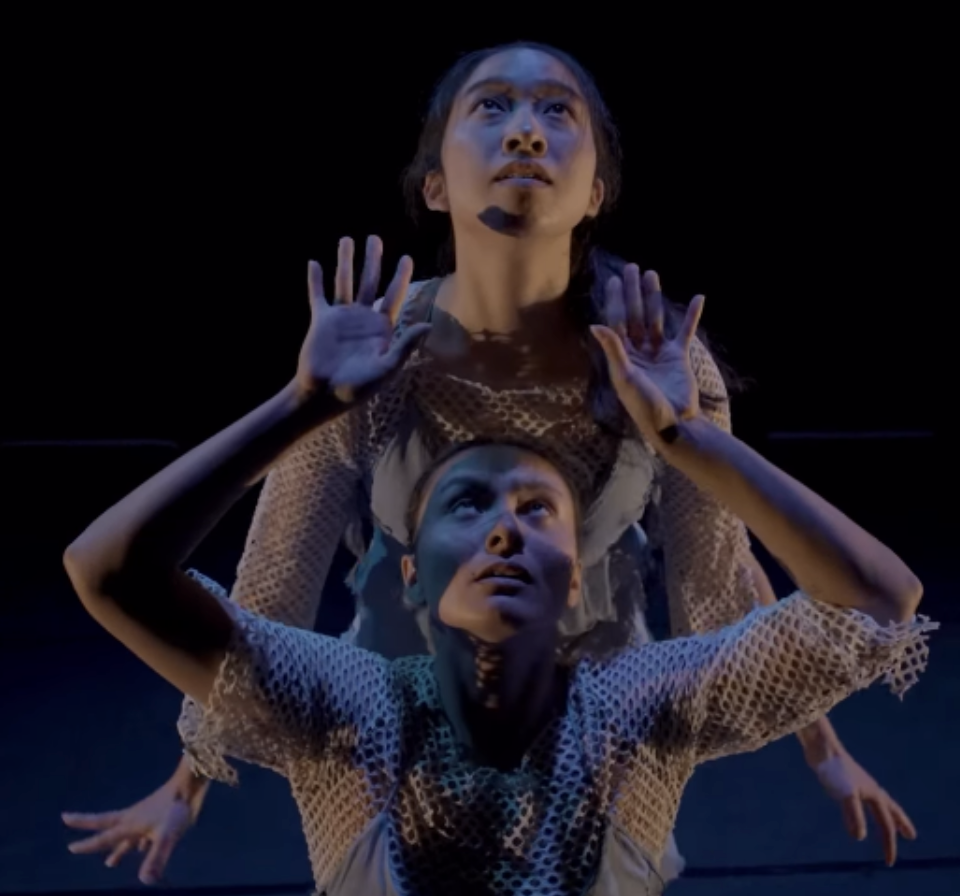
Soft Animals
Sepia light sliced in from the side of the stage to carve out the dancers in the black void of the stage. In the opening, they tumbled like they were caught in waves, Alley’s soundtrack suggesting a sea journey far from home. Later spoken text, played forwards and backwards, implied lost language and the struggle to find a voice. Lurking in the shadows was a masked, robed figure, dragging tinkling bells. Whether it was shamanic or supernatural, it at first seemed threatening, then later played a key role in the women transforming.
Accolades should go to the emerging talents—Bryn Bridgen, Madeleine Cruz, Mia Pelayo, Nancy Junjiaqi, LiShana 愛 Wolfe, and Yuha Tomita—who interpreted Alley and Prince’s choreography, which moved fluidly between a powerful, animal physicality and tender fragility.
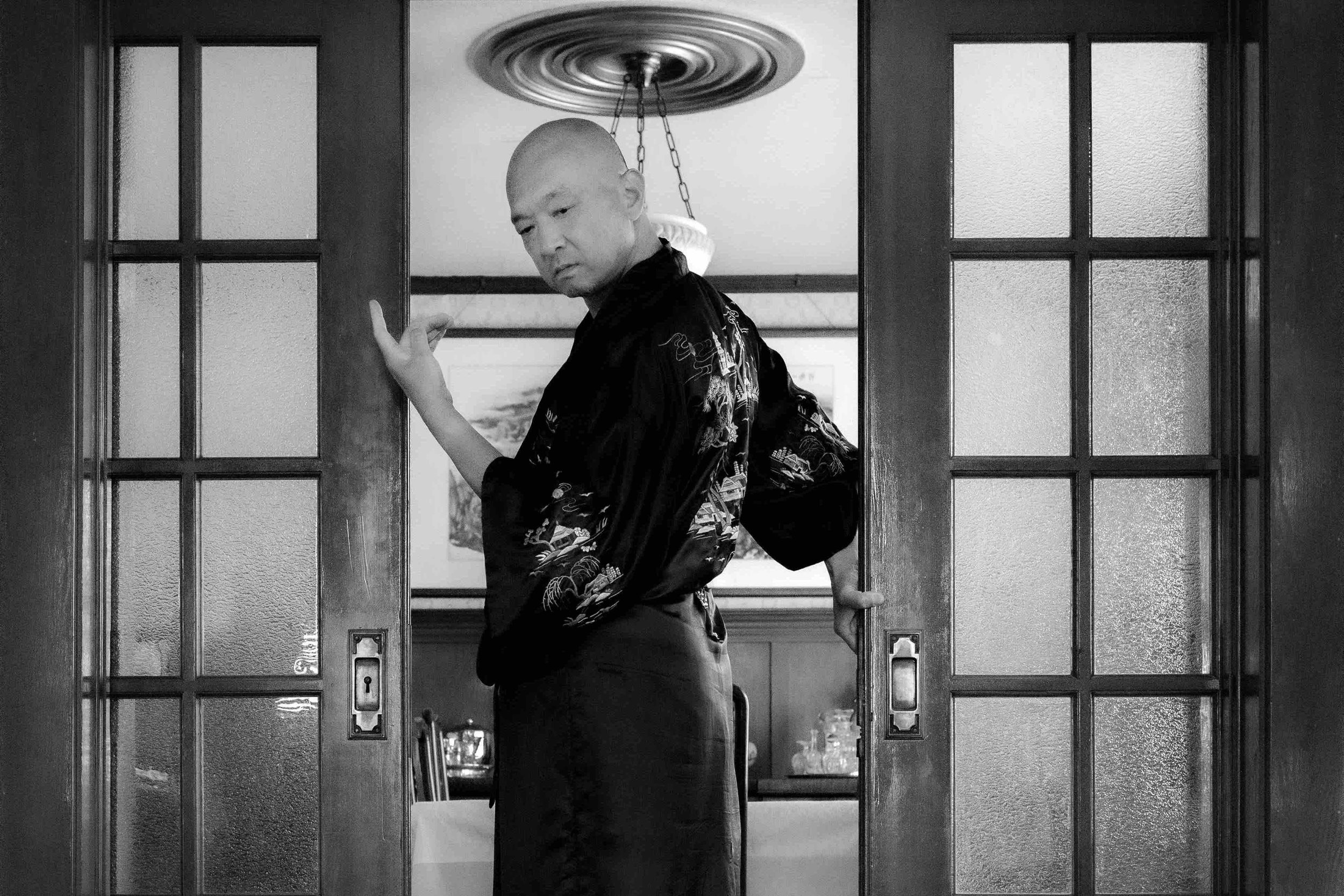
Elsewhere, O.Dela Arts and musica intima’s collaborative Where You Go found singers performing gorgeous a cappella choral music around an expressive central pair of dancers (Sophie Dow and Brandon Schwinn). The long main section was an earnest interpretation of Ernest Hemingway’s A Farewell to Arms, the couple distilling the emotions, rather than the literal plot points, and capturing the essence of longing and loss in the World War I story. It was a work of extreme intimacy; arms clung and pulled apart, bodies entwined and lay lifeless on the ground. Sometimes they communicated through simple stillness, crouching, head to head, on the floor. The second, shorter part of Where You Go drew from Klangenfort, a duet originally created and performed by Vancouver arts-scene veterans Savannah Walling and Terry Hunter, and an ode to the eternity of love beyond a partner’s death—a more hopeful take than Hemingway’s.
It’s impossible to overstate the emotional depth and atmosphere the live voices of the dozen singers brought to the piece, adding a kind of choreography with their own physicality and helping to shape the space with their sonic textures that drew, throughout the hour, from the likes of composers Jóhann Jóhannsson, David Lang, and Luca Marenzio. One of the most affecting sections layered lyrics like “When you die, I will die:”, “Where you live, I will live” in echoey, wavelike canon. Theatrical touches (fluttering rose petals) and dappled lighting (by Jonathan Jono Kim) added to the vibe.
It was exactly the kind of innovative collaboration you want to see at Dancing on the Edge, the better for the ability to watch it all close up on the Firehall Arts Centre stage. And in the case of each of these works—which continue this weekend—they could easily, and will no doubt eventually, fill a bigger space. 

Related Articles