Film review: Green Border gives a ground-level look at the brutality of Europe's migrant crisis
Agnieszka Holland’s new film focuses on the zone between Belarus and Poland, where refugees are stuck in a deadly political battle
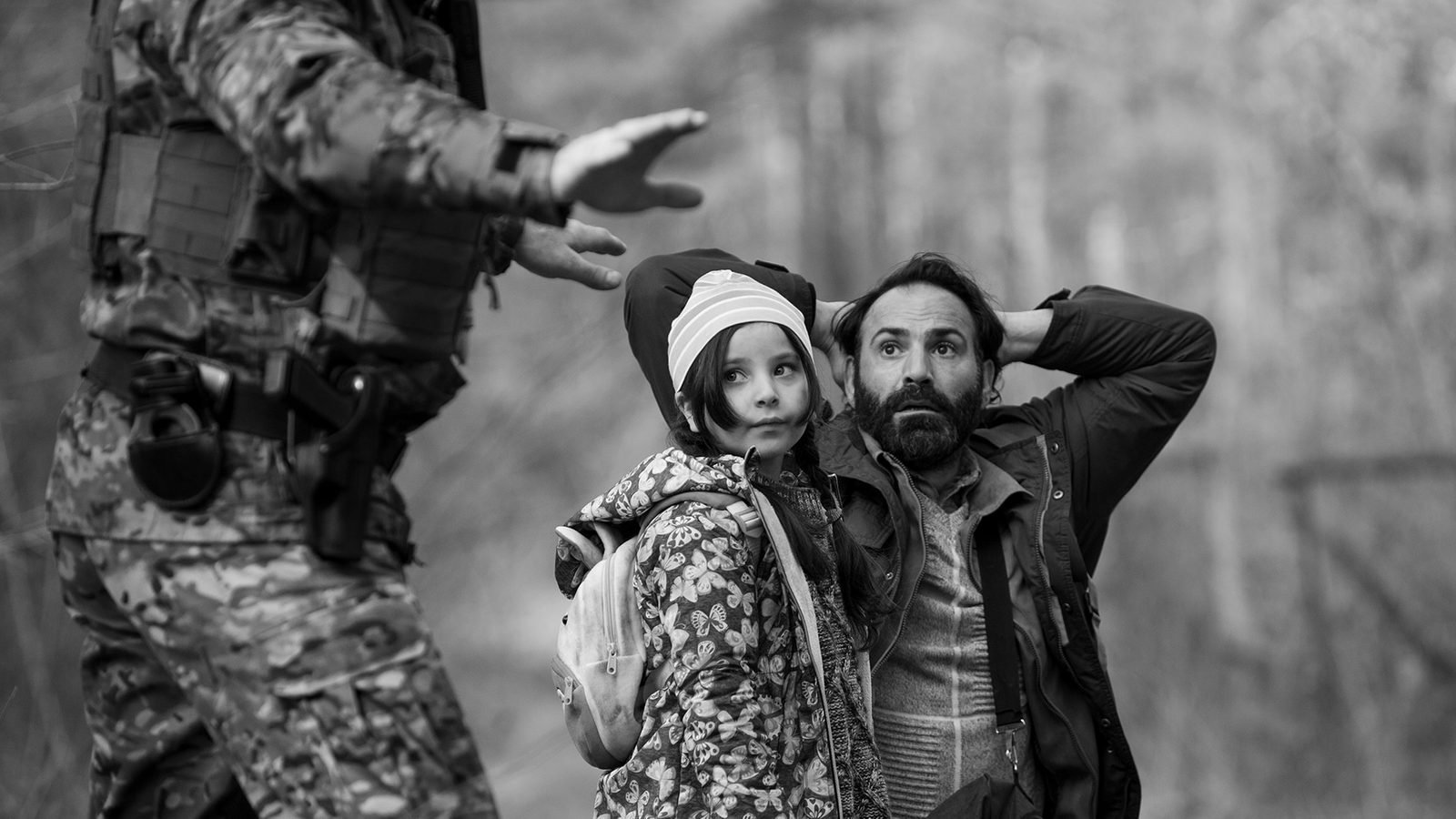
A Syrian family is repeatedly caught and returned in the exclusion zone between Belarus and Poland in Green Border.
Green Border screens at VIFF Centre August 30 to September 9
POLISH DIRECTOR Agnieszka Holland’s new film opens with a sweeping overhead drone shot of an endless, idyllic emerald forest. But soon the footage switches—and sticks—to bleak black and white, suggesting the real-life nightmare continuing beneath the trees in this borderland between Belarus and Poland. The monochrome is also a nod back to old footage of forced migration that plagued this corner of eastern Europe in the last century—a subject that’s fascinated this fiercely political septuagenarian filmmaker in masterworks like Europa Europa and In Darkness.
Holland lost her grandparents to the Holocaust and was arrested during the Prague Spring, and she’s ever vigilant when it comes to racism, oppression, and fascism. In Green Border, they’re clearly the cause of the horrors happening in the exclusion zone between Poland and Belarus, where refugees from Syria, Afghanistan, and African nations become human footballs tossed back and forth—illegally—over razor-wire fences between the two countries’ borderguards. When they perish in the swampy forest, the bodies get dumped over the border one last time.
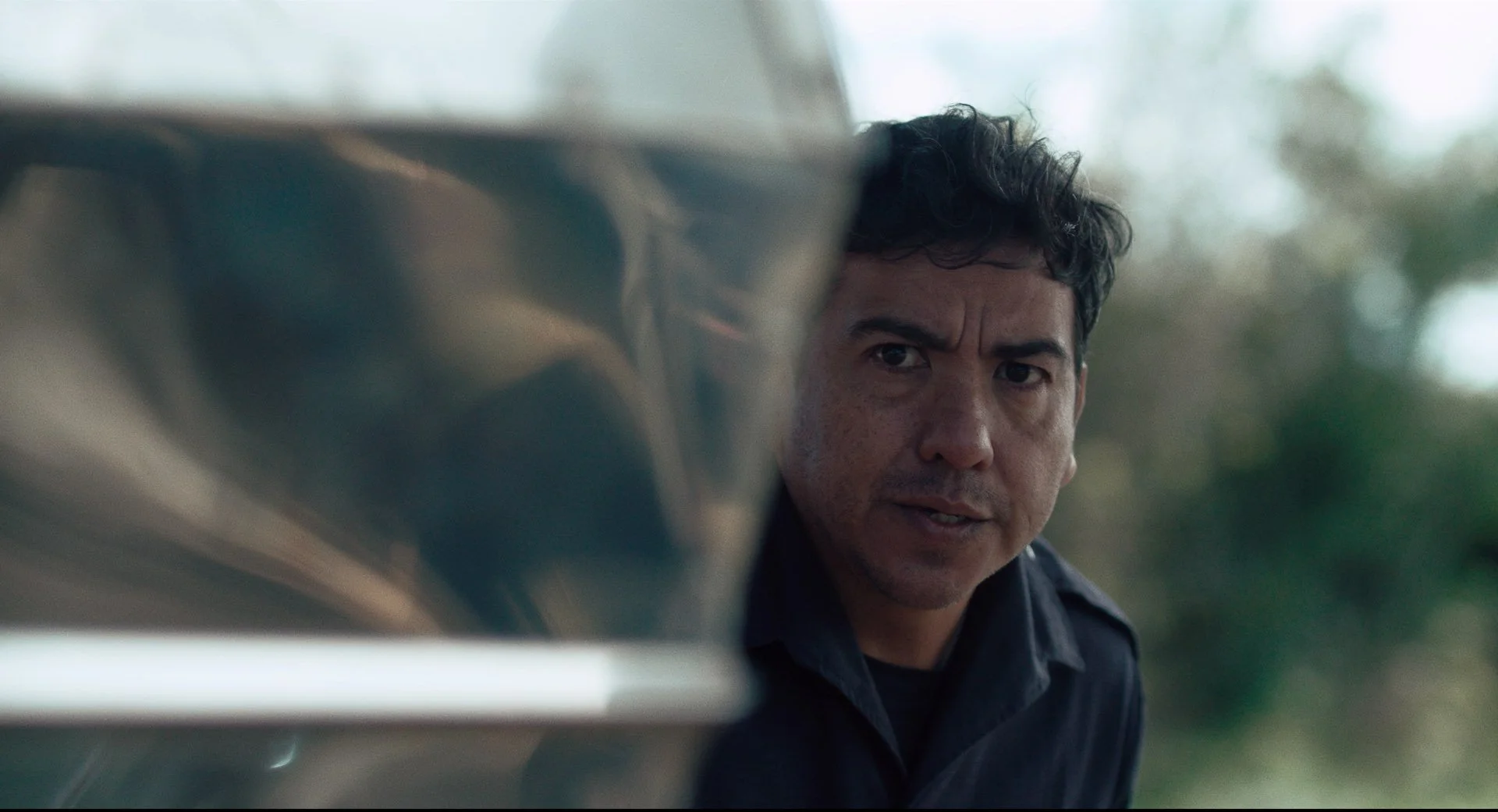
You can feel her outrage as Holland follows the story from different vantage points—including that of a Syrian family trying to get to Sweden; an Afghani woman who joins them; a border soldier tormented by the trauma he witnesses; and a psychologist who joins Polish activists bringing water, food, and medical aid to the refugees.
Most importantly, Holland immerses us in this hidden border zone that the world has forgotten. It’s a realm where migrants, from infants to the elderly, struggle to stay warm under blankets and tarps, where a bottle of water can run 50 euros, and where cellphones are weapons the soldiers try to smash. Much of the violence happens at night, when guards in face masks herd migrants into trucks, or when the refugees try to make a run for it through thick brush and waist-high mud to the supposed freedom of Europe—only to be hoisted back the next night, trapped in an absurd and dehumanizing loop.
Holland doesn’t delve too far into the political background of this mess. North Americans unfamiliar with the situation might find it useful to know Belarusian dictator and Putin crony Alexander Lukashenko promised in 2021 to flood the European Union with migrants as a way to destabilize it—even going so far as to allow refugees to fly into Minsk and then transporting them to the Polish border. “They are live bullets,” a Polish commander tells his troops in the film.
Instead, Holland wants to give viewers a sense of the ground-level brutality and suffering, and the effects not only on the people fleeing war zones but on the Poles tasked with capturing them. All this makes Green Border a grim, unflinching, but essential watch. Holland is pulling out into plain view an ugliness that has gone on for years under the cover of the forest.
Still, she saves her biggest gut punch for last, in her coda, when we see Poles welcoming Ukrainian refugees with open arms—the filmmaker walking a careful line between praise for a population stepping up to help millions of war escapees, but also posing deeply uncomfortable questions about whether those refugees’ race made a difference in their reception. Those are questions that echo widely—whether it’s to the waterways of the Mediterranean, where thousands have been lost at sea, or to the not-so-green border in the desert just south of Texas and Arizona. 

Related Articles