Theatre review: People, Places and Things dives inside the rehab bubble with bold theatricality
At The Cultch, The Search Party play’s strong performances, dry wit, and inventive staging capture the disorientation of addiction and the stories we tell ourselves about it
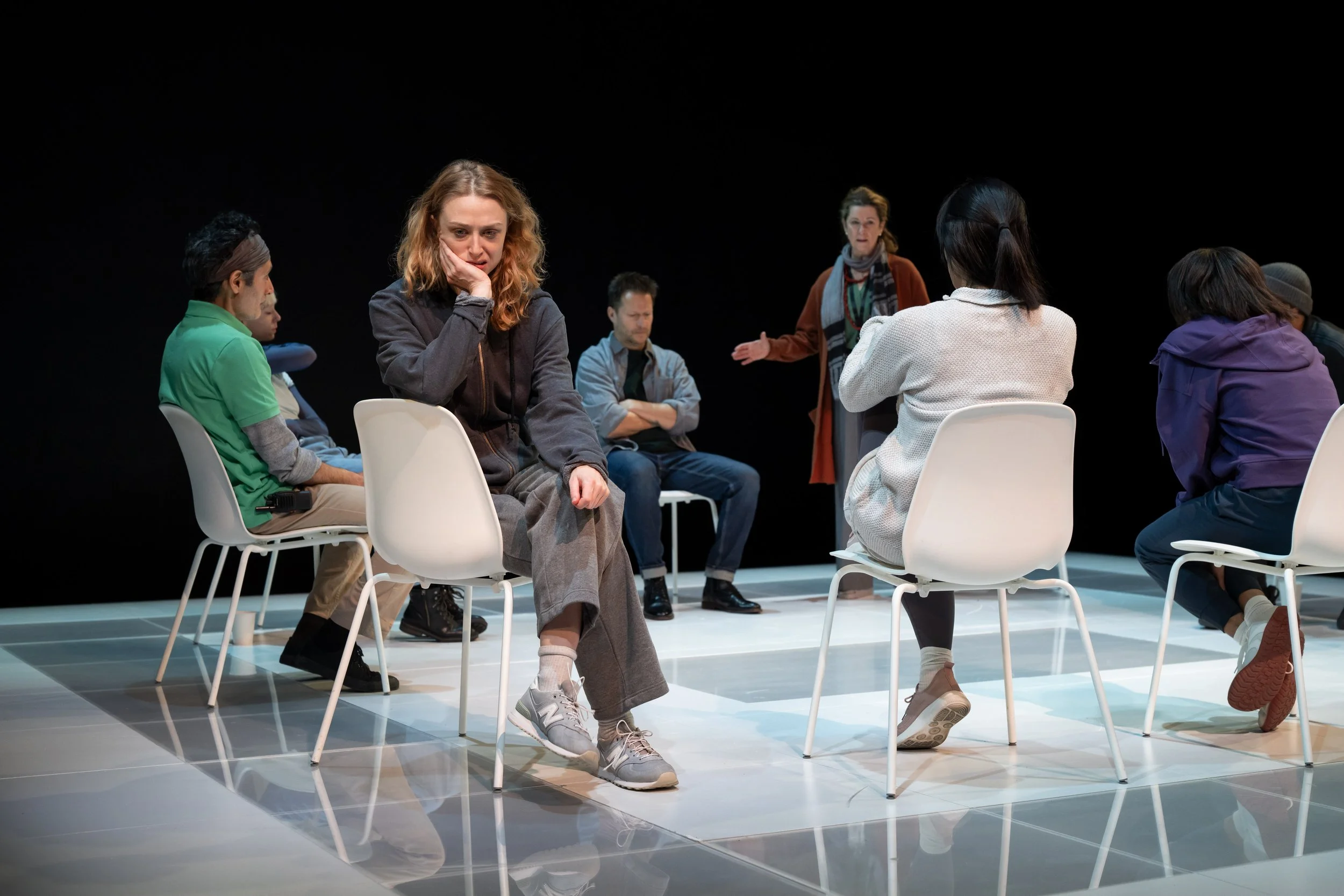
People, Places and Things. Photo by Emily Cooper
The Search Party presents People, Places and Things at The Cultch Historic Theatre to March 27
THE CONCEPT OF “acting as if” originated in the early days of Alcoholics Anonymous. The principle encourages those in recovery to behave like the person they hope to become until the behaviour becomes real.
Emma might be uniquely equipped—or uniquely resistant to—the logic behind it. Emma (which may not be her real name) is the central character of People, Places and Things and, importantly, an actor. Acting has largely been another escape hatch; as she tells us, “acting gives me the same thing as drugs and alcohol. Good parts are hard to come by.”
But British playwright Duncan Macmillan’s People, Places and Things is less interested in Emma’s addiction itself than in the stories she tells around it, and, in doing so, the stories we expect to hear.
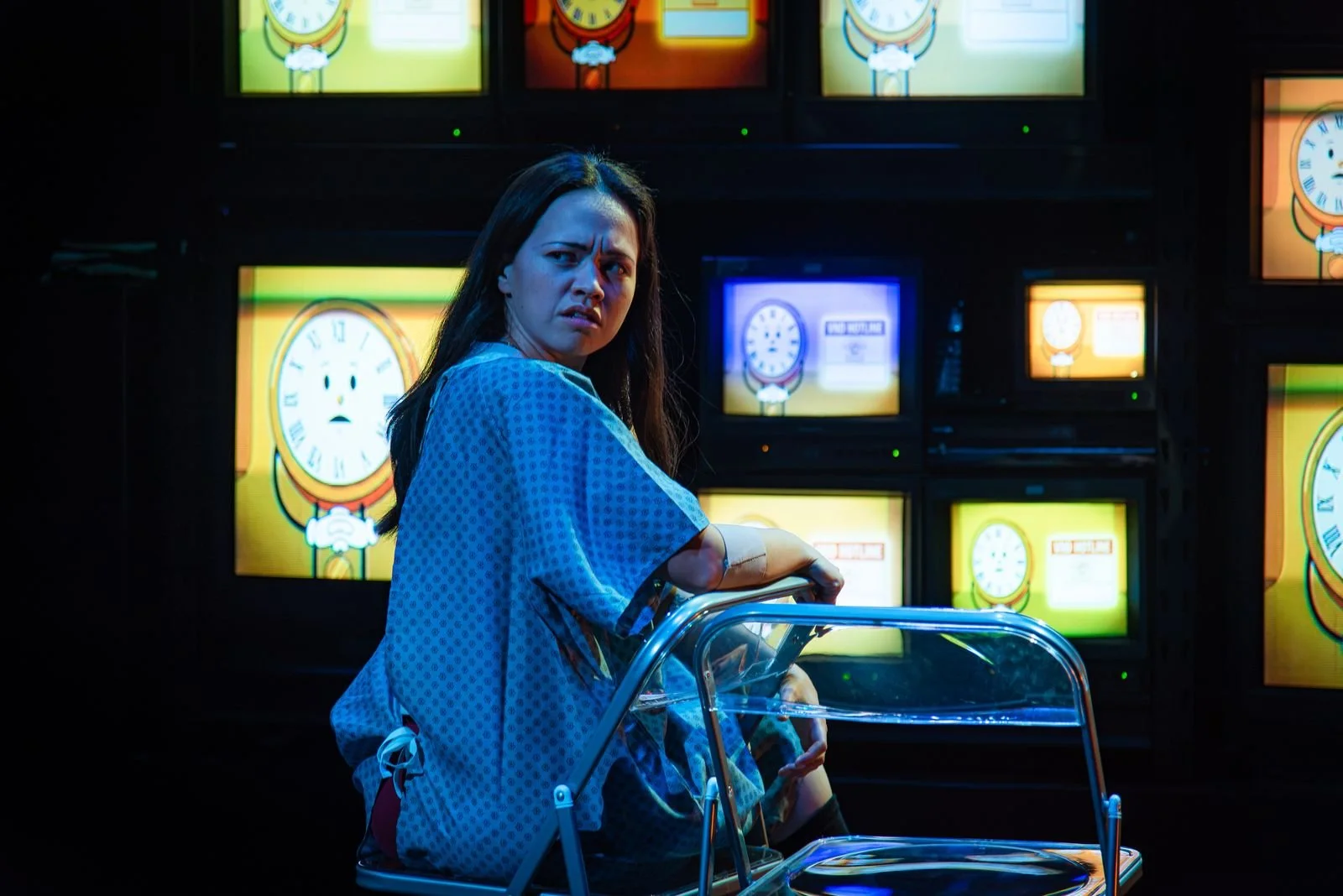
The show opens with Emma (Tess Degenstein) stumbling through a speech from Chekhov’s The Seagull. A drastic scene change, one of many disorienting but fluid transitions used throughout the night, moves us from the stage to Emma’s drug-fuelled night. A cocktail of benzos, weed, alcohol, and speed have begun to get in the way of her acting, and soon she checks herself into rehab.
Much of the show takes place inside the rehab facility, where Emma reluctantly checks herself in and almost immediately becomes incredulous about the process. Among the exercises are staged conversations in which patients rehearse difficult encounters they will eventually have outside the centre.
The humour comes from the language of recovery and Emma’s outright refusal to participate in it. The other patients speak with the certainty of people who have already been through it, often in blunt terms. Emma meets them with her own dryness, usually sarcasm and thinly veiled impatience.
The play carries a distinctly British dry humour, one that Mindy Parfitt’s direction leans into. The opening night audience responded with generous laughter.
There is a slight missed opportunity in not localizing some of the context to our city, though. And hearing references to the NHS, Brexit, and pubs without British accents briefly breaks the illusion.
Still, those are minor criticisms. The play’s concerns are deeply insular. The outside world matters far less than the inside of Emma’s head.
This is a play that puts a huge weight on its central performance, and Degenstein keeps the whole volatile thing squarely on her shoulders. A naturally sharp comic actor, she leans into the play’s dark humour without softening its edge. When her character is still using, Degenstein’s physicality is jittery and disoriented. She punctuates confessions with awkward laughter. There is a precision to her faulty, defiant flippancy as she dismisses everyone around her or just flat out lies.
Underneath it all sits a masked rage, and as she moves deeper into recovery, her anger grows clearer and her physicality becomes more subdued.
The head doctor of the recovery facility, played by a grounding Jennifer Clement (who also doubles roles as the therapist and Emma’s mother), tells Emma at one point that addicts are the broken centre of the universe. For the show’s two-and-a-half-hour runtime (intermission inclusive), the production makes that feel true.
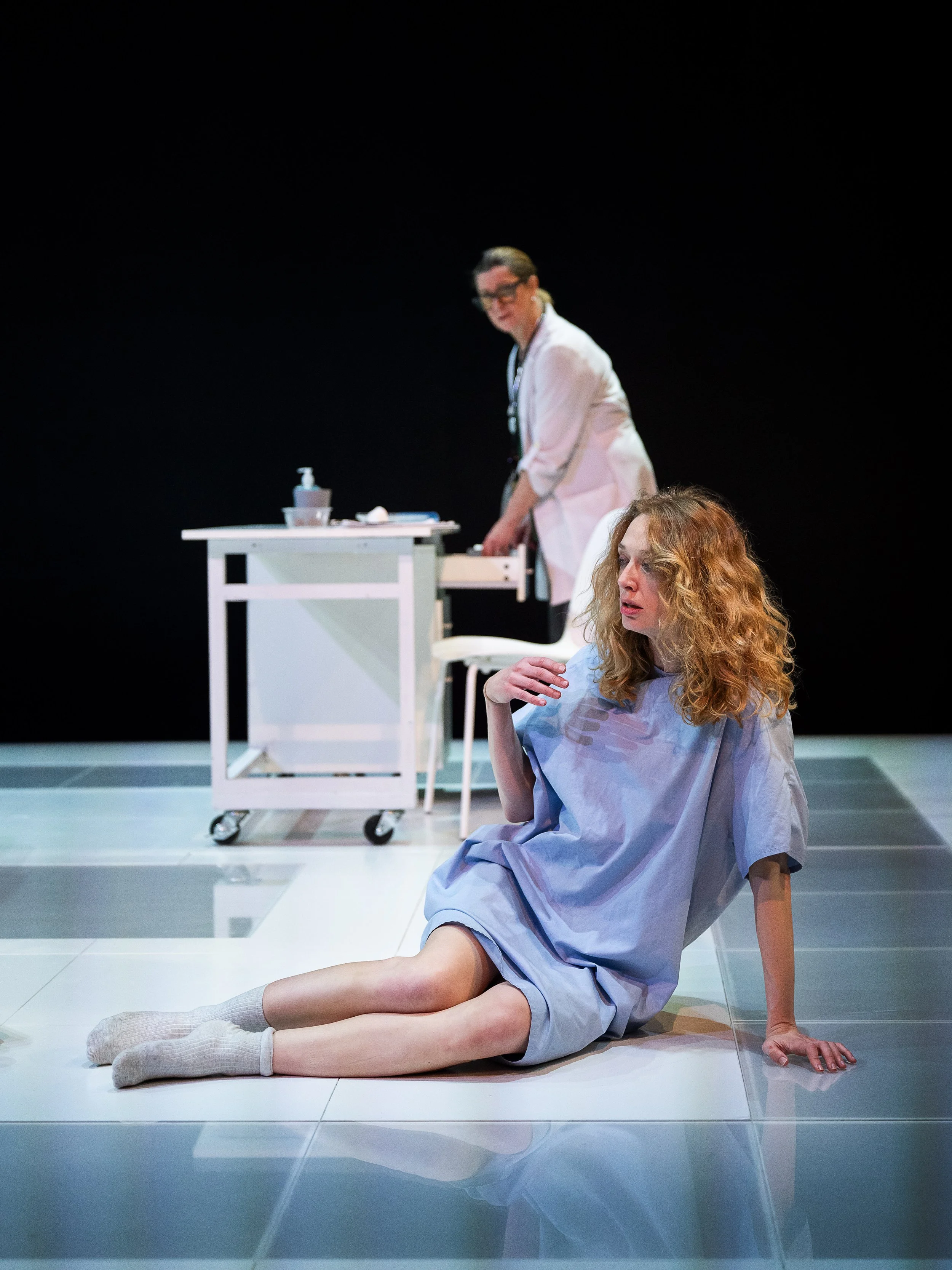
People, Places and Things. Photo by Emily Cooper
Amir Ofek’s set places Emma at the centre of gravity while keeping the world around her unstable. Scenes assemble and dissolve around her in full view of the audience. The stage is open and wall-less, a glowing white, square platform surrounded in darkness. Its tiled surface lights from beneath to isolate Emma or signal a shift in reality.
The game ensemble, choreographed by Heather Laura Gray, rolls in the few necessary objects—a bed, a desk, rows of chairs for group therapy—and clears them away just as quickly.
Jolting and pulsating sound design pushes the instability further, and Sophie Tang’s lighting is consistently immersive, but the most visceral effects come from the sudden blackouts that punctuate certain moments.
The ensemble cast is strong, particularly in the group therapy scenes, and for a moment it looks like the play gestures toward a collective portrait of recovery. The play quickly turns inward again, however.
Although Emma’s journey ultimately follows a familiar addiction and recovery axis, and stories like this usually resolve into melodrama or redemption, this play resists both. Instead, Emma’s recovery becomes more of a philosophical crisis of identity and narrative.
The ending makes that refusal clear. After rebuilding herself inside the “bubble” of rehab, Emma returns to the people, places, and things beyond her control that could make or break her sobriety. What follows is not reconciliation but a devastating stalemate, a ricocheting grief that refuses to resolve. (Kevin McNulty’s performance as Emma’s father is especially heartbreaking here.)
People, Places and Things is theatrically bold and viscerally stimulating, and it can also feel strangely cold. Its protagonist remains curiously blank at the centre of the story, a surface onto which to project heady questions about recovery. The result is conceptually rich, even if it sometimes feels sealed off from the world outside Emma’s head. 

Related Articles