Celebrating its 50th anniversary, the Powell Street Festival stays true to its legacy
Retaining its spirit of community and resistance, the long-running arts festival returns to Paueru Gai for a milestone weekend of food, performances, and storytelling

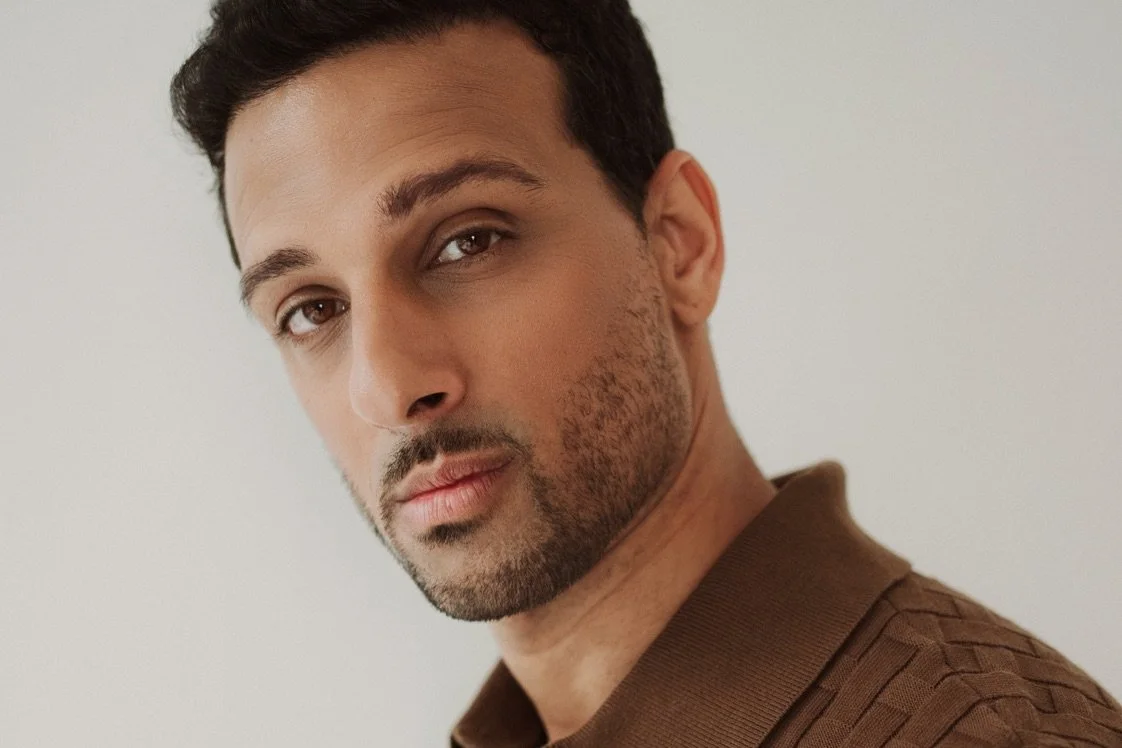
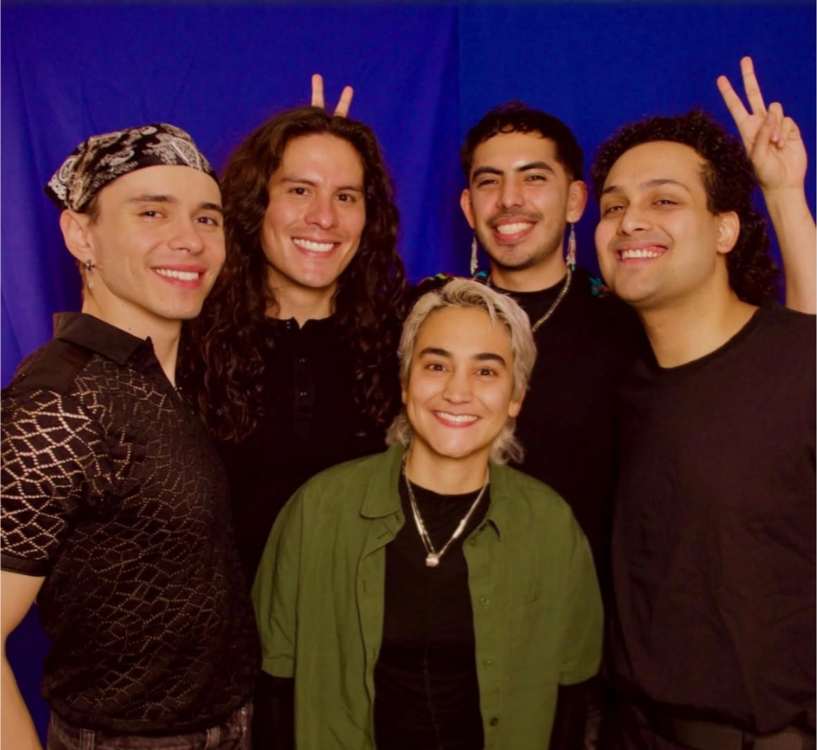
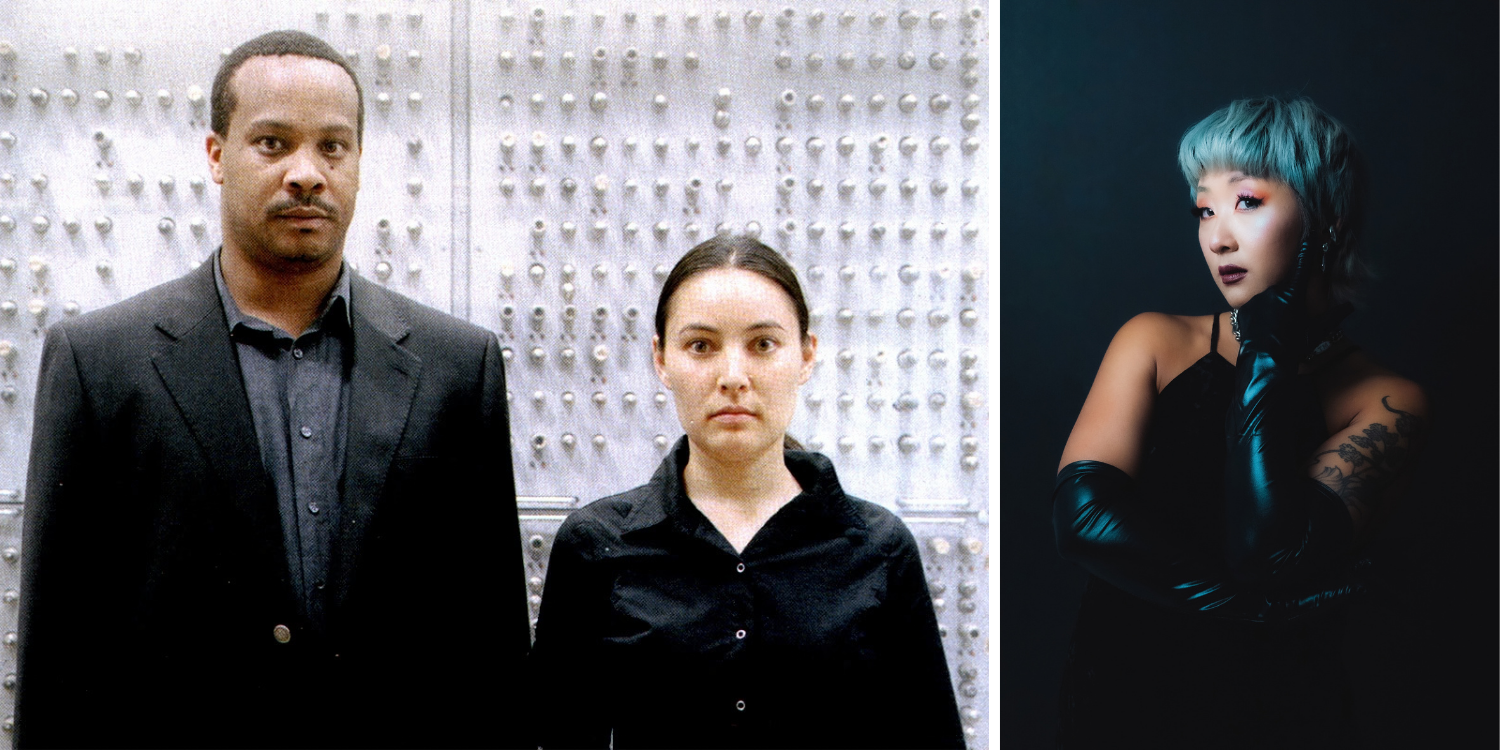
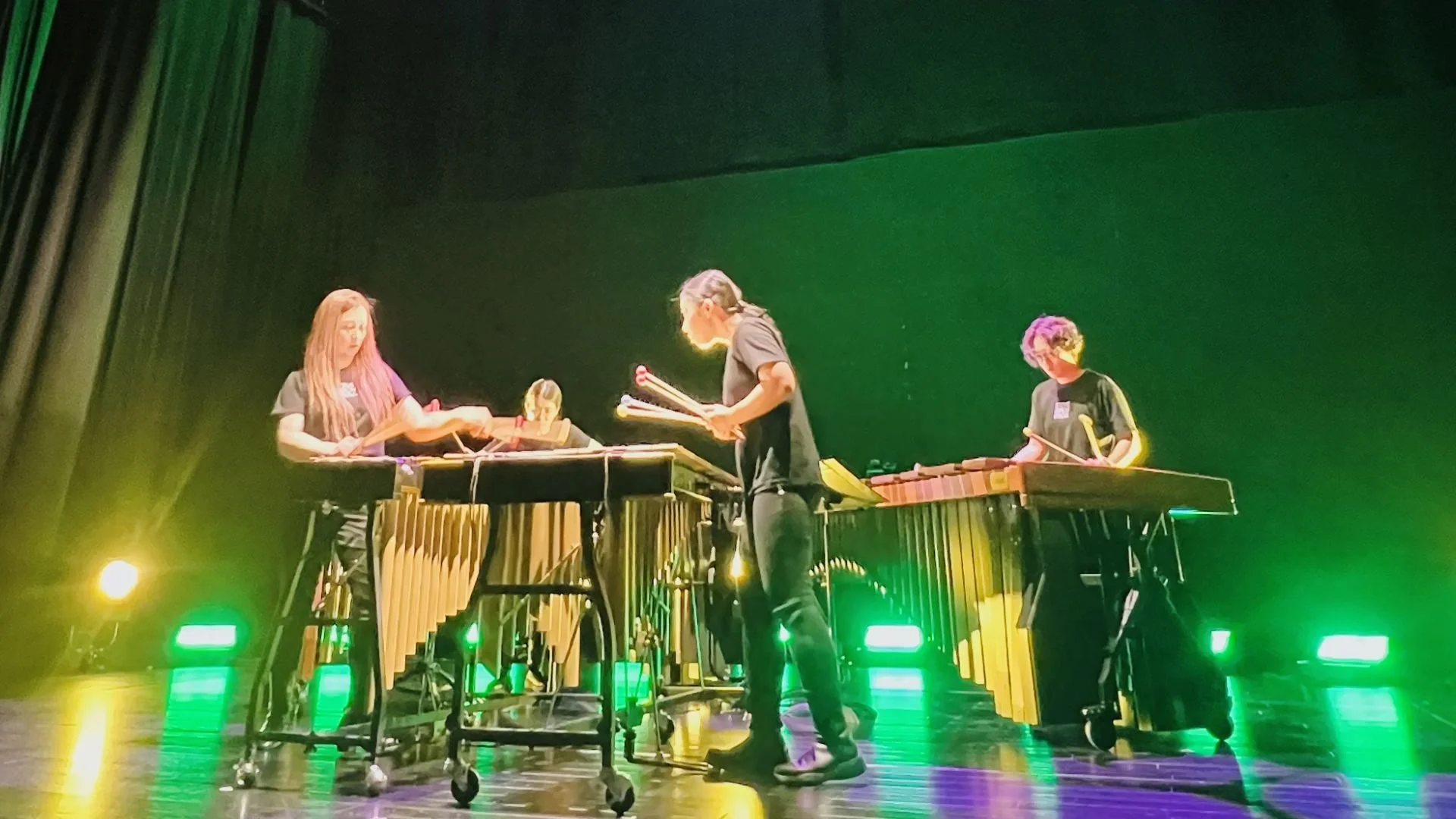
(Left to right) Sophie Yamauchi Latimer; Katari Taiko (photo by Jack’s Camera)
The Powell Street Festival runs August 1 and 2 from 11 am to 7 pm at Oppenheimer Park and in the Paueru Gai area (around Powell Street)
IN THE SUMMER of 1977, what was meant to be a one-time commemoration of the Japanese Canadian Centennial took place in Vancouver’s historic Japanese neighbourhood known as Paueru Gai (Powell Street area). Amidst a period of cultural renewal and the growing redress movement for the atrocities committed against Japanese Canadians during World War II, the first rendition of the Powell Street Festival created space for people to reflect, reclaim, and honour the community and its heritage.
Growing up in Vancouver, fifth-generation Japanese Canadian Sophie Yamauchi Latimer fondly remembers attending the beloved event with her family. Now, as executive director of the Powell Street Festival Society (PSFS)—a role she stepped into just ahead of the festival’s 49th year—she’s stewarding its 50th anniversary.
“Powell Street is the place that I always found community and where my family went to experience our foods and see our friends and family,” she tells Stir over Zoom. “This has always been a place that I could return to every year and really get to be Japanese Canadian, whatever that means to me.”
Running August 1 and 2 at Oppenheimer Park and the surrounding Powell Street area, this year’s festivity brings more than 80 free programs spanning from film screenings and traditional dance to art installations, martial arts demonstrations, literary events, and more. Visitors can expect the streets to be filled with the resounding rhythm of taiko drumming and the smoky scent of salmon barbecue mingling with sweet and savoury delicacies from local vendors.
Performance highlights include taiko ensemble Katari Taiko; karatekas from Sato-ha Karate Do Canada; the Vancouver Sakura Singers; and the new Paueru Gai Ondo, a community-based song and dance created to honour the history of the Powell Street neighbourhood. The marketplace features artists, makers, and small businesses offering everything from comics and paintings to handcrafted jewellery and pottery. Not to mention the ever-popular sumo wrestling competition, which has been renamed the Shig Hirai Sumo Tournament as a tribute to the late co-founder of Fujiya Japanese Foods, a longtime festival supporter and avid sumo enthusiast.
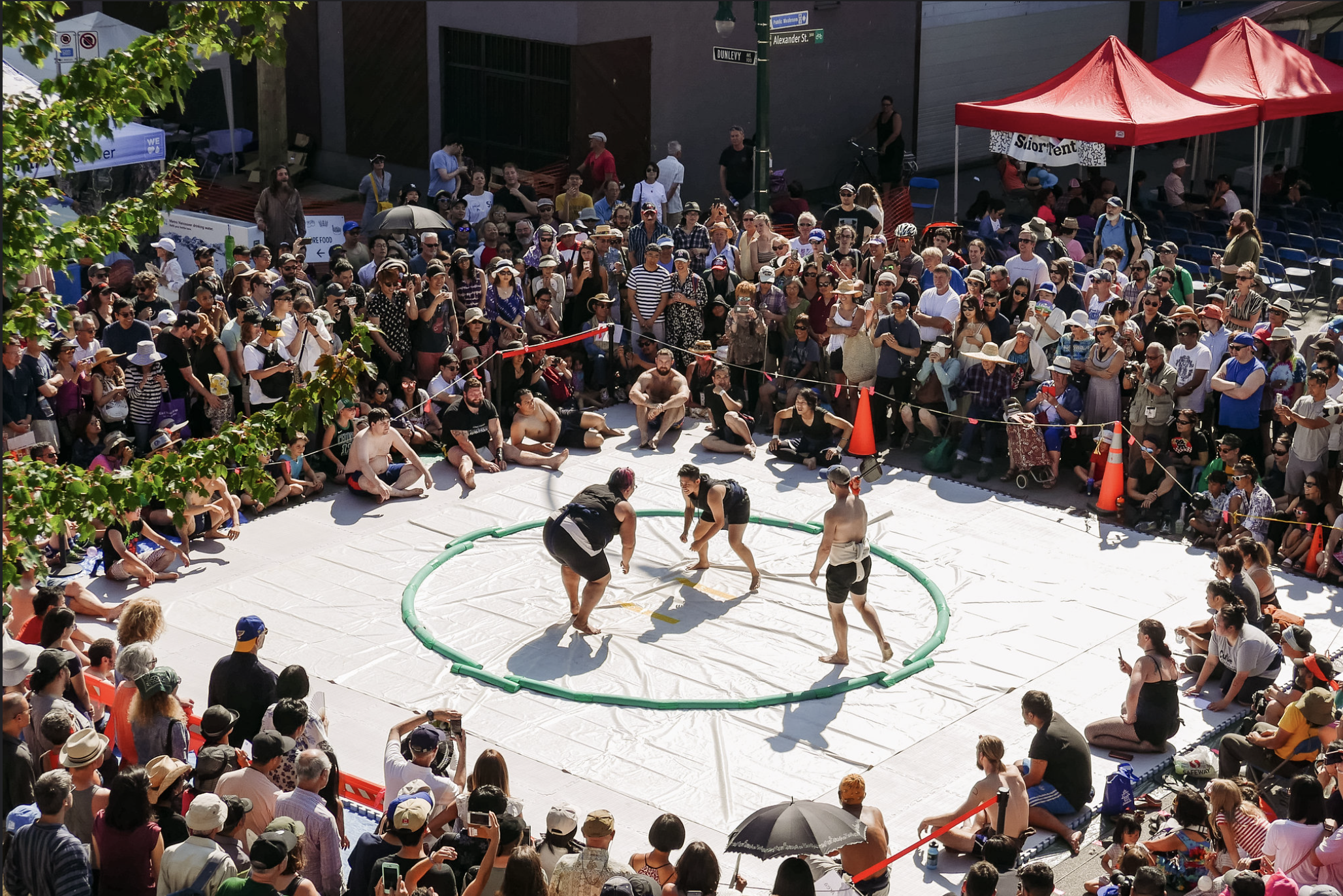
Sumo wrestling at Powell Street Festival. Photo by Tracy Moromisato
Earlier this year, the Hirai family gifted $250,000 to the Powell Street Festival Society’s Our Next 50 Years campaign. The landmark donation, Yamauchi Latimer explains, allowed for the creation of an inaugural endowment fund with the Vancouver Foundation, planting the seed of the festival’s sustainability.
“I would love to know that my future grandkids can sit with me at the information booth when I’m a senior, and they can do all the heavy lifting for me,” she says with a laugh. “I firmly believe that this festival, which has been held together by community, will continue to be held together by community.”
And community is most definitely at the centre of the festival’s 50th celebration. In addition to new merchandise and a stamp hunt leading visitors around grounds, the expanded programming funded by the Japanese Canadian Legacies Society (JCLS) highlights the projects of individual community members: think family cookbooks, art installations, oral histories, cultural workshops, and more.
Many of the projects wrapped up just within the last few months and will be shared for the first time at the festival—perfect timing, according to Yamauchi Latimer. “I think it’s those one-on-one conversations that will inspire somebody else to go do research on their family tree, and then hopefully we’ll have even more stories to show in the upcoming years.”
As the festival continues to shift and grow, Yamauchi Latimer is careful to hold onto what hasn’t changed since its inception. Grounded in a history of forced removal and the reclamation of Japanese Canadian identity and culture, PSFS is conscious that Paueru Gai is now home to another vulnerable population at risk of their own displacement in today’s Downtown Eastside.
“Powell Street has used our story of community and activism, and the fight and advocacy for human rights as our core,” she stresses. “As politics change around us, we shift to stay relevant. But really, it’s always about helping our neighbours, being able to celebrate who we are, and having the freedom to create and be a little weird.”

Related Articles