At VIFF, Soran Mardookhi’s The Flight witnesses collective action fuelled by individual grief
The Kurdish-Canadian filmmaker’s feature documentary follows three families of Flight PS752 victims in their ongoing fight for justice
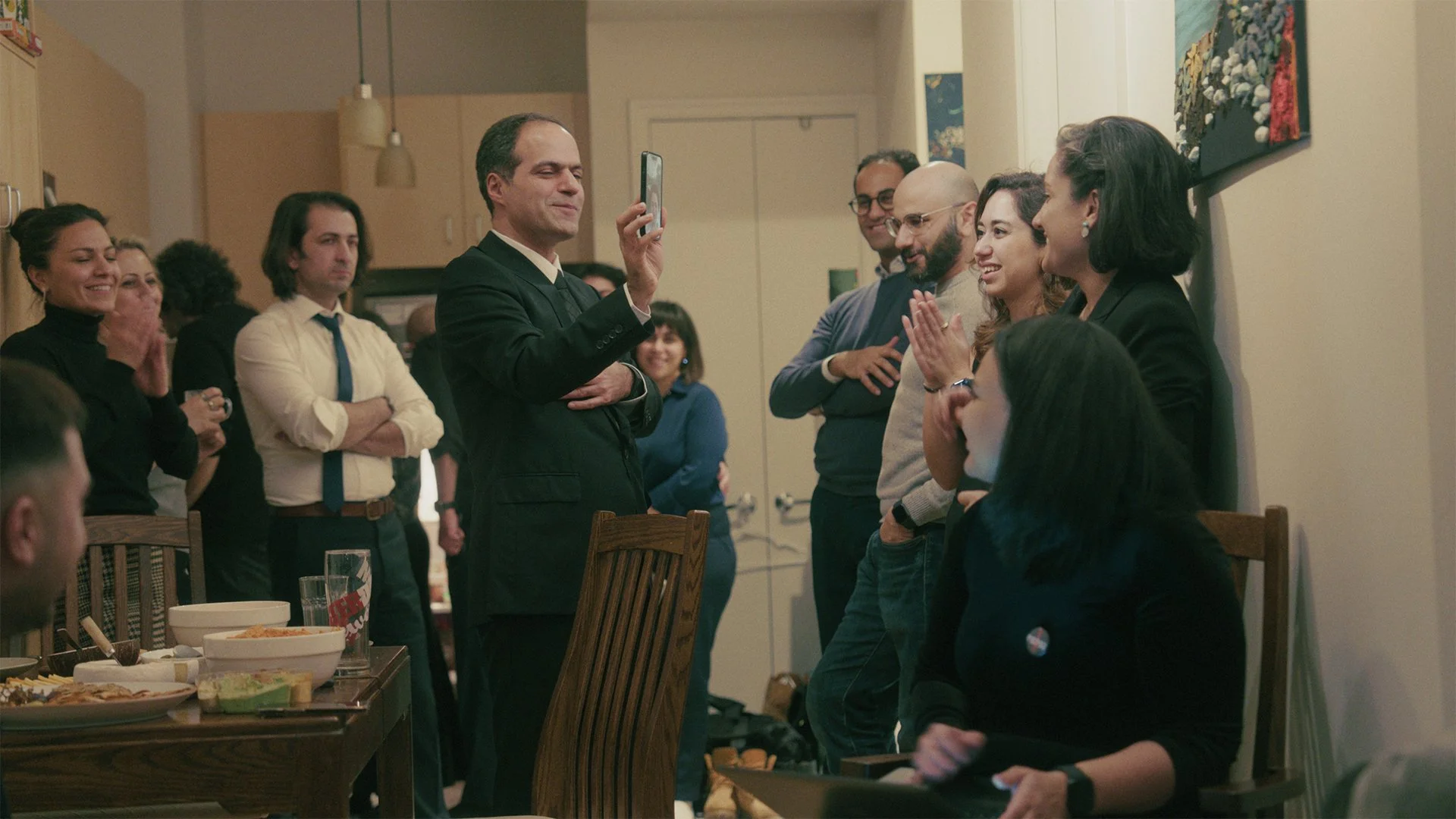
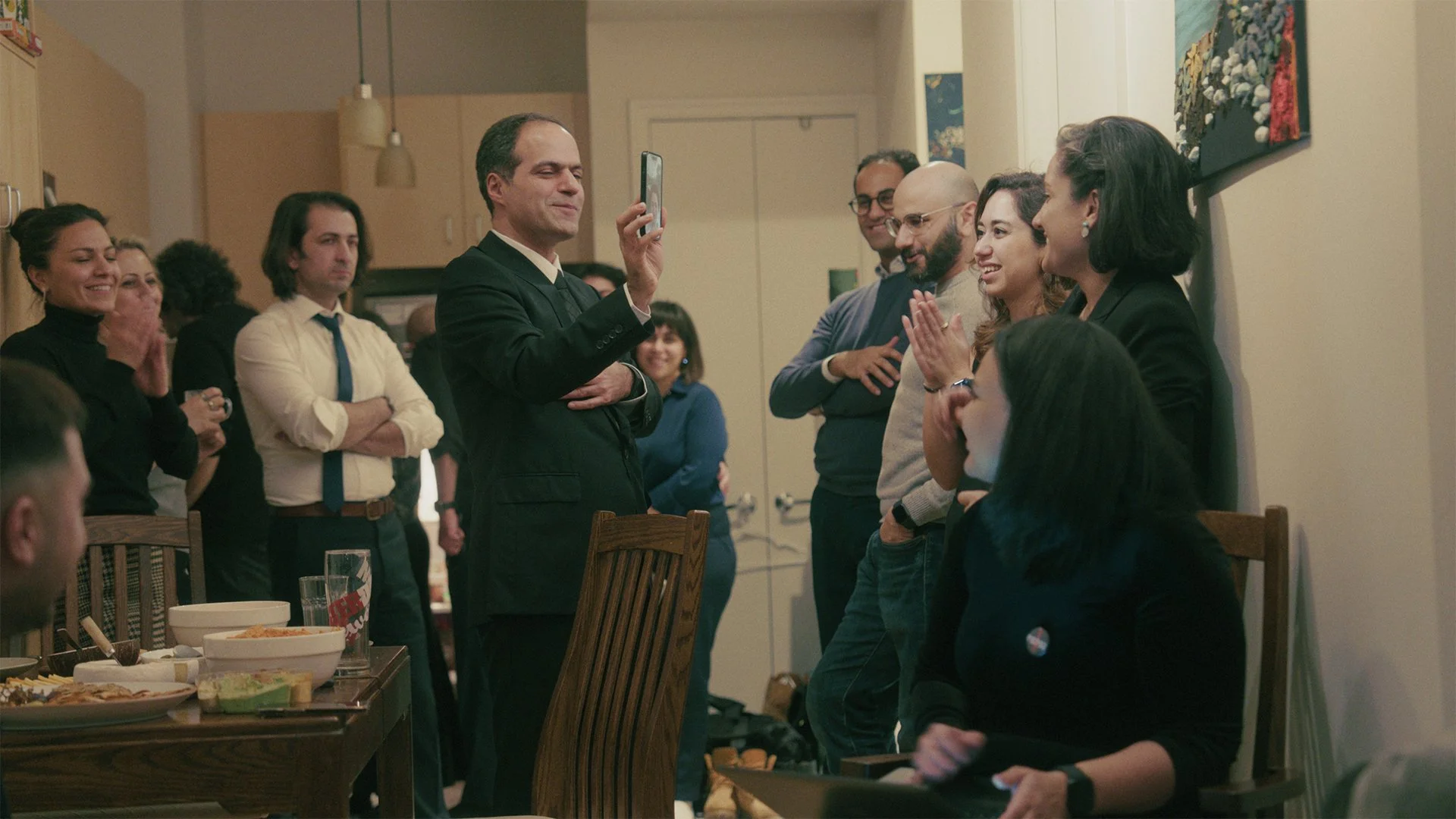
Flight PS752 families gather in Toronto in The Flight. Photo courtesy of the National Film Board of Canada
The Vancouver International Film Festival presents The Flight on October 8 at SFU Woodward’s and on October 11 at Fifth Avenue Cinemas
FOR THREE DAYS, they lied to the world.
On January 8, 2020, the Islamic Revolutionary Guard Corps shot down Ukraine International Airlines flight 752 (Flight PS752) with two surface-to-air missiles, minutes after the plane had taken off from Tehran’s Imam Khomeini International Airport. All 176 people aboard, including 55 Canadian citizens and 30 permanent residents, were killed.
For three days, the Iranian government claimed that the downing was due to technical failure. For three days, families and friends of victims waited for the truth. When Iran eventually admitted to the real cause, they dismissed it as human error. For Soran Mardookhi, those three days can only be likened to a kind of darkness. And so his latest feature documentary, The Flight, opens with a pitch-black screen, accompanied by the voices of family members describing the immediate aftermath of the tragedy.
“People sensed that there was something wrong and everybody was waiting, but those three days were very hard, especially for the families of victims,” the Kurdish-Canadian writer-director tells Stir over Zoom. “A black screen was the best picture I could actually create to show that moment.”
It was during this period of obscurity that Mardookhi decided to make his latest project documenting three families across Canada in their united search for truth, justice, and accountability. Produced through the National Film Board and premiering at this year’s Vancouver International Film Festival, The Flight is more than a story of loss and grief. The film follows parents, partners, spouses, siblings—with no familiarity in advocacy or international law—as they learn to navigate social platforms, hold public protests, form a non-profit organization, and overcome a complex legal system to bring their fight to international courts.
A long-time witness to their resilience and strength is Mardookhi, who has followed them on their journey from the very beginning, spending years researching, interviewing, and building trust with the families. “I knew two of those victims on the flight, Arvin Morattab and Aida Farzaneh. Both were very close friends of my cousin and brother,” he says. “I saw how these everyday citizens became experts in so many different ways, hiring lawyers, lobbying the government, publishing books.”
He reiterates that the film’s focus is not solely on loss and mourning, but also on how individual grief fuelled collective action. In the past six years, the Association of Families of Flight PS752 Victims has continuously campaigned for international accountability through numerous forums, including the International Civil Aviation Organization, the International Criminal Court, the International Court of Justice, and domestic courts in Canada. They have conducted independent investigations, organized demonstrations, and lobbied national governments and global institutions—all while ensuring that each victim is remembered.
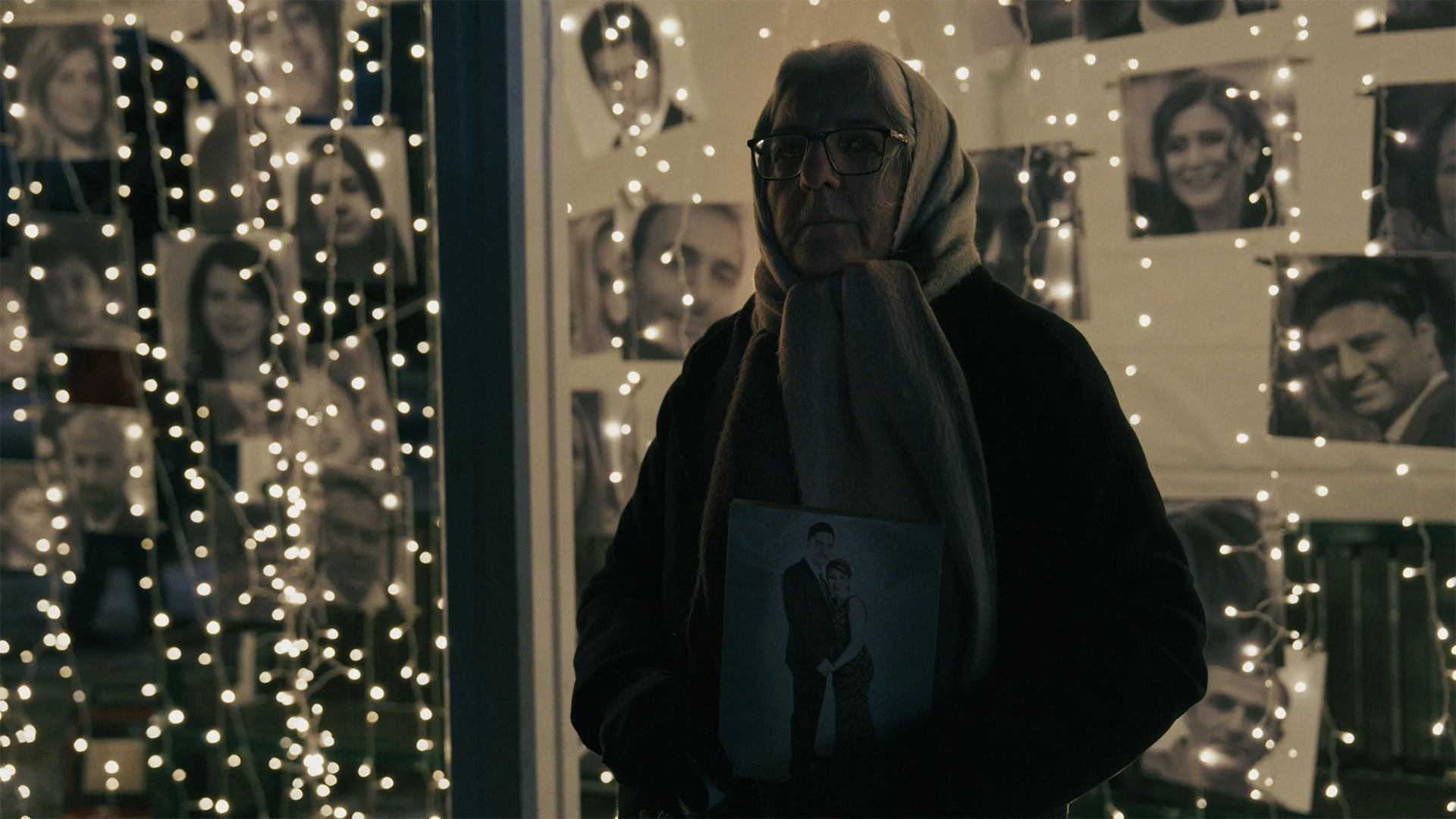
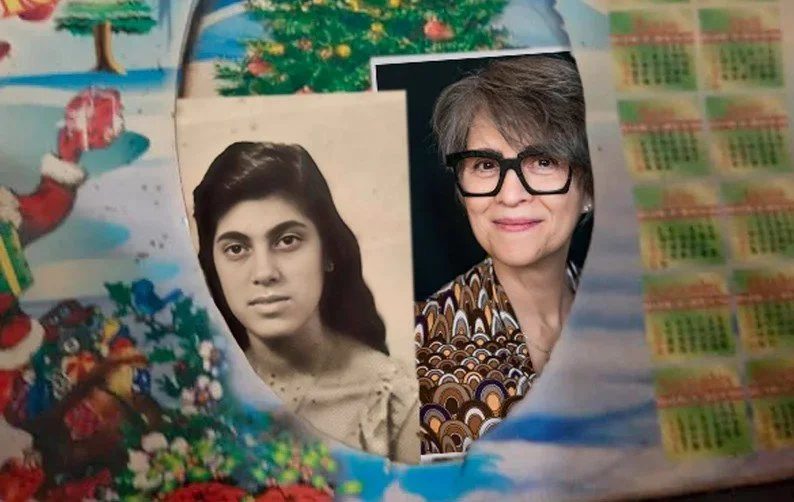
Shahla Ghasri, mother of PS752 victim Arvin Morattab, holds a photograph of Morattab and his wife in The Flight. Photo courtesy of the National Film Board of Canada
Throughout the film, footage of family gatherings, marriage proposals, and daily moments of shared laughter provide intimate glimpses of the lives that were suddenly taken away. Mardookhi’s use of home videos stems from his desire to highlight the individual lives that often get buried under a figure. For Flight PS752, that figure is 176. “Numbers are very important. It shows how big that crime was,” he says. “I also know that once the numbers go up, we forget about the people behind the numbers.”
Far from forgotten, these people are front and centre in The Flight, both on and off camera. Creating a safe environment was a priority for the filmmaker, who intentionally worked with a small crew and allowed the families to take the lead in sharing their stories. “After a while, you forget there’s a camera, and most of the actual film you see is not planned, it just happened at that time,” he explains. “I let the families direct us, not me direct the families. I stayed back and let them talk for themselves.”
Moments captured onscreen reflect the realities of these families, whose lives are permanently marked by their loss. When Arvin Morattab’s mother tells an anecdote about her son’s childhood, the room fills with laughter and nostalgia, and then just as quickly falls into deafening silence. Elsewhere, the Association of Families gathers in an apartment in Toronto; between warm embraces and joyful greetings in Farsi, Kurdish, and English, there are periods of stillness and moments of frustration. This is their reality.
Looking back on the past five years he has spent with the families, Mardookhi recalls a line that has stayed with him to this day. “Arvin’s brother, Arash, says this in the film: ‘Justice is a journey.’ And that actually changed my direction of the piece,” he says. “It’s not just going to court and saying that was the Iranian regime’s fault and done. Justice for these families is to bring back all those lives to this world, which is impossible. But why are they still fighting? For what? To make sure such an unbelievable pain does not happen to other people.”
The Flight is an ongoing story that reaches beyond Flight PS752 itself. What does justice mean when crimes are irreversible? How can ordinary individuals hold powerful authorities accountable? How can we find the truth?
“Some ordinary people came together and fought one of the most brutal regimes in the world,” Mardookhi reflects. “It’s not impossible. It’s possible.” 

Related Articles