Vancouver Cultural Precinct unveils ambitious call for four new arts venues, from a 400-seat hall to a 2,000-seat proscenium theatre
Space-starved alliance of 32 of the city’s arts groups releases a range of possible architectural site concepts that span Robson Square, Larwill Park, Northeast False Creek, and renos to the Queen Elizabeth Theatre building
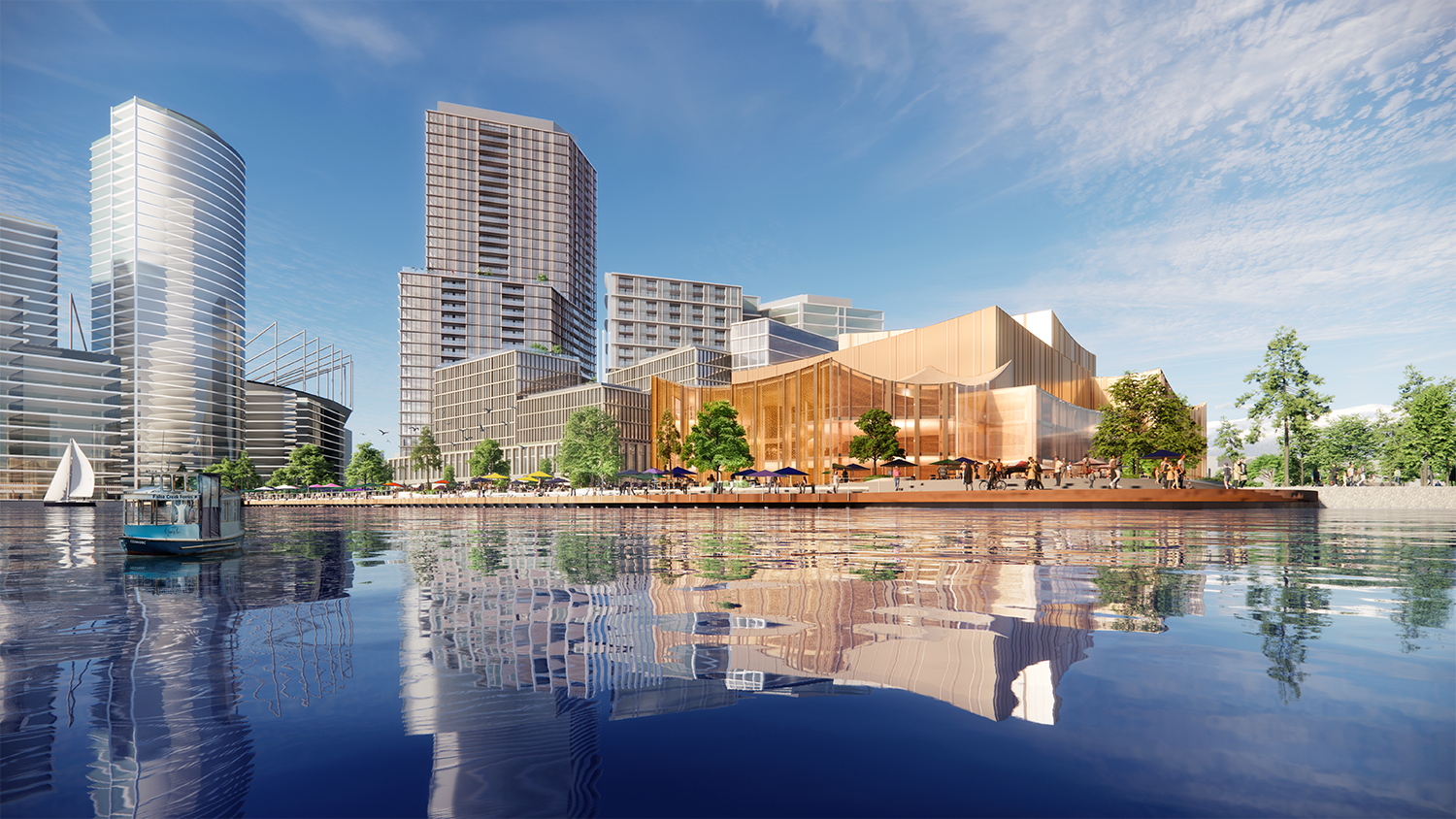
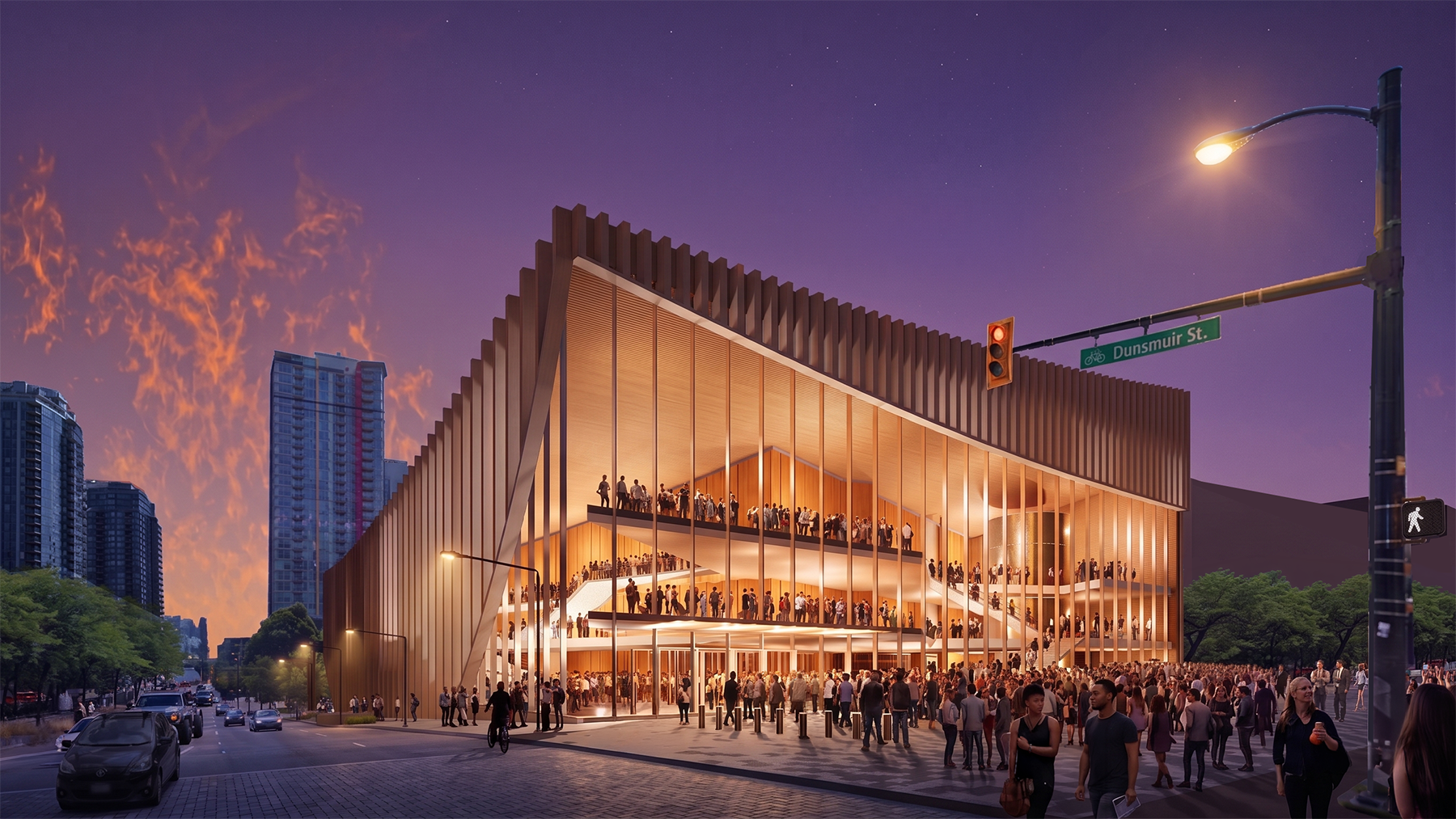
Diamond Schmitt Architects’ rendering of a new large-proscenium venue at Northeast False Creek.
A concept from Diamond Schmitt Architects for a new concert hall at Larwill Park.
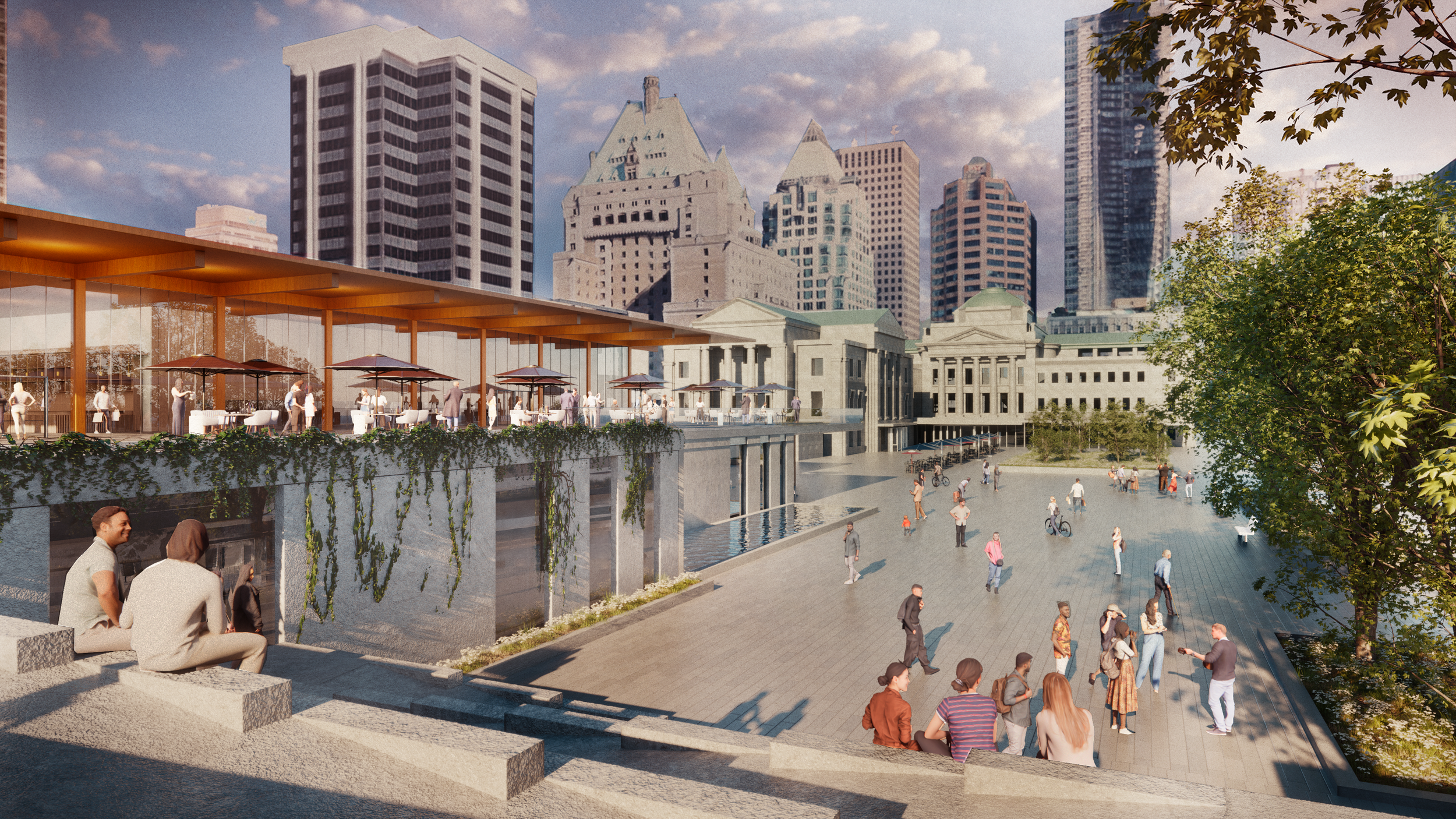
Diamond Schmitt Architects’ vision for the south side of Robson Square, with small hall and Rattenbury Building renovation for a concert hall.
THE VANCOUVER CULTURAL PRECINCT has unveiled an expanded vision for four new performing-arts venues in the city’s downtown.
In an announcement today at VIFF Centre, the hub would include a 400-seat hall for recitals, chamber music, and other events; an 850-seat medium hall for dance, choral concerts, and more; a 1,750-seat concert hall to accommodate large-scale orchestral and choral performances; and a 2,000-seat large-proscenium venue for opera, ballet, and other large-scale productions.
Among the proposal’s most ambitious architectural renderings are a scalloped-glass-walled waterfront landmark on Northeast False Creek; a grand, undulating glass shared foyer at the Queen Elizabeth Theatre site; and a medium-sized venue that would seamlessly convert from an acoustically optimized music hall to a multipurpose dance and opera space through a rigging system and moveable panels.
At a press conference today, the alliance of 32 arts groups said the quartet of theatres would together form a vibrant new cultural hub downtown. All three levels of government were on hand to support the concept plan today, including Deputy Mayor Sarah Kirby-Yung, MLA Terry Yung, and Vancouver Centre MP Hedy Fry.
However, the location for the venues has not been nailed down.
As part of a two-year feasibility study, early-concept drawings by Canada’s Diamond Schmitt Architects—a firm that has an extensive portfolio of arts and culture facilities across Canada and the United States, including the National Arts Centre—were released today. They include different combinations of renovating the Queen Elizabeth site, adding to the proposed new Vancouver Art Gallery development at Larwill Park; building at Robson Square on the old Vancouver Art Gallery site (including renovating what the VCP is calling the Rattenbury Building, after its original, early-20th-century architect Francis Mawson Rattenbury); or erecting the major new theatre at Northeast False Creek, near where the Georgia Viaduct now sits. There are at least two site possibilities for each of the four venues.
Organizers are calling it the most significant cultural investment in the city’s history—a project finally gaining momentum after several attempts over three decades.
For Suzanne Anton, former B.C. attorney general, vice-chair of the Vancouver Symphony Society, and chair of the Vancouver Concert Hall and Theatre Society that’s leading the VCP initiative, it’s time for a city celebrated for its arts to get the world-class stages it deserves.
“I’m not sure how well the culture side of our world has advocated for itself over the years,” she told Stir in a separate interview. That, despite wide acclaim abroad—as when the VSO earned an orchestra-in-residence spot at the prestigious Salzburg Easter Festival this year, dance talent like Ballet BC and Crystal Pite’s Kidd Pivot saw sold-out houses around Europe and the U.S., or the Vancouver Youth Choir won top prize at the Cork International Choral Festival in May.
Anton stressed that two factors take precedence across all four proposed venues: acoustic excellence and multifunctional attributes for flexibility of use.
AT LEAST PART OF THE RATIONALE for new venues is that Vancouver holds the lowest per-capita music hall capacity of any major Canadian or comparable international city—0.52 seats per 1,000 residents, compared with Toronto’s 1.03 or Melbourne’s 1.44. No new major performance venues have been built here since 1997 (the Chan Centre for the Performing Arts out at UBC), and estimates are that the population will grow by 67 percent between 2001 and 2030.
In a presentation today, architect Donald Shmitt also pointed out the economic impacts of cultural precincts, including the fact that Melbourne Arts Precinct brought in $16 of economic impact for every dollar spent on its facilities.
The gap in adequate spaces has pushed some touring productions to bypass this city for Calgary and Seattle, while local groups have difficulty finding available space to program their performances at civic theatres. The 2,762-seat Orpheum alone is booked 311 days of the year.
In addition, there are currently no civic theatres in the in-demand 800-to-1,200-seat range that was identified as ideal by about one-third of the arts groups as part of the feasibility study. The Queen Elizabeth Theatre has 2,765 seats and the Playhouse 668—though the latter lacks the wing space, upstage areas, and robust fly tower required by many dance and theatre productions.
“A medium-sized hall will be very welcome to opera and dance, because at the opera, it is hard for them to put on some of these very interesting new works in a large venue,” Anton told Stir of the proposed multifunctional, 850-seat “medium” theatre that could fill this gap. “It seems to be our number one building in terms of interest to our organizations.”
The 850-seat venue would also house the most multifunctional of spaces, shape-shifting from a concert hall to a wider dance space, thanks to moveable acoustic partitions that make way for a fly tower and wings. The VCP and architects have been inspired in part by the Alice Tully Hall at New York City’s Lincoln Center for the Performing Arts, an acoustically superior space that converts from chamber music and recital to film and multimedia configurations. Increasingly, European cities, too, are prioritizing smaller, flexible, multidisciplinary spaces that allow different seating and stage configurations, rather than traditional larger, single-use auditoriums.
“Both of those communities [dance and music] were really anxious that they would be compromised if they were in a space that wasn’t specifically designed for them,” Diamond Schmitt architect Matthew Lella told Stir in an interview at the press conference. “So we took that question extremely seriously. This can’t be top tier for one and second tier for the other. So we looked quite carefully at quite a lot of precedent. It also can’t be expensive to flip.” He says the architects are now confident that they can build a medium-sized theatre “with an orchestra pit that would also be perfect for dance”.

Diamond Schmitt Architects’ interior view of the multifunctional “medium hall” in chamber-concert and recital mode.
OVER THE PAST TWO years, the precinct alliance has looked at many site options and several configurations of theatres. But with the help of Diamond Schmitt Architects and what Anton describes as surveys and decision-making through intensive workshops, here are the options the group has now narrowed down:
Putting the small theatre and either the 850-seat medium venue or the 1,750-seat concert hall in a renovated Rattenbury Building that will eventually be abandoned for the Vancouver Art Gallery’s planned new facility in Larwill Park. “I’ll put my own personal opinion in here: I think Robson Square is underachieving,” Anton asserted. “It’s broken up. People love to walk through Robson Street. They love to congregate around the art gallery. But that south side between Robson Street and the courthouse is pretty much inactive. And we think we could transform Robson Square.” The logistics are challenging, as it would require getting the Province, the Arthur Erickson Foundation, UBC, and heritage advocates on board.
Adding the small venue, the medium venue, and the concert hall to the current Queen Elizabeth Theatre site and adjacent Larwill Park, where the new art gallery will be. The 850-seat “medium” theatre could run along Hamilton Street, placing all four theatres on the current Queen E. and Playhouse site, sharing a massive, undulating glass lobby in architectural renderings. The medium venue could also move over to sit with the new art gallery at Larwill Park. Architects suggest lowering the grade at Cambie Street to allow for easy pedestrian access and gathering space across from the new gallery.
Creating the biggest 2,000-seat “large proscenium auditorium” for opera and ballet with either significant renovations and upgrades to the Queen Elizabeth Theatre, and possibly sizing down the current home to Ballet BC and Vancouver Opera from its current 2,700 seats; or creating a brand-new, purpose-built 2,000-seater on the waterfront at Northeast False Creek, on the former Expo Lands. As for the latter idea, Anton admits to major challenges. “We think it could be Vancouver's Sydney Opera House,” she told Stir. “But it’s also quite long-term. You probably know that the viaducts are proposed to come down at some point. And there’s two major landowners down there, Northchild Group and Concord Pacific. They are talking about rezoning, but they haven’t brought anything in for rezoning yet.” Architect Shmitt showed drawings that would create a whole new neighbourhood on the water’s edge, adjoining greenspace and pathways that would lead over to Science World.
These proposals have grown out of a long history of effort to bring a new theatre complex to Vancouver. Rewind to 1993, and the City secured a site in Coal Harbour for an arts complex, along with $7.5 million from developer Marathon Realty in community amenity contributions. The Civic Arts Complex, featuring a 1,500-seat concert hall at Burrard Landing, was intended to complement the City’s existing civic theatres and was to be developed and operated by the Vancouver Concert Hall and Theatre Society non-profit. Ten years later, that plan was eclipsed by the Province’s Vancouver Convention Centre Expansion Project, and Vancouver city council agreed to release the City’s interest in the site to the Province, in exchange for a cash contribution of $10.6 million. Then a VCHTS plan in 2011 proposed repurposing the current Vancouver Art Gallery site as a 1,950-seat underground concert hall and 450-seat multipurpose theatre designed by famed architect Bing Thom.
For various, complex reasons, those earlier plans never got enough traction, but the fund earmarked for a new arts complex or concert hall, meanwhile, has grown to well over $30 million in these decades.
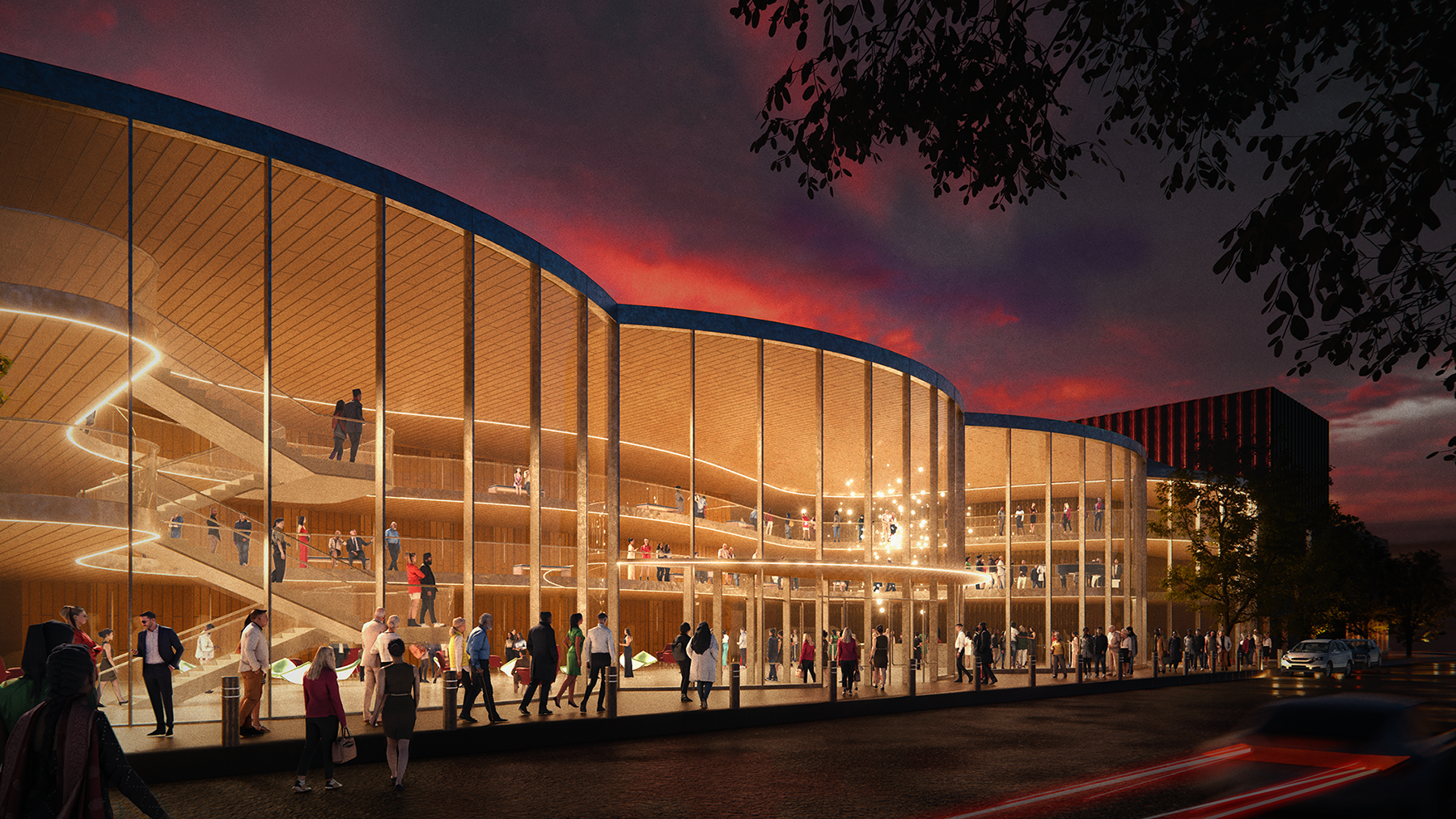
The concept by Diamond Schmitt Architects for a shared Queen Elizabeth Theatre Hamilton Street entrance, renovated for the new halls.
IN THE ENSUING YEARS, Vancouver arts groups have seen increasing pressure on their ability to find available, adequate venues. But many of the original advocates from earlier attempts—groups like the VSO, the Vancouver Recital Society, DanceHouse, Vancouver Opera, and Ballet BC—are helping to steer the new project, drawing in an unprecedented number of other organizations, from the city’s strong contingent of choirs to Indigenous dance troupes and new-music groups, to add strength in numbers.
Arts groups from so many different areas have never rallied for a cause like this before. And yet, there are art forms that are absent from the 32-member working group, most noticeably larger film and theatre groups. Architects have said they are focusing all four venues on “art forms that use music in an acoustic way”. But are the spaces going to be as flexible as they could be long into the future?
“I think I’ve been approached by theatre a few times,” Anton explained to Stir. “But it just seemed to be biting off more than we could chew. We are obviously extremely supportive of all the performing arts in Vancouver, including theatre. And one of the things that this does, by the way, is it frees up the Playhouse, which was built as a theatre. So if we have a lot of organizations wanting a music hall going to either the 400- or the 900-seat venue, there’s a lot more room in the Playhouse. And could we get a theatre company back there again? I don’t know.”
What is clear is that there is much more work to do before locations are firmed up. With a civic election happening this fall, the Vancouver Cultural Precinct volunteers are eager to solidify support as more in-depth site analysis and budgeting takes place.
Anton hopes to have announcements for site selection within a year, with project investment estimates and economic impact analysis following that. The hope is that the cultural precinct will enter a construction phase between 2029 to 2034, with staggered openings for each of the four venues—though it’s hard to say now just which facility might come to fruition first.
“We’ll start where the going is good,” Anton said. “Where we land the building and where we have support to build it—that is the one we’ll go with first.” As VSO president and CEO Angela Elster added today: "It's not if the Vancouver Cultural Precinct will happen, it's about how fast it can happen." 
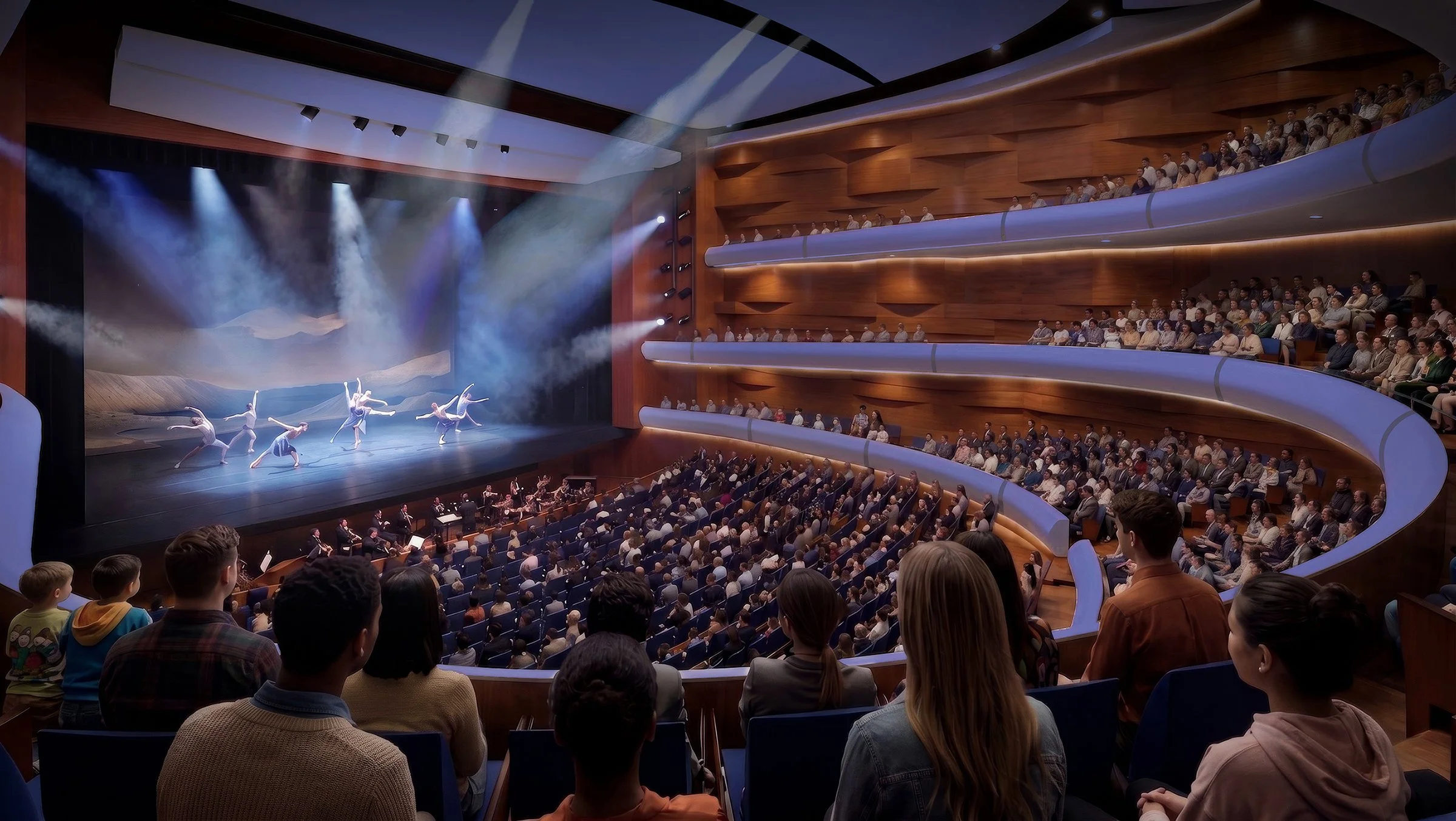
Diamond Schmitt Architects’ concept for a large-proscenium auditorium.

Related Articles