Fin’Amor takes the hurdy-gurdy into uncharted territory at the Queer Arts Festival
Composer Jeffrey Ryan, librettist James Fagan Tait, and tenor Bud Roach explore contemporary art song with the medieval era’s version of the synthesizer
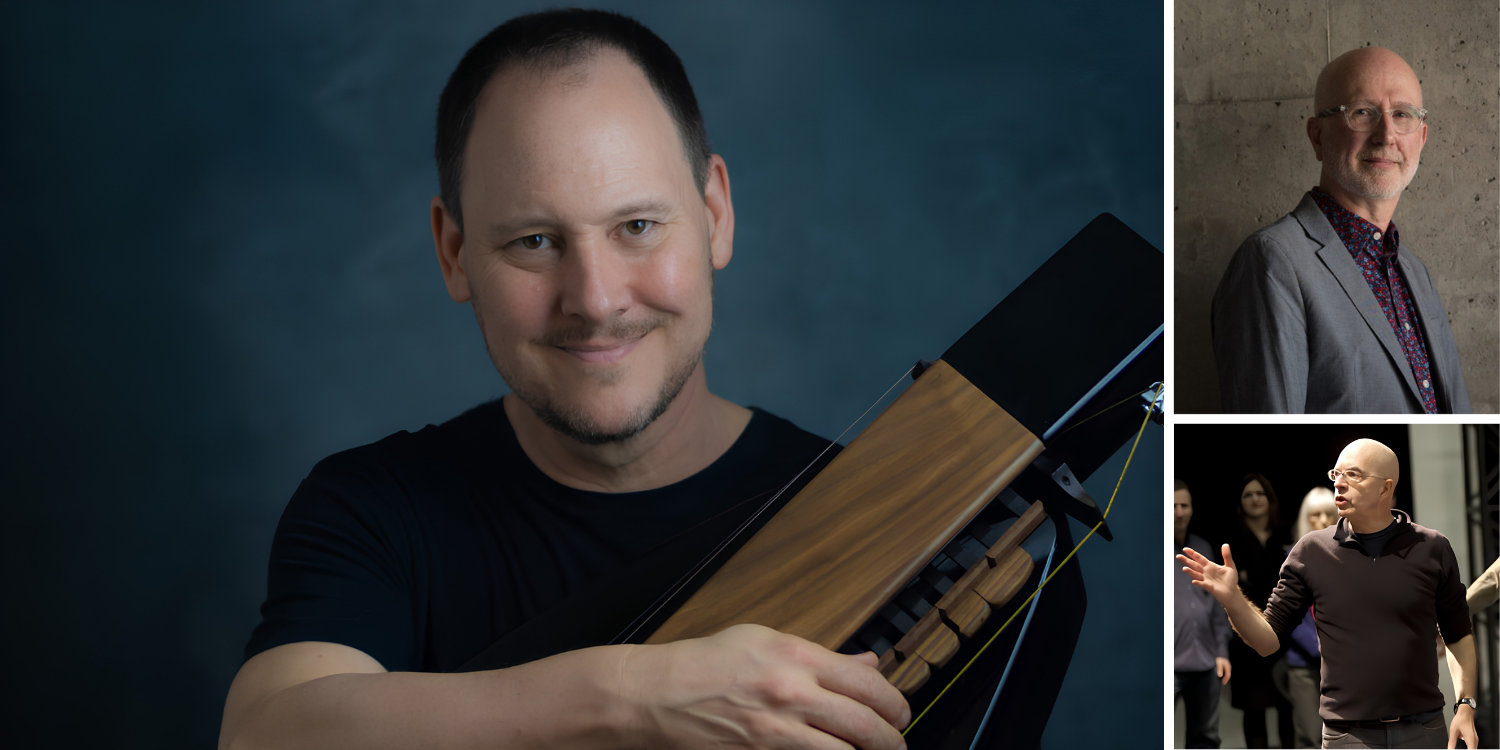
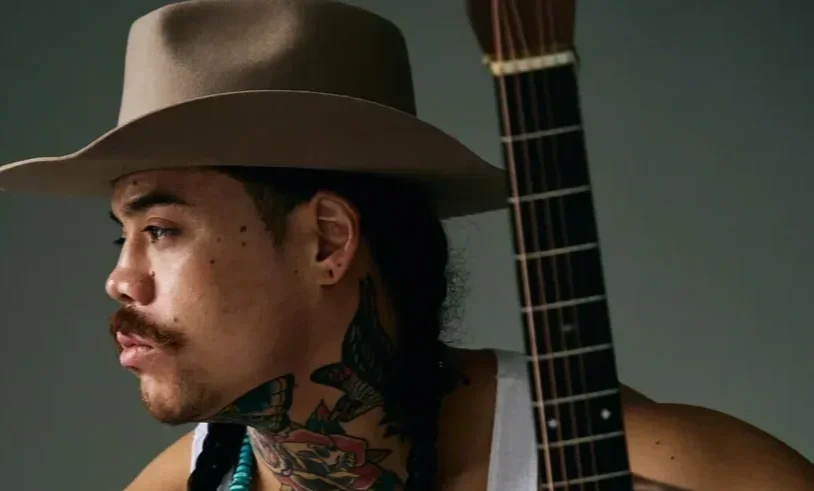
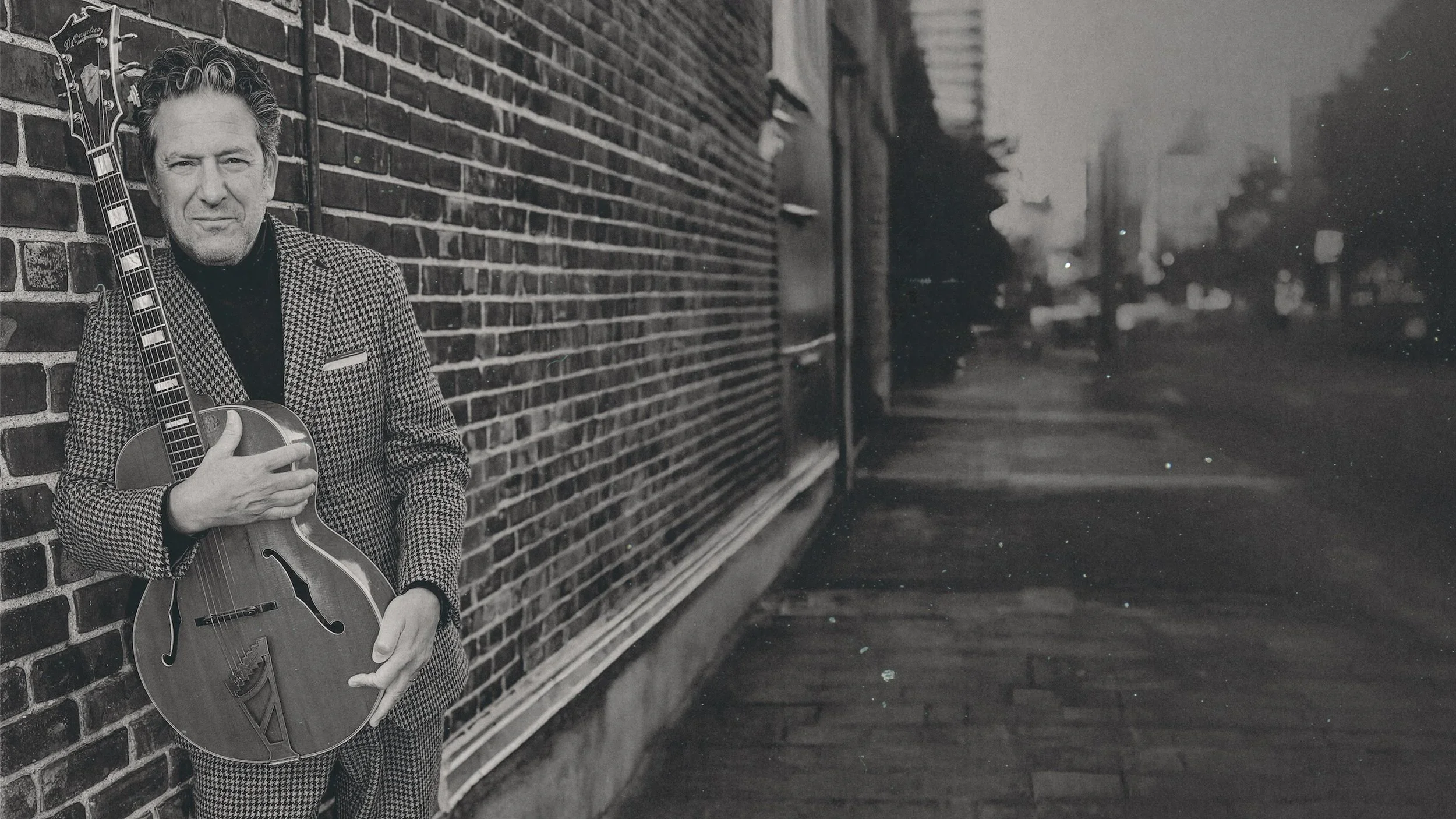
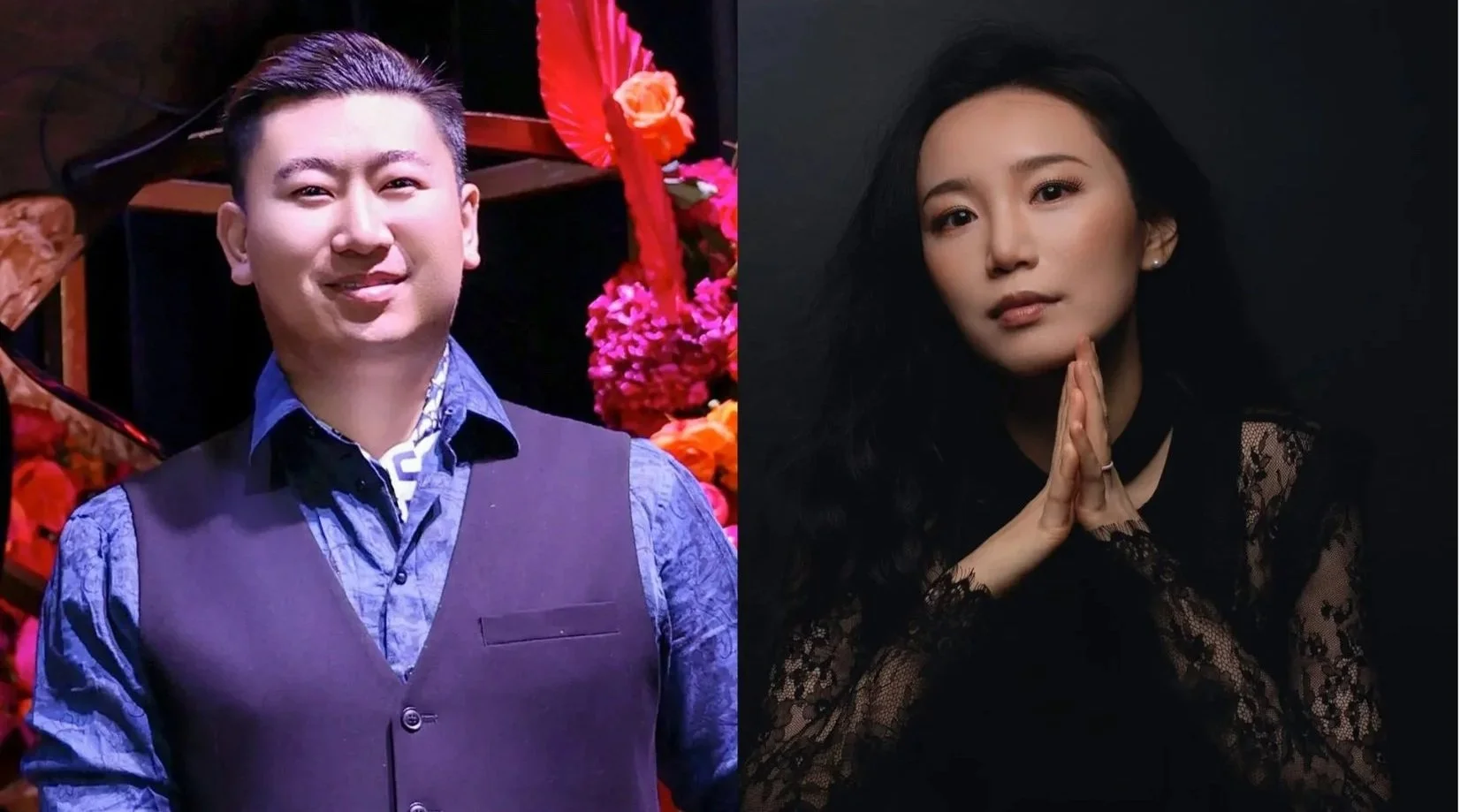
(Clockwise from left) Bud Roach, Jeffrey Ryan, James Fagan Tait
The Queer Arts Festival presents Fin’Amor at the Firehall Arts Centre on June 26
GOOD THINGS TAKE time. And while it might seem odd to celebrate the 50th anniversary of the Criminal Law Amendment Act (Bill C-150)—which decriminalized consensual sex between men—in 2026, Fin’Amor is both bigger and better for the delay.
This new one-act song cycle—which will be premiered as part of the Queer Arts Festival at the Firehall Arts Centre on June 26—tells more stories and features more music than composer Jeffrey Ryan and librettist James Fagan Tait had originally intended, and in tenor Bud Roach the two have found an ideal vehicle for their intimate and adventurous one-man show. Roach has “this beautiful, high, flexible tenor voice that just rings,” as Ryan points out, and he has one more striking attribute: he plays the hurdy-gurdy.
How many other classically trained tenors have also mastered that vexatious, charming, and mechanically bowed string instrument? None that we know of.
Although the hurdy-gurdy has been used in contexts as varied as medieval song, Ukrainian folk music, a variety of atmospheric film scores, and the 1994 reunion of Led Zeppelin founders Jimmy Page and Robert Plant, it’s likely that most listeners still know it through the British folk singer Donovan’s 1968 hit “Hurdy Gurdy Man”.
On which, oddly enough, no hurdy-gurdy can be heard. Donovan’s lyrics seem apt, however: the protagonist of the title is also known for “singing songs of love”, and that’s exactly what Roach will be up to. There’s a difference, though: the love Tait and Ryan’s songs describe could once land you in jail.
Fin’Amor’s subtitle is telling: Songs from a Former Criminal. Now in their 60s and 70s, Roach, Tait, and Ryan are old enough that their nature was considered a criminal offence, and their song cycle celebrates all of the positive changes that have taken place in the years since Pierre Elliott Trudeau famously declared that “There’s no place for the state in the bedrooms of the nation.”
“Jimmy and Bud and I are all part of the first generation to grow up under that change, right?” Ryan points out. “And we’ve kind of found that this history is something that a lot of younger people just take for granted. So in some ways we’re sort of the story-keepers from that time, because of course so many people from our generation didn’t make it past the 1980s.
“Well, ‘take it for granted’ is perhaps not the best way to put it,” he continues. “It’s really just that the way that life in Canada, and particularly in urban Canada, has changed over 40 years has created an environment where a lot of younger queer people are reaping the benefits of that. It’s made things more positive and more welcoming. That’s not true everywhere, and it’s not true everywhere in Canada. but there has been a lot of positive change in the last 50 years, and Jimmy and Bud and I were all there to see it.”
Fin’Amor, then, is celebratory at heart, although not dismissive of old injuries and sorrows stemming from the AIDS crisis and ongoing discrimination. In crafting the libretto, Tait has drawn on the three principals’ personal stories, from observation, and from conjecture. “Born in ’55”, for instance, references the veteran actor, playwright, and theatre director’s own birthdate, but “The World Changed” is sung from the perspective of a police officer tasked with authorizing a Pride parade—and, tellingly, their viewpoint is not hostile.
“When Jeff approached me, I said ‘What do you want it to be?’” Tait recalls. “And he said ‘We’ll start from you. Enter into the material however you want. This is where we’re coming from, but just go for it.’ So I did, and he looked at it all and just gently guided me towards other things, or the discussions opened up into other things and their specifics. Jeff also had some archival material, some great material, from the newspapers of the time in Toronto and other places—and it was a delight. So I entered it with some of my own experiences, some of my own ideas, and then Jeff and I met several times to look at it and see what there was. And when Bud joined us for the first workshop, he also had some perspectives about it. I would say that the libretto was a collective creation, initiated by the materials that I put down on paper.
“And there was a lot of material!” he adds, laughing.
“Jimmy just presented rafts of things,” Ryan concurs. “‘Here’s a thought. Here’s a poem. This is not fully formed yet, but this is what I’m thinking.’ And then we sat down and kind of went through it. Some of that was me looking at it from a composer’s perspective, knowing that the text would have to be set to a singing voice. Not every text lends itself to that, and not every text would suggest music, necessarily, to me.”
After workshopping the first drafts, the composer adds, “What became very clear was that there was so much enthusiasm about what we were doing that we realized it needed to be a bigger piece. People wanted to hear more of these stories in this context. So it became expanded into what’s going to happen at the end of this month, which is a 45-, 50-minute one-act show, with the hurdy-gurdy. And that set up a challenge for me as a composer; to find different ways of using the hurdy-gurdy, so that it’s not just everything being drone-based.”
Contemporary art song with hurdy-gurdy accompaniment is essentially uncharted territory, but the Fin’Amor team had one historical model to follow: the songs left behind by the 12th and 13th-century trouvères, troubadours, and trobairitz. These French poets, musicians, and entertainers often set their songs of courtly love, chivalry, and, yes, same-sex friendship to what was essentially the synthesizer of their time. This is terrain that both Ryan and Roach know well.
“I knew that Bud was engaged in self-accompanying with theorbo and Baroque guitar and things like that,” Ryan says. “That was a part of his music-making, along with doing contemporary music, and so we kind of hashed out the idea of doing some kind of contemporary take on early music. That’s kind of where it started, and then we thought ‘What about doing this: a totally 21st-century spin on the medieval troubadour. It could be really, really cool to have a contemporary take on that.’”
Roach, a singer and scholar who leads Hamilton, Ontario’s Capella Intima, allows that hurdy-gurdy is a more recent passion for him, and in fact for Fin’Amor he had to trade his old and unpredictable example for a new, luthier-built model.
“A composer wants to write to the limits of an instrument, right?” he says. “They don’t want to have to scale things down because of technical difficulties. But my skills are to provide a serviceable accompaniment that would have been historically accurate. A lot of people were accompanying themselves in the 17th century and earlier who weren’t necessarily virtuosos on the level of [17th-century lutenist and composer] Giovanni Girolamo Kapsberger, for example. But when I said ‘I have a hurdy-gurdy,’ Jeff just sort of lit up.
“So I allowed Jeff to take the lead for this so see where it would go,” Roach adds. “He came up with the idea—I guess it was just the germ of a thing—when we thought about the hurdy-gurdy. We both liked the idea of love poetry, he mentioned Jimmy Tait, and then I started getting these songs—and they were absolutely amazing.”
The amazement flows both ways. Roach’s voice, Ryan says, “was just such a wonderful sound to have in my head as I was writing the music for this.” And Tait stresses that while he and Ryan live within walking distance of each other in Vancouver’s West End, the bond they felt with Roach in Hamilton was palpable. “It’s a joy collaborating with these two,” he says. “It’s been a thrill—and we laugh a lot!” 

Related Articles