Silent classic The Passion of Joan of Arc gave Beautiful Violence a sonic challenge
The musical duo of Simon Dobbs and Jon McGovern found scoring Carl Theodor Dreyer’s 1928 film a more daunting prospect than they anticipated
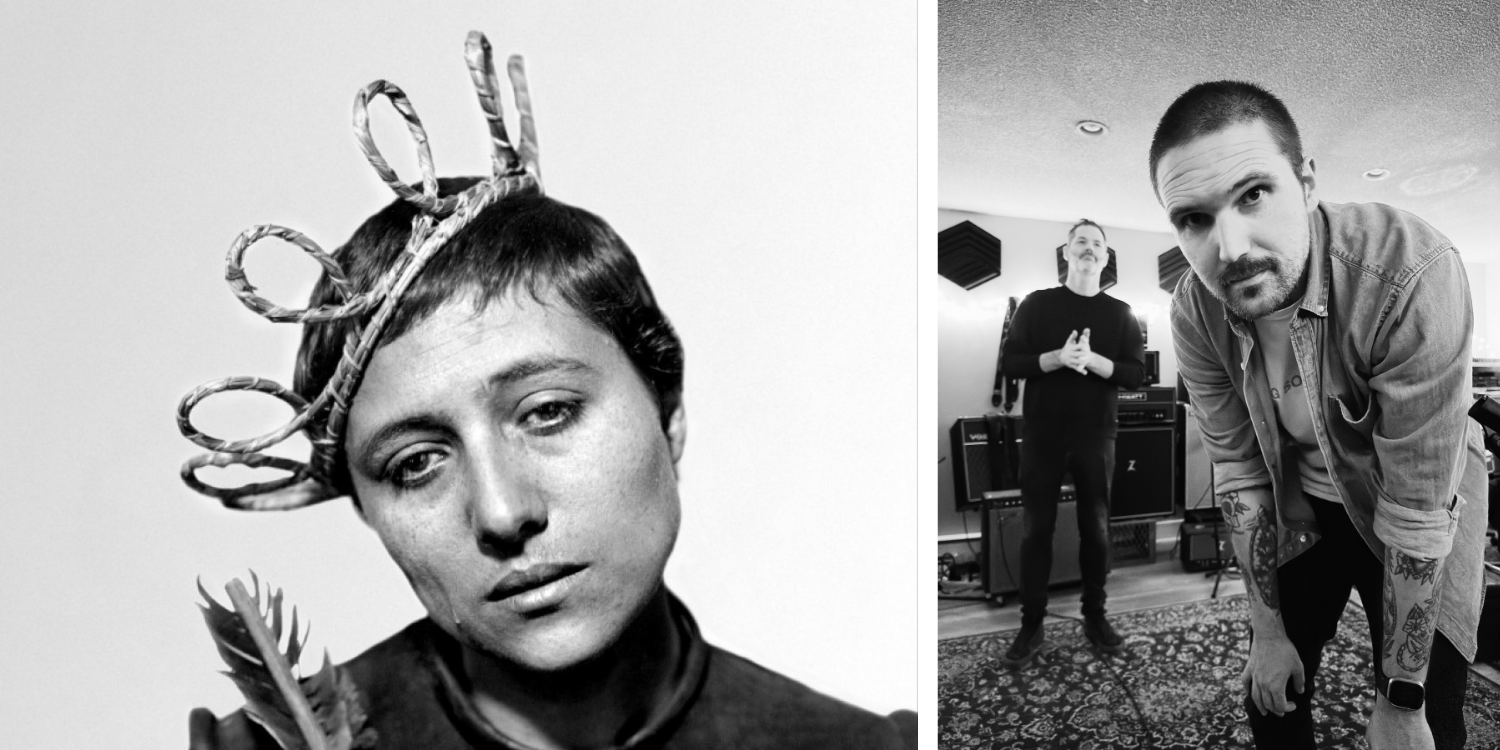
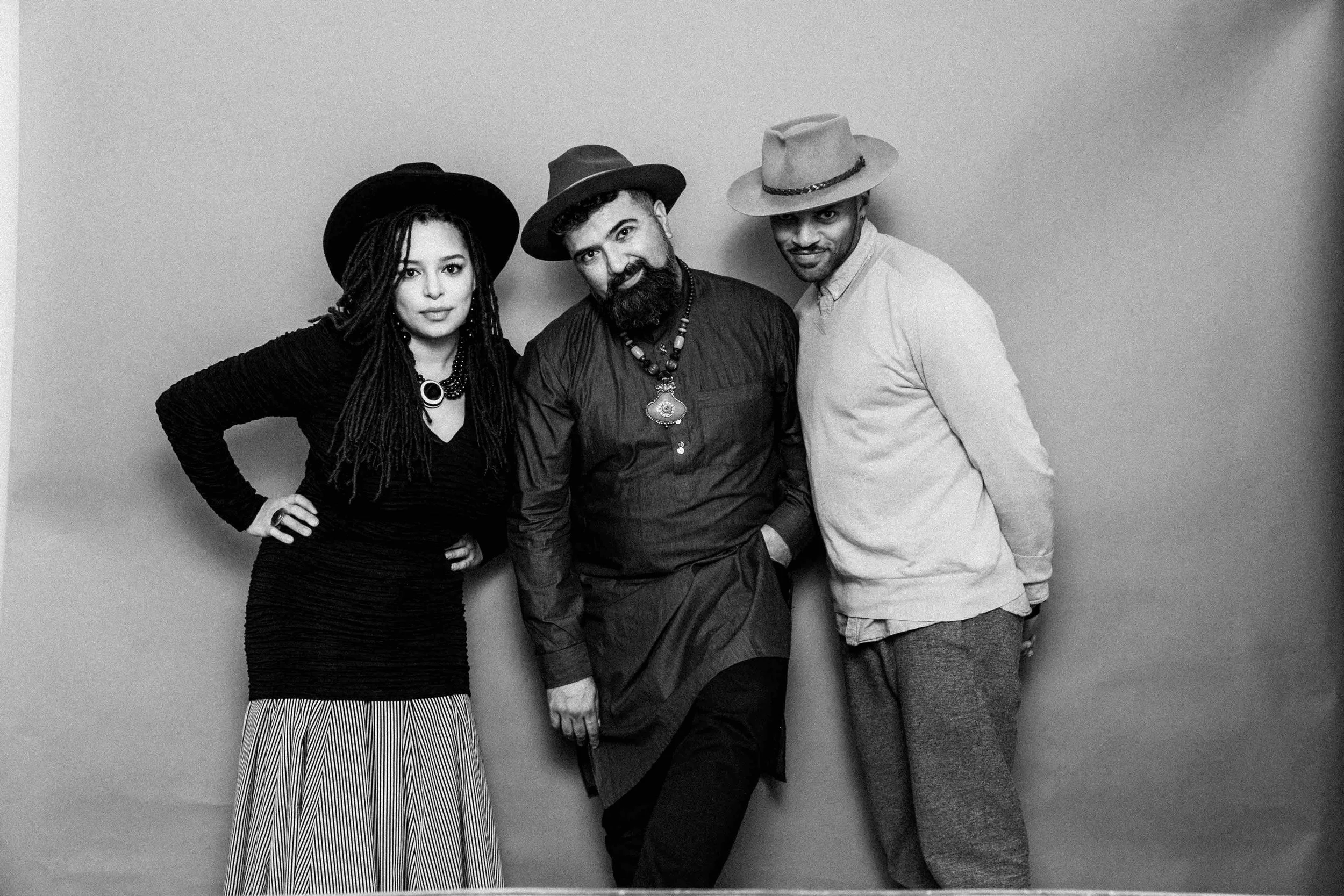
Left: The Passion of Joan of Arc. Right: Beautiful Violence.
The Shadbolt Centre for the Arts presents The Passion of Joan of Arc, with a live original score by Beautiful Violence, on May 2 at 7:30 pm.
SILENT MOVIES WERE never truly silent. Even before the advent of sound-on-film technology, films had musical scores, usually performed live in the theatre. Sadly, the scores to many classics of early-20th-century cinema are lost, which means we’ll never know what moviegoers in 1927 heard while they watched F.W. Murnau’s Sunrise or Fritz Lang's Metropolis.
There are exceptions, of course. Carl Theodor Dreyer’s The Passion of Joan of Arc, for example, premiered in Paris in 1928 with music composed by Léo Pouget and Victor Alix. While that score survives, Dreyer is on record as saying he didn’t care much for it, or for any other soundtrack created for the film within his lifetime.
That has left the door open for other composers to take a shot at scoring The Passion of Joan of Arc—which is surely a daunting task, given that the film is widely regarded as one of the greatest ever made. The most ambitious attempt to date is arguably Richard Einhorn’s Voices of Light, scored for orchestra and chorus with soloists, with a libretto drawn in part from the writings of medieval female mystics.
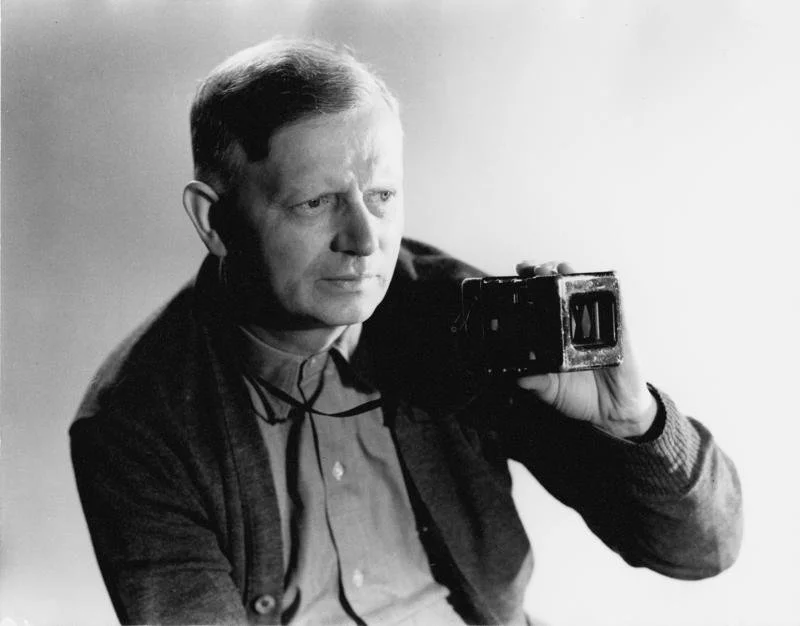
Carl Theodor Dreyer
Vancouver musician Simon Dobbs has a pretty good idea whose music would make a good accompaniment to Dreyer’s visuals. “I had rewatched it and realized what an incredible-looking film it is, and how emotionally powerful,” Dobbs tells Stir over a Zoom call from his day job with the City of Burnaby’s arts and culture department, based in the Shadbolt Centre for the Arts in Deer Lake Park. “I was talking to Shadbolt staff about it. I’d been listening to a lot of Nick Cave and the Bad Seeds—and watching the film while listening to Nick Cave—and thinking ‘There’s so much you could do with this, musically.’”
Dobbs says it wasn’t so much anything specific about the Bad Seeds’ sound that inspired him as it was Cave’s mastery of thematic and emotional dynamics: “He has a great way of moving between the huge to the tiny, right? The epic to the small, fragile. I think that’s what really kicked it off for me.”
Maybe someday Cave, Warren Ellis, and their fellow Bad Seeds will take a swing at it. In the meantime, Dobbs is more than happy to step up to the plate himself, along with Jon McGovern, his musical partner in the experimental duo Beautiful Violence. At this point, Dobbs and McGovern are old hands at providing live musical accompaniment to silent classics.
“We play in a kind of postrock, postmetal band called Griefwalker here in Vancouver,” Dobbs says. “The Griefwalker band was asked to work on The Cabinet of Dr. Caligari, and then after that, Jon and I were asked to do Metropolis, and it just went from there.”
Griefwalker has since played a live score to Murnau’s Faust; each of these performances has taken place, unsurprisingly, at the Shadbolt, and Beautiful Violence will return there for The Passion of Joan of Arc.
Dreyer’s feature is, as the title suggests, about the French patron saint, a 15th-century peasant girl who claimed that divine visions were guiding her to help Charles VII overturn occupation by English forces. Charles assented, and under Joan’s banner, Armagnac troops rousted the English from Orléans and the Loire Valley, and Charles was crowned the king of France.
After that, things got a bit… messy, in large part because France was still in a civil war in addition to its external conflicts. When Burgundians captured Joan in 1430, they turned her over to the English, who put her on trial for heresy and subsequently condemned her to be burned alive.
Dreyer chose to focus on the trial and execution, and the director’s extraordinary depiction of these events, Dobbs says, meant that he and McGovern couldn’t approach their task in a formulaic fashion.
“Usually, we think of the three-act structure,” he says. “You know the language of cinema—without trying to sound pretentious—and you can feel where something’s ramping up or when you need to hold back, and that’s how we would write to it.”
The Passion of Joan of Arc utterly defied this approach. The first half hour of the film is a trial scene in which Dreyer shows us almost nothing of the courtroom itself, favouring tight close-up shots of the mocking expressions of the prosecutors and the judge, French Catholic bishop Pierre Cauchon (played with implacable cruelty by Eugène Silvain). Most remarkable of all is the title character’s portrayal by Renée Jeanne Falconetti, who could convey entire worlds of meaning with just an upward tilt of her pleading face.
“There wasn’t a lot in the first 30 minutes to latch onto,” Dobbs admits. “Once you get into the torture and the hair-cutting and the burning alive, there’s lots of great stuff to write to, but the first 30 was hard. Metropolis was just a gift in that way—the same with Faust, as well, where every frame looks like an album cover. But Joan of Arc is a hard one, because it feels really claustrophobic. So trying to crack that was the hardest part, that first 30 minutes. After that, you’ve got some good visual material to work with, but getting there was tough.”
Dobbs reveals that the Beautiful Violence scoring process begins with each musician watching the film on his own, with the two sending each other musical ideas and notes for each scene. They gradually arrive at something they feel is complete enough to run through as a duo, armed with guitars, analogue and digital synthesizers, and samplers.
“By the time we perform—or whatever you want to call it—that will probably have been the fourth time, as a duo, we’ve sat and played to it live,” Dobbs says. “We do sort of write individually and then pass things back and forth. We’ll create an idea or a feeling for a scene or a movement, whatever you want to call it, send it back and forth and say, ‘Oh, that’s cool. I was thinking of this.’ And then we’ll basically record the entire thing, so we’re finished, and then sort of deconstruct how we’re going to perform it live after that.”
It’s a modus operandi that leaves ample room for improvisation during the screening—which is a nice thing to have, because if anything goes off-track, it’s not really feasible to rewind to the start of a scene and start over.
“There’s a chance of it drifting,” Dobbs acknowledges. “That’s where the improvisational part comes in. I think we’re both comfortable enough to be able to improvise our way back on track, or at least make some of that drift part of the humanity of it.”
If you’re wondering exactly how much of Nick Cave’s imprint made it into the final score, you’ll just have to take a seat at the Shadbolt and judge for yourself. According to Dobbs, it might not be evident on the surface.
“In terms of genre or stylistically, probably nothing, frankly,” he says. “It’s obviously a lot more ambient and a little bit of Sunn O))) and William Basinski and stuff like that. But in terms of wanting to create a feeling that he’s able to create, absolutely 100 percent.” 

Related Articles